What National Electric Vehicle Infrastructure Funding Actually Means for You
The short answer: The U.S. has committed roughly $7.5 billion through the Bipartisan Infrastructure Law (BIL) and the National Electric Vehicle Infrastructure (NEVI) Formula Program to build out a coast-to-coast DC fast-charging network. For EV buyers in 2026, this means more reliable 150–350 kW chargers along major highway corridors, reduced range anxiety on road trips, and — in some states — supplemental rebates for home Level 2 charger installation. However, funding does not guarantee a charger on every block. Rural corridors, apartment dwellers without home charging, and cold-climate drivers still face real access gaps that must factor into your purchase decision.
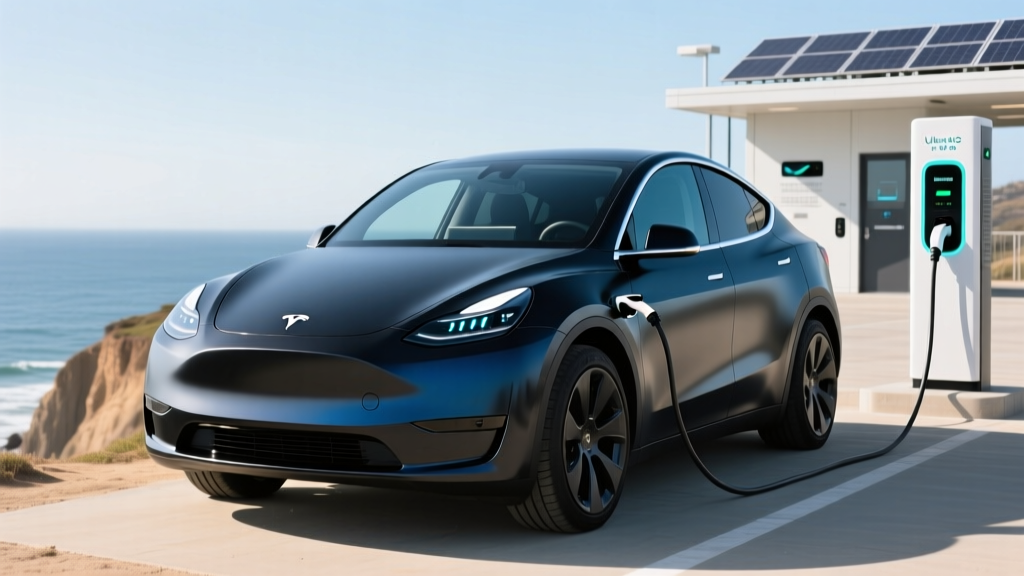
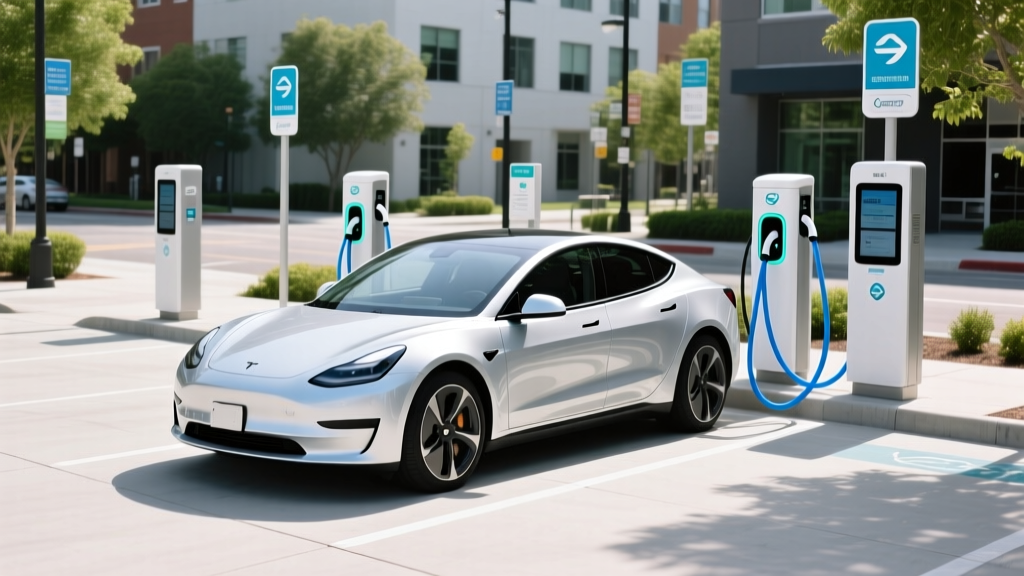
The NEVI program, administered by the Federal Highway Administration (FHWA), requires states to deploy chargers every 50 miles along designated Alternative Fuel Corridors, with each station offering at least four 150 kW (or higher) DC fast-charging ports. As of early 2026, over 3,500 NEVI-funded ports are operational or under construction nationwide, with thousands more in the permitting pipeline. This is meaningful progress — but it's not a finished network.
For a prospective EV buyer, infrastructure funding matters because it directly affects three things: whether you can road-trip confidently, what you'll pay to charge on the go, and whether an EV is practical for your specific driving pattern. Let's break down the numbers.
How Federally Funded Charging Compares to Gas-Station Convenience
The common objection to EVs is that you can't fill up in five minutes like a gas car. That's true — but the comparison is more nuanced than it seems. Here's what the data actually shows:
| Metric | Gas Car (2026 Avg) | EV (Typical 2026 BEV) |
|---|---|---|
| "Refuel" time (full/80%) | ~5 minutes | 18–30 min (10–80% at 150–250 kW DCFC) |
| Cost per mile (fuel/energy) | ~$0.14/mi (28 MPG avg, $3.80/gal) | ~$0.04/mi (home L2, $0.13/kWh); ~$0.11/mi (public DCFC) |
| Station/port density (highway) | Every 10–30 miles | Every 25–50 miles (NEVI corridors); gaps remain off-corridor |
| Annual fuel/energy cost (12,000 mi) | ~$1,680 | ~$480 (home) / ~$1,320 (mostly public DCFC) |
| Maintenance cost/year | ~$900 (oil, filters, brakes) | ~$300 (cabin filter, tire rotation, fluid top-off) |
The math favors EVs heavily when you charge at home. A driver covering 12,000 miles annually in a 2026 Hyundai Ioniq 6 SE (EPA 361 miles, 140 MPGe combined, 77.4 kWh battery) spending $0.13/kWh on residential electricity pays roughly $480/year in energy. The equivalent gas car at 28 MPG and $3.80/gallon spends $1,680. That's a $1,200 annual savings — or $6,000 over five years — before accounting for reduced maintenance.
But if you rely entirely on public DC fast charging at $0.35–$0.48/kWh (common on Electrify America and EVgo networks), your annual energy cost climbs to $1,300–$1,700 — nearly matching gas. This is why home charging access remains the single most important variable in EV ownership economics, regardless of how much federal funding flows into public infrastructure.
Real Costs of EV Ownership in 2026
Let's model a realistic five-year ownership scenario for a mainstream EV versus a comparable gas sedan. We'll use the 2026 Tesla Model 3 Rear-Wheel Drive (base MSRP ~$38,990, EPA 341 miles, 60 kWh LFP battery, 250 kW peak DC charging) and a 2026 Toyota Camry LE (MSRP ~$29,995, EPA 32 MPG combined).
| Cost Category (5 Years) | 2026 Tesla Model 3 RWD | 2026 Toyota Camry LE |
|---|---|---|
| Purchase price (after §30D credit) | ~$31,490 (if eligible for $7,500 point-of-sale credit) | $29,995 (no EV credit) |
| Fuel/energy (60,000 mi, 70% home / 30% DCFC) | ~$3,360 | ~$8,400 |
| Maintenance | ~$1,500 | ~$4,500 |
| Insurance (avg) | ~$10,500 ($2,100/yr) | ~$7,500 ($1,500/yr) |
| Depreciation (est.) | ~$14,000 | ~$10,000 |
| Total 5-Year Cost | ~$60,850 | ~$60,395 |
The five-year totals are remarkably close — within $500. The EV wins decisively on energy and maintenance but gives back ground on insurance (EV premiums average 25–40% higher, per industry data) and steeper depreciation. The federal §30D tax credit, applied at point of sale under current IRS rules, is the swing factor. Without it, the Model 3's five-year cost jumps to ~$68,350.
Important caveats on §30D eligibility: The $7,500 credit requires the vehicle to meet critical-mineral and battery-component sourcing thresholds, the buyer's AGI must not exceed $150,000 (single) or $300,000 (joint), and the vehicle MSRP must be under $55,000 for sedans. Always verify eligibility on the IRS portal before purchase — rules tighten annually.
Where NEVI-Funded Chargers Help — and Where They Don't
The NEVI program's 50-mile spacing requirement is designed for highway corridors: I-95, I-80, I-10, I-5, and similar routes. If your road trips follow interstates, the network is increasingly viable. A 2026 Chevrolet Equinox EV (EPA 319 miles, 85 kWh NMC battery, 150 kW peak DC charging, 10–80% in ~32 minutes) can comfortably cover interstate segments with a single 20-minute stop every 2.5–3 hours.
But infrastructure funding has clear blind spots:
- Rural and non-corridor routes: State highways, scenic byways, and rural roads off the designated corridor map may lack DC fast charging entirely. If you regularly drive Montana's Highway 12 or rural West Virginia, plan around sparse infrastructure.
- Urban apartment dwellers: NEVI funds highway stations, not apartment-garage Level 2 chargers. If you can't install a home charger, you'll depend on public Level 2 (often 6–19 kW) or DCFC — adding time and cost.
- Cold-climate range loss: A 300-mile EPA-rated EV may deliver only 200–240 miles in sub-freezing highway driving due to battery chemistry and cabin heating demands. NEVI spacing of 50 miles helps, but 25% range loss compresses your margin for error.
- Charger uptime: NEVI mandates 97% uptime for funded stations — a meaningful improvement over older networks. However, non-NEVI chargers on the same corridor may still suffer from broken cables, payment failures, or CCS/NACS adapter issues.
Common Misconceptions About Federal EV Infrastructure Funding
| Myth | Fact |
|---|---|
| "Federal funding means free charging everywhere." | NEVI stations charge market rates — typically $0.30–$0.48/kWh for DC fast charging. The subsidy covers construction, not your session cost. |
| "There will be a charger at every rest stop by 2026." | Deployment is ongoing; many stations are still in permitting or construction. Expect coverage on major corridors, not universal availability. |
| "All new chargers use Tesla's NACS connector." | NEVI-funded stations must include CCS1 connectors. Many now also offer NACS cables, and Tesla Superchargers are opening to non-Tesla EVs via adapters — but CCS remains the NEVI baseline. |
| "Infrastructure funding eliminates range anxiety." | It reduces highway range anxiety significantly. Apartment dwellers, cold-climate drivers, and off-corridor travelers still face real access limitations. |
| "Federal money covers home charger installation." | NEVI funds public infrastructure. Home Level 2 installation ($500–$2,000+ for equipment and electrician) may qualify for a separate §30C tax credit of up to $1,000, but that's a different program. |
Decision Framework: Is an EV Right for Your Situation?
Choose a battery-electric vehicle (BEV) if:
- You have access to Level 2 home or workplace charging (240V, 7–11 kW, adding 25–45 miles per hour of charging).
- Your typical daily driving is under 80 miles round-trip, and your road trips follow NEVI-designated corridors.
- You qualify for the §30D federal tax credit (check income caps, MSRP limits, and battery-sourcing requirements on irs.gov).
- You want to minimize per-mile energy cost ($0.04–$0.05/mi at home) and maintenance ($300/year average).
Choose a plug-in hybrid (PHEV) if:
- You lack reliable home charging or live in an apartment without EV infrastructure.
- You frequently drive rural or off-corridor routes where DC fast chargers remain sparse.
- You want 25–50 miles of electric-only range for commuting but need gas flexibility for 400+ mile trips without planning charging stops.
- Example: 2026 Toyota RAV4 Prime (EPA 42 miles electric-only, 38 MPG combined on gas, $44,990 MSRP).
Wait or choose a conventional hybrid (HEV) if:
- You live in extreme cold (regularly below 0°F) where EV range loss of 25–40% makes 200-mile segments risky.
- Your budget is under $28,000 and you don't qualify for used-EV credits, making the upfront cost gap prohibitive.
- You tow heavy loads frequently (trailers over 3,000 lbs compress EV range by 30–50%).
What First-Time EV Buyers Should Know Before Signing
Beyond infrastructure and cost, first-time buyers should internalize a few ownership realities that spec sheets don't highlight:
Charging curves matter more than peak kW. A vehicle rated for 250 kW peak charging doesn't sustain that rate. Most EVs taper significantly above 60–70% state of charge. The more useful metric is 10–80% time: the 2026 Hyundai Ioniq 5 (84 kWh battery, 350 kW peak) achieves 10–80% in roughly 18 minutes on a capable charger, while the 2026 Ford Mustang Mach-E Extended Range (91 kWh NMC, 150 kW peak) takes about 35 minutes. Plan road-trip stops around the 10–80% window — charging from 80–100% can take as long as 10–80%.
Battery chemistry affects daily habits. LFP (lithium iron phosphate) batteries, used in the Tesla Model 3 RWD and some BYD models, tolerate daily 100% charging with minimal degradation and offer longer cycle life. NMC (nickel manganese cobalt) batteries, common in longer-range models, benefit from daily charging limits of 80% and are better optimized for cold weather. Check your vehicle's battery chemistry — it changes how you set your charge limit.
Home charger installation costs vary wildly. A straightforward Level 2 (240V, 48A) installation near your electrical panel might cost $500–$800. But if you need a panel upgrade from 100A to 200A service — common in older homes — expect $1,500–$3,000 additional. Get a quote from a licensed electrician before committing to an EV.
Tire costs are higher. EVs are 15–25% heavier than comparable gas cars and deliver instant torque, accelerating tire wear. Budget $200–$400 more per tire replacement cycle, and consider EV-specific tires (e.g., Michelin Pilot Sport EV, Hankook iON) rated for higher load indices.
Frequently Asked Questions
How many NEVI-funded charging stations are operational in 2026?
As of early 2026, the FHWA reports over 3,500 individual NEVI-funded charging ports are operational, with several thousand more in active construction or permitting. These are concentrated along designated Interstate highway corridors. The full buildout target is roughly 75,000 miles of corridor coverage, which is expected to take through 2030 to complete.
Will NEVI chargers work with my Tesla or non-Tesla EV?
NEVI-funded stations must include CCS1 connectors by regulation. Many newer NEVI stations also include NACS (Tesla-style) cables, and Tesla's Supercharger network — while not NEVI-funded — has opened many stations to non-Tesla EVs via the Magic Dock adapter or third-party NACS adapters. Check the specific station listing on the charger network's app before relying on it.
Does federal infrastructure funding lower the price of EVs?
Not directly. NEVI funds charging infrastructure, not vehicle purchases. Vehicle price reductions come from the §30D federal tax credit (up to $7,500 for new EVs, up to $4,000 for used), manufacturer price cuts, and state-level rebates. However, a robust charging network increases EV resale value and reduces total cost of ownership by enabling cheaper, faster public charging.
I live in an apartment with no charging — is an EV still practical?
It's possible but significantly more expensive and time-consuming. You'll rely on public Level 2 chargers (6–19 kW, adding 20–60 miles per hour) or DC fast chargers ($0.30–$0.48/kWh). Weekly charging sessions of 30–60 minutes replace the convenience of overnight home charging. A PHEV with 30–50 miles of electric range may be a better fit, letting you charge opportunistically while using gas for longer trips.
What happens to EV charging infrastructure if federal funding changes?
NEVI funds are obligated to states through multi-year agreements, meaning already-allocated funding is largely protected even if future appropriations shift. However, the pace of expansion beyond the initial corridor buildout could slow. Private networks (Electrify America, EVgo, ChargePoint) and automaker-funded networks (Tesla, Ionna — the BMW/GM/Honda/Hyundai/Kia/Mercedes/Stellantis joint venture) continue expanding independently of federal funding.
The bottom line: national electric vehicle infrastructure funding is making highway EV travel meaningfully more practical in 2026 — but it hasn't solved every access problem. Your purchase decision should still center on your specific charging access, driving patterns, climate, and budget. The network is better than it was. It's not finished yet.