The Short Answer on National Electric Vehicle Sweden (NEVS)
National Electric Vehicle Sweden (NEVS) — the company that acquired Saab Automobile's assets in 2012 with ambitions to produce electric vehicles — filed for bankruptcy in March 2023 and entered liquidation. As of 2026, NEVS does not manufacture or sell any vehicles. Its planned EV models, including the Emily GT sedan concept, never reached production. If you're researching NEVS as a potential EV purchase, the company is no longer operational, and no NEVS-branded vehicle is available for sale anywhere in the world.
This guide explains what NEVS was, why it failed, and what practical lessons its collapse holds for EV buyers evaluating lesser-known automakers in 2026.
What Was National Electric Vehicle Sweden (NEVS)?
NEVS was founded in 2012 by a Hong Kong-based consortium led by Kai Johan Jiang after the original Saab Automobile went bankrupt. The company purchased Saab's Trollhättan factory in Sweden, along with intellectual property rights to the Saab 9-3 platform (though notably excluding the Saab brand name and griffin logo, which were controlled separately).
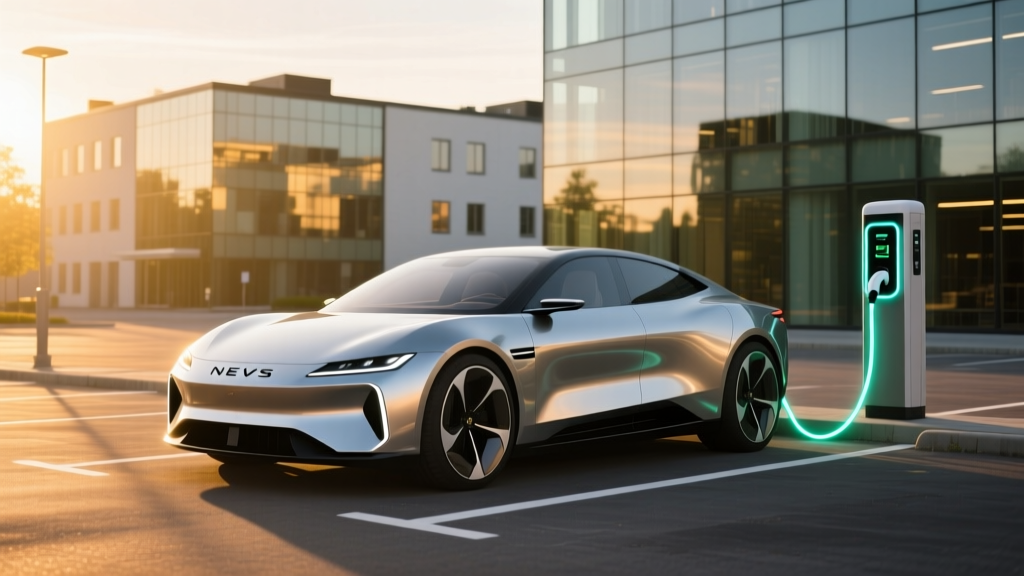
NEVS initially produced a small number of conventionally powered Saab 9-3 variants before pivoting to an all-electric strategy. In 2019, the company unveiled the NEVS 9-3 EV prototype and later revealed the Emily GT, a large electric sedan concept designed by Henrik Fisker's former associates. The company also explored autonomous driving partnerships and signed a major (ultimately unfulfilled) deal with Chinese ride-hailing firm DiDi.
Key timeline milestones:
- 2012: NEVS acquires Saab assets for approximately $200 million
- 2014: Production halts due to financial difficulties with Chinese backer Qingbo Investment
- 2019: NEVS 9-3 EV prototype shown; DiDi partnership announced
- 2021: Emily GT concept revealed; Trollhättan factory largely idle
- March 2023: NEVS files for bankruptcy in Sweden
- 2024–2026: Assets liquidated; no vehicle production resumes
Why NEVS Failed: Lessons for EV Buyers
NEVS is one of dozens of EV startups that collapsed before delivering a production vehicle. Understanding why helps you evaluate risk when considering vehicles from smaller or newer manufacturers.
Chronic Undercapitalization
Bringing a new EV to production requires billions of dollars. Tesla burned through roughly $5 billion before the Model 3 reached sustained production. Rivian and Lucid each raised over $10 billion before and during early production ramp-ups. NEVS operated on a fraction of that, relying on intermittent Chinese investment that repeatedly dried up.
No Production at Scale
NEVS built a handful of prototype and pilot vehicles at Trollhättan but never achieved meaningful series production. The factory sat idle for most of the company's existence. Without volume manufacturing, there was no revenue stream, no real-world reliability data, and no service network.
Overreliance on Legacy Platforms
The NEVS 9-3 EV was based on a platform dating back to 2002. By the late 2010s, dedicated EV architectures from Tesla, Hyundai (E-GMP), and others had made converted ICE platforms obsolete. The Emily GT was a cleaner-sheet design but never progressed beyond the concept stage.
No Sales, Service, or Parts Infrastructure
Even if NEVS had produced vehicles, it had no dealer network, no certified service centers, no parts supply chain, and no over-the-air update capability. For comparison, established EV makers in 2026 like Tesla, Hyundai, BMW, and Rivian operate hundreds of service points across the U.S. alone.
Evaluating EV Startups: A Buyer's Risk Framework
The NEVS story isn't unique. Fisker Inc. filed for bankruptcy in late 2024. Lordstown Motors collapsed in 2023. Byton never delivered a vehicle. If you're considering an EV from a newer or smaller manufacturer, use this decision framework:
If/Then EV Startup Evaluation
- If the company has not delivered 10,000+ vehicles → then treat all specs and timelines as preliminary, and avoid pre-order deposits over $500
- If the company has no established service network in your state → then factor in $1,500–$3,000/year for potential out-of-network repairs and towing
- If the company relies on a single foreign investor for funding → then monitor quarterly financial disclosures and delay purchase until at least two years of sustained production
- If the vehicle uses a converted ICE platform rather than a dedicated EV skateboard → then expect inferior range, packaging, and charging speeds vs. competitors
- If no EPA range certification or IIHS/NHTSA crash data exists → then do not purchase — these are non-negotiable safety and efficiency baselines
- If the company has been operating 5+ years without production → then walk away; the pattern matches NEVS, Byton, and other failed ventures
What to Buy Instead: Proven EVs in 2026
Rather than gambling on an EV startup, 2026 offers a deep bench of proven electric vehicles with established service networks, verified EPA range, and available federal tax credits. Here's how established options compare to the kind of speculative EV that NEVS promised:
| Factor | NEVS (Promised/Concept) | 2026 Tesla Model 3 LR | 2026 Hyundai Ioniq 6 LR | 2026 BMW i4 eDrive40 |
|---|---|---|---|---|
| EPA Range | Never certified | 363 miles | 361 miles | 318 miles |
| Battery (usable kWh) | Unknown | 79 kWh (NMC) | 77.4 kWh (NMC) | 81 kWh (NMC) |
| Peak DC Fast Charge | Unknown | 250 kW | 240 kW | 205 kW |
| 10–80% Charge Time | Unknown | ~26 min | ~18 min | ~31 min |
| 0–60 mph | Estimated 5.0s (unverified) | 4.2 sec | 5.1 sec | 5.5 sec |
| Base MSRP | N/A (never sold) | $42,630 | $42,715 | $57,395 |
| Federal Tax Credit (§30D) | N/A | Up to $7,500* | Up to $7,500* | Up to $7,500* |
| Service Centers (U.S.) | 0 | 300+ (mobile + fixed) | 800+ Hyundai dealers | 350+ BMW dealers |
| Battery Warranty | N/A | 8 yr / 120,000 mi | 10 yr / 100,000 mi | 8 yr / 100,000 mi |
*Federal §30D tax credit eligibility depends on buyer income caps, vehicle MSRP caps, battery sourcing requirements, and point-of-sale transfer availability. Always verify current-year rules at IRS.gov before purchasing.
Real-World EV Ownership Costs: What NEVS Never Addressed
One reason NEVS struggled was that building a car is only the beginning. Sustaining ownership — charging infrastructure, warranty service, insurance, software updates — is where most EV startups fail. Here's what real EV ownership costs look like in 2026 using a mainstream mid-range EV as a baseline:
| Cost Category | 2026 EV (e.g., Ioniq 6) | 2026 Gas Sedan (e.g., Toyota Camry) |
|---|---|---|
| Purchase Price (after $7,500 credit) | ~$35,215 | ~$29,500 |
| Fuel/Energy (5 yr, 75,000 mi) | $3,750 (home L2 @ $0.14/kWh avg) | $7,500 (30 MPG @ $3.00/gal) |
| Maintenance (5 yr) | $1,200 (tire rotation, cabin filter, fluid top-off) | $3,500 (oil changes, brakes, transmission fluid) |
| Insurance (5 yr avg) | $9,500 ($1,900/yr avg) | $7,500 ($1,500/yr avg) |
| Estimated Depreciation | ~$14,000 | ~$11,000 |
| Total 5-Year Cost | ~$63,665 | ~$59,000 |
| Cost Per Mile | ~$0.85/mi | ~$0.79/mi |
EVs remain slightly more expensive on a total-cost basis for many buyers due to higher insurance premiums and steeper initial depreciation, but the gap narrows significantly when you factor in higher annual mileage, lower local electricity rates, or state incentives beyond the federal credit. Data sourced from fueleconomy.gov and industry averages.
Common Misconceptions About EV Startups and NEVS
| Myth | Fact |
|---|---|
| "NEVS is still making Saab EVs in Sweden" | NEVS filed for bankruptcy in 2023. The Trollhättan factory is no longer producing vehicles. The Saab brand name is controlled by Saab AB (defense/aerospace), which has not authorized NEVS to use it. |
| "EV startups are always a good bet because they're innovative" | Since 2018, at least 8 EV startups (NEVS, Byton, Lordstown, Fisker Inc., Karma, Nikola passenger division, Canoo, Faraday Future at scale) have failed or produced negligible volumes. Innovation without capitalization and manufacturing execution is not a viable business. |
| "If I pre-order from a startup, my deposit is protected" | Most EV startup deposits are refundable in theory, but in bankruptcy proceedings, deposit holders become unsecured creditors. Fisker Inc. deposit holders in 2024 faced months of uncertainty before partial refunds were processed. |
| "A factory in Sweden means the cars are reliable" | Manufacturing location does not guarantee vehicle quality or company solvency. NEVS's Trollhättan factory sat idle for years. Reliability comes from production volume, iterative improvement, and a funded service network — none of which NEVS achieved. |
| "NEVS might come back" | While asset sales occasionally revive brands (see: DeLorean's multiple resurrections), NEVS's core assets — the factory, tooling, and IP — have been liquidated. No credible entity has announced a revival as of 2026. |
What First-Time EV Buyers Should Know in 2026
If the NEVS story is your entry point into EV research, welcome — here's what actually matters when buying an electric vehicle today:
Home Charging Is the Foundation
Roughly 80% of EV charging happens at home. Before choosing an EV, confirm you can install a Level 2 (240V) home charger. A typical installation runs $800–$2,500 for the charger and electrical work, depending on whether your panel needs an upgrade to 200A. Without home charging, public DC fast charging costs roughly 2–3× more per mile and adds wear from repeated high-rate charging.
EPA Range ≠ Real-World Range
The EPA test cycle includes low-speed city driving that favors EVs. Expect real-world highway range to be 10–20% below the EPA sticker. In cold weather (below 30°F), range can drop 20–35% due to battery chemistry limitations and cabin heating demands. A 360-mile EPA rating might deliver 280–300 miles on a 75°F highway day and 230–260 miles in 15°F conditions.
Charging Speed Matters More Than Peak kW
A vehicle rated for 250 kW peak charging rarely sustains that rate. Charging curves taper significantly above 80% state of charge to protect battery health. What matters is the 10–80% time: the Hyundai Ioniq 5/6 platform achieves ~18 minutes on a 350 kW charger, while some competitors take 30+ minutes. Check sustained charge rates, not just the headline number.
Verify Tax Credit Eligibility Before You Buy
The §30D federal tax credit offers up to $7,500, but eligibility requires meeting buyer income caps ($150K single / $300K joint), vehicle MSRP caps ($55K sedans / $80K SUVs/trucks), and battery critical-mineral and component sourcing rules that tighten annually. As of 2026, many vehicles qualify for partial credits ($3,750) rather than the full amount. The credit can now be transferred to the dealer at point of sale, reducing your purchase price directly. Always confirm eligibility at IRS.gov or consult a tax professional.
Insurance Costs More for EVs
EV insurance premiums average 15–25% higher than comparable gas vehicles, driven by higher repair costs (specialized body shops, battery replacement risk) and elevated vehicle values. Shop quotes from GEICO, Progressive, State Farm, and EV-specialty insurers like Lemonade before committing to a purchase.
The Bottom Line: NEVS Is a Cautionary Tale, Not an Option
National Electric Vehicle Sweden represents a pattern familiar in the EV industry: ambitious vision, legacy assets, foreign capital, and ultimately insufficient execution. For EV buyers in 2026, the lesson is clear — prioritize manufacturers with proven production volume, established service networks, verified EPA certifications, and transparent financial health. The market now offers dozens of compelling, production-proven EVs from companies that will still be here to honor your warranty.
Is NEVS still in business?
No. NEVS filed for bankruptcy in Sweden in March 2023 and its assets were liquidated. The company does not produce or sell vehicles.
Can I buy a NEVS electric car?
No NEVS vehicle was ever sold to consumers at scale. A handful of prototype and pilot vehicles exist, but none are available through any retail channel.
What happened to the NEVS Emily GT?
The Emily GT was a concept sedan revealed in 2021. It never entered production. The design team and tooling were part of the bankruptcy liquidation.
Is Saab making electric cars?
The Saab brand name is owned by Saab AB, a defense and aerospace company. Saab AB has not announced plans to produce electric vehicles. The original Saab Automobile's factory and some IP passed through NEVS and have since been liquidated.
How can I protect myself from EV startup failures?
Only purchase from manufacturers with at least 2–3 years of sustained production, an established dealer or service network in your area, EPA-certified range figures, and NHTSA/IIHS safety ratings. Keep pre-order deposits minimal and refundable. Verify the company's financial backing includes multiple funding sources rather than a single investor.
What's the safest EV to buy in 2026 for a first-time buyer?
Proven options with strong reliability records, broad service networks, and available tax credits include the Tesla Model 3, Hyundai Ioniq 5/6, Kia EV6, Ford Mustang Mach-E, and BMW i4. Each has EPA-verified range above 300 miles, DC fast charging under 30 minutes (10–80%), and battery warranties of 8–10 years.