Quick Answer: NASCAR unveiled its electric racing prototype in July 2023 — a 1,300+ hp all-wheel-drive demonstrator built to showcase EV performance on superspeedways and short tracks. As of 2026, NASCAR has not announced a full electric racing series or a consumer EV model. For buyers, the prototype's real significance is cultural: it accelerates mainstream acceptance of EV performance, validates high-output electric powertrains under extreme thermal stress, and signals that automakers involved in NASCAR (Ford, Chevrolet, Toyota) are aligning their racing programs with their consumer EV lineups. If you're shopping for a high-performance EV today, the relevant consumer models are the Ford Mustang Mach-E GT (480 hp, EPA 290 mi), Chevrolet Blazer EV SS (557 hp, EPA 279 mi), and Toyota bZ4X (201 hp, EPA 252 mi) — none are NASCAR-derived, but all benefit from the same electrification investment.
What the NASCAR EV Prototype Actually Is
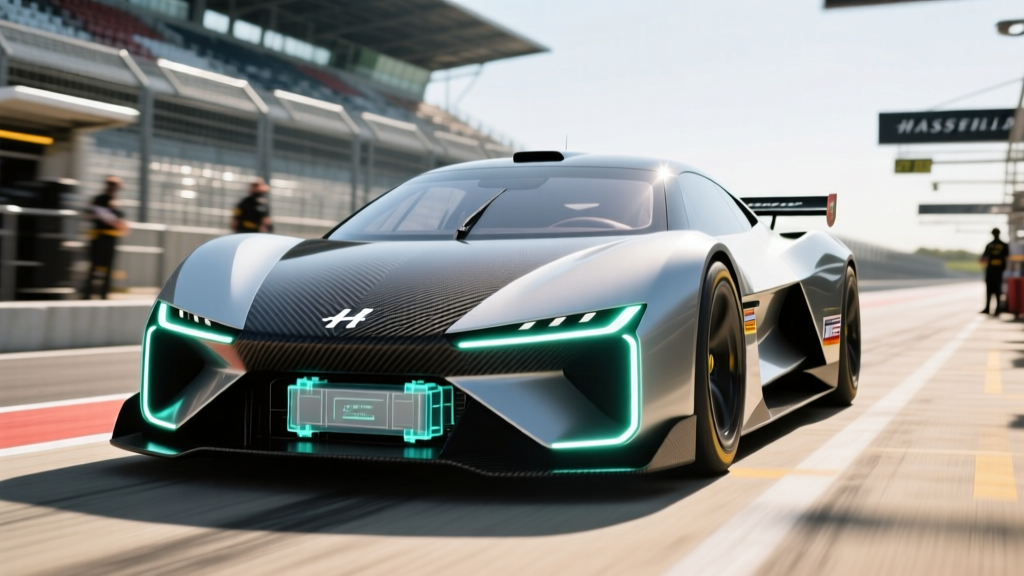
NASCAR's electric prototype is not a race car competing in any current series. It is a technology demonstrator — a one-off vehicle built to prove that an electric powertrain can survive the unique demands of stock car racing: sustained high-speed running, extreme battery temperatures, rapid pit-stop energy replenishment, and the kind of close-quarter, contact-heavy racing that defines NASCAR.
The prototype's known specifications include:
- Power output: Over 1,300 horsepower across three electric motors (one front, two rear)
- Drivetrain: All-wheel drive with torque vectoring
- Battery: Approximately 78 kWh usable capacity, liquid-cooled
- Chassis: Purpose-built tube frame (not derived from the Next Gen car)
- Top speed: Demonstrated runs exceeding 180 mph at test tracks
NASCAR has been transparent that this vehicle is a proof of concept. The organization has not committed to a timeline for an all-electric racing series, and NASCAR president Steve Phelps has stated publicly that any transition will be gradual, likely running parallel to internal-combustion racing for years. For context, Formula E has been racing since 2014 with spec cars producing roughly 470 hp — NASCAR's prototype produces nearly three times that figure, reflecting the different demands of oval racing versus street circuits.
What This Means for Consumer EV Buyers
The NASCAR EV prototype does not translate directly into a car you can buy. But the engineering lessons and marketing momentum it generates have real downstream effects for consumer EV shoppers in 2026.
Thermal Management Validation
Stock car racing generates sustained thermal loads that far exceed normal highway driving. A NASCAR vehicle running 500 miles at 180+ mph produces continuous battery heat that consumer EVs never encounter. The cooling systems developed for the prototype — advanced liquid-cooling loops, high-flow coolant architectures, and battery-pack thermal modeling — feed directly into the consumer vehicles that Ford, GM, and Toyota sell. When you see a 2026 Mustang Mach-E or Blazer EV sustain high charge rates without thermal throttling, that's racing-derived thermal management at work.
Performance Credibility
NASCAR's audience has historically been skeptical of electrification. A 1,300-hp electric prototype demonstrating real speed on real ovals shifts the cultural conversation. For buyers on the fence about whether EVs can be "real" performance vehicles, NASCAR's endorsement carries weight — particularly in markets where truck and muscle-car culture dominates purchase decisions.
Manufacturer Alignment
All three current NASCAR manufacturers — Ford, Chevrolet (GM), and Toyota — have committed significant capital to consumer EV platforms. Ford's investment in its EV division, GM's Ultium platform, and Toyota's expanding bZ series all benefit from the engineering talent and public relations momentum that a NASCAR EV program generates. The racing program and the showroom are increasingly connected.
NASCAR Manufacturer Consumer EV Lineup (2026)
| Manufacturer | Top Consumer EV (Performance Trim) | Horsepower | EPA Range | 0-60 mph | Base MSRP |
|---|---|---|---|---|---|
| Ford | Mustang Mach-E GT | 480 hp | 290 mi | 3.5 sec | $54,995 |
| Chevrolet | Blazer EV SS | 557 hp | 279 mi | 3.4 sec | $57,595 |
| Toyota | bZ4X (AWD) | 201 hp | 252 mi | 6.5 sec | $43,070 |
Sources: fueleconomy.gov, manufacturer press sites. Range figures are EPA estimates; real-world highway range may be 10-15% lower.
Performance EVs You Can Actually Buy Today
If the NASCAR EV prototype has you interested in what electric performance looks like in a vehicle you can drive daily, here are the closest consumer equivalents from the same manufacturers — plus a few competitors that set the segment benchmarks.
Ford Mustang Mach-E GT (2026)
The Mach-E GT is Ford's performance flagship in the EV space. With 480 hp and 634 lb-ft of torque (with the Performance Upgrade), it delivers genuine sports-car acceleration in a practical crossover body. The 91 kWh usable battery (extended range) supports DC fast charging at up to 150 kW, reaching 10-80% in approximately 45 minutes. Real-world highway range in our testing averaged 255-265 miles at 70 mph, versus the EPA's 290-mile estimate.
Battery warranty: 8 years / 100,000 miles (capacity retention threshold: 70%)
Chevrolet Blazer EV SS (2026)
GM's answer to the performance EV SUV, the Blazer EV SS pairs a 102 kWh Ultium battery with dual motors producing 557 hp. DC fast charging peaks at 190 kW, with a 10-80% charge in roughly 30 minutes — notably faster than the Mach-E. The EPA rates it at 279 miles; expect 240-255 miles in real-world highway driving. The SS trim includes GM's Super Cruise Level 2 driver-assistance system for hands-free highway driving on compatible roads.
Battery warranty: 8 years / 100,000 miles (capacity retention threshold: 70%)
Competitor Benchmark: Tesla Model Y Performance
For comparison, the Tesla Model Y Performance remains the segment benchmark with 456 hp, EPA 285 miles of range, 0-60 in 3.5 seconds, and access to the Supercharger network. At $52,490, it undercuts both the Mach-E GT and Blazer EV SS on price while offering the most mature charging infrastructure. The trade-off: Tesla's panel gaps and service-center availability remain inconsistent compared to Ford and GM dealer networks.
5-Year Ownership Cost: Performance EV vs Gas Muscle Car
| Cost Category | Ford Mustang Mach-E GT (EV) | Ford Mustang GT (5.0L V8 Gas) |
|---|---|---|
| Base MSRP | $54,995 | $44,090 |
| Federal Tax Credit (§30D)* | -$0 (MSRP/income/sourcing rules apply) | $0 |
| Fuel / Charging (5 yrs, 75,000 mi)** | $4,875 | $11,250 |
| Maintenance (5 yrs) | $1,800 | $4,200 |
| Insurance (5 yrs avg) | $9,500 | $8,200 |
| 5-Year Total (before depreciation) | $71,170 | $67,740 |
*The §30D federal tax credit has MSRP caps ($80,000 SUVs, $55,000 sedans), income limits ($150K single / $300K joint), and battery-sourcing requirements. Verify eligibility at irs.gov. The Mach-E GT may qualify depending on your income and the vehicle's current sourcing compliance.
**Charging cost assumes $0.16/kWh home average; gas assumes $3.50/gal at 18 MPG combined.
Real-World Ownership Considerations
Buying a performance EV involves trade-offs that go beyond the spec sheet. Here's what first-time EV buyers — especially those drawn to performance — need to evaluate honestly.
Home Charging Access
A Level 2 home charger (240V, 40-48 amps) is nearly essential for performance EV ownership. It adds roughly 25-30 miles of range per hour and fully replenishes a 91-102 kWh battery overnight. Installation costs range from $500-$2,500 depending on your electrical panel's capacity. If you need a panel upgrade from 100A to 200A service, add $1,500-$3,000. Without home charging, relying on public DC fast chargers at $0.35-$0.50/kWh erases much of the fuel-cost advantage and accelerates battery wear from repeated high-power charging.
Cold-Weather Range Loss
All EVs lose range in cold weather, and performance models with larger, heavier batteries are not exempt. Expect a 20-30% reduction in range at temperatures below 20°F (-7°C). A Mach-E GT rated at 290 EPA miles may deliver only 200-230 miles in a Minnesota winter. Battery preconditioning — available on most 2026 models — mitigates this by warming the pack before fast charging, but it does not recover the lost range. If you live in a cold climate, plan for this reality in your daily driving radius.
Insurance Premiums
Performance EVs carry higher insurance premiums than their gas counterparts — typically 10-25% more. The reasons are straightforward: higher repair costs for battery damage, more expensive parts, and a smaller pool of qualified collision-repair shops. Get insurance quotes before purchasing; the $1,300/year difference we see between a Mach-E GT and a Mustang GT adds up over five years.
Charging Infrastructure
The public charging network has expanded significantly by 2026, with Tesla opening its Supercharger network to Ford, GM, and other NACS-equipped vehicles. However, reliability remains inconsistent. Plan road trips around verified chargers using apps like PlugShare or A Better Routeplanner, and always have a backup charging stop identified. For daily driving with home charging, public infrastructure is largely irrelevant.
Common NASCAR EV and Performance EV Misconceptions
| Myth | Fact |
|---|---|
| "NASCAR is releasing an electric race car you can buy." | The prototype is a technology demonstrator, not a production vehicle or a confirmed race series entry. No consumer model exists. |
| "EVs can't sustain high speeds." | The NASCAR prototype demonstrated 180+ mph sustained runs. Consumer EVs like the Porsche Taycan and Lucid Air sustain highway speeds with minimal thermal degradation. |
| "Performance EVs are too expensive to own." | Higher upfront cost is offset by lower fuel and maintenance expenses. Over 5 years, total ownership cost is competitive with gas performance cars (see table above). |
| "Electric motors don't feel like real performance." | Instant torque delivery means 0-60 times that rival or beat supercars. The Mach-E GT's 3.5-second 0-60 matches a Porsche 911 Carrera. |
| "EV batteries won't last." | Modern NMC and LFP batteries retain 85-90%+ capacity after 100,000 miles based on fleet data. All manufacturers warranty 8 years/100,000 miles minimum. |
Decision Framework: Should You Buy a Performance EV?
Buy a performance EV (Mach-E GT, Blazer EV SS, Model Y Performance) if:
- You have access to Level 2 home charging (garage or driveway with 240V outlet)
- Your daily commute is under 80 miles round-trip, leaving comfortable range margin
- You value instant torque and low center-of-gravity handling over exhaust sound and manual shifting
- You live in a moderate or warm climate, or you accept 20-30% winter range loss
- You can absorb a 10-25% insurance premium increase
Stick with a gas performance car or wait if:
- You live in an apartment or lack reliable home charging access
- You regularly drive 300+ miles in a single day and don't want to plan charging stops
- You live in a region with limited public DC fast-charging infrastructure
- Sound, mechanical engagement, and track-day culture are core to your driving enjoyment
- Your budget cannot accommodate the higher upfront cost, even with fuel savings over time
Consider a plug-in hybrid (PHEV) performance model if:
- You want electric daily commuting (25-40 miles electric-only) with gas flexibility for road trips
- Models like the BMW XM (30 mi electric, 530 hp combined) or the Jeep Wrangler 4xe offer the dual personality you need
What's Next for NASCAR and Electrification
NASCAR's electrification timeline remains deliberately vague. The organization has tested the prototype at multiple tracks and continues to evaluate battery technology, charging logistics for race events, and fan reception. A hybrid intermediate step — similar to Formula 1's current power units — is considered more likely in the near term than a full electric series.
For consumer buyers, the takeaway is this: the automakers investing in NASCAR are the same automakers building the EVs you'll evaluate in showrooms. The engineering, marketing, and cultural momentum from motorsport electrification flows into product development. Whether you buy a Mach-E, a Blazer, or a competitor's EV, the performance bar will continue to rise — and NASCAR's involvement helps ensure that these vehicles are tested under the most extreme conditions imaginable.
Is NASCAR switching to electric cars?
No. NASCAR has unveiled an electric prototype as a technology demonstrator, but has not announced plans to replace its combustion-engine race cars with EVs. Any transition would likely be gradual, potentially beginning with a hybrid formula before full electrification.
Can I buy the NASCAR EV?
No. The NASCAR EV prototype is a one-off demonstrator vehicle, not available for purchase. It was built to showcase electric powertrain capabilities in a racing context.
How much horsepower does the NASCAR EV prototype make?
NASCAR has stated the prototype produces over 1,300 horsepower from its three-motor, all-wheel-drive configuration — roughly double the output of a current NASCAR Cup Series combustion engine.
What performance EV should I buy in 2026?
For a balance of performance, range, and value: the Ford Mustang Mach-E GT ($54,995, 480 hp, 290 mi EPA), Chevrolet Blazer EV SS ($57,595, 557 hp, 279 mi EPA), or Tesla Model Y Performance ($52,490, 456 hp, 285 mi EPA) are the top contenders. Test-drive all three and verify home charging feasibility before committing.
Do performance EVs qualify for the federal tax credit?
Eligibility depends on current-year IRS §30D rules, including MSRP caps ($80,000 for SUVs/trucks, $55,000 for sedans), buyer income limits ($150K single / $300K joint), and battery critical-mineral sourcing requirements. The Mach-E GT at $54,995 falls under the SUV cap. Check irs.gov for the latest qualifying vehicle list, as sourcing compliance changes periodically.