The Short Answer on NASCAR Electric
NASCAR's electric prototype — an all-wheel-drive, ~1,000+ HP test mule built on a bespoke chassis — is not a car you can buy. It exists to prove that high-performance EVs can endure 200+ mph oval racing and road-course abuse. For everyday buyers in 2026, the real takeaway is this: the battery, thermal-management, and fast-charging tech NASCAR is stress-testing is the same engineering that will trickle into production performance EVs over the next three to five years. If you're shopping for a fast, capable EV today, the closest showroom equivalents are the Tesla Model S Plaid ($89,990, 396 mi EPA, 1,020 HP), the Porsche Taycan Turbo GT ($230,700, 276 mi EPA, 1,019 HP), and the Hyundai Ioniq 5 N ($67,500, 221 mi EPA, 640 HP with N Grin Boost). NASCAR's EV era is a technology accelerant, not a purchase option — but it validates that mainstream EVs are no longer compromise vehicles.
What NASCAR's Electric Prototype Actually Is
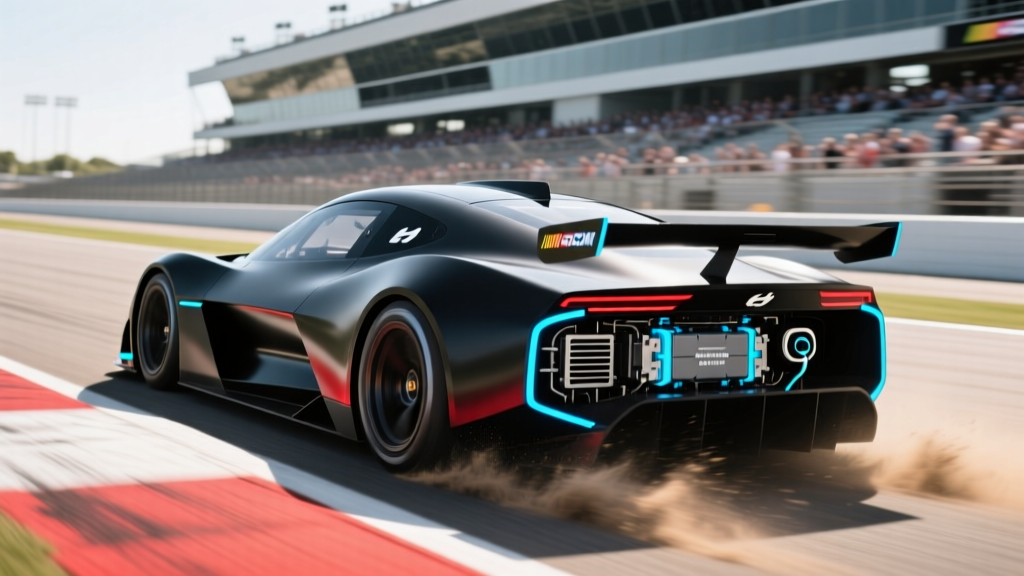
NASCAR unveiled its electric prototype at the 2023 Chicago Street Race weekend, a compact crossover-style body riding on a tube-frame chassis with a multi-motor all-wheel-drive layout. The organization has been coy about exact specifications, but confirmed details include a battery pack north of 70 kWh, combined output in the 1,000–1,300 HP range, and a target weight near 4,000 lbs. The prototype has run demonstration laps at tracks including Watkins Glen and the LA Coliseum, but it is not a race-legal competitor — NASCAR's Cup Series remains powered by 5.86-liter V8 engines producing roughly 670 HP through at least the 2027 season.
The prototype's purpose is threefold: (1) attract EV-adjacent manufacturers like Hyundai, which joined the prototype program and already sells the Ioniq 5 N performance EV; (2) develop extreme-duty thermal management and cell-cooling strategies; and (3) serve as a marketing bridge to younger, EV-aware fans. NASCAR CEO Jim France has publicly stated the sport is "exploring electrification" but has committed to keeping internal-combustion racing as the core product for the foreseeable future.
How NASCAR's EV Tech Compares to Production Performance EVs
The engineering challenges NASCAR faces — sustained high-speed discharge, brutal regenerative-braking heat, rapid pit-stop charging — are the same challenges production EV buyers encounter on track days, road trips, and cold-weather commutes. Here's how today's closest production EVs stack up against the NASCAR prototype's known targets:
| Spec | NASCAR Prototype (Est.) | Tesla Model S Plaid | Hyundai Ioniq 5 N | Porsche Taycan Turbo GT |
|---|---|---|---|---|
| Powertrain | Tri-motor AWD | Tri-motor AWD | Dual-motor AWD | Dual-motor AWD |
| Horsepower | ~1,000–1,300 HP | 1,020 HP | 601 HP (640 N Grin Boost) | 1,019 HP (Launch Control) |
| 0–60 mph | ~2.5 sec (est.) | 1.99 sec | 3.4 sec (3.25 NGB) | 2.1 sec |
| Battery (usable) | ~70+ kWh | 95 kWh (NMC) | 84 kWh (NMC) | 97 kWh (NMC, Performance Battery Plus) |
| EPA Range | N/A (race config) | 396 mi | 221 mi | 276 mi |
| Peak DC Charge | TBD (targeting ultra-fast) | 250 kW (CCS/NACS) | 238 kW (CCS) | 320 kW (NACS adapter) |
| 10–80% DC Charge | ~15 min (target) | ~27 min | ~18 min | ~18 min |
| Base MSRP (2026) | Not for sale | $89,990 | $67,500 | $230,700 |
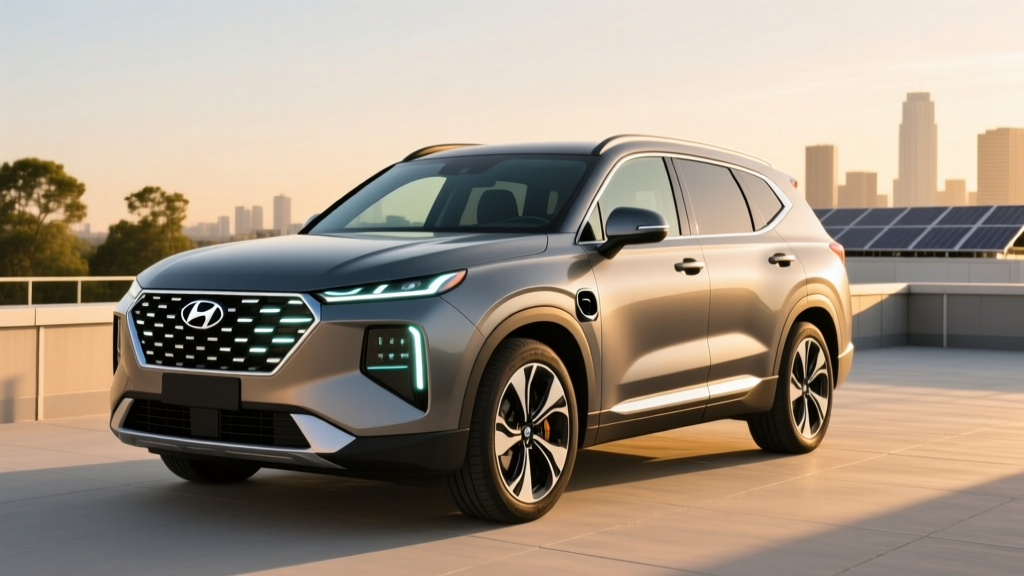
The Hyundai Ioniq 5 N deserves special attention here. Hyundai is NASCAR's prototype partner, and the Ioniq 5 N is the closest thing to a "street-legal NASCAR EV philosophy" — an EV engineered explicitly for track abuse with advanced thermal management, simulated gear shifts (N e-Shift), and sustained high-power output without the derating that plagues lesser EVs on a hot lap. On a real road course, the Ioniq 5 N can sustain full power for multiple laps before thermal management intervenes, a direct benefit of the kind of cooling R&D NASCAR's prototype program accelerates.
Real Costs: What a Performance EV Actually Costs to Own
If NASCAR's electric future inspires you to buy a performance EV today, the economics look very different from a NASCAR V8 — and from a mainstream commuter EV. Here's a realistic 5-year cost breakdown for the Hyundai Ioniq 5 N versus a comparable gas performance car (the BMW M3 Competition, ~$78,800 MSRP, 16 city / 23 hwy MPG):
| Cost Category (5 Years / 75,000 mi) | Hyundai Ioniq 5 N | BMW M3 Competition (Gas) |
|---|---|---|
| Purchase Price (MSRP) | $67,500 | $78,800 |
| Federal §30D Tax Credit | $0 (income/MSRP/sourcing rules — Ioniq 5 N assembled in Korea, likely ineligible in 2026) | $0 |
| Fuel / Electricity | ~$4,200 (home L2 avg $0.14/kWh, ~3.0 mi/kWh) | ~$10,500 ($3.70/gal avg, 19 MPG combined) |
| Maintenance (brakes, fluids, tires) | ~$2,800 (regen saves brakes; tires are the big cost) | ~$5,500 (oil, brakes, belts, more tire wear) |
| Insurance (avg annual) | ~$2,400/yr ($12,000 total) | ~$2,200/yr ($11,000 total) |
| Estimated 5-Year Total Cost | ~$86,500 | ~$105,800 |
| Cost Per Mile | ~$1.15/mi | ~$1.41/mi |
Key takeaways: The Ioniq 5 N saves roughly $19,300 over five years versus the M3, driven primarily by fuel savings (~$6,300) and lower maintenance (~$2,700). Insurance is slightly higher for the EV — a common pattern for performance EVs due to repair costs and parts pricing. The §30D federal tax credit is unlikely to apply to the Ioniq 5 N in 2026 because of its Korean assembly and battery-sourcing requirements under current IRS rules. Always verify eligibility on the IRS qualified-vehicles list before purchase.
For a more mainstream EV — say, a Tesla Model 3 Long Range ($42,490, 363 mi EPA, ~$540/yr insurance) — the 5-year savings versus a gas equivalent (Toyota Camry V6, ~30 MPG combined) can exceed $12,000 when home charging is available and the federal credit applies.
Real-World Ownership: What NASCAR Fans Should Know Before Going EV
EPA Sticker vs. Reality
Performance EVs lose range fast when driven hard. The Ioniq 5 N's 221-mile EPA rating assumes mixed driving at moderate speeds. On a track day with repeated full-power laps, expect effective range to drop below 80 miles before needing a charge. On a 70-mph highway road trip, expect ~180–195 miles in mild weather and ~150–165 miles in sub-30°F cold (battery chemistry slows, cabin heating draws power, and no heat pump is standard on all trims). The Model S Plaid fares better at ~320–340 highway miles mild, ~270–290 cold.
Home charging is non-negotiable for performance EV ownership. A Level 2 home charger (240V, 40–48 amps / 9.6–11.5 kW) adds roughly 25–35 miles of range per hour and fully replenishes a performance EV overnight. Installation costs range from $500–$1,500 if your panel has capacity, to $2,500–$5,000+ if you need a 200-amp panel upgrade. Without home charging, owning a performance EV becomes an exercise in public-charger logistics — and DC fast-charging at 250 kW costs roughly $0.35–$0.50/kWh at networks like Electrify America, erasing much of the fuel-cost advantage.
Cold climate? If you live where winters regularly drop below 20°F, plan for 25–35% range loss versus the EPA sticker. Preconditioning the battery (warming it while plugged in before driving) mitigates this and also enables faster DC charging — a cold battery at a fast charger may peak at just 50–80 kW instead of its rated 238–320 kW until it warms up.
Common Misconceptions About NASCAR, EVs, and Performance
| Myth | Fact |
|---|---|
| "NASCAR is going fully electric in 2026." | False. NASCAR's Cup Series continues with V8 engines. The electric prototype is a demonstration and R&D vehicle, not a 2026 race competitor. |
| "EVs can't handle sustained high-speed driving." | Modern performance EVs like the Taycan Turbo GT and Ioniq 5 N use advanced liquid-cooling to sustain high power output for extended periods. The Ioniq 5 N specifically was engineered for track-day durability. |
| "EVs are always cheaper to own." | Not always. Performance EVs carry higher insurance, premium tire costs, and potential battery-out-of-warranty replacement risk ($15,000–$25,000). Savings depend on driving patterns, electricity rates, and whether you qualify for tax credits. |
| "NASCAR's EV will be a Tesla." | NASCAR's prototype uses a bespoke tube-frame chassis, not a production EV platform. Hyundai is the primary OEM partner, and any future production tie-in would likely use Hyundai's E-GMP or next-gen platform. |
| "Electric means silent racing." | NASCAR has acknowledged that fan experience — including sound — is a major consideration. Any future EV racing series would likely incorporate enhanced audio or accept a fundamentally different sensory experience. |
Decision Framework: Should NASCAR's Electric Push Influence Your Next Car?
Choose a Performance EV (Ioniq 5 N, Model S Plaid, Taycan) If:
- You have reliable Level 2 home charging (or can install it for $500–$5,000)
- Your daily commute is under 80 miles round-trip, with occasional road trips
- You value instant torque, low center of gravity, and near-silent acceleration
- You live in a moderate or warm climate, or can accept 25–35% winter range loss
- You want to future-proof against rising gas prices and potential ICE restrictions
Stick With Gas or Hybrid Performance (BMW M3, Corvette, Mustang) If:
- You lack home charging access and public DC chargers are sparse in your area
- You regularly drive 300+ miles in a single day and can't afford 20–30 minute charge stops
- You live in extreme cold (regularly below 0°F) where EV range loss is severe
- You do frequent track days and don't want to manage battery thermal limits between sessions
- Your budget is below $50,000 and you need a practical daily driver first
Consider a PHEV (BMW XM, Porsche Cayenne E-Hybrid) If:
- You want electric-only commuting (20–40 miles) with gas-engine range for road trips
- You're not ready to commit to full EV infrastructure
- You want performance-car power with a safety net for charging deserts
Frequently Asked Questions
When will NASCAR actually race electric cars?
NASCAR has not announced a firm date for EV competition in its top series. Industry analysts expect a demonstration or support series no earlier than 2028–2030, with the Cup Series remaining V8-powered through at least 2027. The ARCA Menards Series or a new EV-specific support series are the most likely entry points.
Can I buy the NASCAR electric prototype?
No. The prototype is a one-off demonstration vehicle owned by NASCAR and its OEM partners. It is not homologated for road use and has no production variant planned. The closest consumer equivalent from NASCAR's prototype partner (Hyundai) is the Ioniq 5 N at $67,500 MSRP.
Does NASCAR's EV program affect federal tax credits for my EV purchase?
No. NASCAR's racing programs have no bearing on IRS §30D tax credit eligibility. Credit eligibility depends on the vehicle's MSRP (≤$55,000 sedans, ≤$80,000 SUVs/trucks/vans), your adjusted gross income (≤$150,000 single / ≤$300,000 joint), battery critical-mineral sourcing, and North American final assembly. The Hyundai Ioniq 5 N, for example, is assembled in Korea and is unlikely to qualify in 2026.
Will NASCAR's EV tech make production EVs charge faster?
Indirectly, yes. NASCAR's prototype program pushes extreme-duty battery cooling and high-C-rate discharge/charge cycles. Lessons from this R&D — particularly in cell chemistry durability under thermal stress — feed into OEM road-car programs. Hyundai's next-gen E-GMP platform (expected 2027+) will likely benefit from this work, potentially offering sustained 350+ kW charging and improved track-day durability.
How does a performance EV's insurance compare to a gas equivalent?
Performance EVs typically cost 10–25% more to insure than equivalent gas performance cars, according to industry data. The Tesla Model S Plaid averages ~$3,200/year nationally; the BMW M3 averages ~$2,600/year. Higher EV premiums reflect expensive battery replacement risk, specialized repair requirements, and higher parts costs. Always get quotes before purchasing — IIHS safety ratings can help you assess which models insurers favor.
What's the real-world range of the Ioniq 5 N on a road trip?
The EPA rates the Ioniq 5 N at 221 miles. On a 70-mph highway in 70°F weather with moderate A/C, expect roughly 185–200 miles before needing to charge. In 25°F weather with cabin heat, expect 155–170 miles. At a 238 kW DC fast charger, a 10–80% session takes approximately 18 minutes when the battery is preconditioned — but add 5–10 minutes if arriving cold. Plan road-trip legs around 150-mile intervals for comfort.
The Bottom Line for EV Shoppers
NASCAR's electric prototype is a technology statement, not a showroom car. But the engineering it validates — high-power electric drivetrains, extreme thermal management, rapid DC charging under load — is already available in production EVs you can buy today. The Hyundai Ioniq 5 N, born from the same OEM partnership that built NASCAR's prototype, offers genuine track capability at $67,500 with 221 miles of EPA range and 18-minute fast charging. The Tesla Model S Plaid delivers 1,020 HP and 396 miles of range at $89,990. Neither is cheap, but both prove that the performance-EV future NASCAR is previewing has already arrived — it just costs real money, requires real charging infrastructure, and demands honest expectations about range, insurance, and cold-weather reality. If you've got home charging, a moderate climate, and the budget, a performance EV in 2026 is a genuinely compelling ownership experience. If you don't, a hybrid or gas performance car remains the pragmatic choice — and that's fine, too.