The Short Answer on NASCAR Electric Cars
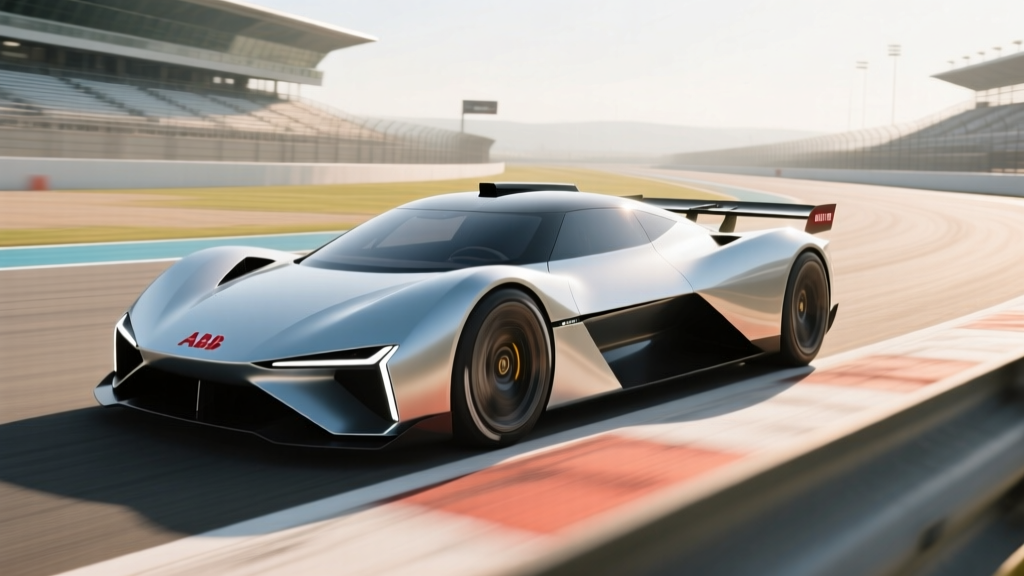
NASCAR's electric racing future centers on the ABB FIA eTouring Car World Cup partnership and internal electrification exploration. As of 2026, NASCAR's top Cup Series still runs V8 combustion engines, but the organization has tested hybrid prototypes and is actively evaluating fully electric stock cars. For everyday EV buyers, the real takeaway isn't about racing — it's that motorsport-driven battery and thermal-management R&D accelerates the same fast-charging and durability tech showing up in consumer EVs today.
Where NASCAR Electric Cars Actually Stand in 2026
Search for "NASCAR electric cars" and you'll find a tangle of rumors, concept renders, and legitimate developments. Here's what's confirmed: NASCAR has not announced a fully electric Cup Series replacement. What they have done is pursue a multi-pronged electrification strategy:
- Next Gen Hybrid Prototype (tested): NASCAR has evaluated a hybrid-assist system for the Cup Series using a regenerative braking unit paired with the existing 5.86L pushrod V8. This system recovers energy under braking and deploys it as a short electric boost — similar in concept to Formula 1's MGU-K, though far less complex.
- ABB eTouring Car Alignment: NASCAR's parent company and partners have explored aligning with electric touring car racing, where purpose-built EV sedans race on street circuits. These cars typically run 65–80 kWh battery packs with 350–450 kW (470–600 hp) outputs.
- EV Demonstrations: NASCAR has run electric vehicle demonstrations at select race weekends, showcasing consumer EVs from manufacturers like Ford (Mustang Mach-E) and Chevrolet (Blazer EV) — brands that also field Cup Series entries.
The gap between a 3,400-pound Cup car running 900 miles on a Sunday and a battery-electric equivalent remains substantial. But the engineering lessons from electric motorsport filter down to the EVs you can actually buy.
Racing Tech That Shows Up in Your EV
Motorsport has always served as an R&D accelerator for production vehicles. Electric racing is no different. Here's how NASCAR-adjacent EV tech development connects to consumer cars:
| Technology Area | Racing Application | Consumer EV Equivalent (2026) |
|---|---|---|
| Thermal Management | Active liquid cooling to sustain 400+ kW discharge over 45-minute races | Hyundai Ioniq 5 N: Track-capable battery cooling sustains peak output for multiple laps without thermal derating |
| Fast Charging | Pit-stop charging at 600 kW in Formula E Gen3 testing | Consumer DC fast charging now peaks at 350 kW (e.g., Porsche Taycan, Lucid Air); 800V architectures becoming mainstream |
| Regenerative Braking | Up to 300 kW regen capture under heavy braking | One-pedal driving in production EVs recovers 50–100 kW; extends real-world range 10–20% in stop-and-go traffic |
| Battery Chemistry | High C-rate NMC cells optimized for power density | Consumer NMC cells now sustain 2C+ charge rates; LFP gaining ground for longevity (Ford, Tesla standard-range models) |
| Structural Packs | Cell-to-chassis designs for rigidity and weight savings | Tesla 4680 structural pack, BYD Cell-to-Body, GM Ultium cell-to-pack integration |
The Real Cost Comparison: EV vs Gas for Daily Drivers
NASCAR fans considering their first EV often ask whether the economics actually work. Forget racing budgets — here's what ownership looks like for a real buyer comparing a popular electric SUV against its gas counterpart over five years.
| Cost Category (5-Year / 75,000 Miles) | EV: Hyundai Ioniq 5 SEL AWD ($48,600 MSRP) | Gas: Toyota RAV4 XLE AWD ($33,425 MSRP) |
|---|---|---|
| Purchase Price (after §30D credit) | $41,100 (assuming full $7,500 point-of-sale credit) | $33,425 |
| Fuel / Electricity | $3,375 (at $0.15/kWh home charging, 3.0 mi/kWh) | $7,500 (at $3.50/gal, 28 MPG combined) |
| Maintenance | $1,500 (cabin filter, tire rotation, brake fluid) | $3,750 (oil changes, filters, spark plugs, transmission fluid) |
| Insurance (avg) | $9,000 ($150/mo avg — EVs typically 15–25% more) | $7,200 ($120/mo avg) |
| Estimated Depreciation | $18,500 (~45% over 5 years) | $14,000 (~42% over 5 years) |
| 5-Year Total Cost of Ownership | $73,475 | $65,875 |
Sources: EPA fueleconomy.gov, IRS §30D credit rules, Kelley Blue Book depreciation estimates. Actual costs vary by state, driving habits, and electricity rates.
The EV costs more upfront even after the federal tax credit, but fuel and maintenance savings close the gap by roughly $7,600 over five years. The remaining difference is primarily depreciation — a factor that's improving as the used EV market matures and battery longevity data strengthens buyer confidence.
What First-Time EV Buyers Should Actually Know
If the idea of NASCAR going electric got you curious about EVs, here's the practical foundation you need before shopping:
Home Charging Is the Make-or-Break Factor
Over 80% of EV charging happens at home. A Level 2 home charger (240V, 32–48 amps) adds roughly 25–35 miles of range per hour and costs $800–$2,500 installed, depending on whether your electrical panel needs an upgrade. If you can't install a home charger — apartment dwellers, street parkers — public DC fast charging becomes your primary fueling method, which costs 2–3× more per mile than home charging and adds wear to the battery from repeated high-power sessions.
EPA Range vs. Real-World Range
The EPA range sticker is tested under mixed conditions at moderate temperatures. In real-world highway driving at 70+ mph, expect 85–90% of the EPA figure. In freezing temperatures (below 32°F), range drops 20–35% depending on whether the vehicle has a heat pump. A car rated at 300 miles EPA may deliver 210 miles on a cold winter highway trip. Always plan road trips around worst-case range, not best-case.
Charging Speed: kW Is Not the Whole Story
Peak charge rate (say, 240 kW) only tells part of the story. What matters is the charge curve — how long the car sustains that peak rate before tapering. Most EVs charge fastest between 10–50% state of charge, then progressively slow above 80% to protect battery health. A "240 kW" vehicle might average only 120 kW across a full 10–80% session. Look for 10–80% charge times (typically 18–30 minutes for modern EVs on 350 kW chargers) rather than peak kW figures.
Federal Tax Credit Rules (2026)
The §30D clean vehicle credit offers up to $7,500, but eligibility depends on multiple requirements that change annually:
- MSRP caps: $80,000 for SUVs/pickups/vans, $55,000 for sedans
- Buyer income caps: $150,000 single / $300,000 joint adjusted gross income
- Battery sourcing: Increasingly strict critical-mineral and battery-component requirements tied to North American sourcing
- Point-of-sale transfer: You can apply the credit as a down payment reduction at the dealer rather than waiting for tax filing
Always verify current eligibility on IRS.gov before purchasing — a vehicle that qualified in 2025 may not qualify in 2026 as sourcing thresholds tighten.
Common NASCAR-to-EV Misconceptions, Corrected
| Myth | Fact |
|---|---|
| "If NASCAR goes electric, EVs must be ready for 500-mile races." | NASCAR Cup races demand sustained 200+ mph speeds for 3+ hours. Current battery energy density can't match a 18-gallon fuel tank for that use case. But consumer driving averages 39 miles/day — well within any modern EV's range. |
| "Electric race cars are slow." | Formula E Gen3 cars hit 200 mph. The Volkswagen ID.R set the Pikes Peak record at 7:57. Electric motors deliver instant torque — 0–60 mph in under 2 seconds for top-tier EVs. |
| "EV batteries won't last." | Modern NMC and LFP batteries are warrantied for 8 years/100,000 miles at 70% minimum capacity retention. Real-world data from Tesla, Nissan, and Chevrolet shows most packs retain 85–90% capacity at 100,000 miles. Full replacement (rare) costs $5,000–$20,000 depending on pack size. |
| "EVs are worse in cold weather." | Range drops are real (20–35% in deep cold), but EVs start instantly in any temperature, don't need warm-up idling, and vehicles with heat pumps (standard on many 2026 models) significantly reduce cabin-heating energy draw. |
| "There aren't enough chargers." | As of early 2026, the U.S. has over 70,000 public charging ports including 40,000+ DC fast chargers. Coverage is strong along interstates and in metro areas, though rural gaps persist in the Mountain West and parts of the South. |
Decision Framework: Is an EV Right for You?
Choose an EV if:
- You have access to home or workplace Level 2 charging
- Your daily commute is under 80 miles round-trip (covers 90%+ of U.S. drivers)
- You want to eliminate oil changes, spark plugs, and transmission service
- You qualify for the §30D tax credit, bringing effective price closer to a gas equivalent
- You value instant torque, quiet operation, and one-pedal driving in traffic
Choose a Hybrid (HEV) or Plug-in Hybrid (PHEV) if:
- You regularly drive 300+ miles in rural areas with sparse DC fast-charger coverage
- You lack reliable home charging access
- You want EV-like city efficiency without any range planning
- Your budget is under $30,000 (hybrids like the Toyota Prius at $28,350 offer 57 MPG combined with no charging needed)
Stick with Gas for Now if:
- You tow heavy loads (8,000+ lbs) regularly — EV towing range drops 40–50%
- You live in extreme cold (sustained sub-zero temps) without a garage
- Your apartment or street parking situation makes charging impractical with no near-term solution
Frequently Asked Questions
Will NASCAR ever go fully electric?
NASCAR has not announced a timeline for a fully electric Cup Series. The organization is exploring hybrid assist technology first, which is a more practical bridge given the 500-mile race distances, 200+ mph speeds, and the cultural expectations of stock car fans. A fully electric top-tier series would require either dramatically shorter races, mid-race charging stops, or a major leap in battery energy density.
What EV does NASCAR currently use?
NASCAR doesn't field electric race cars in its national series. However, the organization has used EVs as pace vehicles and fan-experience demonstrators at tracks — including the Ford Mustang Mach-E and Chevrolet Blazer EV. NASCAR's connection to electric racing is more about manufacturer alignment and R&D observation than direct competition.
How much would an electric NASCAR-style car cost to build?
A competitive electric touring car (similar to what an electric NASCAR might look like) costs roughly $500,000–$800,000 per vehicle, driven largely by the custom battery pack and power electronics. For context, a current Next Gen Cup car costs approximately $300,000–$400,000. The price gap is primarily in battery cells and the thermal management system needed to sustain high power output.
Can I buy a car with NASCAR-level EV performance?
The closest consumer equivalent to a track-capable electric performance car is the Hyundai Ioniq 5 N ($66,300 MSRP, 641 hp with N Grin Boost, 0–60 in 3.25 seconds). It features active battery thermal management that allows sustained track use — technology directly informed by Hyundai's motorsport programs. It's not a stock car, but it's the most race-derived EV you can buy for under $70,000.
Do electric cars make good daily drivers for NASCAR fans who drive trucks?
If you're coming from a truck, the electric pickup segment has matured significantly. The Ford F-150 Lightning (EPA range up to 320 miles, starting around $55,000 before credits) and Rivian R1T (up to 420 miles EPA, starting ~$70,000) offer genuine truck utility with EV economics. Towing capacity remains a compromise — expect range to drop roughly 40–50% when towing at capacity. For daily driving without a trailer, these trucks are efficient, powerful, and practical.