The Short Answer: NASA's EV Connection
NASA doesn't manufacture consumer electric vehicles, but its battery and power-management research has directly shaped the EVs you can buy today. NASA-funded work on lithium-ion cell stability, thermal management, and solid-state electrolytes has filtered into commercial battery supply chains through partnerships with companies like NASA's Glenn Research Center and Department of Energy national labs. For buyers in 2026, the practical takeaway is that NASA-origin advances in energy density and thermal safety are now standard in NMC and emerging solid-state packs — but they don't change the fundamental buying decision: match the vehicle's EPA range, charging speed, and total cost to your actual driving pattern.
How NASA Battery Research Reached Your Driveway
NASA's involvement in electric propulsion stretches back decades, but the most relevant work for today's EV buyers centers on three areas:
- Lithium-ion cell safety and energy density: NASA Glenn Research Center developed advanced diagnostic methods for detecting lithium plating and dendrite formation — the failure modes that cause battery fires. These diagnostic protocols were adopted by cell manufacturers and are now embedded in the battery management systems (BMS) of vehicles from Tesla, Hyundai, and GM.
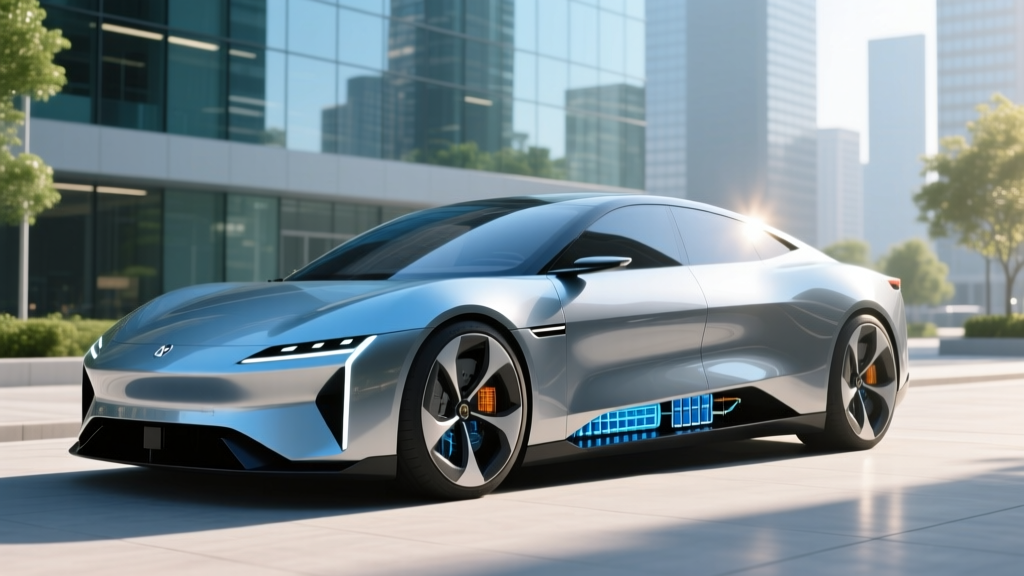
- Thermal management under extreme conditions: NASA's work on phase-change materials and active cooling for spacecraft batteries directly informed the liquid-cooling architectures now standard in most 2026 EVs. Without this, fast-charging at 250+ kW would cause unacceptable thermal degradation.
- Solid-state and advanced chemistry: NASA continues to fund solid-state electrolyte research, with recent grants supporting sulfide- and polymer-based cells. While solid-state EVs remain largely in pilot production (Toyota's bZ4X successor is expected to use a semi-solid pack), NASA's early-stage work reduces the timeline to commercial viability.
The key point for buyers: NASA research improves the components inside your EV's battery pack — it doesn't create a special "NASA-certified" vehicle. Any marketing that implies otherwise is misleading.
What This Means for 2026 EV Range and Charging
The battery technologies that benefited from NASA and DOE research are now table stakes in the EV market. Here's what a well-equipped 2026 EV actually delivers, with real-world caveats:
| Spec | 2026 Typical Mid-Size EV (e.g., Hyundai Ioniq 6 SE LR) | Real-World Expectation |
|---|---|---|
| EPA Range | 361 mi | ~290–310 mi highway at 70 mph; ~250 mi in cold (below 32°F) |
| Battery Capacity | 77.4 kWh (NMC) | Usable: ~74 kWh (buffer protects longevity) |
| Peak DC Fast Charge | 233 kW | Sustained ~180 kW to 50% SoC, tapering to ~60 kW above 80% |
| 10–80% Charge Time | ~18 minutes (ideal) | ~22–25 minutes in practice (depends on charger output, battery temp) |
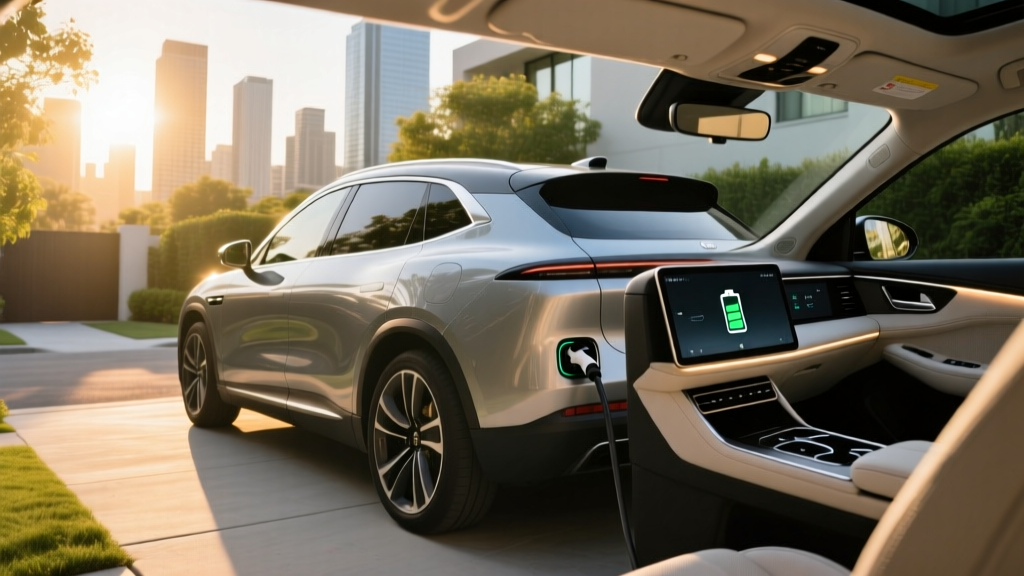
| Level 2 Home Charge | 10.9 kW (48A) | ~30 mi of range per hour; full charge in ~7.5 hours |
| Efficiency | 140 MPGe combined | ~3.8 mi/kWh highway; ~4.2 mi/kWh city with regen |
Real-World Range Reality: EPA estimates assume mixed city/highway driving at moderate temperatures. On a 75°F day at 65 mph, you'll hit close to the EPA sticker. At 75 mph on the interstate, expect a 15–20% reduction. In sub-freezing weather with cabin heat running, plan for 25–35% range loss. Preconditioning the battery before DC fast charging recovers some of this by warming cells to optimal temperature.
EV vs. Gas vs. Hybrid: The Numbers That Matter
Whether NASA tech is inside the battery or not, the buying decision still comes down to total cost and driving fit. Here's a concrete comparison using a mid-size sedan platform over 5 years / 75,000 miles:
| Cost Factor | 2026 EV (e.g., Ioniq 6 SE, $42,000 MSRP) | 2026 Hybrid (e.g., Toyota Camry Hybrid, $33,000) | 2026 Gas (e.g., Honda Accord 1.5T, $32,000) |
|---|---|---|---|
| Purchase Price (after incentives) | ~$34,500 (with $7,500 §30D credit, if eligible) | $33,000 (no federal credit) | $32,000 |
| Fuel/Energy (75k mi) | ~$3,900 ($0.13/kWh home charging) | ~$5,800 (52 MPG combined, $3.40/gal) | ~$8,500 (33 MPG combined, $3.40/gal) |
| Maintenance (5 yr) | ~$1,800 (tires, cabin filter, wipers, brake fluid) | ~$3,200 (oil, filters, brakes, belts) | ~$3,800 (oil, filters, brakes, belts, spark plugs) |
| Insurance (avg annual) | ~$2,100/yr ($10,500 total) | ~$1,600/yr ($8,000 total) | ~$1,500/yr ($7,500 total) |
| 5-Year Total Cost | ~$50,700 | ~$50,000 | ~$51,800 |
Key takeaway: The EV's higher insurance premiums (typically 25–40% above gas equivalents due to repair costs and battery replacement risk) offset much of the fuel savings. The EV wins on operating cost only if you charge primarily at home at residential rates. Public DC fast charging at $0.35–$0.50/kWh pushes energy costs close to hybrid territory.
For buyers without home charging access, a hybrid like the Camry (52 MPG combined, no range anxiety, no charging dependency) often makes more financial sense in 2026.
The Real Costs of EV Ownership Nobody Advertises
NASA-derived battery tech makes today's EVs safer and longer-lasting, but ownership still comes with costs that marketing materials omit:
Home Charging Installation
A Level 2 home charger (240V, 48A) requires a dedicated 60A circuit. Installation costs vary dramatically:
- Simple install (panel nearby, no upgrade): $500–$1,200
- Moderate install (100+ ft conduit run, subpanel): $1,500–$3,000
- Panel upgrade required (200A service upgrade): $3,000–$5,500
The federal §30D tax credit does not cover home charger installation. A separate Residential Clean Energy Credit may cover up to 30% of charger equipment and installation costs through 2032, but eligibility depends on your tax situation — consult a tax professional.
Battery Degradation and Replacement
Modern NMC and LFP packs lose roughly 1–2% capacity per year under normal use. By year 8, expect 85–92% of original capacity. Federal law mandates a minimum battery warranty of 8 years/100,000 miles with at least 70% capacity retention. Out-of-warranty replacement for a 77 kWh pack runs $12,000–$18,000 in 2026 — rare, but a real risk for high-mileage or second-owner buyers.
Tire Wear
EVs are 15–25% heavier than gas equivalents and deliver instant torque. Expect tire replacement every 25,000–35,000 miles (vs. 40,000–55,000 for gas cars). Budget $800–$1,400 per set for EV-rated tires.
Common EV Misconceptions — Fact-Checked
| Myth | Fact |
|---|---|
| "NASA makes electric cars" | NASA funds battery and materials research adopted by commercial manufacturers. No NASA-branded EV exists. |
| "EV batteries need replacing every 5 years" | Most 2026 packs retain 85–92% capacity at year 8. Warranty covers defects and excessive degradation for 8 yr/100k mi. |
| "You'll save $10,000+ over gas" | Savings depend on electricity cost, driving miles, and insurance. Realistic 5-year savings: $0–$3,000 for most buyers with home charging. |
| "The $7,500 tax credit applies to everyone" | The §30D credit has income caps ($150k single / $300k joint), MSRP caps ($55k cars / $80k SUVs/trucks), and battery-sourcing requirements. Many popular EVs qualify for only partial credit or none. Check fueleconomy.gov for current eligibility. |
| "Fast charging damages the battery" | Modern BMS and liquid cooling (tech that traces back to NASA thermal research) manage heat effectively. Occasional DC fast charging causes negligible extra degradation vs. Level 2. Daily 100% charges and extreme heat exposure are the real culprits. |
| "EVs don't work in cold weather" | They work, but range drops 25–35% below freezing. A heat pump (standard on most 2026 EVs) recovers 10–15% of that loss. Preconditioning while plugged in minimizes the hit. |
Decision Framework: Should You Buy an EV in 2026?
Choose a full EV if:
- You have reliable home charging (garage or driveway with 240V access)
- Your daily driving is under 80 miles round-trip
- You take fewer than four road trips over 250 miles per year (or don't mind 20–30 min charging stops)
- You qualify for the §30D credit (check income, MSRP, and sourcing rules on IRS.gov)
- You value low operating costs and can absorb higher insurance premiums
Choose a plug-in hybrid (PHEV) if:
- You have home charging but regularly drive 150+ miles in a day
- You want electric-only commuting (25–45 mi range) with gas backup for road trips
- You live in an area with sparse DC fast-charging infrastructure
Choose a conventional hybrid (HEV) if:
- You lack home charging access (apartment, street parking)
- You want maximum range flexibility with no charging dependency
- Your budget is under $35,000 and you want the lowest total cost of ownership
Wait on an EV if:
- Your current gas car is paid off, gets 30+ MPG, and you drive under 10,000 miles/year — the math doesn't justify the switch yet
- You're considering a solid-state battery EV — these are announced but not widely available in 2026; expect broader selection in 2028–2029
What a First-Time EV Buyer Must Know Before Signing
- kW vs. kWh — know the difference. kW (kilowatts) measures power — how fast you charge. kWh (kilowatt-hours) measures energy — your battery's capacity. A 77 kWh battery charging at 233 kW is like a 20-gallon tank filling at 5 gallons per minute.
- Test-charge before you buy. Visit a DC fast charger near your home during your test drive. Confirm the charging curve (peak speed, taper behavior) matches the manufacturer's claims. Apps like PlugShare show real charger reliability scores.
- Verify tax credit eligibility yourself. Don't rely on dealer assurances. Check the VIN against fueleconomy.gov's credit database, confirm your income is under the cap, and verify whether you'll take the credit at point-of-sale or on your tax return.
- Get an insurance quote before purchase. EV insurance premiums can be 25–40% higher than equivalent gas cars. Get a binding quote from your insurer for the exact trim you're buying.
- Plan your home charging before delivery. Schedule an electrician estimate at least 4 weeks before your delivery date. If a panel upgrade is needed, lead times can stretch to 8–12 weeks.
Frequently Asked Questions
Does NASA manufacture electric vehicles?
No. NASA conducts battery, thermal management, and power electronics research that has been adopted by commercial EV manufacturers and cell suppliers. NASA's Glenn Research Center and partnerships with DOE national labs have contributed to lithium-ion safety standards, thermal management architectures, and solid-state electrolyte development — all of which are inside the EVs you can buy today, but under commercial brand names.
Are EVs with NASA-derived technology more expensive?
No. NASA research contributions are embedded across the entire EV market — from a $30,000 Chevrolet Equinox EV to a $90,000 Tesla Model S. The technology is in the battery cell design and management systems, not a premium feature you pay extra for.
How much does it cost to charge an EV at home vs. gas?
At the US average residential rate of ~$0.16/kWh (2026), charging a 77 kWh battery from 10% to 90% costs roughly $10 — yielding about 250 miles of range. The equivalent gas car (33 MPG) needs ~7.5 gallons at $3.40/gal = ~$25.50. That's a per-mile energy cost of $0.04 (EV at home) vs. $0.10 (gas). Public DC fast charging at $0.40/kWh narrows the gap to ~$0.09/mile.
Will solid-state batteries from NASA research be available soon?
Solid-state batteries are in limited pilot production. Toyota has announced a semi-solid-state pack for a future model, and several startups (QuantumScape, Solid Power) are in validation phases. Broad commercial availability in mainstream EVs is expected around 2028–2030. For a 2026 purchase, today's NMC and LFP packs are mature, well-warranted, and offer 250–370 miles of EPA range.
What's the best EV for someone who lives in an apartment without charging?
Without home charging, a full EV is challenging unless your workplace offers Level 2 charging or you have reliable public chargers within 5 minutes of home. In this situation, a plug-in hybrid (like the Toyota RAV4 Prime, 42 mi electric-only range) or conventional hybrid (Toyota Camry Hybrid, 52 MPG) is the practical choice. You get meaningful fuel savings without charging dependency.