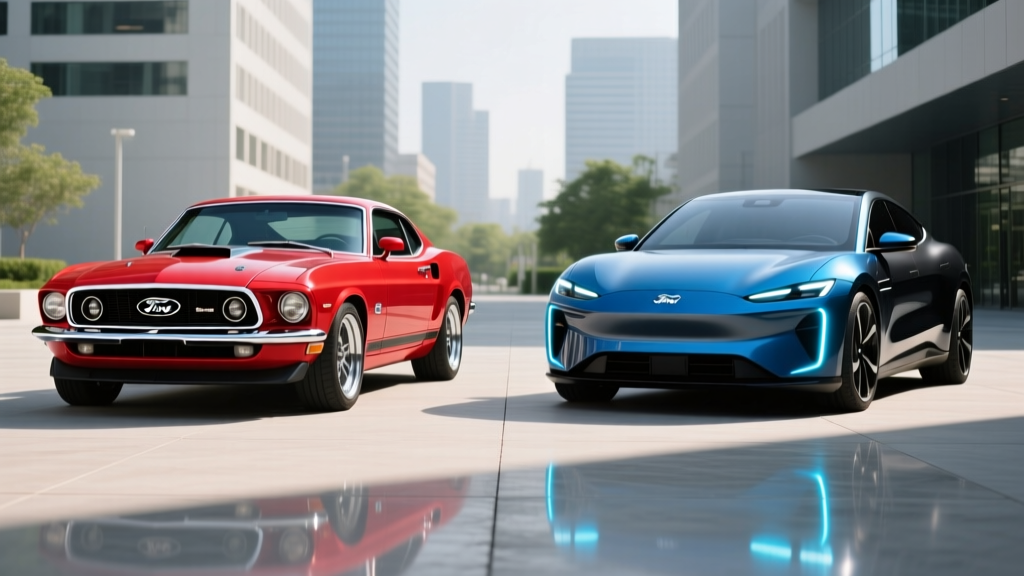
The Legend and the Lightning: Why Compare a 1969 Mach One to the 2026 Mach-E?
Search for "ford mustang mach one 1969" and you'll find one of the most iconic muscle cars ever built — a 7.0L Cobra Jet V8, 335 horsepower (gross), and a 0-60 mph time around 5.5 seconds in its day. Fast-forward to 2026, and Ford's electric Mustang Mach-E GT delivers 480 horsepower, a 3.5-second 0-60, and zero tailpipe emissions. This isn't just nostalgia — it's a real crossroads for enthusiasts deciding whether classic muscle or modern electric performance better fits their garage.
Below, we profile the 2026 Ford Mustang Mach-E GT with full EV specs, then put it head-to-head with the 1969 Mach One on the metrics that matter: acceleration, cost per mile, and daily usability. Whether you're restoring a classic or shopping for an electric daily driver, the numbers tell a story marketing brochures won't.
2026 Ford Mustang Mach-E GT: Full EV Specs at a Glance
| Spec | Value |
|---|---|
| EPA Estimated Range | 290 miles |
| Battery Capacity (Usable) | 91 kWh (NMC lithium-ion) |
| Drivetrain | Dual-motor AWD |
| Horsepower | 480 hp |
| Torque | 634 lb-ft |
| 0-60 mph | 3.5 seconds |
| Max DC Fast Charge Rate | 150 kW (peak) |
| 10-80% DC Fast Charge Time | ~38 minutes |
| Level 2 Home Charge Rate | 10.5 kW (~30 mi/hr) |
| Efficiency (Combined) | 84 MPGe / 40 kWh/100 mi |
| Cargo Volume (rear seats up) | 29.7 cu ft |
| Cargo Volume (rear seats folded) | 59.7 cu ft |
| Front Trunk (Frunk) | 4.7 cu ft |
| Base MSRP (GT Extended Range AWD) | $59,995 |
| Battery/Powertrain Warranty | 8 years / 100,000 miles |
Sources: EPA Fueleconomy.gov, Ford.com Mach-E specifications.
Real-World Range: What the EPA Sticker Doesn't Tell You
EPA Estimate: 290 miles (combined city/highway)
Real-World Highway (70-75 mph, moderate temps): ~240-260 miles
Real-World Cold Weather (below 32°F, highway): ~195-220 miles
Real-World City / Suburban: ~275-295 miles
The Mach-E GT's 290-mile EPA rating assumes a mix of city regenerative braking and moderate highway speeds. On a sustained 75-mph interstate run in 70°F weather, expect to consume roughly 42-45 kWh/100 mi, dropping effective range to around 240-260 miles before you'd want to stop at 10-15% State of Charge.
Cold weather is the bigger penalty. Lithium-ion NMC chemistry loses efficiency below freezing — cabin heating, battery thermal management, and increased rolling resistance can cut range by 25-35%. If your commute involves sub-30°F highway driving, plan for ~200 miles of usable range and rely on the Mach-E's heat pump (standard on 2026 models) to mitigate losses. Preconditioning the battery while plugged in before departure recovers significant range and enables faster DC charging.
Charging Speed: DC Fast, Level 2, and the Curve Reality
The Mach-E GT peaks at 150 kW on DC fast chargers, but like all EVs, it doesn't sustain that rate. The charge curve tapers significantly above 80% SoC to protect battery longevity. Here's what a typical charging session looks like:
| Charging Level | Power | Speed (Miles Added/Hour) | Notes |
|---|---|---|---|
| Level 1 (120V household) | ~1.4 kW | ~3-4 mi/hr | Emergency/trickle only |
| Level 2 (240V, 48A home charger) | 10.5 kW | ~30 mi/hr | Full charge in ~9 hours |
| DC Fast (150 kW peak) | 150 kW → ~90 kW avg | ~180 mi/hr (10-50%) | 10-80% in ~38 min |
| DC Fast (350 kW station) | Limited to 150 kW | Same as above | No benefit above 150 kW cap |
The 38-minute 10-80% time is competitive but not class-leading — the Hyundai Ioniq 5 and Kia EV6, with their 800V architectures, hit 10-80% in roughly 18 minutes at 350 kW chargers. For road-trippers who frequently DC-charge, this is a meaningful difference. For daily home chargers, the 10.5 kW Level 2 rate is perfectly adequate: plug in at night, wake up to a full battery every morning.
Home charging installation for a 48-amp Level 2 charger (like the Ford Charge Station Pro) typically runs $800-$2,000 including a licensed electrician, 240V circuit, and permit — assuming your panel has capacity. A 200-amp panel upgrade can add $1,500-$3,000.
Performance: Where the Mach-E GT Outruns Its Ancestor
The 1969 Mustang Mach One with the 428 Cobra Jet V8 produced 335 gross horsepower (roughly 270-290 by today's net SAE measurement) and ran 0-60 mph in approximately 5.5 seconds. The 2026 Mach-E GT produces 480 hp and 634 lb-ft of instant electric torque, hitting 60 mph in 3.5 seconds — faster than a 1969 Mach One could manage on a drag strip with slicks.
But straight-line speed isn't the whole story. The Mach-E GT's dual-motor AWD provides traction in rain and snow that a rear-wheel-drive '69 Mach One simply cannot match. The electric powertrain delivers maximum torque from 0 RPM with no gear shifts, creating an effortless, linear acceleration feel that's fundamentally different from a carbureted V8's powerband. Enthusiasts will miss the exhaust note and mechanical engagement; commuters will appreciate the silence and one-pedal driving courtesy of regenerative braking.
Pricing, Tax Credits, and Total Cost of Ownership
| Item | Amount |
|---|---|
| Base MSRP (GT Extended Range AWD) | $59,995 |
| As-Tested (w/ GT Performance Upgrade) | ~$65,000 |
| Federal §30D Tax Credit (if eligible) | Up to $7,500 |
| Effective Price (after max credit) | ~$52,495 |
Federal tax credit eligibility for the Mach-E is not automatic. Under current IRS §30D rules, you must meet all of the following:
- MSRP Cap: SUVs/vans/pickups must be ≤$80,000 MSRP — the Mach-E GT qualifies.
- Buyer Income Cap: Modified AGI ≤$150,000 (single), ≤$225,000 (head of household), ≤$300,000 (joint).
- Battery Sourcing: A percentage of critical minerals and battery components must be sourced from the US or free-trade-agreement countries. The exact credit amount ($3,750 or $7,500) depends on whether the vehicle meets both the critical-minerals and battery-component requirements for the given model year. Check the DOE/EPA qualified vehicle list for the specific VIN.
- Point-of-Sale Transfer: As of 2024+, you can transfer the credit to the dealer at purchase, reducing your out-of-pocket cost immediately — no need to wait until tax filing.
Consult a tax professional for your specific situation. Credit rules and sourcing requirements change annually.
Electricity (home L2, $0.14/kWh avg): ~$5,250 total
Gasoline equivalent (25 MPG, $3.50/gal): ~$10,500 total
Fuel savings over 5 years: ~$5,250
Maintenance savings (no oil, fewer brakes): ~$2,000-$3,000
Higher insurance premium (avg +15-20%): ~$2,500-$4,000 additional
Interior, Tech, and Daily Usability
The Mach-E's cabin is a departure from the 1969 Mach One's analog simplicity. A 15.5-inch vertical touchscreen running Ford SYNC 4A dominates the dash, supporting wireless Apple CarPlay, Android Auto, and over-the-air updates. The digital instrument cluster is configurable, and the available BlueCruise hands-free driving system (SAE Level 2) works on over 130,000 miles of pre-mapped divided highways.
BlueCruise is an SAE Level 2 driver-assistance system. It is NOT self-driving. You must remain attentive, keep your eyes on the road (monitored by a driver-facing camera), and be prepared to take over at any time. Only Level 4 services like Waymo operate without a human driver.
Passenger space is generous: 43.3 inches of front legroom and 38.9 inches in the rear — enough for adults on longer trips. The 29.7 cu ft cargo area behind the rear seats expands to 59.7 cu ft with seats folded, and the 4.7 cu ft frunk (with a drain plug — useful for tailgate ice storage) adds practical versatility the '69 Mach One never had.
Pros, Cons, and Who Should Buy the Mach-E GT
- 3.5-second 0-60 — supercar acceleration in an SUV
- 290-mile EPA range covers most daily needs
- AWD and heat pump for all-season capability
- BlueCruise hands-free highway driving
- OTA updates improve the car over time
- Frunk + spacious cargo area
- 150 kW DC fast-charge cap lags 800V rivals
- 38-minute 10-80% time slows road trips
- $60K base price before options
- Tax credit eligibility not guaranteed (sourcing rules)
- Insurance premiums 15-20% higher than ICE equivalents
- No visceral V8 sound or analog engagement
Best for: Performance-oriented commuters who want sports-car acceleration with SUV practicality, daily drivers with reliable home Level 2 charging, and families needing AWD in snow-belt states. Less ideal for: Frequent long-distance road-trippers (the 150 kW charge cap adds time), buyers without home charging access, or purists who value the mechanical soul of a 1969 Mach One.
Frequently Asked Questions
What is the real-world range of the 2026 Mach-E GT?
Expect 240-260 miles on the highway in mild weather, and as low as 195-220 miles in freezing conditions. The 290-mile EPA figure reflects a combined cycle with city regenerative braking. Plan conservatively for road trips.
How fast does the Mach-E GT charge at home and on the road?
At home on a 240V Level 2 charger, it adds ~30 miles per hour (full charge in ~9 hours). On DC fast chargers, it peaks at 150 kW and reaches 10-80% in approximately 38 minutes. It cannot take advantage of 350 kW chargers beyond its 150 kW ceiling.
How much does the Mach-E GT cost after tax credits?
The base GT Extended Range AWD starts at $59,995. If you qualify for the full $7,500 federal §30D credit (meeting income, MSRP, and battery-sourcing requirements), the effective price drops to ~$52,495. Point-of-sale transfer lets you apply this at the dealership.
Does the 2026 Mach-E qualify for the federal EV tax credit?
It can, but eligibility depends on current-year battery-sourcing compliance, your income, and the vehicle's MSRP (which is under the $80,000 SUV cap). Check the DOE qualified vehicle list for the specific model year and VIN before purchasing.
Is the Mach-E GT worth buying over competitors like the Ioniq 5 N or Tesla Model Y Performance?
The Mach-E GT offers a compelling blend of power, space, and BlueCruise tech. However, the Hyundai Ioniq 5 N charges significantly faster (800V architecture, ~18 min 10-80%), and the Tesla Model Y Performance benefits from the Supercharger network. If DC charging speed is your top priority, test-drive the Ioniq 5. If you prefer Ford's build quality and hands-free driving system, the Mach-E GT is a strong choice.
Can a 1969 Mustang Mach One be converted to electric?
Yes — several companies offer EV conversion kits for classic Mustangs, typically using Tesla drive units or aftermarket motors. Costs range from $30,000 to $60,000+ beyond the donor car's value. You gain instant torque and zero emissions but lose the original numbers-matching V8 and much of the collector value. It's a passion project, not a financial decision.