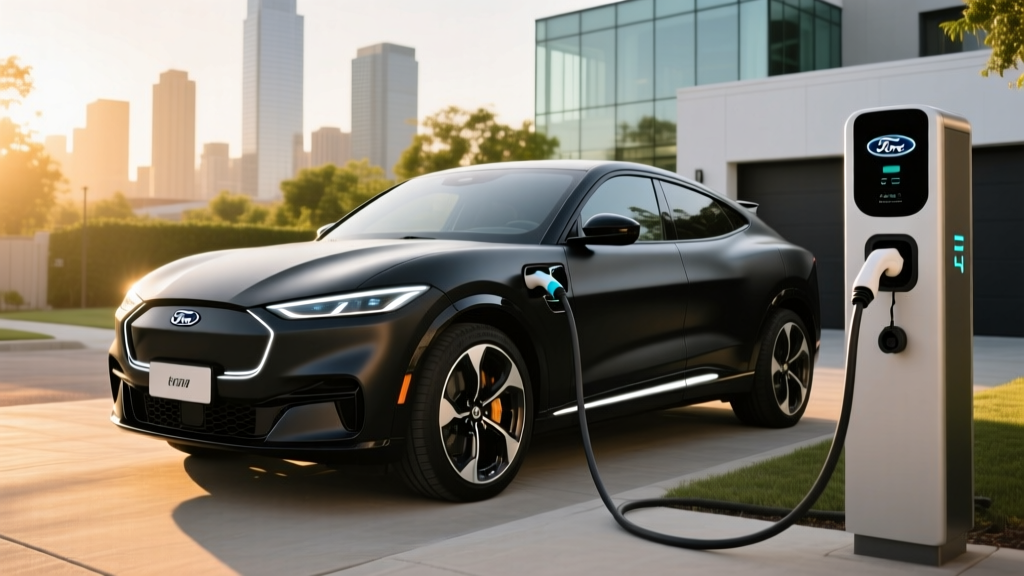
The Ford Mustang Mach-E remains one of the most recognizable electric crossovers on the road, blending pony-car styling with practical SUV dimensions. But for buyers in 2026, the most pressing question isn't about its 0-60 time — it's whether the Mustang Mach-E tax credit still applies under current IRS §30D rules. Battery sourcing requirements, MSRP caps, and buyer income limits have tightened considerably since the credit was first expanded, and eligibility now varies by trim and build date.
This review dissects the 2026 Mach-E lineup with a buyer's lens: exact EPA range figures, real-world highway and cold-weather expectations, DC fast-charging curves, home Level 2 speeds, and a precise breakdown of what you'll actually pay after federal incentives. If you're cross-shopping the Tesla Model Y, Hyundai Ioniq 5, or Kia EV6, the numbers below will tell you exactly where the Mach-E stands.
2026 Mustang Mach-E Specs at a Glance
| Spec | Select RWD | Premium AWD (ER) | GT |
|---|---|---|---|
| EPA Range | 250 mi | 320 mi | 280 mi |
| Battery (usable) | 70 kWh (LFP) | 91 kWh (NMC) | 91 kWh (NMC) |
| Horsepower | 266 hp | 346 hp | 480 hp |
| 0-60 mph | 6.3 sec | 5.1 sec | 3.5 sec |
| Drivetrain | RWD (single motor) | AWD (dual motor) | AWD (dual motor) |
| Max DC Fast Charge | 115 kW | 150 kW | 150 kW |
| 10-80% DCFC Time | ~38 min | ~45 min | ~45 min |
| Level 2 Home Rate | 10.5 kW (~30 mi/hr) | 10.5 kW (~30 mi/hr) | 10.5 kW (~30 mi/hr) |
| MPGe (combined) | 105 MPGe | 98 MPGe | 86 MPGe |
| EPA kWh/100 mi | 32 kWh | 34 kWh | 39 kWh |
| Base MSRP | $39,995 | $48,995 | $59,995 |
| Battery Warranty | 8 yr / 100,000 mi | 8 yr / 100,000 mi | 8 yr / 100,000 mi |
Source: fueleconomy.gov and Ford Motor Company 2026 specifications.
Ford Mustang Mach-E Tax Credit Eligibility for 2026
The federal EV tax credit under IRS §30D offers up to $7,500, but qualifying in 2026 requires clearing three hurdles: buyer income caps, vehicle MSRP limits, and battery-component/critical-minerals sourcing rules that have tightened each year since 2024.
- MSRP Cap: The Mach-E is classified as an SUV, so the cap is $80,000. All 2026 trims — including a fully loaded GT at ~$67,000 — fall well under this threshold.
- Buyler Income Limits: Modified AGI must not exceed $150,000 (single), $225,000 (head of household), or $300,000 (married filing jointly).
- Battery Sourcing: For 2026, 100% of battery components must be manufactured or assembled in North America, and a high percentage of critical minerals must be sourced from the U.S. or FTA-partner countries. The Select trim's LFP battery (sourced primarily from CATL in China) does not qualify for the full credit. Premium and GT trims with NMC packs assembled in Michigan may qualify for the full $7,500, but final eligibility depends on the specific VIN and build date.
- Point-of-Sale Transfer: Eligible buyers can apply the credit as a discount at the dealership rather than waiting to claim it on their tax return.
| Trim | MSRP | Est. §30D Credit | Effective Price |
|---|---|---|---|
| Select RWD | $39,995 | $3,750 (partial) | ~$36,245 |
| Premium AWD (ER) | $48,995 | $7,500 (if VIN qualifies) | ~$41,495 |
| GT | $59,995 | $7,500 (if VIN qualifies) | ~$52,495 |
Credit amounts are estimates based on 2026 §30D rules. Confirm eligibility for your specific VIN at the dealer and consult a tax professional. Rules may change.
Real-World Range: What the EPA Sticker Doesn't Tell You
EPA Estimated Range (Premium AWD Extended Range): 320 miles
Real-World Expectations:
- Mixed city/suburban driving (65-75°F): ~290-310 miles
- Sustained highway at 75 mph: ~250-270 miles
- Cold weather (below 32°F) with cabin heat: ~210-240 miles (25-35% loss)
The Mach-E Premium with the Extended Range pack posts a strong 320-mile EPA figure, putting it in the same tier as the Tesla Model Y Long Range. But EPA testing favors lower-speed, moderate-temperature cycles. On a 70°F day doing 65 mph on flat interstate, expect to see roughly 270 miles before the battery hits zero. Push speeds to 80 mph or encounter headwinds, and 250 miles is a safer planning number.
Cold weather is the bigger concern for northern-climate buyers. The Mach-E uses a resistive PTC heater on lower trims and a heat pump on Premium and GT models. Even with the heat pump, sustained 20°F driving with the cabin at 70°F will consume 25-35% more energy, dropping effective range to roughly 210-240 miles. Preconditioning the battery while plugged in recovers some of this loss and is critical for preserving fast-charge speeds in winter.
The Select trim's 70 kWh LFP battery delivers a more modest 250 EPA miles. Real-world highway range drops to roughly 200-215 miles, making it best suited for commuters with reliable home charging and daily drives under 80 miles round-trip.
Charging Speeds: DC Fast Charging and Home Level 2
| Charging Level | Rate | Miles Added per Hour | Notes |
|---|---|---|---|
| Level 1 (120V household) | ~1.4 kW | ~3-4 mi/hr | Emergency/trickle only |
| Level 2 (240V, 48A circuit) | 10.5 kW | ~30 mi/hr | Full charge overnight (~9-10 hr) |
| DC Fast Charge (Select) | Peak 115 kW | ~150 mi in 30 min | 10-80% in ~38 min |
| DC Fast Charge (Premium/GT) | Peak 150 kW | ~190 mi in 30 min | 10-80% in ~45 min |
The Mach-E's DC fast-charging performance is its most debated spec. While competitors like the Hyundai Ioniq 5 (peak 240 kW, 10-80% in ~18 minutes) and Kia EV6 (peak 239 kW) charge dramatically faster on 350 kW chargers, the Mach-E peaks at 150 kW on Extended Range trims. On a typical 150 kW Electrify America or EVgo station, you'll see sustained rates of 110-130 kW through the 20-60% state of charge, tapering to 50-60 kW above 75%.
The charging curve matters more than the peak number. Ford's thermal management keeps the battery in an optimal window, so the Mach-E holds its charge rate reasonably well through the mid-SoC range. A 10-80% session takes roughly 45 minutes for the 91 kWh pack — adequate for road trips with planned meal or rest stops, but noticeably slower than the 800V architecture vehicles from Hyundai/Kia.
At home on a 48-amp Level 2 charger (requiring a 60-amp dedicated circuit), the onboard 10.5 kW charger adds about 30 miles of range per hour. A full 0-100% charge on the Extended Range pack takes approximately 9-10 hours, easily achievable overnight. Ford's Mobile Power Cord is included but delivers only ~1.4 kW on a standard 120V outlet — useful for topping off, not for daily charging of a depleted battery.
Performance, Efficiency, and Daily Livability
The Mach-E GT's 3.5-second 0-60 mph time and 480 hp make it genuinely quick — a match for the Tesla Model Y Performance. But the more relevant trims for most buyers are the Select and Premium, which deliver perfectly adequate acceleration (5.1-6.3 seconds) with better efficiency.
Efficiency, measured in kWh per 100 miles, tells you how far each unit of electricity takes you. The Select RWD achieves 32 kWh/100 mi (105 MPGe combined), while the heavier, more powerful GT consumes 39 kWh/100 mi (86 MPGe). For cost-conscious buyers, the Select's LFP battery also offers a longevity advantage: LFP chemistry tolerates frequent 100% charging and typically shows less degradation over 100,000+ miles compared to NMC packs.
Cargo and Passenger Space:
- Behind second row: 29.7 cu ft
- Seats folded: 59.7 cu ft
- Front trunk (frunk): 4.7 cu ft (drainable — useful for wet gear or tailgating)
- Rear legroom: 38.9 inches
- Front headroom: 40.4 inches
The Mach-E's cargo area is competitive with the Model Y but falls short of the Hyundai Ioniq 5's 56.2 cu ft with seats folded. The drainable frunk is a genuinely useful differentiator for active-lifestyle buyers who haul muddy shoes, ice, or groceries that might leak.
Technology and Driver-Assist Systems
The Mach-E's 15.5-inch vertically oriented touchscreen runs Ford's SYNC 4A system, which supports wireless Apple CarPlay and Android Auto, over-the-air updates, and a configurable home screen. The interface is responsive, though some buyers find the vertical layout less intuitive for navigation than a landscape screen.
Ford Co-Pilot360 Active 2.0 is standard and includes adaptive cruise control with stop-and-go, lane centering, and evasive steering assist. Available BlueCruise (a subscription-based feature after the initial trial) enables hands-free driving on over 130,000 miles of pre-mapped divided highways. This is an SAE Level 2 system — the driver must remain attentive, and a camera monitors eye gaze. BlueCruise works well on long highway stretches but does not handle construction zones, unmapped roads, or complex interchanges autonomously.
SAE Level 2 — Not Self-Driving: BlueCruise and Ford Co-Pilot360 require the driver to remain engaged and ready to take over at any moment. These are driver-assist systems, not autonomous vehicles. Only Level 4 services like Waymo operate without a human driver.
Pros and Cons
Pros
- Strong real-world range on Extended Range trims (270+ mi highway)
- Engaging driving dynamics for a crossover; GT is genuinely fast
- Drainable frunk and practical cargo space
- BlueCruise hands-free highway driving is well-executed
- Qualifies for up to $7,500 federal credit on NMC trims (VIN-dependent)
- LFP battery on Select offers excellent long-term durability
Cons
- DC fast charging (150 kW peak) lags behind 800V competitors
- Select LFP trim likely qualifies for partial credit only ($3,750)
- Cold-weather range loss is significant without consistent preconditioning
- Rear-seat space trails some midsize EV SUV rivals
- BlueCruise requires paid subscription after trial period
- 10-80% charge time (~45 min) is 20+ minutes slower than Ioniq 5/EV6
Who Should Buy the Mustang Mach-E?
Choose the Mach-E Select if: You're a commuter with home charging, daily drives under 80 miles, and want an affordable entry point with LFP battery longevity. The partial $3,750 credit still brings the effective price near $36,000.
Choose the Mach-E Premium AWD ER if: You need 300+ mile range for road trips, want the full $7,500 tax credit (confirm VIN), and value BlueCruise for long highway commutes. This is the sweet-spot trim.
Choose the Mach-E GT if: Performance is a priority, you want sub-4-second acceleration, and budget is flexible. The $7,500 credit softens the ~$52,500 effective price, but you sacrifice ~40 miles of range versus the Premium ER.
Look elsewhere if: You take frequent long road trips and want the fastest possible DC charging (consider Ioniq 5 or EV6), or you need three-row seating and maximum cargo volume (consider the Kia EV9 or Rivian R1S).
Frequently Asked Questions
Does the 2026 Mustang Mach-E qualify for the full $7,500 federal tax credit?
It depends on the trim and your specific VIN. The Premium and GT trims with NMC batteries assembled in North America are most likely to qualify for the full $7,500, assuming you meet the income caps ($150K single / $300K joint) and the vehicle MSRP stays under $80,000 (it does). The Select trim's LFP battery uses China-sourced components and will likely qualify for only $3,750 (the critical-minerals half). Always verify with your dealer and a tax professional before purchase.
What is the real-world range of the Mustang Mach-E?
The Premium AWD Extended Range posts 320 EPA miles, but expect roughly 270 miles at sustained highway speeds and 210-240 miles in freezing weather. The Select RWD delivers 250 EPA miles with real-world highway range around 200-215 miles.
How fast does the Mach-E charge at home and on road trips?
On a 48-amp Level 2 home charger, the Mach-E adds ~30 miles per hour and fully charges overnight in ~9-10 hours. On DC fast chargers, Extended Range trims peak at 150 kW with a 10-80% time of about 45 minutes. This is slower than 800V competitors like the Ioniq 5 (~18 minutes).
Is the Mustang Mach-E worth buying over the Tesla Model Y?
The Mach-E offers more traditional styling, a usable frunk, and strong BlueCruise highway assist. The Model Y counters with faster Supercharger network access, slightly better efficiency, and a larger third-row option. If tax credit eligibility and dealership service matter to you, the Mach-E has an edge. If charging speed and software ecosystem are priorities, the Model Y remains compelling.
How long will the Mach-E battery last?
Ford warranties the high-voltage battery for 8 years or 100,000 miles against defects and excessive capacity loss (below 70% state of health). Real-world data from 2021-2024 Mach-E owners shows typical degradation of 5-8% over the first 60,000 miles. LFP-equipped Select trims may show even less degradation over time.
Can I tow with the Mustang Mach-E?
Yes, but modestly. The Mach-E is rated for up to 2,300 pounds with the factory tow package (available on Premium and GT). This covers a small utility trailer or a pair of jet skis but not a boat or camper. Towing will reduce range by 30-50%.