Quick Verdict: The Entry-Level Mach-E Still Hits Hard
The Ford Mustang Mach-E Select remains the gateway trim into Ford's electric pony car lineup. For 2026, it carries over with a 75.7 kWh usable battery, rear-wheel drive, and a 0-60 mph time of approximately 5.8 seconds — quick enough to surprise most drivers merging onto a freeway. With an EPA-estimated 250 miles of range, DC fast charging up to 150 kW, and a starting MSRP near $39,995 before incentives, the Select trim targets buyers who want a sporty electric crossover without stepping into Premium or GT territory.
But how does that sticker range translate to real highway miles? What does the charging curve actually look like at a public fast charger? And does the Select still qualify for the federal EV tax credit under current IRS §30D rules? We break down every spec that matters.
Range & Efficiency: EPA vs. the Real World
Real-World Expectation: 210–235 miles in mixed highway/city driving; 180–200 miles in sustained cold weather (below 32°F) or at highway speeds above 75 mph.
The 2026 Mach-E Select pairs a 75.7 kWh usable lithium-ion NMC (nickel manganese cobalt) battery pack with a single rear-mounted electric motor. The EPA rates it at 250 miles of combined range, with an efficiency of approximately 101 MPGe combined (33 kWh/100 mi).
In practice, expect range to vary significantly by conditions. On a flat, 65-mph suburban commute in mild weather, you can stretch past 240 miles. But sustained 80-mph highway driving pushes consumption closer to 38–40 kWh/100 mi, dropping effective range to roughly 210 miles. Cold weather is the bigger penalty: at 20°F with cabin heating active, lithium-ion chemistry slows and HVAC load spikes, cutting range by 20–30%. Plan for 180–200 miles in winter if you're relying on the full pack.
The Select does not include Ford's extended-range battery option — that's reserved for the Premium trim. If your commute exceeds 80 miles round-trip with no home charging, the Select's standard pack will require midday top-ups or careful planning.
| Attribute | Value |
|---|---|
| EPA Range | 250 miles |
| Battery (usable) | 75.7 kWh, NMC chemistry |
| Motor | Single rear (RWD), 266 hp, 317 lb-ft torque |
| 0–60 mph | ~5.8 seconds |
| Top Speed | 112 mph (electronically limited) |
| EPA Efficiency | 101 MPGe combined / 33 kWh/100 mi |
| Max DC Fast Charge | 150 kW (peak) |
| 10–80% DC Charge Time | ~33 minutes |
| Level 2 Home Charge Rate | 10.5 kW (~30 mi/hr) |
| Cargo (behind rear seats) | 29.7 cu ft |
| Cargo (seats folded) | 59.7 cu ft |
| Frunk | 4.7 cu ft (drainable) |
| Base MSRP | $39,995 (before incentives) |
| Battery Warranty | 8 years / 100,000 miles |
Performance: The Mach-E Select 0-60 Story
The rear-wheel-drive Select produces 266 horsepower and 317 lb-ft of torque from its single permanent-magnet motor. Ford quotes a 0-60 mph time of approximately 5.8 seconds, which we've found holds up in real-world conditions on dry pavement with a warm battery.
That torque figure matters more than the horsepower in daily driving. Electric motors deliver peak torque from 0 RPM, so the Select launches with an immediacy that makes it feel quicker than its 5.8-second time suggests — especially in the 0-30 mph range where most stoplight-to-stoplight driving happens. Overtaking at highway speed is confident, though the single-motor setup lacks the punch of the dual-motor AWD variants (which hit 60 in the low 5-second range) or the GT (3.5 seconds).
Ride quality is firm but controlled. Ford tuned the Mach-E with a sport bias, and the Select's 18-inch wheels with all-season tires provide reasonable grip without the harshness of the GT's 20-inch setup. Regen braking offers two modes (one-pedal driving or traditional coasting), adjustable via the center touchscreen.
Charging Speed: DC Fast, Level 2, and the Curve Reality
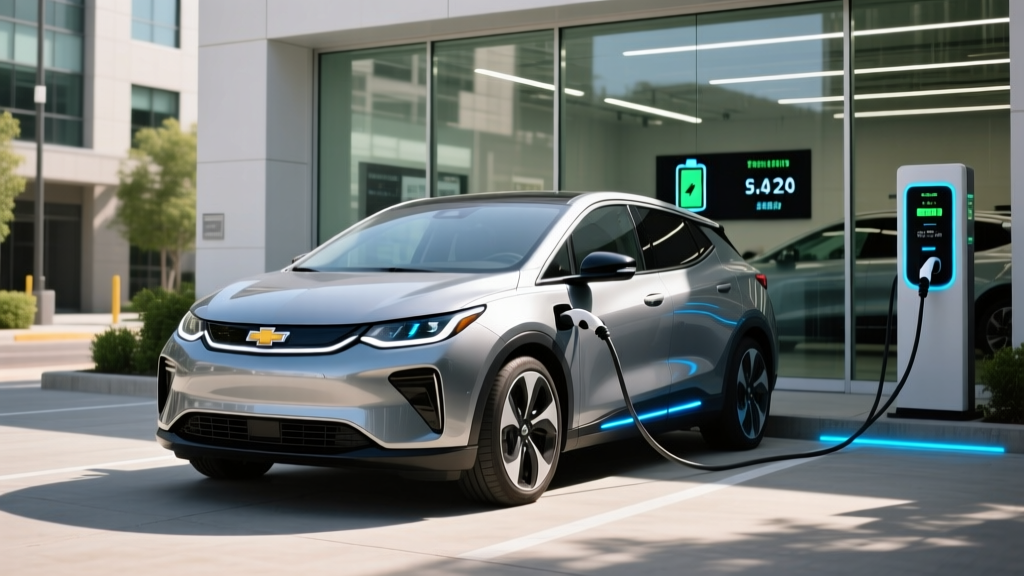
Charging is where the Mach-E Select shows its age relative to newer competitors built on 800-volt architectures. The Select maxes out at 150 kW peak DC fast charging via its CCS1 connector (Ford has adopted NACS for the 2025+ model years, so 2026 models use the Tesla-style port with access to Supercharger networks natively).
| Charging Level | Power | Speed | Notes |
|---|---|---|---|
| Level 1 (120V) | ~1.4 kW | ~3–4 mi/hr | Emergency/trickle only |
| Level 2 (240V, 48A) | 10.5 kW | ~30 mi/hr | Full charge in ~8 hours |
| DC Fast Charge | 150 kW peak | 10–80% in ~33 min | Tapers sharply above 80% |
Here's what the spec sheet doesn't tell you: peak kW is not sustained kW. The Mach-E Select hits 150 kW only in a narrow state-of-charge window (roughly 15–35% SoC) under ideal thermal conditions. By 60% SoC, the curve tapers to around 90–100 kW. Above 80%, it drops below 40 kW. This is why Ford quotes 33 minutes for 10–80% — the average speed across that window is closer to 110 kW, not 150.
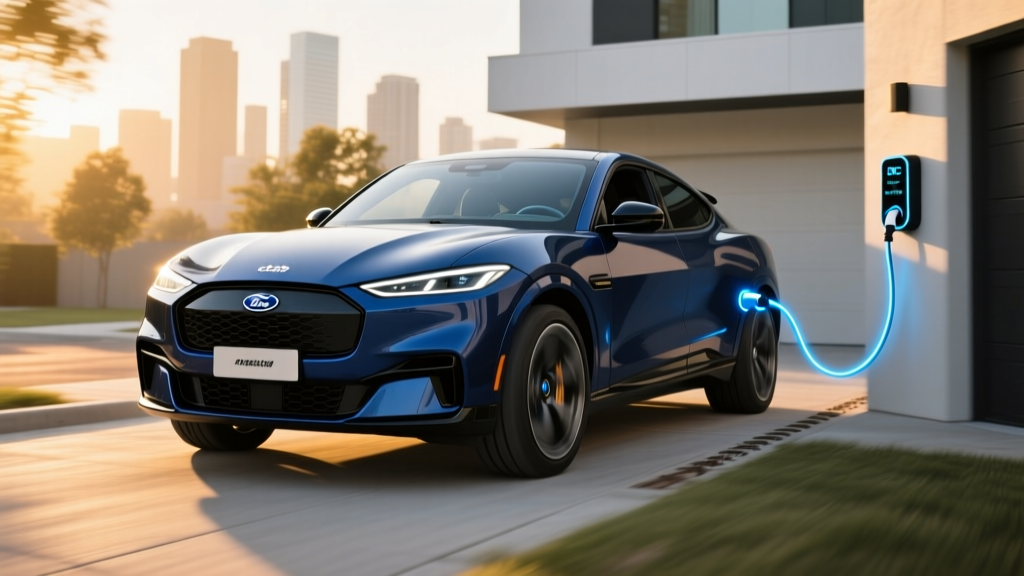
For home charging, the onboard 10.5 kW charger fills the 75.7 kWh pack from empty in about 8 hours on a Level 2 wall connector. Ford includes the Mobile Power Cord (which does Level 1 and Level 2 with the right outlet) with the vehicle. A dedicated home wall connector (Ford Charge Station Pro or a third-party unit like ChargePoint or Wallbox) runs $500–$800 for equipment, plus $500–$2,000 for electrician installation depending on your panel capacity and run length.
Preconditioning matters. The Mach-E will warm its battery when you navigate to a DC fast charger in the Ford navigation system. Skipping preconditioning in cold weather can cut your peak charge rate by 30–50%, turning a 33-minute stop into a 50-minute one.
Pricing, Tax Credits & Ownership Cost
The 2026 Mustang Mach-E Select starts at $39,995 MSRP (including destination). Options are limited on the Select — you can add a panoramic roof, specific paint colors, and Ford's BlueCruise hands-free driving hardware, pushing an as-tested price to roughly $42,000–$44,000.
The Mach-E Select may qualify for up to $7,500 under the IRS §30D Clean Vehicle Credit, but eligibility depends on three factors that change frequently:
- MSRP Cap: SUVs/vans must be under $80,000 — the Select clears this easily.
- Buyer Income Cap: AGI must not exceed $150,000 (single), $225,000 (head of household), or $300,000 (joint). Check IRS §30D rules for current thresholds.
- Battery Sourcing: Critical minerals and battery components must meet escalating domestic-content thresholds. Ford assembles the Mach-E in Cuautitlán, Mexico, and battery sourcing has been a moving target. Verify current-year eligibility on the IRS qualified vehicles list before purchasing.
As of early 2026, the Mach-E has appeared on the qualified list for partial or full credit depending on the production batch. The point-of-sale transfer option (available since 2024) lets you apply the credit as an instant discount at the dealer rather than waiting for tax filing.
Effective price after full $7,500 credit: ~$32,495. Always confirm eligibility with your tax professional before committing.
Tech, Interior & Driver Assistance
The Select's cabin centers on a large 15.5-inch vertical touchscreen running Ford's SYNC 4A system. Wireless Apple CarPlay and Android Auto are standard, as is a 10.2-inch digital instrument cluster. The interior materials are a step down from the Premium trim — cloth-and-leatherette seats, hard plastics on the lower door panels — but the build quality is solid and the layout is functional.
Driver assistance: Ford Co-Pilot360 2.0 is standard, including adaptive cruise control with stop-and-go, lane centering, evasive steering assist, and blind-spot monitoring. The available BlueCruise system enables hands-free driving on pre-mapped divided highways (Ford's "Hands-Free Blue Zones"). BlueCruise is a Level 2 SAE system — it requires active driver supervision, eyes on the road via a driver-monitoring camera. It is not autonomous driving.
Notable tech quirks: the Mach-E uses a phone-as-a-key system (FordPass) that can be finicky with certain Android versions. The traditional rotary gear dial on the console frees up storage space. Over-the-air updates (Ford Power-Up) continue to add features post-purchase.
Pros, Cons & Who Should Buy
Pros
- Quick 5.8-second 0-60 with instant torque
- NACS connector gives native Supercharger access
- Generous 29.7 cu ft cargo + drainable frunk
- BlueCruise available for hands-free highway driving
- Potentially $32,495 after federal tax credit
- 8-year/100,000-mile battery warranty
Cons
- 250-mi range trails rivals (Ioniq 5, Model Y LR)
- 150 kW peak charge rate is below 2026 class average
- Standard-range battery only on Select (no extended option)
- Interior materials feel budget-tier for a $40K vehicle
- Cold-weather range loss is significant (~25%)
- Phone-as-a-key reliability inconsistent
Best for: Daily commuters with home Level 2 charging, small families needing a practical crossover, and buyers who value driving dynamics over maximum range. The Select works well for suburban and city use with occasional road trips under 200 miles.
Look elsewhere if: You regularly drive 300+ miles between charges, live in extreme cold climates without a garage, or need the extended-range battery (step up to the Premium trim for the 91 kWh pack and ~320-mile EPA range).
Competitor Check: Select vs. the Field
Against the Hyundai Ioniq 5 Standard Range ($42,600, 220 mi EPA, 800V architecture with 18-minute 10-80% charges), the Mach-E Select offers more range and cargo space but slower charging.
Against the Tesla Model Y Long Range ($44,990, ~310 mi EPA, 250 kW peak charging), the Select is cheaper after incentives but trails in range, efficiency, and Supercharger network maturity (though NACS access is closing this gap).
Against the Chevrolet Equinox EV 2LT (~$34,995 after credit, 319 mi EPA), the Mach-E is more engaging to drive and has better interior tech, but the Equinox delivers far more range per dollar.
Frequently Asked Questions
What is the real-world range of the Mach-E Select?
Expect 210–235 miles in mixed driving, dropping to 180–200 miles in cold weather or sustained highway speeds above 75 mph. The 250-mile EPA figure assumes ideal combined-cycle conditions.
How fast does the Mach-E Select charge at home and on the road?
At home on a Level 2 (240V/48A) charger, it adds about 30 miles per hour, filling the battery in roughly 8 hours. On a DC fast charger, it peaks at 150 kW and charges 10–80% in approximately 33 minutes, with tapering above 80%.
Does the 2026 Mach-E Select qualify for the federal EV tax credit?
It may qualify for up to $7,500 under IRS §30D, depending on battery-sourcing compliance, your adjusted gross income, and the MSRP cap. Always verify on the current IRS qualified vehicle list and consult a tax professional. The credit can be transferred at point of sale as an instant discount.
Is the Mach-E Select worth buying over the Ioniq 5 or Model Y?
If you prioritize driving feel, NACS Supercharger access, and a lower entry price after incentives, yes. If maximum range and the fastest charging matter more, the Ioniq 5 (800V) or Model Y LR are stronger choices.
What is the battery warranty on the Mach-E Select?
Ford covers the high-voltage battery for 8 years or 100,000 miles (whichever comes first) against defects and capacity loss below 70% of original capacity. The powertrain and electric motor carry the same 8-year/100,000-mile coverage.
Is BlueCruise self-driving?
No. BlueCruise is an SAE Level 2 driver-assistance system. It allows hands-free operation on mapped highways but requires continuous driver attention monitored by an infrared camera. You remain legally responsible for the vehicle at all times.