The Ford Mustang Mach-E has been one of the most polarizing yet commercially significant electric crossovers since its 2021 debut. As we move through the 2026 model year, Mustang Mach-E sales figures tell a story of an EV that has carved out a loyal buyer base in an increasingly crowded segment. But beyond the sales numbers, what does it actually mean to live with one? This review breaks down every spec that matters to real buyers — range, charging, pricing, tax credits, and the ownership experience — so you can decide whether the Mach-E deserves a spot in your driveway.
2026 Mustang Mach-E Sales Snapshot: Where It Stands
Ford's all-electric Mustang-badged crossover has faced stiff competition from the Tesla Model Y, Hyundai Ioniq 5, and a wave of new entrants. Mustang Mach-E sales have fluctuated with incentive cycles, production changes at Ford's Cuautitlán plant, and the broader shift in consumer appetite for electric SUVs. Despite the headwinds, the Mach-E remains one of the highest-volume non-Tesla electric crossovers sold in the U.S., a testament to Ford's dealer network and the model's broad appeal to former ICE buyers who want something familiar yet electrified.
The question for prospective buyers isn't just whether others are buying it — it's whether the Mach-E's specs, charging infrastructure compatibility, and total cost of ownership make sense for your driving needs. Let's dig into the numbers.
Range, Efficiency, and the Real-World Reality Check
The 2026 Mustang Mach-E lineup spans four primary configurations:
- Select (RWD, Standard Range): ~250 miles EPA — expect ~210–230 mi real-world highway/cold
- Premium (RWD, Extended Range): ~320 miles EPA — expect ~270–290 mi real-world highway
- Premium (AWD/eAWD, Extended Range): ~290 miles EPA — expect ~245–265 mi real-world
- GT (AWD, Extended Range): ~280 miles EPA — expect ~235–255 mi real-world, less with spirited driving
Cold weather (below 30°F) can reduce range by 20–30% across all trims. Highway driving at 75+ mph consistently yields 10–15% less than the EPA sticker regardless of drivetrain.
The Mach-E uses NMC (nickel manganese cobalt) lithium-ion chemistry across all trims. The Standard Range battery provides approximately 70 kWh usable capacity, while the Extended Range pack delivers roughly 91 kWh usable. NMC offers higher energy density than LFP, which translates to more range in a lighter package — but it does mean Ford recommends keeping daily charge limits around 80–90% to preserve long-term battery health, reserving 100% charges for road trips.
Efficiency ratings vary by configuration. The RWD Extended Range model achieves approximately 101 MPGe combined (roughly 33 kWh/100 mi), while the GT drops to around 84 MPGe (roughly 40 kWh/100 mi). These are respectable but not class-leading — the Hyundai Ioniq 5 RWD and Tesla Model Y RWD both edge ahead on efficiency per mile.
Charging Speed: DC Fast Charging and Home Setup
Charging speed is where the Mach-E has historically drawn criticism, and the 2026 model carries forward the architecture established in prior refreshes. Here's what you need to know:
| Charging Level | Max Power | Speed / Time | Notes |
|---|---|---|---|
| Level 1 (120V household) | ~1.4 kW | ~3–4 miles per hour | Emergency/top-up only |
| Level 2 (240V home/public) | ~10.5 kW (48A) | ~28–32 miles per hour; full charge in ~9–10 hrs | Ford Mobile Power Cord or wall connector |
| DC Fast Charge (CCS) | Peak ~150 kW | 10–80% in ~45 minutes | Charge curve tapers significantly above 80% |
| DC Fast Charge (NACS adapter) | ~150 kW | 10–80% in ~45 minutes | Tesla Supercharger access via Ford-provided adapter |
The Mach-E's peak DC fast-charge rate of approximately 150 kW is the model's most common criticism in 2026. Competitors like the Hyundai Ioniq 5 (up to 240 kW on 800V architecture) and the Tesla Model Y (up to 250 kW) add range substantially faster on road trips. At 150 kW peak — which the Mach-E sustains only briefly before tapering — a 10–80% session takes roughly 45 minutes under ideal conditions. In colder weather without adequate battery preconditioning, expect that to stretch to 55–60 minutes.
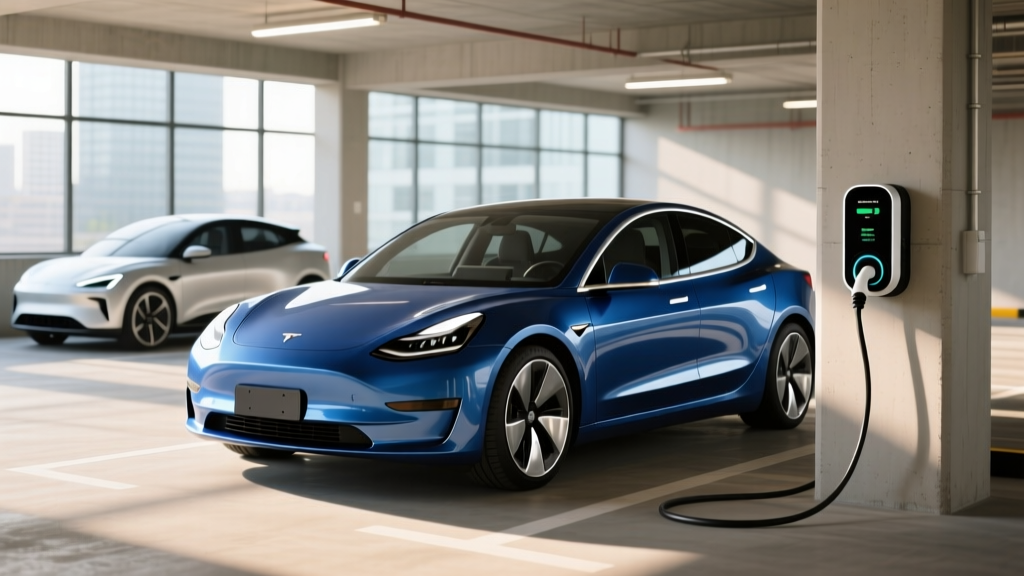
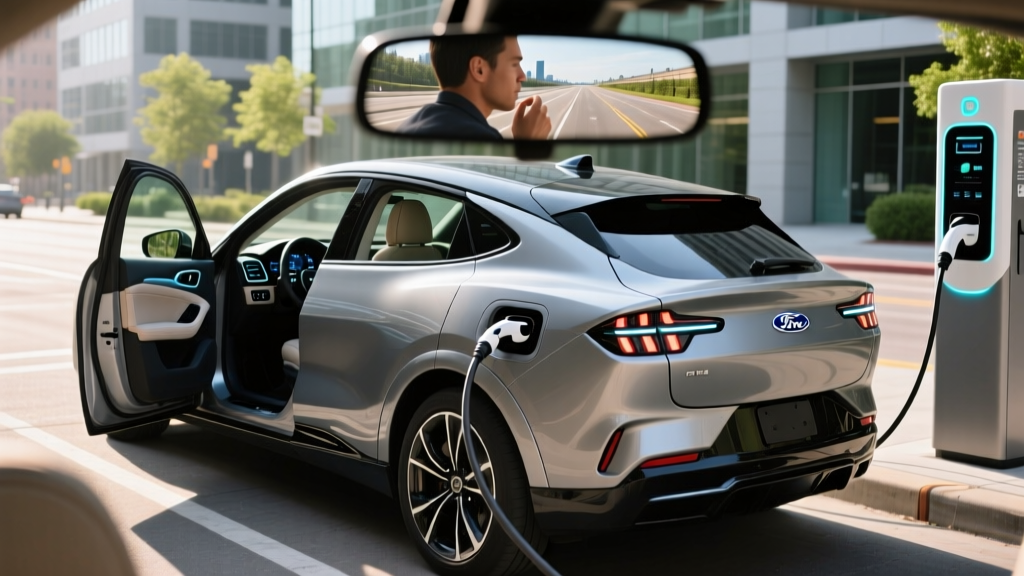
One major ownership advantage: Ford's integration with the Tesla Supercharger network via a NACS adapter. This gives Mach-E owners access to the most reliable and expansive DC fast-charging network in North America. If you road-trip frequently, this access alone can offset the slower peak charge rate, since Supercharger stalls are more consistently available and functional than many Electrify America or third-party stations.
For home charging, the onboard charger accepts up to 10.5 kW on a 48-amp Level 2 circuit. This means a full overnight charge from near-empty takes about 9–10 hours for the Extended Range pack. Most owners will arrive home with 40–60% remaining and wake up fully charged. Budget approximately $500–$1,500 for a professional 240V/48A home charging installation depending on your electrical panel's capacity and distance from the panel to your parking spot — a licensed electrician should evaluate whether your panel needs a 200A upgrade.
Performance and Drivetrain: From Commuter to GT
| Trim | Drivetrain | Horsepower | Torque (lb-ft) | 0–60 mph | Battery |
|---|---|---|---|---|---|
| Select | RWD | 266 hp | 387 | ~6.3 sec | 70 kWh (Std Range) |
| Premium RWD | RWD | 290 hp | 387 | ~5.8 sec | 91 kWh (Ext Range) |
| Premium AWD | Dual-Motor eAWD | 346 hp | 428 | ~5.1 sec | 91 kWh (Ext Range) |
| GT | Dual-Motor eAWD | 480 hp | 634 | ~3.5 sec | 91 kWh (Ext Range) |
The GT trim's 3.5-second 0–60 time puts it in legitimate sports-car territory, and the instant electric torque makes even the base RWD model feel punchy around town. The dual-motor eAWD system provides confident all-weather traction without the mechanical complexity of a traditional AWD system — there's no driveshaft or center differential, just software-controlled power distribution between front and rear motors.
Regenerative braking on the Mach-E is adjustable but doesn't offer true one-pedal driving in the way a Nissan LEAF or Chevrolet Bolt does. You'll still use the friction brake pedal regularly. Ford's "L" mode increases regen but stops short of bringing the car to a complete hold. This is a deliberate design choice aimed at drivers transitioning from gas cars, but seasoned EV drivers may find it wanting.
Pricing, Trims, and Federal Tax Credit Eligibility
The 2026 Mustang Mach-E starts at approximately $42,995 MSRP for the Select trim and climbs to around $59,995 for the GT. Here's the trim-level breakdown:
| Trim | Base MSRP | §30D Credit (Est.) | Effective Price |
|---|---|---|---|
| Select (RWD, Std Range) | $42,995 | Up to $3,750–$7,500* | ~$35,495–$39,245 |
| Premium (RWD, Ext Range) | $48,995 | Up to $3,750–$7,500* | ~$41,495–$45,245 |
| Premium (AWD, Ext Range) | $51,995 | Up to $3,750–$7,500* | ~$44,495–$48,245 |
| GT (AWD, Ext Range) | $59,995 | Up to $3,750–$7,500* | ~$52,495–$56,245 |
*Federal tax credit amounts under IRS §30D depend on battery component sourcing and critical mineral requirements, which vary by build date and supply chain status. Some Mach-E configurations may qualify for the full $7,500, while others may receive $3,750 or none at all depending on battery-sourcing compliance at the time of purchase. Additionally, buyer income caps apply ($150K single / $300K joint), and the vehicle MSRP must not exceed $80,000 for SUVs. The credit can be transferred to the dealer at point of sale as an upfront discount. Always verify current eligibility with your dealer and a tax professional before purchasing.
As-tested pricing with popular packages (BlueCruise subscription, panoramic roof, upgraded wheels) can add $4,000–$8,000 to any trim. A well-equipped Premium AWD with BlueCruise typically lands in the $54,000–$57,000 range before incentives.
Interior Space, Cargo, and Daily Livability
The Mach-E is classified as a midsize crossover, and its interior dimensions reflect that positioning:
- Front legroom: 43.3 inches
- Rear legroom: 38.9 inches
- Cargo behind rear seats: 29.7 cu ft
- Cargo with rear seats folded: 59.7 cu ft
- Front trunk (frunk): 4.7 cu ft (drainable — useful for wet gear or tailgate ice storage)
Rear-seat space is adequate for adults on shorter trips but tighter than a Hyundai Ioniq 5 or Kia EV6 for tall passengers on long hauls. The 29.7 cu ft cargo area handles a week's groceries or two large suitcases comfortably, but the sloping roofline limits vertical space for bulkier items like dog crates or tall boxes. The drainable frunk is a genuinely clever feature that competitors still haven't widely matched.
The cabin materials are a mixed bag. The synthetic leather (Ford calls it ActiveX) is durable and easy to clean, but hard plastics on the lower door panels and center console feel out of step with the $45,000+ price point. The minimalist interior design — dominated by the large 15.5-inch vertical touchscreen — appeals to tech-forward buyers but frustrates those who prefer physical knobs for climate and volume control.
Technology, Driver Assistance, and Software
The Mach-E runs Ford's SYNC 4A infotainment system on a portrait-oriented 15.5-inch display with a secondary 10.2-inch digital instrument cluster. Wireless Apple CarPlay and Android Auto are standard. Over-the-air (OTA) updates have been a consistent feature, with Ford pushing improvements to navigation, BlueCruise functionality, and battery management since launch.
Ford BlueCruise is the Mach-E's headline driver-assistance system. It's an SAE Level 2 system — meaning it handles steering, acceleration, and braking on pre-mapped divided highways, but you must remain attentive and ready to take over at all times. BlueCruise allows hands-off driving on over 130,000 miles of qualified highways, monitored by a driver-facing camera. It's competitive with GM's Super Cruise but falls short of Tesla's FSD (Supervised) in urban complexity. Expect a subscription cost of approximately $75/month or $800/year after any included trial period.
BlueCruise is not self-driving. It operates only on pre-mapped divided highways. It will not navigate city streets, construction zones, or unmapped routes. The driver is legally responsible for the vehicle at all times. Hands-off does not mean eyes-off — the cabin camera will issue warnings and ultimately disengage the system if it detects inattention.
Standard safety features include automatic emergency braking with pedestrian detection, blind-spot monitoring, rear cross-traffic alert, lane-keeping assist, and evasive steering assist. The Mach-E has earned strong ratings from both NHTSA and IIHS in prior model years.
Warranty, Battery Longevity, and Ownership Costs
Ford backs the Mach-E with the following warranty coverage:
- Battery & Electric Powertrain: 8 years / 100,000 miles (whichever comes first), covering defects and capacity loss below 70% of original capacity
- Bumper-to-Bumper: 3 years / 36,000 miles
- Powertrain (non-electric components): 5 years / 60,000 miles
The 70% capacity retention threshold is industry-standard but worth understanding: if your 91 kWh pack degrades to 63.7 kWh within the warranty period, Ford will repair or replace it. Real-world data from early 2021–2022 Mach-E owners suggests NMC degradation is moderate — most high-mileage owners report 5–8% capacity loss after 60,000–80,000 miles, which is within acceptable bounds for NMC chemistry.
Insurance costs for the Mach-E tend to run 10–20% higher than comparable gas-powered crossovers, driven by higher repair costs for EV-specific components and the vehicle's performance capability (especially the GT). Get quotes before purchasing — annual premiums of $1,800–$2,600 are common depending on your profile and location.
Maintenance is a genuine bright spot: no oil changes, no spark plugs, minimal brake wear thanks to regenerative braking, and no transmission fluid. Expect annual maintenance costs of $100–$300 (cabin air filter, tire rotation, wiper fluid) compared to $600–$1,000+ for a comparable gas SUV.
Who Should Buy the Mach-E — and Who Should Look Elsewhere?
Choose the Mach-E if:
- You want Supercharger network access without buying a Tesla
- You prefer a traditional crossover driving position over sedan-like EVs
- You value a strong Ford dealer network for service in rural or suburban areas
- You want a performance EV (GT trim) that can also serve as a daily family hauler
- You road-trip 2–4 times per year and want proven long-distance capability
Look elsewhere if:
- DC fast-charge speed is your top priority (consider Ioniq 5 or Model Y)
- You need maximum rear-seat legroom (Kia EV6 or Ioniq 5 are roomier)
- You want true one-pedal driving (Nissan Ariya, Chevrolet Blazer EV)
- You want LFP battery chemistry for daily 100% charging without degradation concerns
- You prioritize the lowest possible cost per mile (Tesla Model Y RWD is more efficient)
- Tesla Supercharger access via NACS adapter
- GT performance rivals sports cars at a fraction of the price
- Strong Ford dealer service network nationwide
- Drainable frunk is genuinely practical
- BlueCruise is a polished hands-off highway system
- Comfortable, composed ride quality for a performance crossover
- 150 kW peak DC charge rate lags competitors significantly
- Rear seat space is tighter than key rivals
- Interior hard plastics don't match the price point
- No true one-pedal driving mode
- NMC chemistry requires charge-limit discipline for longevity
- BlueCruise subscription adds recurring cost
Frequently Asked Questions
What is the real-world range of the 2026 Mustang Mach-E?
Real-world range depends heavily on trim, drivetrain, and conditions. The Extended Range RWD (EPA 320 mi) typically delivers 270–290 miles in mixed driving, dropping to 220–250 miles in cold weather or sustained highway driving above 75 mph. The GT averages 235–255 miles under normal conditions. Plan conservatively for road trips and use fueleconomy.gov to compare efficiency ratings across trims.
How fast does the Mustang Mach-E charge at home and on the road?
At home on a 240V Level 2 charger (48A), the Mach-E adds roughly 28–32 miles of range per hour, fully charging overnight in 9–10 hours. On DC fast chargers, it peaks at approximately 150 kW, delivering a 10–80% charge in about 45 minutes under ideal conditions. This is slower than the Hyundai Ioniq 5 (~18 min) and Tesla Model Y (~25 min) but is partially offset by Tesla Supercharger network access.
Does the Mustang Mach-E qualify for the federal EV tax credit?
It depends on the specific build configuration and timing. Under IRS §30D rules, the Mach-E may qualify for up to $7,500, $3,750, or $0 depending on battery component and critical mineral sourcing compliance at the time of manufacture. Buyer income caps ($150K single / $225K head of household / $300K joint) and the $80,000 SUV MSRP cap also apply. The credit can be applied as a point-of-sale discount through a participating dealer. Always check the latest IRS guidance and confirm with your dealer before signing.
Is the Mustang Mach-E worth buying vs. the Tesla Model Y or Hyundai Ioniq 5?
It depends on your priorities. The Model Y wins on efficiency, charging speed, and cargo space. The Ioniq 5 wins on DC fast-charge speed (800V architecture) and rear-seat room. The Mach-E wins on Supercharger access without buying a Tesla, ride comfort, GT-level performance, and Ford's nationwide dealer service footprint. If charging speed is your dealbreaker, the Mach-E falls short. If you want a comfortable, well-rounded crossover with strong dealer support, it remains a compelling choice.
What's the biggest drawback of owning a Mustang Mach-E?
The 150 kW peak DC fast-charging rate is the most impactful limitation for road-trippers. On a 300-mile trip with a midway charge stop, you'll spend roughly 15–20 minutes longer at the charger than an Ioniq 5 or Model Y owner. For daily commuters who charge at home, this is irrelevant — but frequent long-distance drivers should factor in the extra time.
How long will the Mach-E battery last?
Ford warranties the battery for 8 years/100,000 miles against defects and capacity loss below 70%. Real-world data from early owners suggests 5–8% degradation over 60,000–80,000 miles with NMC chemistry. Following best practices — keeping daily SoC between 20–80%, avoiding frequent DC fast charging, and using preconditioning — can extend battery health well beyond the warranty period. Full battery replacement costs, if ever needed out of warranty, are estimated at $12,000–$18,000 depending on pack size and labor.