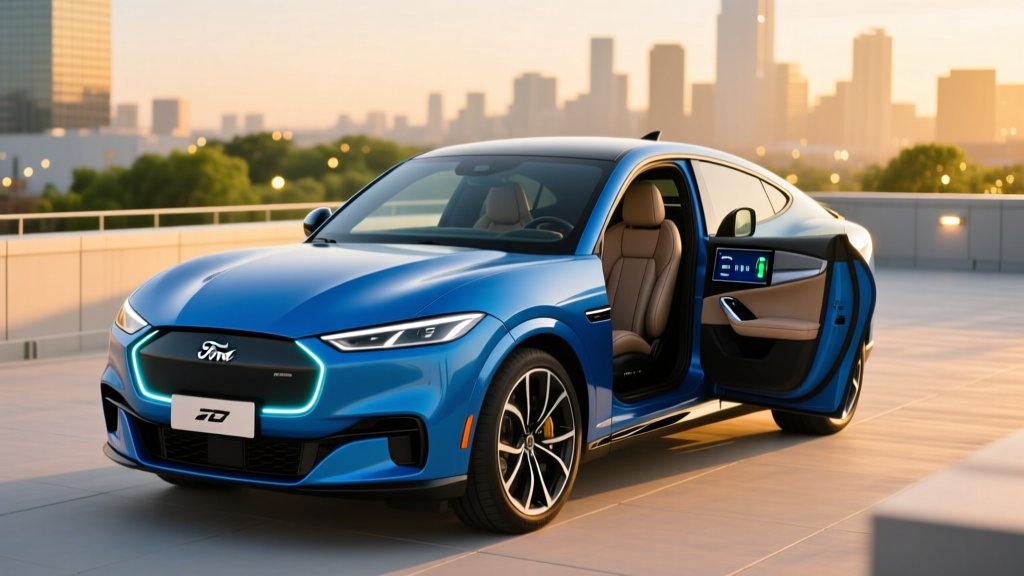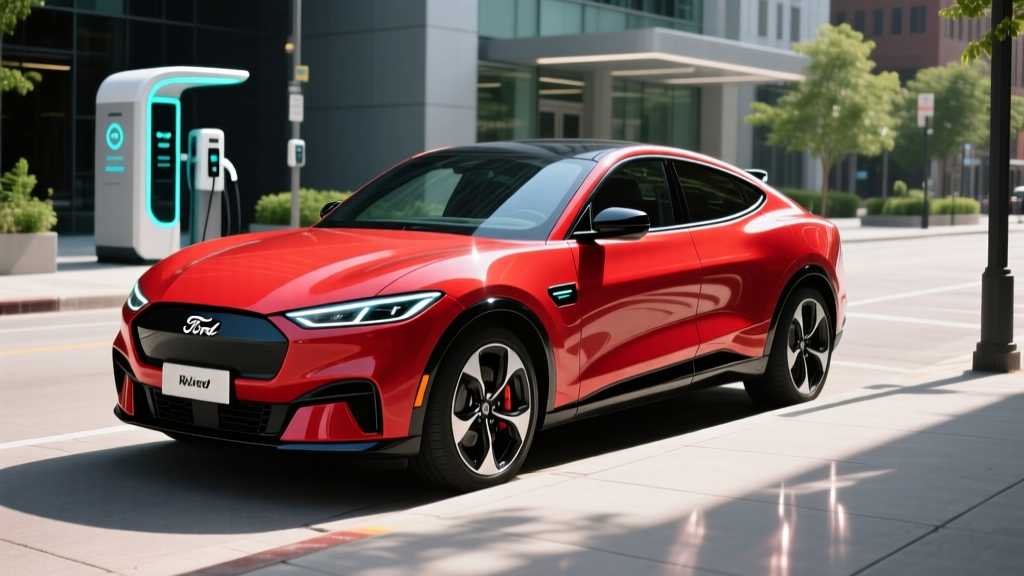
Ford's Mustang Mach-E entered 2026 with a clearer value proposition than at any point since its 2021 launch. After a turbulent 2024-2025 that saw aggressive lease incentives, a mid-cycle refresh, and the addition of the Tesla North American Charging Standard (NACS) port on new builds, Mustang Mach-E sales have stabilized as Ford positions the crossover against a rapidly expanding field of midsize electric SUVs. This review breaks down the current-generation Mach-E's range, charging performance, pricing, and ownership economics to help you decide whether it deserves a spot on your shortlist.
2026 Mustang Mach-E Spec Snapshot
| Spec | Select RWD | Premium AWD | GT |
|---|---|---|---|
| EPA Range | 250 mi | 300 mi (Ext. Range) | 280 mi |
| Battery (usable) | 70 kWh (LFP) | 91 kWh (NMC) | 91 kWh (NMC) |
| Horsepower / Torque | 266 hp / 387 lb-ft | 346 hp / 428 lb-ft | 480 hp / 600 lb-ft |
| 0-60 mph | 6.1 sec | 5.1 sec | 3.5 sec |
| Drivetrain | RWD single motor | AWD dual motor | AWD dual motor |
| Max DC Fast Charge | 150 kW | 150 kW | 150 kW |
| 10-80% DC Time | ~34 min | ~41 min | ~41 min |
| Level 2 Home Rate | 10.5 kW (~30 mi/hr) | 10.5 kW (~30 mi/hr) | 10.5 kW (~30 mi/hr) |
| Combined MPGe | 101 MPGe | 98 MPGe | 84 MPGe |
| Efficiency | 33 kWh/100mi | 34 kWh/100mi | 40 kWh/100mi |
| Base MSRP | $39,995 | $48,995 | $57,995 |
| Battery Warranty | 8 years / 100,000 miles (≥70% capacity retention) | ||
Range Reality: EPA Sticker vs. the Real World
Select RWD (Standard Range): EPA 250 mi — expect ~210-225 mi on sustained highway driving at 70-75 mph; ~175-195 mi in freezing weather with cabin heat.
Premium AWD (Extended Range): EPA 300 mi — expect ~255-275 mi highway; ~215-240 mi in sub-30°F conditions.
GT: EPA 280 mi — expect ~235-250 mi highway with normal driving; spirited use drops this further.
The Mach-E's heat pump, standard since the 2023 refresh, helps mitigate cold-weather losses compared to competitors without one, but the physics of lithium-ion cells and cabin heating still exact a 15-25% toll in winter. The 91 kWh Extended Range pack uses NMC chemistry, which is more energy-dense but slightly more temperature-sensitive than the 70 kWh LFP pack in the Select trim. LFP cells tolerate cold poorly during charging but hold up well in calendar aging — a trade-off worth understanding if you plan to keep the vehicle 8+ years.
According to fueleconomy.gov, the Extended Range AWD returns 34 kWh per 100 miles combined, which is competitive with the Hyundai Ioniq 5 (34 kWh/100mi) but trails the Tesla Model Y Long Range (~30 kWh/100mi). If your commute is primarily city and suburban driving with regenerative braking opportunities, you'll trend closer to or even above EPA estimates.
Charging Performance: DC Fast, Level 2, and the NACS Transition
Ford adopted the NACS connector for the Mach-E starting with 2025 model-year production, meaning 2026 builds charge natively at Tesla Superchargers without an adapter. Earlier Mach-E models with CCS1 ports retain Supercharger access via Ford's included adapter, though adapter-based charging can occasionally introduce handshake delays at the stall.
| Charging Level | Power / Rate | Miles Added per Hour | Notes |
|---|---|---|---|
| Level 1 (120V household) | ~1.4 kW | ~3-4 mi/hr | Emergency/trickle only |
| Level 2 (240V home) | 10.5 kW (48A) | ~30 mi/hr | Full charge overnight (~9-10 hrs for Ext. Range) |
| DC Fast Charge (peak) | 150 kW | ~60 mi in 10 min (mid-SoC) | 10-80% in ~34-41 min depending on pack |
The Mach-E's 150 kW peak DC charge rate is its most common criticism in 2026. Competitors like the Hyundai Ioniq 5 and Kia EV6 accept up to 235-240 kW on 800V architectures, completing a 10-80% session in roughly 18 minutes. The Mach-E's 400V architecture caps it at 150 kW, and the charge curve tapers noticeably above 60% SoC — you'll spend the last 20% of the session watching rates drop from ~100 kW to under 40 kW.
For home charging, the Ford Mobile Power Cord (included) delivers up to 30 miles of range per hour on a 240V NEMA 14-50 outlet. A hardwired Level 2 station like the ChargePoint Home Flex or Emporia Level 2 at 48 amps will fill the Extended Range pack from empty in roughly 9.5 hours. Budget $500-$1,200 for a licensed electrician to install a 14-50 receptacle near your panel, or $1,500-$2,500+ if your home requires a panel upgrade to 200A service.
Driving Dynamics, Tech, and Interior
The Mach-E drives lower and more car-like than its crossover dimensions suggest. The GT variant's 3.5-second 0-60 time is legitimately quick, and the MagneRide dampers (standard on GT, optional on Premium) manage ride quality well over broken pavement. The RWD Select, at 6.1 seconds to 60, is adequate for merging but won't surprise anyone — this is the efficiency-focused trim.
Inside, the 15.5-inch vertical touchscreen running SYNC 4A dominates the dash. Wireless Apple CarPlay and Android Auto are standard. The physical volume knob integrated into the screen's base is a welcome retention. Rear legroom measures 38.9 inches — generous for adults — and cargo volume behind the second row is 29.7 cubic feet, expanding to 59.7 cu ft with the rear seats folded. The front trunk (frunk) adds 4.7 cu ft with a drain plug, useful for tailgating or wet gear.
Ford's BlueCruise hands-free driving system operates on over 130,000 miles of pre-mapped divided highways. This is an SAE Level 2 driver-assist system: it controls steering, acceleration, and braking, but you must remain attentive. A driver-facing camera monitors eye gaze, and the system will issue escalating warnings if you look away. BlueCruise is not "self-driving" — it's a competitive alternative to GM's Super Cruise and Tesla's Autopilot, and real-world usability depends heavily on highway coverage in your region.
Pricing, Trims, and Federal Tax Credit Eligibility
The 2026 Mach-E lineup starts at $39,995 (including destination) for the Select RWD with the 70 kWh LFP pack. The Premium AWD with the Extended Range battery is the volume seller at $48,995, and the GT tops out at $57,995 before options. Adding the GT Performance Upgrade package ($5,000) pushes the GT above $62,000.
| Trim | Base MSRP | Est. §30D Credit | Effective Price |
|---|---|---|---|
| Select RWD | $39,995 | Up to $7,500* | ~$32,495 |
| Premium AWD Ext. Range | $48,995 | Up to $7,500* | ~$41,495 |
| GT | $57,995 | Up to $7,500* | ~$50,495 |
*Eligibility for the full $7,500 federal tax credit under IRS §30D depends on: buyer AGI caps ($150K single / $300K joint), vehicle MSRP cap ($80,000 for SUVs — all Mach-E trims qualify), and battery critical-mineral and component sourcing requirements that change annually. The point-of-sale transfer option allows you to apply the credit as a down-payment reduction at the dealer. Confirm eligibility with your tax professional before purchasing.
The LFP battery in the Select RWD is sourced differently from the NMC Extended Range packs, and critical-mineral sourcing compliance can shift with supply-chain changes. Ford has generally maintained §30D eligibility across the lineup, but always verify the specific VIN's credit status on the DOE's qualifying vehicle list before signing paperwork.
What's Driving Mustang Mach-E Sales in 2026?
Mustang Mach-E sales figures have been closely watched since the model's launch, and 2026 represents a stabilization period. Several factors explain the renewed buyer interest:
- NACS native charging: Direct Supercharger access without an adapter eliminates the biggest friction point for 2021-2024 owners and expands the usable road-trip network significantly.
- LFP option on Select trim: The 70 kWh LFP pack lowers the entry price to under $40K and appeals to buyers who want a daily commuter with lower long-term degradation concerns, even at the cost of range.
- BlueCruise expansion: Over 130,000 miles of hands-free highway coverage is a tangible selling point for frequent Interstate commuters.
- Lease and incentive normalization: After heavy discounting in 2024-2025, Ford has settled into more sustainable pricing, and buyers who were waiting for deals are now purchasing rather than leasing.
- Competitive field pressure: The Tesla Model Y refresh, Hyundai Ioniq 5, Kia EV6, and Volkswagen ID.4 all compete in this segment. The Mach-E holds its own on driving dynamics and interior space but trails on charging speed.
Pros and Cons
- Engaging driving dynamics, especially GT with MagneRide
- Native NACS port on 2025+ builds — seamless Supercharger access
- Spacious rear seat (38.9" legroom) and practical cargo area
- Standard heat pump reduces cold-weather range loss
- BlueCruise is a competitive Level 2 hands-free system
- LFP battery option lowers entry price and improves cycle life
- 150 kW peak DC charge rate lags 800V competitors (Ioniq 5, EV6)
- Charge curve tapers heavily above 60% SoC on DC fast charging
- SYNC 4A can be sluggish; fewer physical buttons than some prefer
- No frunk power outlet (V2L not available)
- Insurance costs trend 10-18% higher than comparable gas crossovers
- GT trim pricing approaches luxury territory without luxury badge cachet
Frequently Asked Questions
What is the real-world range of the Mustang Mach-E?
The EPA rates the Extended Range AWD at 300 miles, but sustained highway driving at 70-75 mph typically yields 255-275 miles. In freezing temperatures (below 30°F), expect 215-240 miles with cabin heat. The Select RWD with the smaller LFP pack delivers roughly 210-225 highway miles and 175-195 in winter.
How fast does the Mach-E charge at home and on the road?
On a Level 2 home charger at 10.5 kW (48 amps), you'll add about 30 miles of range per hour, filling the Extended Range pack overnight in ~9.5 hours. On DC fast chargers, the Mach-E peaks at 150 kW, reaching 10-80% in roughly 34-41 minutes depending on pack size — slower than 800V competitors that complete the same session in ~18 minutes.
Does the 2026 Mustang Mach-E qualify for the federal EV tax credit?
All Mach-E trims fall under the $80,000 SUV MSRP cap. However, the full $7,500 credit under IRS §30D requires meeting battery critical-mineral and component sourcing thresholds, plus buyer income limits ($150K single / $225K head of household / $300K joint). Use the point-of-sale transfer to apply the credit at purchase, and verify your VIN's eligibility on the DOE's official list.
Is the Mach-E worth buying vs. the Tesla Model Y or Hyundai Ioniq 5?
Choose the Mach-E if you prioritize car-like handling, a spacious rear seat, and BlueCruise hands-free driving. Choose the Model Y if you want maximum efficiency, the densest Supercharger network (though the gap has closed with NACS adoption), and over-the-air feature updates. Choose the Ioniq 5 if fast DC charging (235 kW, 10-80% in ~18 min) is your top priority for road trips. All three are strong — the right answer depends on your commute, road-trip frequency, and tech preferences.
What is the battery warranty on the Mach-E?
Ford covers the high-voltage battery for 8 years or 100,000 miles (whichever comes first), warranting that it will retain at least 70% of its original capacity. The powertrain (motors, reduction gear) carries the same 8-year/100,000-mile coverage. This is standard for the segment and matches Hyundai, Kia, and Tesla.
Who is the Mustang Mach-E best suited for?
The Mach-E fits daily commuters and small families who want a car-like driving experience with crossover practicality. The Select RWD suits budget-conscious commuters with home charging. The Premium AWD Extended Range is the road-trip and all-weather pick. The GT is for driving enthusiasts who want EV torque and don't mind the efficiency trade-off. It's less ideal for buyers who frequently tow (1,500-lb max) or who rely exclusively on DC fast charging without patience for a 40-minute session.