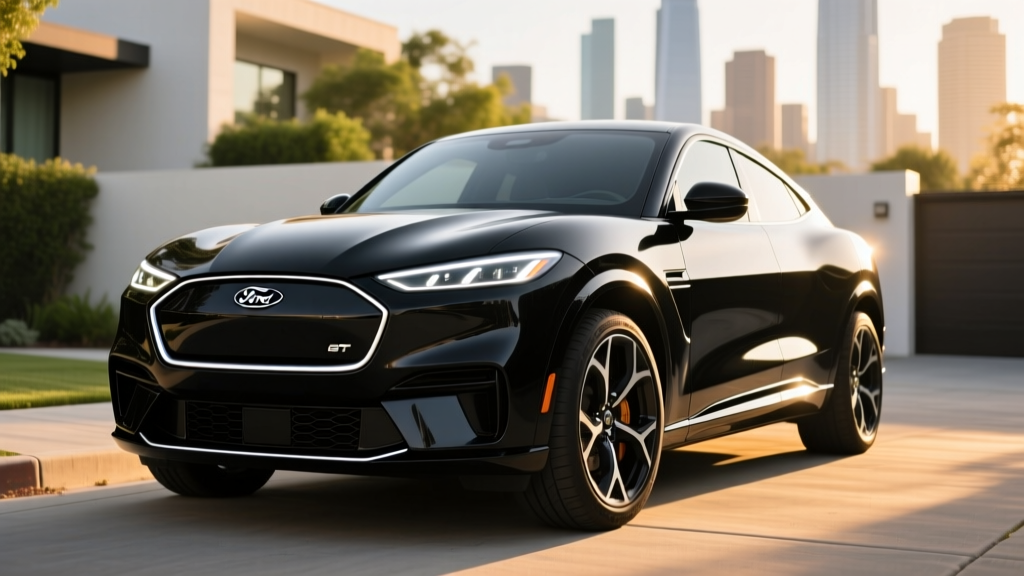
The Ford Mustang Mach-E has been on sale since late 2020, giving us several model years of real-world ownership data, service bulletins, and long-term fleet feedback. For buyers asking are Mustang Mach-E reliable, the answer is nuanced: the powertrain and battery have proven durable, but software glitches, 12V battery drain issues, and early build-quality quirks have kept it slightly behind segment leaders like the Tesla Model Y and Hyundai Ioniq 5 in overall dependability surveys. This review covers the 2026 Mustang Mach-E with a reliability-focused lens — pairing hard specs with the ownership realities that matter most.
2026 Mustang Mach-E: Core EV Specs at a Glance
| Spec | Standard Range | Extended Range |
|---|---|---|
| EPA Range | 250 mi (RWD) | 320 mi (RWD) / 290 mi (AWD) |
| Battery (usable) | 72 kWh (LFP) | 91 kWh (NMC) |
| Drivetrain | RWD or AWD | RWD or AWD (eAWD) |
| Horsepower | 266 hp (RWD) | 290 hp (RWD) / 365 hp (eAWD) |
| 0-60 mph | 6.3 sec (RWD) | 5.1 sec (RWD) / 4.8 sec (eAWD) |
| Peak DC Fast Charge | 115 kW | 150 kW |
| 10-80% DCFC Time | ~38 min | ~36 min |
| Level 2 Home Charge | 10.5 kW (~30 mi/hr) | 10.5 kW (~30 mi/hr) |
| MPGe (combined) | 101 MPGe | 94-101 MPGe |
| Efficiency | 33 kWh/100 mi | 34-36 kWh/100 mi |
| Cargo (rear seats up) | 29.7 cu ft | |
| Cargo (seats folded) | 59.7 cu ft | |
| Front Trunk (frunk) | 4.7 cu ft (drainable) | |
| Rear Legroom | 38.1 in | |
| Base MSRP | $42,495 | $48,995 |
| Battery Warranty | 8 yr / 100,000 mi | |
Source: fueleconomy.gov and Ford Motor Company 2026 specifications.
Reliability Track Record: What the Data Shows
After five full model years on the road, the Mach-E's reliability story breaks into two categories: mechanical/electrical durability and software/build quality.
Powertrain and Battery Durability
The Mach-E's electric motors and high-voltage battery have been largely trouble-free. Ford's 8-year/100,000-mile battery warranty guarantees at least 70% capacity retention — a standard threshold for the industry. Real-world degradation data from fleet operators and owner forums shows most 2021-2023 Extended Range models (NMC chemistry) retaining 92-95% State of Health (SoH) after 50,000-70,000 miles, which aligns with or slightly exceeds the segment average. The 2024+ Standard Range models switched to LFP (lithium iron phosphate) chemistry, which trades energy density for a longer cycle life and greater tolerance for repeated 100% charging — a reliability-positive move for daily commuters.
Common Issues Reported by Owners
- 12V auxiliary battery drain: The most widely reported issue across 2021-2024 models. The 12V battery can deplete if the vehicle sits for extended periods or if software modules fail to sleep properly, leaving the car unable to start even with a full traction battery. Ford issued software updates and, in some cases, replaced the 12V battery under warranty.
- Infotainment freezes and SYNC 4A reboots: Intermittent screen blackouts or lag, typically resolved via over-the-air (OTA) updates or dealer reflashes. Frequency has decreased in 2025-2026 builds.
- Panel gap inconsistency: Early 2021-2022 models showed uneven door and hatch gaps. Ford's Cuautitlán, Mexico assembly plant has improved fitment on 2024+ models, though it still trails Tesla's Fremont/Austin output in consistency.
- Drive motor whine and reduction-gear noise: A small subset of owners reported a high-pitched whine under acceleration. Most cases were addressed under warranty with updated motor calibration or replacement.
- BlueCruise availability frustrations: While not a reliability defect, some owners report BlueCruise hands-free zones being inconsistently mapped or the driver-monitoring camera being overly sensitive in low-light conditions.
Third-Party Reliability Ratings
Consumer Reports rates the 2025 Mach-E at average for predicted reliability (3 out of 5), an improvement from the below-average scores of the 2021-2022 launch years. J.D. Power's 2025 U.S. Vehicle Dependability Study places Ford near the industry average, with the Mach-E specifically performing better than the Ford F-150 Lightning in problem-free ownership rates. The Mach-E earned the IIHS Top Safety Pick+ designation for the 2024-2025 model years with acceptable or good ratings across all crashworthiness tests (iihs.org).
Real-World Range vs. EPA Estimates
EPA sticker: 250 mi (Standard Range RWD) to 320 mi (Extended Range RWD)
Real-world highway (70-80 mph, mild weather): Expect ~210-230 mi (SR) and ~270-290 mi (ER)
Cold weather (below 30°F, highway): Reduce EPA figures by 20-30% — roughly 175-200 mi (SR) and 225-255 mi (ER)
City/regenerative driving: Can meet or slightly exceed EPA estimates thanks to regen recapture
The Mach-E's efficiency of 33-36 kWh/100 mi is competitive for a crossover in this size class but trails the more aerodynamic Tesla Model Y (28-30 kWh/100 mi). On a 300-mile highway road trip in an Extended Range AWD model, plan for one DC fast-charge stop — the math simply doesn't allow a single-charge run at interstate speeds in cool weather.
Charging Speed: DC Fast, Level 2, and Home Setup
| Level | Power | Miles Added per Hour | Notes |
|---|---|---|---|
| Level 1 (120V) | 1.2 kW | ~3 mi/hr | Emergency/top-up only |
| Level 2 (240V, 48A) | 10.5 kW | ~30 mi/hr | Full charge in ~7-9 hours |
| DC Fast (Standard Range) | 115 kW peak | ~180 mi in 38 min (10-80%) | CCS1 or NACS (2025+ adapter) |
| DC Fast (Extended Range) | 150 kW peak | ~200 mi in 36 min (10-80%) | Sustained ~120 kW to 60%, then tapers |
A critical note on the Mach-E's charge curve: the 150 kW peak on Extended Range models is reached briefly between 15-30% State of Charge, then steps down to roughly 120 kW through 60%, and further tapers above 80%. The 10-80% time of ~36 minutes is respectable but noticeably slower than the Hyundai Ioniq 5's 18-minute 10-80% on its 800V architecture. If you road-trip frequently, this 15-20 minute gap per stop adds up.
Starting with the 2025 model year, Ford provides a NACS adapter for Tesla Supercharger access, dramatically expanding the usable fast-charging network. For 2026, native NACS ports are available on new builds, eliminating the adapter requirement. At home, a 48-amp Level 2 charger on a 60-amp circuit is the recommended setup — budget $800-$1,500 for the charger and $500-$2,000 for electrician installation depending on panel proximity and whether a 200-amp service upgrade is needed.
Pricing, Tax Credits, and Total Cost
| Trim | Battery | Drivetrain | MSRP | Est. After §30D Credit* |
|---|---|---|---|---|
| Select (SR) | 72 kWh LFP | RWD | $42,495 | $34,995 |
| Select (ER) | 91 kWh NMC | RWD | $48,995 | $41,495 |
| Premium (ER) | 91 kWh NMC | eAWD | $54,495 | $46,995 |
| GT (ER) | 91 kWh NMC | eAWD | $62,495 | $54,995 |
*Tax credit estimates assume full $7,500 eligibility. Actual credit varies.
Federal Tax Credit Eligibility (§30D Rules for 2026)
- MSRP cap: SUVs/vans/pickups must be ≤$80,000. All Mach-E trims qualify.
- Buyer income cap: AGI ≤$150,000 (single) / ≤$300,000 (joint) / ≤$225,000 (head of household).
- Battery sourcing: A percentage of critical minerals and battery components must be sourced from the U.S. or FTA partners. Ford has shifted supply chains to maximize eligibility, but the exact credit amount ($3,750 or $7,500) depends on the specific VIN's battery pack origin.
- Point-of-sale transfer: You can transfer the credit to the dealer at purchase for an immediate price reduction rather than waiting for tax filing.
- Lease loophole: Leased EVs may qualify for the $7,500 commercial credit (§45W) regardless of sourcing or income caps — passed through as a lease discount.
Always verify your specific VIN's eligibility at irs.gov or with a tax professional before purchasing. Rules are subject to change.
Performance, Tech, and Daily Livability
Driving Dynamics
The Mach-E GT's 4.8-second 0-60 mph time and 480 lb-ft of torque deliver genuine sports-sedan acceleration in a crossover body. The eAWD system uses a rear-biased torque split that feels engaging rather than numb. However, the steering lacks the communicative feedback of a Porsche Macan EV or even the Tesla Model Y Performance. Ride quality is firm but compliant — Ford tuned the suspension to handle poorly maintained urban roads without crashing over potholes, a practical advantage over stiffer competitors.
Interior and Technology
The 15.5-inch vertical SYNC 4A touchscreen dominates the dashboard. Wireless Apple CarPlay and Android Auto are standard. The Mach-E includes Ford Co-Pilot360 2.0 as standard (automatic emergency braking, lane-keeping, blind-spot monitoring), with BlueCruise hands-free driving available on 130,000+ miles of pre-mapped divided highways.
The 29.7 cu ft cargo area behind the rear seats is slightly smaller than the Model Y's 30.2 cu ft and significantly less than the Ioniq 5's 27.2 cu ft (which expands more with seats folded). The 4.7 cu ft frunk is drainable — a clever feature for storing wet gear or using as a cooler on tailgate outings.
Notable Drawbacks
- DC fast-charging speed trails the 800V competition (Ioniq 5, EV6, GV60).
- Regenerative braking is not strong enough for true one-pedal driving in most conditions — you'll still use the brake pedal regularly.
- Rear-seat headroom is tight for passengers over 6'2" due to the sloping roofline.
- Ford's mobile app can be slow to refresh vehicle status compared to Tesla's instantaneous connectivity.
Pros and Cons: The Honest Verdict
- Powertrain and battery reliability improved significantly post-2023
- LFP battery option offers longer cycle life for daily charging
- NACS access opens 17,000+ Tesla Superchargers
- Competitive real-world range (270+ mi highway, Extended Range)
- Engaging driving dynamics for a crossover
- Drainable frunk is genuinely useful
- IIHS Top Safety Pick+ rating
- DC fast-charging slower than 800V rivals (36 min vs 18 min, 10-80%)
- 12V battery drain issues persist in some builds
- One-pedal driving is weak compared to Tesla or Hyundai
- SYNC 4A still occasionally lags or reboots
- Rear headroom limited for tall passengers
- Insurance premiums run 15-25% higher than gas Escape
Who Should Buy the Mustang Mach-E?
- Choose the Mach-E if: You want an American-brand EV crossover with proven battery durability, Tesla Supercharger access, engaging driving dynamics, and strong safety ratings — and you don't road-trip so frequently that 18-minute charge stops matter.
- Look at the Tesla Model Y if: You prioritize charging speed (250 kW V3 Superchargers), the most mature software/OTA ecosystem, and maximum cargo efficiency.
- Look at the Hyundai Ioniq 5 if: Ultra-fast 800V charging (18 min, 10-80%), a more spacious rear seat, and V2L (vehicle-to-load) capability are top priorities.
- Look at the Chevrolet Equinox EV if: You need maximum range per dollar (319 mi EPA at ~$33,000 after credit) and don't need sporty performance.
For daily commuters with home Level 2 charging, the Mach-E Select Standard Range at ~$35,000 after the federal credit is a compelling value — the LFP battery tolerates daily 100% charges without accelerated degradation. For families who road-trip 3-4 times a year, the Extended Range AWD Premium provides the best balance of range, space, and all-weather capability. The GT is for enthusiasts who want the thrill but should honestly consider whether a 4.8-second 0-60 justifies the $20,000 premium over the Select.
Frequently Asked Questions
Are Mustang Mach-E expensive to maintain?
No. Like most EVs, the Mach-E eliminates oil changes, spark plugs, and transmission fluid. Annual maintenance typically costs $100-$200 (cabin air filter, tire rotation, wiper fluid). Brake pads last 80,000+ miles thanks to regenerative braking. However, tire replacement costs are higher than a gas crossover due to the Mach-E's weight (~4,800 lbs) and the need for EV-optimized tires.
Does the Mach-E qualify for the full $7,500 federal tax credit?
Most 2026 Mach-E trims qualify for either $3,750 or $7,500 depending on the battery pack's critical-mineral and component sourcing for that specific VIN. The MSRP is well under the $80,000 SUV cap. Buyer income limits apply ($150K single / $300K joint). Verify at the point of sale and consult irs.gov for current rules.
How long will the Mach-E battery last?
Ford warrants the high-voltage battery for 8 years or 100,000 miles against defects and capacity loss below 70%. Real-world data from early 2021 models shows 92-95% capacity retention at 60,000 miles. Most EV batteries outlast the vehicle itself — a full replacement (rarely needed) would cost $12,000-$18,000 at current pricing.
Is the Mach-E better than the Tesla Model Y?
It depends on your priorities. The Model Y wins on charging speed, software polish, Supercharger seamlessness, and cargo space. The Mach-E wins on interior material quality, ride comfort, BlueCruise availability, and (for some buyers) brand loyalty. Both are strong choices; test-drive both before deciding.
Can I charge a Mach-E at Tesla Superchargers?
Yes. 2025+ models include a NACS adapter, and 2026 models may ship with a native NACS port. You'll use the FordPass app to initiate and pay for sessions on Tesla's network. Charging speeds are limited to the Mach-E's peak acceptance rate (115-150 kW), so you won't see Tesla's 250 kW speeds.
Sources: fueleconomy.gov, iihs.org, Ford Motor Company, irs.gov.