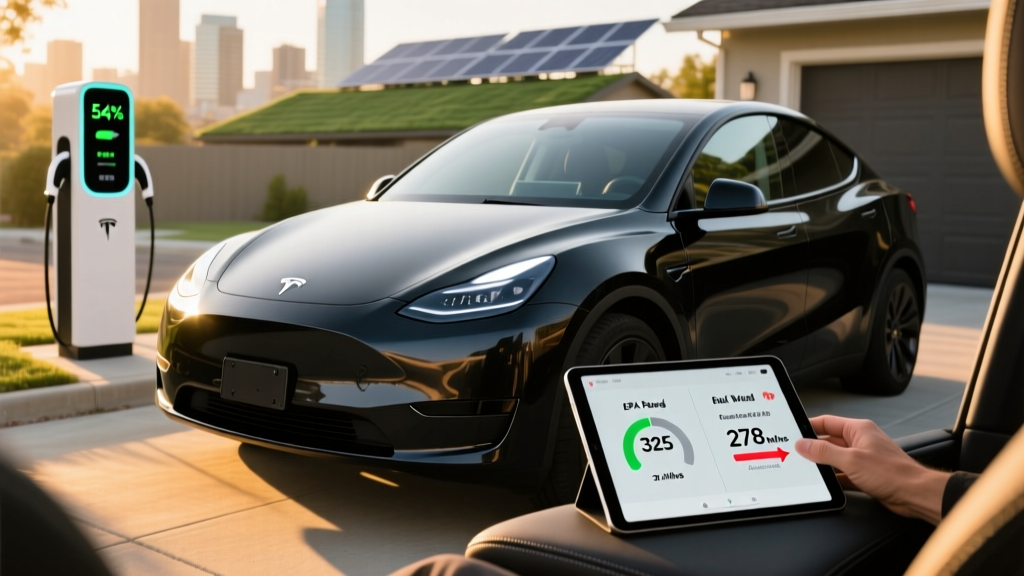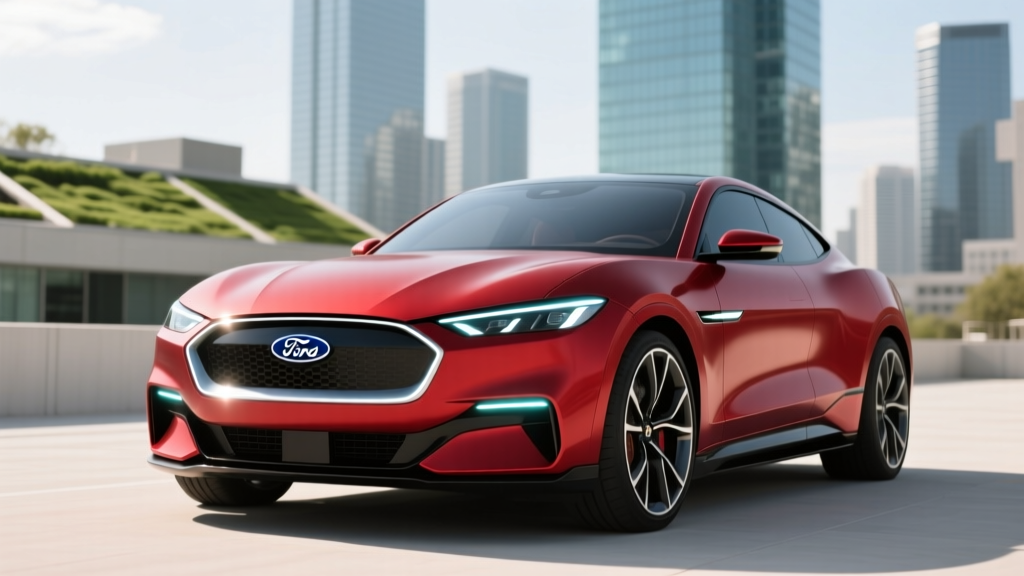
Ford's Mustang electric cars — specifically the Mustang Mach-E lineup — are the Blue Oval's answer to the Tesla Model Y, Hyundai Ioniq 5, and Volkswagen ID.4. For 2026, the Mach-E continues as a two-row electric crossover with three battery/drivetrain configurations, EPA range spanning roughly 250 to 320 miles, and pricing that starts in the low $40,000s before incentives. If you're cross-shopping a Mustang EV against a gas Mustang or a rival electric SUV, the short answer is this: the Mach-E is a practical daily-driver EV with competitive charging, decent real-world range, and Ford's BlueCruise hands-on-wheel assist — but it is not a sports car, and its value hinges heavily on your access to home charging and current federal tax-credit eligibility.
Quick Answer: Are Mustang Electric Cars Worth It?
The 2026 Ford Mustang Mach-E makes sense if you want a mainstream-brand EV with 250-320 miles of EPA range, DC fast charging up to ~150 kW, access to the Tesla Supercharger network via NACS, and available BlueCruise highway assist. It does not make sense if you need three rows, need a true sports car (the gas Mustang EcoBoost/GT still fills that role), or lack reliable Level 2 home or workplace charging. Real-world highway range typically lands 15-20% below EPA; cold-weather range can drop 25-35%.
2026 Mustang Mach-E: Range, Battery, and Charging by Trim
The Mach-E is offered in Select, Premium, California Route 1 (RWD only), and GT trims, with Standard Range (~70 kWh usable, LFP chemistry) and Extended Range (~91 kWh usable, NMC chemistry) battery packs. LFP (lithium iron phosphate) batteries tolerate regular 100% charging and tend to degrade more slowly over time, but they're heavier and offer less range per pound than NMC (nickel manganese cobalt). Here's how the numbers stack up:
| Trim / Config | Battery (kWh usable) | Chemistry | EPA Range | 0-60 mph | HP / lb-ft | Base MSRP* |
|---|---|---|---|---|---|---|
| Select SR RWD | ~70 | LFP | ~250 mi | ~6.2 sec | 266 / 317 | ~$42,995 |
| Premium ER RWD | ~91 | NMC | ~320 mi | ~5.8 sec | 290 / 317 | ~$48,995 |
| Premium ER AWD | ~91 | NMC | ~290 mi | ~5.1 sec | 346 / 428 | ~$51,995 |
| GT ER AWD | ~91 | NMC | ~280 mi | ~3.5 sec | 480 / 634 | ~$62,995 |
*MSRP figures are approximate for the 2026 model year and exclude destination. Verify at Ford's spec pages; trims and pricing shift annually.
Real-World Range Reality Check
EPA sticker: up to 320 miles (Premium ER RWD).
Real-world highway (70 mph, mild weather): expect ~255-275 miles.
Cold weather (below 30°F) combined driving: expect ~210-240 miles due to cabin heating and battery resistance.
Mountain/towing: significant further reduction. The Mach-E's max towing is just 1,500 lbs — this is not a truck.
Charging the Mach-E on DC fast chargers peaks around 150 kW on Extended Range packs, yielding a 10-80% charge in roughly 38-45 minutes. That's noticeably slower than the Hyundai Ioniq 5 or Kia EV6 (which peak near 240 kW on 800V architecture and hit 10-80% in ~18 minutes). Level 2 home charging at 11.5 kW adds about 30 miles of range per hour — a full overnight session easily replenishes a day's driving.
Mustang EV vs Gas Mustang vs Hybrid SUV: The Data
The "Mustang" badge causes real confusion. The gas Mustang (EcoBoost and GT) is a two-door sports coupe/convertible. The Mach-E is a four-door electric crossover that shares little beyond branding. They serve completely different use cases. A more honest comparison is against gas-powered midsize crossovers or hybrid alternatives like the Ford Escape PHEV or Toyota RAV4 Hybrid.
| Metric | 2026 Mach-E Premium ER RWD | 2026 Mustang EcoBoost | 2026 RAV4 Hybrid AWD |
|---|---|---|---|
| Powertrain | BEV (91 kWh NMC) | 2.3L Turbo I-4 | 2.5L Hybrid |
| EPA Range / MPG | ~320 mi / 101 MPGe | ~24 mpg combined | ~39 mpg combined |
| 0-60 mph | ~5.8 sec | ~5.1 sec | ~7.4 sec |
| Starting MSRP | ~$48,995 | ~$32,500 | ~$34,000 |
| Fuel/Energy Cost (15k mi/yr) | ~$550-$800 | ~$1,900 | ~$1,200 |
| Cargo (rear seats up) | 29.7 cu ft | 13.5 cu ft (trunk) | 37.6 cu ft |
| Maintenance (5-yr est.) | ~$1,200 | ~$3,500 | ~$2,800 |
The Mach-E wins on operating cost and straight-line acceleration (in GT form), but the gas Mustang is cheaper, lighter, and more engaging to drive. The RAV4 Hybrid is the pragmatic choice if you lack home charging and want lower upfront cost with strong cargo space.
Real Costs: Purchase, Charging, Insurance, and Maintenance
Sticker price is only part of the equation. Here's a five-year ownership snapshot comparing a Mach-E Premium ER RWD against a comparably equipped gas crossover, assuming 15,000 miles per year, $0.14/kWh home electricity, and $3.40/gallon gas.
| Cost Category (5 Years) | Mach-E Premium ER RWD | Gas Crossover (~25 mpg) |
|---|---|---|
| Purchase (after est. incentives) | ~$41,495 (with $7,500 credit if eligible) | ~$38,000 |
| Energy / Fuel | ~$3,500 (mostly home L2) | ~$10,200 |
| Maintenance | ~$1,200 | ~$3,500 |
| Insurance (avg.) | ~$10,500 | ~$7,500 |
| Estimated Depreciation | ~$18,000 | ~$14,000 |
| Total 5-Year | ~$74,695 | ~$73,200 |
The Mach-E's fuel and maintenance savings are substantial — roughly $9,000 over five years — but higher insurance premiums and steeper EV depreciation (a persistent trend as battery costs drop and used-EV supply grows) narrow the gap. Your actual numbers depend on local electricity rates, how much public DC fast charging you rely on (which costs $0.35-$0.55/kWh at networks like Electrify America), and your insurance profile. Get quotes before committing.
Federal Tax Credit: §30D Eligibility Is Not Guaranteed
Under current IRS §30D rules, the Mach-E may qualify for up to $7,500, split between a $3,750 critical-minerals component and a $3,750 battery-components component. Eligibility hinges on:
- MSRP cap: SUVs must be under $80,000 — all Mach-E trims clear this.
- Buyer income cap: AGI ≤ $150,000 (single), $225,000 (head of household), $300,000 (joint).
- Battery sourcing: Critical-mineral and battery-component requirements tighten annually; Ford has worked to localize supply, but verify the specific VIN's eligibility on fueleconomy.gov before purchase.
- Point-of-sale transfer: You can apply the credit as a down-payment reduction at the dealer rather than waiting for tax filing.
Rules are subject to change. Consult a tax professional and check the IRS's latest guidance — never assume the full $7,500 without confirming.
First-Time EV Buyer: What You Actually Need to Know
If the Mach-E is your first EV, the ownership experience differs from gas cars in ways that aren't obvious from a spec sheet:
Home charging is non-negotiable for most owners. Level 1 (120V) charging adds only ~3-4 miles per hour — unusable as a primary strategy for the Mach-E's 70-91 kWh battery. A Level 2 (240V, 48-amp) home charger adds ~30 miles per hour and costs roughly $600-$1,200 for the unit plus $800-$2,500 for electrician installation, depending on whether your panel needs a 200-amp upgrade. Without home or workplace Level 2, EV ownership becomes a chore of public-charger hunting.
The NACS advantage. Ford adopted the Tesla NACS connector for the Mach-E starting with the 2025 model year, granting native access to the Tesla Supercharger network (over 25,000 stalls in North America) without an adapter. This is a meaningful reliability edge over CCS-only vehicles, as Superchargers consistently outperform other networks in uptime.
Preconditioning matters. Use the Mach-E's scheduled departure or navigation-to-charger preconditioning to warm the battery before DC fast charging — especially in cold weather. Skipping this can cut peak charge rates from 150 kW to under 70 kW, nearly doubling your stop time.
Regenerative braking changes how you drive. The Mach-E offers one-pedal driving mode, which uses aggressive regen to slow the car when you lift off the accelerator. Most owners prefer it after a week of adjustment; it also reduces brake wear dramatically.
Common Misconceptions About Mustang Electric Cars
| Myth | Fact |
|---|---|
| "The Mach-E is just a Mustang with batteries." | It shares no chassis, powertrain, or body panels with the gas Mustang. It's a dedicated EV crossover on Ford's GE2 platform. |
| "EV batteries need replacing every 5 years." | Ford warranties the Mach-E battery for 8 years / 100,000 miles against capacity dropping below 70%. Industry data shows most NMC packs retain 85-90% capacity at 100k miles; LFP packs often fare better. |
| "You can't road-trip an EV." | With NACS Supercharger access and 250-320 miles of range, the Mach-E handles road trips fine — expect 25-40 minute stops every 2-3 hours for DC fast charging. |
| "EVs are worse in winter." | Range drops 25-35% in sub-freezing temps (real, not a myth), but the Mach-E's heat pump (standard on ER trims) mitigates cabin-heating energy draw. Preconditioning while plugged in preserves range. |
| "BlueCruise is self-driving." | BlueCruise is SAE Level 2 — hands-off on prequalified highway sections, but eyes-on with driver monitoring. You remain legally responsible. It is not autonomous. |
SAE Automation Level: BlueCruise Is Level 2
Ford's BlueCruise offers hands-free driving on over 130,000 miles of prequalified divided highways, but a driver-monitoring camera requires your eyes on the road. This is SAE Level 2 (partial automation), not Level 4 (driverless). You must remain prepared to take over at any moment.
Decision Framework: Should You Buy a Mustang Mach-E?
Choose the Mach-E If:
- You have (or can install) Level 2 home charging and drive under 250 miles daily.
- You value Supercharger network access via NACS without an adapter.
- You want a mainstream-brand EV with a dealer network for service.
- You qualify for at least part of the §30D federal credit, closing the price gap with gas crossovers.
- You want a quiet, quick, tech-forward daily driver with crossover practicality.
Look Elsewhere If:
- You lack reliable home or workplace charging and your area has sparse public DC infrastructure.
- You regularly tow more than 1,500 lbs or need three rows (consider the Ford Explorer EV or a PHEV).
- You want a genuine sports car — the gas Mustang GT or a Porsche Taycan fills that role better.
- You prioritize the fastest DC charging — the Ioniq 5/EV6 (800V, ~240 kW) outpace the Mach-E significantly.
- You live in a severe cold climate and can't precondition while plugged in — consider a PHEV like the RAV4 Prime for winter flexibility.
Frequently Asked Questions
Is the Mustang Mach-E a real Mustang?
In branding, yes. In engineering, no. The Mach-E is a dedicated electric crossover that shares the Mustang name for marketing cachet but has no mechanical relationship to the gas Mustang coupe. Ford has since softened the controversy by delivering strong performance (the GT's 3.5-second 0-60) and offering track-oriented drive modes, but it remains a family crossover first.
How long does the Mach-E battery last?
Ford warranties the high-voltage battery for 8 years or 100,000 miles, guaranteeing it retains at least 70% of original capacity. Real-world data from high-mileage Mach-E owners and broader NMC battery studies suggest 85-92% retention at 100,000 miles is typical. Full battery replacement (rare) currently costs in the $15,000-$22,000 range out of warranty.
Can I charge the Mach-E at Tesla Superchargers?
Yes. Starting with the 2025 model year, the Mach-E ships with a native NACS charge port, granting direct access to Tesla's Supercharger network. Earlier 2021-2024 models with CCS ports can use Ford-approved NACS adapters. Check your specific model year's connector at Ford's EV page.
What does it cost to charge a Mach-E at home?
At the US average of ~$0.14/kWh, fully recharging the Extended Range 91 kWh battery from 10% to 100% costs roughly $11.50. For a typical 40-mile daily commute using ~12 kWh, you're spending about $1.70/day — versus $5-6/day in a 25 mpg gas crossover at $3.40/gallon.
Is the Mach-E good in snow and cold weather?
The AWD configurations (Premium AWD and GT) provide confident winter traction, and the heat pump on Extended Range trims improves cold-weather efficiency. However, expect 25-35% range loss in sustained sub-freezing temperatures. Preconditioning the battery while plugged in before departure recovers significant range and improves regenerative braking performance.
How does the Mach-E compare to the Tesla Model Y?
The Model Y offers slightly more range (up to ~330 miles EPA), faster Supercharger-native charging, a more mature software ecosystem, and lower starting prices. The Mach-E counters with a more conventional interior layout, physical controls, Ford dealer service access, and a slightly more car-like driving feel. Both use NACS in 2026, neutralizing Ford's former charging-network disadvantage.
For the latest EPA range and efficiency figures, always verify at fueleconomy.gov. For safety ratings, check NHTSA and IIHS before purchasing.