Quick Verdict: An EV Built for Gravel, Not Just the Grocery Run
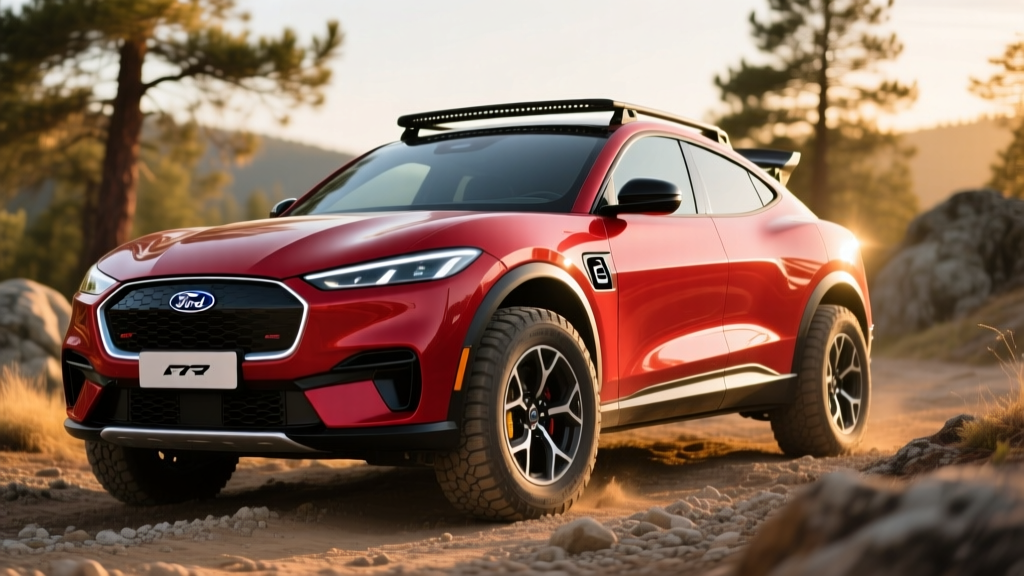
The Ford Mustang Mach-E Rally occupies a strange and compelling niche: a factory-lifted, rally-tuned electric crossover that trades a handful of miles of range for genuine dirt-road credibility. For the 2025 model year (carried into 2026 with minimal changes), Ford equipped the Rally with a 91 kWh usable extended-range battery, dual-motor all-wheel drive producing 480 horsepower, and a MagneRide suspension tuned for washboard roads and forest service trails. It is not a hardcore off-roader like a Rivian R1T, but it is something arguably more practical for most buyers — a daily-driver EV that can handle two-track roads, snowy mountain passes, and gravel shortcuts without flinching.
At a base MSRP of $59,995 before destination, the Rally sits near the top of the Mach-E lineup. It qualifies as a crossover under IRS §30D rules, which matters for tax credit eligibility. Below, we break down every number that matters — range, charging speed, real-world efficiency, cargo space, and total cost — so you can decide whether the Rally earns a spot in your garage.
Range, Battery, and Real-World Efficiency
| Spec | Value |
|---|---|
| EPA Estimated Range | 265 miles |
| Battery Capacity (Usable) | 91 kWh |
| Battery Chemistry | NMC (Nickel Manganese Cobalt) |
| EPA Efficiency | 84 MPGe combined (39 kWh/100 mi) |
| Drivetrain | Dual-motor AWD |
| Horsepower / Torque | 480 hp / 700 lb-ft |
| 0–60 mph | 3.5 seconds (est.) |
| Ground Clearance | 6.9 inches |
The EPA rates the Mach-E Rally at 265 miles. In mixed suburban and city driving at moderate temperatures (60–75°F), expect to see 240–260 miles on a full charge. Sustained highway driving at 75+ mph drops that to roughly 210–230 miles due to the Rally's higher ride height, all-terrain tires, and brick-like aerodynamic profile compared to the standard Mach-E. In cold weather (below 30°F), plan for a 20–30% range reduction, bringing real-world winter range to approximately 185–210 miles before you need to find a charger. Preconditioning the battery while plugged in mitigates some of this loss.
The 91 kWh NMC pack is the same extended-range unit found in the Mach-E GT, but the Rally's taller Michelin CrossClimate 2 all-terrain tires, increased frontal area from the rally-style body cladding, and additional weight from the MagneRide suspension system all conspire to reduce efficiency. At 39 kWh per 100 miles, the Rally is noticeably thirstier than the standard extended-range AWD Mach-E (which achieves around 33 kWh/100 mi). That translates to roughly 3–4 fewer miles per charge per hour of Level 2 charging — a meaningful difference on road trips.
For context, the EPA's fueleconomy.gov listing confirms the combined 84 MPGe figure. If your commute is under 50 miles round-trip and you charge at home nightly, the Rally's range is more than adequate. Road-trippers should plan charging stops every 180–200 miles to stay comfortable.
Charging Speed: DC Fast Charging and Home Level 2
| Charging Level | Power / Rate | Time / Miles Added |
|---|---|---|
| Level 1 (120V household) | ~1.4 kW | ~3–4 miles per hour |
| Level 2 (240V home, 48A) | 10.5 kW | ~25–28 miles per hour; full charge in ~9.5 hours |
| DC Fast Charge (peak) | 150 kW | 10–80% in ~38 minutes |
| DC Fast Charge (sustained avg.) | ~90–110 kW | ~150–180 miles added in 30 min |
The Mach-E Rally's peak DC fast-charge rate of 150 kW is its most significant competitive weakness. Rivals like the Hyundai Ioniq 5 (peak 235 kW on 800V architecture) and the Tesla Model Y (peak ~250 kW) can add equivalent range in roughly half the time. On a 350 kW Electrify America or EVgo station, the Rally will peak near 150 kW for the first 15–20% of the charge session, then taper steadily. The 10–80% session takes approximately 38 minutes — acceptable, but not class-leading.
The charge curve matters more than the peak number. The Rally sustains roughly 100–120 kW from 15–50% state of charge (SoC), then drops to 70–80 kW through 70%, and tapers sharply above 80%. If you're road-tripping and only need to get from 15% to 65%, you'll add about 130 miles in 20 minutes — reasonable for a lunch stop. Just don't plan on the quick 15-minute top-ups that 800V vehicles advertise.
At home on a properly installed 48-amp Level 2 charger (such as the Ford Charge Station Pro or a third-party unit like the Emporia Vue or Wallbox Pulsar Plus), the Rally's onboard charger accepts up to 10.5 kW. A full 0–100% charge takes roughly 9.5 hours, meaning an overnight session easily replenishes a day's driving. Most owners will plug in at 30–40% SoC and wake up at 80–90% — the sweet spot for NMC battery longevity.
Performance, Ride Quality, and Off-Road Capability
The Rally's 480 hp and 700 lb-ft of torque deliver a 0–60 mph time in the 3.5-second range, putting it firmly in sports-sedan territory despite the crossover ride height and 4,900-pound curb weight. The dual-motor AWD system provides excellent traction on loose surfaces, and Ford's RallySport drive mode recalibrates throttle response, stability control, and torque distribution for gravel and dirt.
The MagneRide adaptive dampers are the Rally's defining hardware upgrade. They absorb washboard ruts, potholes, and speed bumps with a compliance that the standard Mach-E simply cannot match. On pavement, the ride is firm but controlled — sportier than a Subaru Outback Wilderness, but less floaty than a traditional body-on-frame SUV. The 6.9 inches of ground clearance is modest by off-road standards (the Rivian R1S offers up to 14.9 inches), but it is sufficient for fire roads, snow-covered driveways, and campground trails. Approach and departure angles are improved over the standard Mach-E thanks to unique front and rear fascias.
The Michelin CrossClimate 2 tires (225/55R19) are an inspired choice — they carry the Three-Peak Mountain Snowflake rating for severe snow service while maintaining acceptable road noise and dry grip. They are not dedicated mud or rock-crawling tires, and the Rally will struggle in deep mud or technical rock crawling. This is a soft-roader, not a rock crawler, and Ford is transparent about that.
Interior Space, Cargo, and Technology
Inside, the Rally shares the 2025-refresh Mach-E cabin, which is a substantial improvement over the 2021–2023 interior. Key dimensions:
- Front headroom: 40.4 inches
- Front legroom: 43.3 inches
- Rear headroom: 38.9 inches
- Rear legroom: 38.9 inches
- Cargo volume (rear seats up): 29.7 cu ft
- Cargo volume (rear seats folded): 59.7 cu ft
- Front trunk (frunk): 4.7 cu ft (drainable, useful for wet gear)
The rear seat is comfortable for two adults on longer trips, though the floor-mounted battery raises the floor height and creates a somewhat knees-up seating position. Cargo space is competitive with the Tesla Model Y (30.2 cu ft rear seats up) and significantly larger than the Hyundai Ioniq 5 (27.2 cu ft).
The 15.5-inch portrait touchscreen runs Ford's latest SYNC 4A software with wireless Apple CarPlay and Android Auto, over-the-air updates, and a configurable digital instrument cluster. The Rally adds unique gauge-cluster graphics showing pitch/roll angles and a rally-inspired sport display. The BlueCruise hands-free driving system (SAE Level 2) is available on pre-approved divided highways — but it requires driver attention at all times and is not autonomous driving.
Pricing, Trims, and Federal Tax Credit Eligibility
| Item | Amount |
|---|---|
| Base MSRP (Rally trim) | $59,995 |
| Destination & Delivery | $1,995 |
| As-Tested Price (with accessories) | ~$63,500–$65,000 |
| Federal §30D Tax Credit (max) | Up to $7,500 (eligibility varies) |
| Effective Price After Max Credit | ~$54,490 (before state incentives) |
The Mach-E Rally is a single-trim model — there are no sub-packages to navigate beyond paint color and a few dealer-installed accessories. The $59,995 MSRP places it firmly in the premium EV crossover segment, competing with the Tesla Model Y Long Range (~$48,990), the Hyundai Ioniq 5 N (~$66,000), and the Subaru Solterra (~$44,995, though far less powerful).
Federal tax credit eligibility requires careful attention. Under current IRS §30D rules, the Mach-E Rally qualifies as a crossover/SUV, which carries an MSRP cap of $80,000 (vs. $55,000 for sedans). The Rally clears this easily. However, full credit eligibility depends on three factors that change regularly:
- Buyer income caps: Modified AGI must not exceed $150,000 (single), $225,000 (head of household), or $300,000 (joint). Check IRS §30D guidelines for current-year thresholds.
- Battery component sourcing: A percentage of battery components must be manufactured or assembled in North America, and critical minerals must be sourced from the U.S. or free-trade-agreement countries. These percentages increase annually, and Ford's supply chain compliance can shift model year to model year.
- Point-of-sale transfer: As of 2024, eligible buyers can transfer the credit to the dealer at purchase, reducing the out-of-pocket price directly. Confirm eligibility with your dealer and tax professional before signing.
The Mach-E is assembled in Cuautitlán, Mexico, and its battery sourcing has historically allowed partial or full credit qualification. However, because the critical-mineral and battery-component requirements tighten each year, you must verify current eligibility on the IRS clean vehicle credit page or with a qualified tax advisor before assuming the full $7,500 applies.
Warranty and Long-Term Ownership Costs
Ford backs the Mach-E Rally with the following warranty coverage:
- Bumper-to-bumper: 3 years / 36,000 miles
- Powertrain (incl. electric motors): 5 years / 60,000 miles
- High-voltage battery: 8 years / 100,000 miles (retains ≥70% capacity)
The 8-year/100,000-mile battery warranty is the industry standard for mainstream EVs and matches competitors like Hyundai, Kia, and Tesla. Ford defines battery failure as dropping below 70% of original capacity — a threshold consistent with most manufacturers. Real-world NMC degradation data from early Mach-E owners (2021–2023 models) suggests approximately 5–8% capacity loss at 60,000 miles when owners follow best practices (charging to 80% daily, avoiding frequent DC fast charging above 90% SoC, and preconditioning in cold weather).
Insurance costs run higher than average for the segment. Expect annual premiums of $2,200–$3,000 depending on your state, driving record, and coverage level — roughly 15–25% more than a comparably priced gas crossover, driven by higher repair costs for EV-specific components and the Rally's performance profile.
Pros, Cons, and the Competition
- Unique rally-tuned MagneRide suspension — genuinely capable on dirt and gravel
- 480 hp with 3.5-sec 0–60 — quick by any measure
- Spacious 29.7 cu ft cargo area plus drainable frunk
- SYNC 4A infotainment with wireless CarPlay/Android Auto
- Comfortable daily-driver ride quality despite off-road tuning
- CrossClimate 2 tires included — excellent all-season/all-weather capability
- 150 kW peak DC charge rate is slow for the segment
- 265-mi EPA range trails rivals (Model Y LR: 320 mi, Ioniq 5: 307 mi)
- 39 kWh/100 mi efficiency is thirsty for an EV crossover
- $59,995 MSRP is steep for a Mach-E variant
- Only 6.9 inches of ground clearance — limited for serious off-roading
- BlueCruise highway list still lags Tesla Supercharger network coverage
Key competitors to cross-shop:
- Tesla Model Y Long Range AWD ($48,990): 320-mi range, 250 kW peak charging, vastly superior Supercharger network. Less rugged, no off-road pretensions, but far more efficient and cheaper.
- Hyundai Ioniq 5 XRT (~$52,000): 290-mi range, 235 kW 800V charging, slightly more ground clearance. Faster charging, lower price, but less power and no MagneRide.
- Rivian R1S Dual-Motor (~$75,900): 352-mi range, genuine off-road capability with 14.9" ground clearance. Massively more capable off-road, but $16,000+ more expensive and larger.
- Subaru Solterra Wilderness (~$46,995): 227-mi range, 8.3" ground clearance, standard AWD. More affordable and more ground clearance, but significantly shorter range and slower charging.
Choose the Mach-E Rally if: You want a single vehicle that handles daily commuting, weekend gravel-road adventures, and snowy mountain passes without sacrificing EV efficiency entirely. You value ride quality and suspension sophistication over maximum range. You charge at home most nights and take road trips 3–4 times per year.
Choose a competitor if: Maximum range and fast charging are your top priorities (Model Y or Ioniq 5). You need serious rock-crawling or deep-water fording capability (Rivian R1S/R1T). You're on a tighter budget and don't need 480 hp (Solterra).
Frequently Asked Questions
What is the real-world range of the Mustang Mach-E Rally?
The EPA rates the Mach-E Rally at 265 miles. In real-world mixed driving, expect 240–260 miles in mild weather, 210–230 miles on the highway at 75+ mph, and 185–210 miles in freezing temperatures. The all-terrain tires and lifted suspension reduce efficiency compared to the standard Mach-E.
How fast does the Mach-E Rally charge at home and on DC fast chargers?
At home on a 48-amp Level 2 charger, the Rally adds about 25–28 miles of range per hour (10.5 kW), fully recharging in roughly 9.5 hours. On a DC fast charger, it peaks at 150 kW and completes a 10–80% charge in approximately 38 minutes. This is slower than rivals with 800V architectures.
Does the Mach-E Rally qualify for the $7,500 federal EV tax credit?
The Rally's MSRP falls under the $80,000 SUV/crossover cap, so it passes that threshold. Full credit eligibility depends on your income (AGI caps apply), and the battery's critical-mineral and component sourcing must meet current-year IRS requirements. These rules tighten annually — verify on IRS.gov or with a tax professional before purchase.
Is the Mach-E Rally worth it versus the Tesla Model Y or Ioniq 5?
It depends on your priorities. If range, charging speed, and price are paramount, the Model Y Long Range or Ioniq 5 are objectively better EVs. If you want a uniquely capable soft-roader with MagneRide comfort, rally styling, and 480 hp — and you charge primarily at home — the Rally offers something no competitor replicates exactly.
Can the Mach-E Rally handle real off-road trails?
The Rally is designed for fire roads, gravel, snow, and maintained dirt trails — not technical rock crawling or deep mud. Its 6.9 inches of ground clearance and all-terrain tires are adequate for moderate off-pavement use. Think Subaru Outback Wilderness capability, not Jeep Wrangler Rubicon.
What is the battery warranty on the Mach-E Rally?
Ford covers the high-voltage battery for 8 years or 100,000 miles, whichever comes first, guaranteeing it retains at least 70% of original capacity. Early Mach-E models have shown 5–8% degradation at 60,000 miles with proper charging habits.