The Honest Take: Living With the 2026 Mustang Mach-E
After three model-year refreshes since its debut, the Ford Mustang Mach-E has settled into its identity: a practical, tech-forward electric crossover that prioritizes daily usability over sports-car theatrics. If you've been searching for a candid Mustang Mach-E owner opinion, this review distills what life with Ford's electric pony actually looks like — from real-world highway range to public charging quirks, tax-credit math, and the ownership pain points Ford forums don't always surface.
The 2026 Mach-E carries over the Extended Range battery architecture introduced for 2024, with minor software and trim adjustments. It competes in the most crowded EV crossover segment in America against the Tesla Model Y, Hyundai Ioniq 5, Kia EV6, and Volkswagen ID.4. Here's what the numbers actually say.
2026 Mustang Mach-E Spec Sheet at a Glance
| Specification | Select RWD | Premium AWD | GT |
|---|---|---|---|
| EPA Range | 250 mi | 290 mi | 280 mi |
| Battery (usable) | 70 kWh (LFP) | 91 kWh (NMC) | 91 kWh (NMC) |
| Horsepower | 266 hp | 346 hp | 480 hp |
| 0-60 mph | 6.3 sec | 5.1 sec | 3.5 sec |
| Drivetrain | RWD single-motor | AWD dual-motor | AWD dual-motor |
| Peak DC Charge | 115 kW | 150 kW | 150 kW |
| 10-80% DC Time | ~38 min | ~36 min | ~36 min |
| MPGe (combined) | 101 MPGe | 98 MPGe | 86 MPGe |
| Base MSRP | $39,995 | $45,995 | $55,995 |
Source: fueleconomy.gov and Ford Motor Company 2026 specification sheets.
Real-World Range: What the EPA Sticker Doesn't Tell You
The EPA rates the Premium AWD Extended Range at 290 miles. That number is achievable — in city-dominant driving at moderate temperatures with climate control in auto mode. But owners who commute on highways or live in cold-weather states should calibrate expectations downward.
- EPA Combined: 290 miles
- Highway-dominant (70-80 mph, 65°F): ~245-260 miles
- Winter mixed driving (30°F, heater on): ~210-230 miles
- Deep cold (below 15°F, short trips): ~185-205 miles
The Mach-E uses a resistive PTC heater on most trims rather than a heat pump, which draws more energy in cold weather than competitors equipped with heat-pump systems (like the Ioniq 5 or Model Y). Preconditioning the cabin while plugged in at home is essential for preserving range in winter.
The Select trim's 70 kWh LFP (lithium iron phosphate) battery delivers 250 EPA miles but suffers less long-term degradation than the NMC packs. LFP chemistry tolerates regular 100% charging, so Select owners can charge to full daily without the range-buffer anxiety that NMC owners manage by stopping at 80-90%.
Charging Speed: Home and Public Networks
Charging speed is where owner opinions diverge most sharply. The Mach-E's peak DC fast-charge rate of 150 kW (Extended Range) is adequate but falls behind the Hyundai-Kia E-GMP platform's 240 kW on 350 kW chargers and the Tesla Model Y's ~250 kW peak. At a 350 kW Electrify America or EVgo stall, the Mach-E won't pull more than 150 kW — the vehicle, not the station, is the bottleneck.
| Charging Level | Power / Rate | Miles Added per Hour | Notes |
|---|---|---|---|
| Level 1 (120V household) | 1.4 kW | ~3-4 mi/hr | Emergency/top-up only |
| Level 2 (240V, 32A) | 7.7 kW | ~22 mi/hr | Standard home wall connector |
| Level 2 (240V, 48A) | 10.5 kW (onboard max) | ~30 mi/hr | Requires 60A circuit; full overnight charge |
| DC Fast (Extended Range) | Peak 150 kW | ~590 mi/hr (at peak) | 10-80% in ~36 min; tapers sharply above 80% |
| DC Fast (Standard/LFP) | Peak 115 kW | ~450 mi/hr (at peak) | 10-80% in ~38 min |
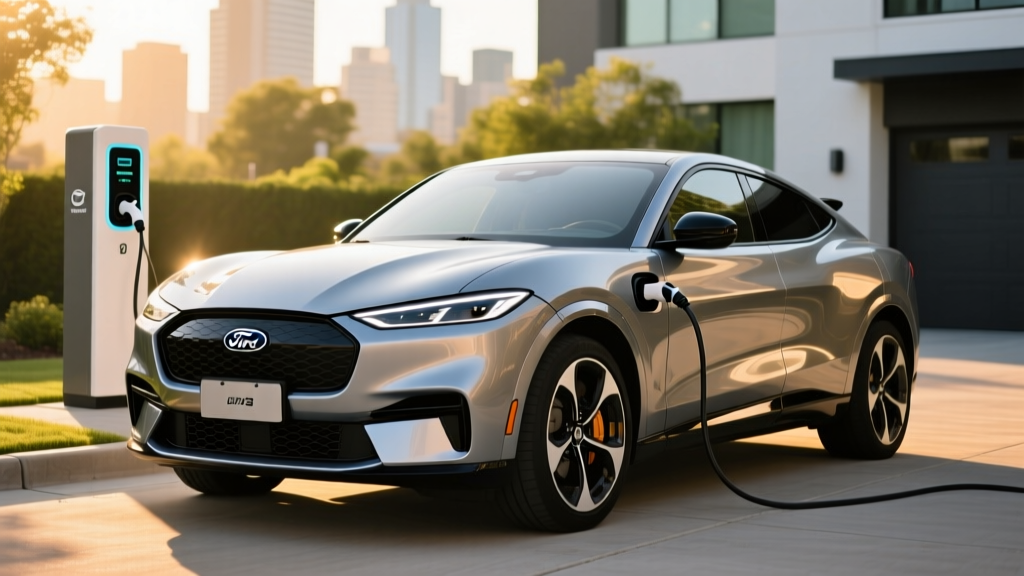
The onboard AC charger maxes at 10.5 kW (48 amps), which is competitive. A full Level 2 home charge from 10-100% takes roughly 9-10 hours for the Extended Range pack — manageable for overnight charging. The NACS adapter (included since 2024) opens access to Tesla Supercharger stalls, which consistently deliver more reliable plug-and-charge sessions than CCS-only networks in many regions.
Charge-curve reality: The Mach-E holds near-peak rate to roughly 55% SoC, then steps down to ~100 kW through 70%, and drops to ~50 kW above 80%. Plan road-trip stops to 10-80% rather than topping off — the last 20% can add 25+ minutes for just 40-50 miles of range.
Pricing, Trims, and Federal Tax Credit Eligibility
Here's what the 2026 lineup costs before incentives, and how the IRS §30D federal credit factors in:
| Trim | MSRP | Est. §30D Credit | Effective Price |
|---|---|---|---|
| Select RWD (LFP) | $39,995 | $3,750* | ~$36,245 |
| Premium RWD | $42,995 | $3,750* | ~$39,245 |
| Premium AWD | $45,995 | $3,750* | ~$42,245 |
| GT AWD | $55,995 | $3,750* | ~$52,245 |
*Credit amount reflects partial critical-minerals and battery-component sourcing compliance for 2026. Full $7,500 requires meeting both sourcing thresholds, which the Mach-E's supply chain does not fully satisfy as of the current tax year. Verify current eligibility on IRS.gov §30D before purchasing — rules change annually.
- Vehicle MSRP must not exceed $80,000 for SUVs/crossovers (all Mach-E trims qualify)
- Buyer AGI cap: $150,000 single / $300,000 married filing jointly
- Battery components must meet phased-in North American manufacturing thresholds
- Critical minerals must meet phased-in sourcing thresholds from the U.S. or FTA partners
- Credit is transferable to the dealer at point of sale as an upfront discount (requires seller report filing)
- Consult a tax professional — individual circumstances vary
Daily Driving: Space, Tech, and What Owners Actually Notice
The Mach-E's cabin is genuinely practical for a family of four. Rear legroom measures 38.9 inches, and the cargo area behind the second row provides 29.7 cubic feet — expanding to 59.7 cu ft with seats folded. The front trunk (frunk) adds 4.7 cu ft with a drain plug, useful for ice and beverages at tailgates.
Ford's SYNC 4A infotainment runs on a 15.5-inch vertical touchscreen. The interface is responsive, supports wireless Apple CarPlay and Android Auto, and includes an EV-specific navigation system that preconditions the battery when a DC fast-charger is set as your destination. BlueCruise, Ford's SAE Level 2 hands-free driving assist, works on over 130,000 miles of pre-mapped divided highways. It's a legitimate road-trip fatigue reducer — but it is not self-driving. Your eyes must stay on the road, and the driver-monitoring camera will nag you if they don't.
BlueCruise provides hands-free steering and speed control on qualified highways, but the driver must remain attentive and ready to take over at any moment. This is fundamentally different from Level 4 robotaxi services like Waymo. Treat it as advanced cruise control, not autonomous driving.
Notable owner gripes surface consistently on forums and in long-term reviews:
- No heat pump: Cold-weather range loss is steeper than the Model Y or Ioniq 5, both of which use heat-pump HVAC systems.
- Phantom drain: Owners report 1-3% daily SoC loss when parked, mitigated by disabling sentry-style features and preconditioning timers when not needed.
- Ride firmness: The GT trim's adaptive damping is sporty but transmits more road imperfection than competitors; the Premium trim rides more compliantly.
- Phone-as-a-key reliability: Bluetooth-based passive entry has intermittent connection delays; carrying the key fob as backup is recommended.
Pros and Cons: The Owner-Verified Scorecard
- NACS adapter included — full Supercharger network access
- Spacious cabin with usable frunk and 59.7 cu ft max cargo
- BlueCruise is one of the best Level 2 systems available
- LFP option on Select trim allows worry-free 100% daily charging
- Competitive pricing before incentives
- Strong dealer/service network compared to startup brands
- DC fast-charge rate (150 kW peak) lags Hyundai/Kia/Tesla rivals
- No heat pump — cold-weather range suffers
- Federal tax credit is partial (~$3,750), not the full $7,500
- Phone-as-a-key Bluetooth can be unreliable
- GT trim ride quality is firm for daily commuting
- Regen braking lacks true one-pedal strength vs. competitors
Warranty and Long-Term Battery Confidence
Ford covers the Mach-E's battery and electric powertrain for 8 years or 100,000 miles, whichever comes first. The warranty guarantees the battery will retain at least 70% of its original capacity during that period. The bumper-to-bumper limited warranty runs 3 years / 36,000 miles.
For the NMC Extended Range packs, Ford recommends daily charging to 90% and only charging to 100% before long trips. The LFP pack in the Select trim has no such restriction — charge it to 100% regularly for best cell-balancing results. Long-term degradation data from 2021-2023 model-year owners suggests the NMC packs lose approximately 5-8% capacity over the first 60,000 miles, which is within industry norms.
Battery replacement costs, should you need one out of warranty, are estimated at $12,000-$18,000 depending on pack size — a figure worth considering if you plan to keep the vehicle past the 100,000-mile mark.
How It Compares: Mach-E vs. the Segment
If you're cross-shopping, here's where the Mach-E lands against key rivals:
- vs. Tesla Model Y Long Range: Model Y wins on charging speed (~250 kW peak), Supercharger convenience (though the gap has closed with NACS adapters), and efficiency. Mach-E wins on build quality, dealer service access, and BlueCruise polish.
- vs. Hyundai Ioniq 5: Ioniq 5 charges dramatically faster (240 kW on 350 kW stations, 10-80% in ~18 min) and has a heat pump. Mach-E offers more rear cargo volume and a more intuitive infotainment system.
- vs. Volkswagen ID.4: ID.4 is cheaper and more comfortable, but charges slower and has less range. Mach-E is the better road-trip vehicle; ID.4 is the better value commuter.
- Choose the Mach-E if: you want a mainstream-brand EV with strong dealer support, NACS Supercharger access, a spacious cabin for family duty, and hands-free highway driving via BlueCruise — and your daily commute fits within ~200 miles round-trip.
- Look elsewhere if: DC fast-charge speed is your top priority (Ioniq 5/EV6), you regularly drive in sub-20°F weather and need heat-pump efficiency (Model Y), or you need the full $7,500 federal credit to make the math work.
Frequently Asked Questions
What is the real-world range of the Mustang Mach-E?
The Premium AWD Extended Range is EPA-rated at 290 miles. In real-world highway driving at 70-80 mph in mild weather, expect 245-260 miles. In winter conditions (30°F and below), plan for 210-230 miles. The Select LFP trim rates at 250 EPA miles with proportionally similar real-world reductions.
How fast does the Mach-E charge at home and on road trips?
At home on a 240V Level 2 charger (48A), the Mach-E adds roughly 30 miles per hour and fully charges overnight in ~9-10 hours. On DC fast chargers, the Extended Range model peaks at 150 kW and charges from 10-80% in approximately 36 minutes. The LFP Select model peaks at 115 kW with a similar 10-80% time of ~38 minutes.
How much does the Mach-E cost after the federal tax credit?
The 2026 Mach-E starts at $39,995 for the Select RWD. With the current partial §30D credit of approximately $3,750 (subject to battery-sourcing rules), effective pricing starts around $36,245. The popular Premium AWD lands near $42,245 after credit. Always verify eligibility on IRS.gov before purchase.
Does the Mustang Mach-E qualify for the full $7,500 federal EV tax credit?
Not currently. Due to battery-component and critical-minerals sourcing requirements under §30D, the Mach-E qualifies for a partial credit (approximately $3,750 for the 2026 tax year). Eligibility rules change annually, so check the latest IRS guidance. The credit can be transferred to the dealer as a point-of-sale discount if you meet income requirements.
Is the Mach-E worth buying vs. the Tesla Model Y or Ioniq 5?
It depends on your priorities. The Mach-E excels in cabin quality, BlueCruise functionality, dealer service accessibility, and family-friendly cargo space. The Model Y charges faster and is more efficient. The Ioniq 5 charges significantly faster and includes a heat pump. If you value mainstream-brand reliability and don't need class-leading charge speeds, the Mach-E is a strong choice.
What are the biggest pros and cons owners report?
Owners consistently praise the driving dynamics, cabin space, NACS Supercharger access, and BlueCruise. The most common complaints are the lack of a heat pump (cold-weather range loss), moderate DC charging speed compared to Korean rivals, occasional Bluetooth key glitches, and firm ride quality on the GT trim.
Editorial note: Specifications reflect 2026 model-year data available at publication. Pricing, tax-credit eligibility, and feature availability are subject to change. Always confirm with your local Ford dealer and a qualified tax professional before purchasing.