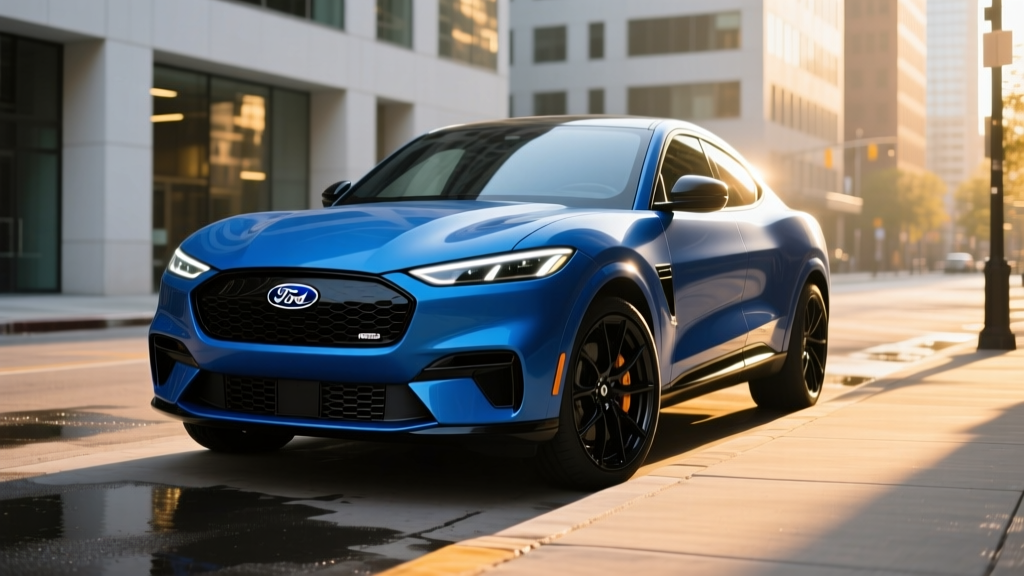
Is the Ford Mustang Mach-E Plagued by Malfunctions?
Search forums, Reddit threads, or owner Facebook groups for "Mustang Mach-E malfunction" and you will find a trail of anxiety: 12V battery drain warnings, phantom "Stop Safely Now" alerts, and drive-motor software hiccups that leave owners stranded at charging stations. For a vehicle that wears the Mustang badge and starts above $43,000, these reports sting.
But context matters. The 2026 Ford Mustang Mach-E enters its fifth model year with meaningful software refinements, a refreshed battery thermal-management system, and a growing body of reliability data that lets us separate early-adopter gremlins from systemic defects. This review puts the malfunction conversation alongside the hard specs — EPA range, DC fast-charging curves, battery chemistry, cargo volume, and §30D tax-credit eligibility — so you can decide whether the Mach-E's strengths outweigh its documented weak points.
2026 Mustang Mach-E Spec Sheet at a Glance
| Specification | Select (RWD) | Premium AWD | GT |
|---|---|---|---|
| EPA Range | 250 mi | 290 mi (Ext. Range: 320 mi) | 280 mi (Ext. Range: 300 mi) |
| Battery (usable kWh) | 70 kWh (LFP) | 91 kWh (NMC) | 91 kWh (NMC) |
| Horsepower | 266 hp | 365 hp | 480 hp |
| 0-60 mph | 6.3 sec | 5.1 sec | 3.5 sec |
| Drivetrain | RWD single-motor | AWD dual-motor | AWD dual-motor |
| Max DC Fast Charge | 115 kW | 150 kW | 150 kW |
| 10-80% DCFC Time | ~38 min | ~45 min | ~45 min |
| Level 2 Home Charge | 10.5 kW (~30 mi/hr) | 10.5 kW (~30 mi/hr) | 10.5 kW (~30 mi/hr) |
| MPGe (combined) | 101 MPGe | 94 MPGe | 84 MPGe |
| Base MSRP (2026) | $43,495 | $48,995 | $59,995 |
| Battery Warranty | 8 years / 100,000 miles (≥70% capacity retention) | ||
Sources: EPA fueleconomy.gov, Ford Motor Company.
The Malfunction Conversation: What the Data Actually Shows
Before addressing range and charging, let us confront the keyword that brought you here. The most frequently reported Mustang Mach-E malfunction categories across NHTSA owner complaints and owner-community databases fall into three buckets:
- 12V auxiliary battery drain. The Mach-E uses a conventional 12V lead-acid battery to power computers, lighting, and contactors that close the high-voltage circuit. If the vehicle sits for 7-10 days without driving, or if the DC-DC converter software enters a parasitic loop, the 12V battery can die — rendering the car unable to start even though the main traction battery is full. Ford issued a software update in late 2024 to improve DC-DC converter wake logic, and 2025-2026 models ship with a revised AGM 12V unit with higher reserve capacity.
- "Stop Safely Now" / drive-motor shutdown. A subset of 2021-2023 Mach-E vehicles experienced high-voltage battery contactor overheating under repeated full-throttle acceleration (particularly in GT trims). Ford's recall 22S41 addressed this with new contactor hardware and software torque-limiting. The 2026 model year uses the revised contactor assembly from the factory.
- Infotainment and SYNC 4A freezes. The 15.5-inch vertical touchscreen running SYNC 4A occasionally freezes or reboots. Over-the-air (OTA) updates in 2025 improved stability, but some owners report Bluetooth-pairing drops and delayed navigation rerouting. This is an annoyance, not a safety defect.
For perspective, the Mach-E's NHTSA complaint volume remains moderate relative to units sold. You can search current complaints at nhtsa.gov/complaints by model year. The 2026 model benefits from four years of iterative fixes, making it the most reliable Mach-E generation to date — though no EV this complex is immune to software-driven warnings.
Real-World Range vs. the EPA Sticker
EPA Estimate: 290 miles (Premium AWD, Standard Range) / 320 miles (Extended Range)
Real-World Expectation: ~245-270 miles on mixed highway driving at 70-75 mph; ~200-230 miles in sustained cold weather (below 32°F) without preconditioning.
The Mach-E Premium AWD Extended Range's 320-mile EPA figure is competitive with the Hyundai Ioniq 5 Long Range AWD (307 mi) and Volkswagen ID.4 Pro S AWD (291 mi). But EPA testing uses a weighted city/highway cycle with moderate speeds and climate control off for a portion of the test. On a flat 70-mph highway run at 72°F, expect approximately 265-280 miles from the 91 kWh (usable) Extended Range pack. Push speeds to 80 mph or encounter elevation changes, and 245 miles is realistic.
Cold weather is the Mach-E's Achilles' heel. Without the available heat pump (standard on Premium and GT, optional on Select), resistive cabin heating can consume 3-5 kW continuously, cutting range by 25-35% in sub-freezing conditions. Preconditioning the battery while plugged in — using the FordPass app to set a departure time — mitigates this by warming the pack on grid power rather than battery power.
The base Select trim's 70 kWh LFP (lithium iron phosphate) battery sacrifices range (250 mi EPA) but gains longevity: LFP chemistry tolerates daily 100% charging without the degradation concerns of NMC cells. Ford explicitly recommends charging LFP packs to 100% at least once weekly for accurate state-of-charge calibration.
Charging Speed: DC Fast Charge and Home Level 2
| Charging Level | Power / Connector | Speed (Approx.) |
|---|---|---|
| Level 1 (120V household) | 1.2 kW, J1772 | ~3 mi/hr |
| Level 2 (240V home/public) | 10.5 kW, J1772 or NACS (2025+) | ~30 mi/hr |
| DC Fast Charge (Standard Range) | 115 kW peak, CCS/NACS | 10-80% in ~38 min |
| DC Fast Charge (Extended Range) | 150 kW peak, CCS/NACS | 10-80% in ~45 min |
The Mach-E's DC fast-charging speed is its most conspicuous competitive weakness. The Extended Range pack peaks at 150 kW and sustains roughly 120-130 kW between 20-60% SoC before tapering sharply above 80%. Compare this to the Hyundai Ioniq 5's 800V architecture, which peaks at 240 kW and hits 10-80% in 18 minutes, or the Tesla Model Y Long Range at 250 kW and ~22 minutes for the same window.
For road-trippers who DCFC multiple times per day, the Mach-E's 45-minute 10-80% session adds meaningful stop time. For home-dominant chargers, this matters less: a 10.5 kW Level 2 home station (requiring a 48A-capable EVSE on a 60A breaker) replenishes the Extended Range pack from 20% to 100% in roughly 8 hours — easily overnight.
Starting with 2025 models, Ford transitioned the Mach-E to the NACS (Tesla-style) charge port, granting access to Tesla Supercharger V3/V4 stalls via the built-in port. Earlier 2021-2024 CCS-port Mach-Es can use Superchargers with Ford-provided CCS-to-NACS adapters. This dramatically expands the public fast-charging network for Mach-E owners — a significant practical advantage over CCS-only competitors still reliant on Electrify America or EVgo.
Pricing, Trims, and Federal Tax Credit Eligibility
| Trim | Base MSRP (2026) | Federal §30D Credit (Est.) | Effective Price |
|---|---|---|---|
| Select RWD | $43,495 | Up to $7,500* | ~$35,995 |
| Premium AWD Std. Range | $48,995 | Up to $7,500* | ~$41,495 |
| Premium AWD Ext. Range | $53,995 | Up to $7,500* | ~$46,495 |
| GT Ext. Range | $59,995 | Up to $7,500* | ~$52,495 |
*Federal §30D tax credit eligibility depends on multiple requirements per IRS rules: buyer AGI must not exceed $150,000 (single) / $300,000 (joint); vehicle MSRP must not exceed $80,000 for SUVs (all Mach-E trims qualify); and battery critical-mineral and component sourcing must meet annual phase-in thresholds. The credit can now be transferred to the dealer at point of sale as an immediate price reduction. Confirm eligibility with your tax professional before purchase — rules tighten annually.
The Mach-E's §30D eligibility has been volatile. Ford's final assembly occurs in Cuautitlán, Mexico — which does not disqualify the vehicle — but battery-cell sourcing and critical-mineral supply chains must satisfy IRS thresholds that escalate each year. As of early 2026, Ford has confirmed that most Mach-E trims qualify for at least a partial credit ($3,750-$7,500 depending on the trim's battery supplier). Always verify the current qualified-vehicles list on the IRS and DOE websites before signing paperwork.
Performance, Efficiency, and Daily Livability
The Mach-E GT's 3.5-second 0-60 mph time and 480 hp make it a genuine performance crossover, rivaling the Porsche Macan Electric on acceleration at a fraction of the price. The mid-tier Premium AWD delivers a respectable 5.1 seconds and 365 hp — more than adequate for highway merging and passing. The base Select RWD, at 266 hp and 6.3 seconds, is the efficiency champion at 101 MPGe combined (33 kWh/100 mi).
Interior space is competitive: 29.7 cubic feet of cargo volume behind the rear seats, expanding to 59.7 cu ft with the 60/40 split rear seats folded. Rear-seat legroom measures 38.9 inches — sufficient for adults on long trips. The front trunk (frunk) adds 4.7 cu ft of drainable, lidded storage — useful for charging cables or wet gear.
The 15.5-inch SYNC 4A portrait screen handles navigation, climate, and media, with wireless Apple CarPlay and Android Auto. Ford Co-Pilot360 Active 2.0 provides hands-on-lane-centering adaptive cruise (SAE Level 2 — you must remain attentive and keep hands available). Available BlueCruise enables hands-free highway driving on mapped divided highways — approximately 130,000 miles of qualified roads as of 2026 — though it remains SAE Level 2 and requires driver supervision at all times.
Pros
- NACS port standard — direct Supercharger access
- LFP battery option for daily-charge longevity
- Spacious cabin, practical frunk, strong cargo volume
- BlueCruise hands-free capability on mapped highways
- Competitive pricing after §30D credit
Cons
- DC fast-charge speed trails Ioniq 5 / Model Y by a wide margin
- 12V battery drain history (improved but not eliminated)
- Heat pump not standard on base Select trim
- Significant cold-weather range loss without preconditioning
- Infotainment SYNC 4A can lag or reboot intermittently
Who Should Buy the Mach-E — and Who Should Look Elsewhere
Buy the Mach-E if: You want a mainstream electric crossover with Supercharger access, generous cargo space, and a driving position that feels familiar to crossover upgraders. The Premium AWD Extended Range is the sweet spot — 320 miles EPA, dual-motor traction, heat pump, and BlueCruise eligibility at roughly $46,500 after the federal credit.
Look elsewhere if: You road-trip frequently and need the fastest possible DC charging (Hyundai Ioniq 5 or Kia EV6 with 800V architecture), you want the longest proven battery track record (Tesla Model Y), or you live in extreme cold and need maximum range retention (consider a larger pack or a PHEV bridge vehicle).
Frequently Asked Questions
What is the most common Mustang Mach-E malfunction?
The most widespread issue is 12V auxiliary battery drain after the vehicle sits unused for 7+ days. This prevents the high-voltage contactor from closing, leaving the car unresponsive despite a full main battery. Ford's 2024-2025 software updates and upgraded AGM 12V battery have reduced but not eliminated this issue. Keeping the vehicle plugged into Level 2 when parked for extended periods mitigates the risk.
Does the 2026 Mach-E qualify for the $7,500 federal EV tax credit?
Most trims qualify for at least a partial §30D credit, but the exact amount depends on battery critical-mineral and component-sourcing thresholds that change annually. Buyer income must not exceed $150,000 (single) or $300,000 (joint filing). The credit can be applied as a point-of-sale discount at the dealership. Always confirm on the IRS qualified-vehicles list before purchase.
How does Mach-E charging speed compare to the Ioniq 5 and Model Y?
The Mach-E Extended Range peaks at 150 kW DC and takes approximately 45 minutes for a 10-80% charge. The Hyundai Ioniq 5 peaks at 240 kW (10-80% in ~18 minutes), and the Tesla Model Y Long Range peaks at 250 kW (~22 minutes). For frequent road-trippers, the Mach-E's slower charging adds roughly 20-25 minutes per DCFC stop.
Is the LFP battery in the Select trim worth the range trade-off?
If you charge at home daily and rarely road-trip beyond 200 miles, the 70 kWh LFP pack's longevity advantage is compelling. LFP cells tolerate daily 100% charges with minimal degradation and are projected to retain >90% capacity at 150,000 miles. The trade-off is 250 miles EPA range (vs. 320 for NMC Extended Range) and slower 115 kW DC fast charging.
What does the Mach-E's battery warranty cover?
Ford covers the high-voltage battery for 8 years or 100,000 miles (whichever comes first), warranting that it will retain at least 70% of original capacity. If degradation exceeds 30% within the warranty period, Ford will repair or replace the battery to bring it above the 70% threshold. The powertrain (motors, inverters, reduction gear) is covered under the same 8-year/100,000-mile term.