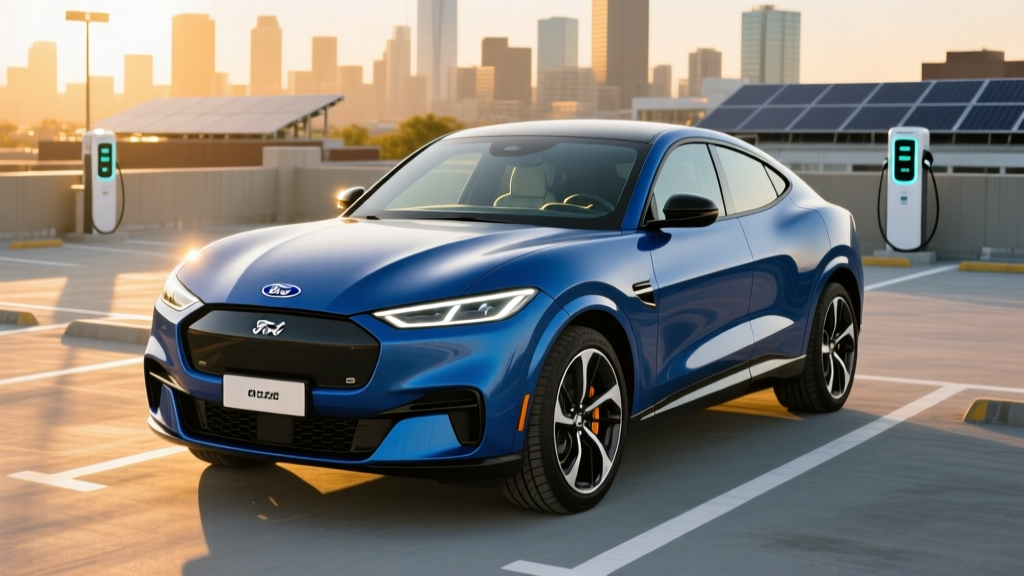
2026 Ford Mustang Mach-E: Lease Value Meets Practical EV Ownership
If you're researching Mustang Mach-E lease deals for 2026, you're likely weighing Ford's electric crossover against the Tesla Model Y, Hyundai Ioniq 5, and Kia EV6. The Mach-E remains one of the most driver-focused EVs in its class, but lease attractiveness depends on real-world range, charging speed, and how federal incentives stack up against monthly payments. This profile breaks down exactly what you're signing up for — EPA numbers, cold-weather reality, charging curves, and total cost.
Range, Battery, and Real-World Efficiency
The 2026 Mustang Mach-E carries over the battery options introduced in the 2024 refresh. Ford offers two pack sizes across Select, Premium, and GT trims:
| Specification | Standard Range | Extended Range | GT (Extended) |
|---|---|---|---|
| Usable Battery (kWh) | 75.7 kWh (NMC) | 91.0 kWh (NMC) | 91.0 kWh (NMC) |
| EPA Range (miles) | 250 mi (RWD) | 320 mi (RWD) / 290 mi (AWD) | 280 mi (AWD) |
| Efficiency (MPGe) | 103 MPGe combined | 101 MPGe combined | 84 MPGe combined |
| Energy Use (kWh/100mi) | 33 kWh | 33-34 kWh | 40 kWh |
| Drivetrain | RWD / eAWD | RWD / eAWD | eAWD (dual motor) |
Chemistry matters for longevity: Ford uses NMC (nickel manganese cobalt) cells in all Mach-E packs. NMC offers higher energy density than LFP (lithium iron phosphate), which is why the Extended Range fits 91 kWh in the same physical space. The trade-off is slightly faster calendar degradation and a recommendation to avoid holding at 100% state of charge for extended periods — daily charging to 80-90% is ideal.
Charging Speed: DC Fast, Level 2, and the Curve Reality
Charging infrastructure compatibility is a Mach-E strong suit. Ford transitioned to the NACS (North American Charging Standard) port for the 2025+ model years, granting native access to Tesla Supercharger stalls (15,000+ locations) without an adapter. Here's what charging actually looks like:
| Charging Level | Power / Rate | Time / Miles Added |
|---|---|---|
| Level 1 (120V household) | ~1.4 kW | ~4 miles per hour |
| Level 2 (240V home, 48A) | 11.5 kW | ~32 miles per hour; 0-100% in ~9.5 hrs (Extended) |
| DC Fast Charge (peak) | 150 kW (Standard) / 150 kW (Extended) | 10-80% in ~33 min (Extended) |
| DC Fast (sustained avg) | ~100-110 kW average | Real-world 10-80% closer to 38-42 min due to taper above 80% |
The 150 kW peak is competitive but not class-leading — the Ioniq 5 peaks at 240 kW on 800V architecture and hits 10-80% in ~18 minutes. For road-trippers who DC-charge frequently, the Mach-E's ~35-minute stops are acceptable but not exceptional. The charge curve holds near peak until ~60% SoC, then tapers progressively. This is typical for 400V NMC packs.
Home charging setup: Ford's Connected Charge Station (48A, hardwired) adds ~32 miles per hour of charging. Budget $500-$800 for the unit and $600-$2,000 for professional installation depending on whether your panel needs a 60A circuit upgrade. Most Mach-E lessees with a garage will find overnight Level 2 charging fully covers daily needs.
Performance, Handling, and Daily Drivability
| Trim | Horsepower | Torque (lb-ft) | 0-60 mph | Drivetrain |
|---|---|---|---|---|
| Select RWD | 266 hp | 317 | 5.8 sec | Rear-Wheel Drive |
| Premium AWD | 346 hp | 428 | 4.8 sec | Dual-Motor eAWD |
| GT | 480 hp | 600 | 3.5 sec | Dual-Motor eAWD |
The Mach-E's chassis tuning is the closest thing to a sports-sedan feel in the electric crossover segment. Steering is precise, body roll is controlled, and the GT's 3.5-second 0-60 time puts it in legitimate performance territory. The trade-off is ride firmness — you'll feel sharp pavement impacts more than in a Hyundai Ioniq 5 or Volkswagen ID.4.
Regenerative braking offers a one-pedal driving mode that's strong enough to bring the car to a full stop in traffic. The steering-wheel-mounted paddle lets you toggle regen intensity on the fly — a practical feature for drivers transitioning from ICE vehicles who want gradual adaptation.
Interior, Cargo, and Technology
The Mach-E's cabin centers on a massive 15.5-inch portrait touchscreen running Ford's SYNC 4A system with wireless Apple CarPlay and Android Auto. The vertical layout is polarizing — some find it intuitive, others miss physical climate controls (buried in menus). A 10.2-inch digital cluster sits behind the wheel.
Cargo and passenger dimensions:
- Rear cargo (seats up): 29.7 cu ft
- Rear cargo (seats folded): 59.7 cu ft
- Front trunk (frunk): 4.7 cu ft (drainable, useful for wet gear)
- Rear legroom: 38.9 inches
- Front headroom: 40.4 inches
Compared to the Tesla Model Y (30.2 cu ft rear, 72.1 cu ft folded), the Mach-E gives up some maximum cargo volume but compensates with a more traditional crossover shape that's easier to load. The frunk is smaller than the Model Y's but includes a drain plug — handy for ice and beverages on road trips.
Driver assistance: Ford's BlueCruise is a hands-free Level 2 system approved for use on 130,000+ miles of divided highways. It requires driver attention monitoring (camera-based eye tracking). This is not autonomous driving — you remain responsible. BlueCruise is included for 90 days on new Mach-Es, then transitions to a subscription (~$75/month or $800/year). Competitors like GM's Super Cruise cover fewer miles but offer similar capability.
Pricing, Lease Economics, and Federal Tax Credit
| Trim | Base MSRP (2026) | Est. Lease (36 mo, 10.5k mi/yr) | Federal §30D Credit Eligibility |
|---|---|---|---|
| Select RWD | $39,995 | $299-$379/mo | Up to $7,500 (subject to income + sourcing) |
| Premium AWD | $46,995 | $399-$489/mo | Up to $7,500 (subject to income + sourcing) |
| GT | $55,995 | $549-$649/mo | Up to $7,500 (subject to income + sourcing) |
Federal tax credit (§30D) rules for 2026: The Mach-E qualifies for up to $7,500, but eligibility depends on three factors:
- MSRP cap: SUVs/crossovers must be under $80,000 MSRP — all Mach-E trims qualify.
- Buyer income cap: AGI must not exceed $150,000 (single) / $300,000 (joint) / $225,000 (head of household).
- Battery sourcing: Critical minerals and battery components must meet escalating domestic-content thresholds. Ford has worked to shift Mach-E battery supply chains, but the exact credit amount ($3,750 or $7,500) depends on the specific build date and cell sourcing. Check the VIN on fueleconomy.gov before signing.
- Point-of-sale transfer: You can apply the credit as an immediate down-payment reduction at the dealer rather than waiting for tax filing.
Lease vs. buy calculus: Leasing bypasses the buyer-side tax credit (the lessor claims it), but competitive Ford Credit lease offers often bake in manufacturer incentives that approximate the credit's value. A $399/month Premium AWD lease with $3,500 due at signing is common in promotional periods. Compare this to a purchase at $46,995 minus $7,500 credit = $39,495 net, financed at 6.5% over 60 months (~$772/mo). Leasing wins on monthly cash flow; buying wins on equity and unlimited mileage.
Warranty, Reliability, and Ownership Costs
Ford backs the Mach-E with:
- Battery/Powertrain: 8 years / 100,000 miles (whichever comes first), covering capacity loss below 70% of original.
- Bumper-to-bumper: 3 years / 36,000 miles
- Corrosion: 5 years / unlimited miles
The 70% retention threshold is standard for the industry (Tesla uses the same). Real-world data from 2021-2023 Mach-E owners shows degradation of 5-8% over the first 60,000 miles, well within warranty parameters. NMC chemistry typically plateaus after the initial break-in period.
Insurance: Expect $150-$220/month for the Mach-E depending on trim, location, and driving record. The GT commands a premium. This is 10-15% higher than a comparable ICE crossover but in line with EV segment averages.
Maintenance: No oil changes, no transmission fluid, no spark plugs. Brake pad life extends to 80,000+ miles thanks to regen. Cabin air filter replacement every 20,000 miles (~$30 DIY). Total 5-year maintenance cost: ~$500-$800 vs. $2,500-$3,500 for a gas equivalent.
Pros, Cons, and Who Should Lease the Mach-E
Pros
- Engaging chassis and steering feel uncommon in EV crossovers
- NACS port provides native Supercharger access (15,000+ stalls)
- BlueCruise hands-free highway driving is mature and widely available
- Competitive lease pricing with manufacturer incentives
- Drainable frunk is practical for outdoor use
- Strong real-world range (260-280 mi highway, Extended RWD)
Cons
- DC fast charging peaks at 150 kW — slower than Ioniq 5/EV6 (240 kW)
- Ride quality is firm, especially on 20-inch GT wheels
- Portrait screen buries climate controls in menus
- BlueCruise requires paid subscription after 90-day trial
- GT efficiency drops to 84 MPGe — frequent charging on road trips
- NMC chemistry requires more SoC management than LFP
Who the Mach-E suits best:
- Commuters with home charging: Overnight Level 2 covers 95% of needs; BlueCruise reduces highway fatigue.
- Small families: Adequate rear seat and cargo for two kids + gear; frunk adds flexibility.
- Driving enthusiasts: GT trim delivers sports-car acceleration with crossover practicality.
- Not ideal for: High-mileage road trippers who prioritize ultra-fast charging (Ioniq 5 wins), or buyers wanting LFP longevity (Tesla Model Y RWD, base trim).
2026 Mustang Mach-E Lease Deals: FAQ
What is the real-world range of the 2026 Mustang Mach-E?
The Extended Range RWD achieves 320 miles EPA, but expect 260-280 miles on highway trips and 200-230 miles in cold weather (below 30°F). The Standard Range RWD delivers ~250 miles EPA, ~200-220 real-world highway.
How fast does the Mach-E charge at home and on DC fast chargers?
Level 2 home charging (48A, 11.5 kW) adds ~32 miles per hour, fully charging the Extended pack in ~9.5 hours. DC fast charging peaks at 150 kW, achieving 10-80% in ~33 minutes, though real-world stops average 38-42 minutes due to taper above 80% SoC.
Does the 2026 Mach-E qualify for the $7,500 federal EV tax credit?
Yes, subject to IRS §30D rules: buyer AGI under $150K (single) / $300K (joint), MSRP under $80K (all trims qualify), and battery sourcing compliance. The exact credit ($3,750 or $7,500) depends on critical-mineral and battery-component thresholds at time of delivery. Verify via IRS.gov or your dealer's point-of-sale system.
Is leasing the Mach-E better than buying in 2026?
Leasing offers lower monthly payments ($299-$489 typical) and lets you upgrade in 3 years as battery/charging tech evolves. Buying makes sense if you drive 15,000+ miles annually (lease penalties apply), want equity, and qualify for the full $7,500 credit. Many Ford Credit leases include manufacturer incentives that offset the lost buyer-side credit.
How does the Mach-E compare to the Tesla Model Y and Hyundai Ioniq 5?
The Mach-E offers superior steering feel and BlueCruise coverage vs. the Model Y, but the Tesla has more cargo space (72 cu ft) and slightly faster charging. The Ioniq 5 charges dramatically faster (18 min 10-80%) and has a more spacious rear seat, but less engaging handling. Choose the Mach-E for driving dynamics; choose Ioniq 5 for road-trip charging speed.
What are the biggest drawbacks of the Mustang Mach-E?
The 150 kW DC charging peak is outpaced by 800V competitors. The portrait infotainment screen buries climate controls. BlueCruise costs $800/year after the trial. The GT's 84 MPGe efficiency means more frequent charging stops on long trips.
Sources: fueleconomy.gov (2026 Mach-E EPA data), Ford Motor Company official specifications, IRS §30D Clean Vehicle Credit guidelines.