Quick Verdict: How Much Horsepower Does the Mustang Mach-E Actually Make?
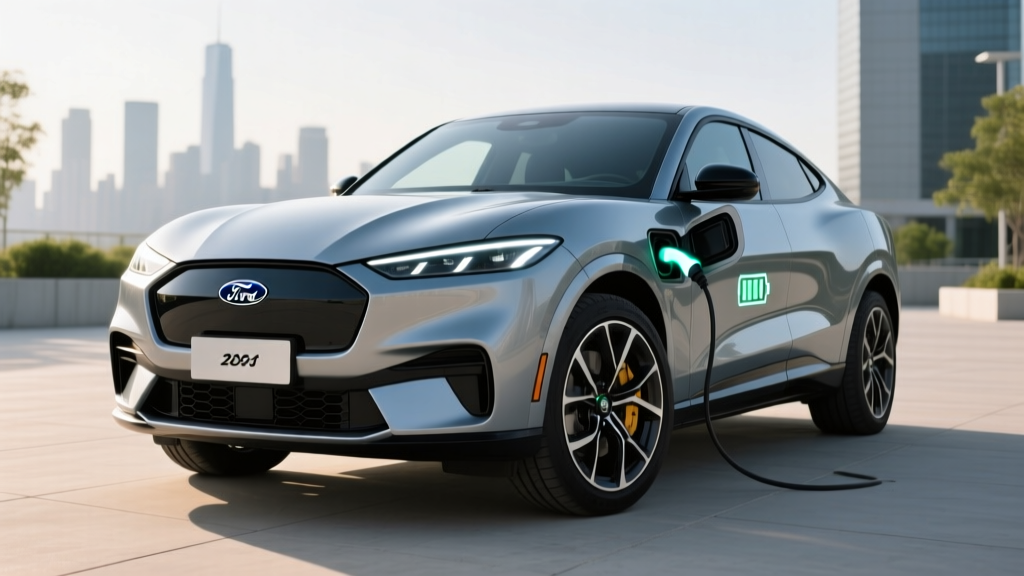
Ford's Mustang Mach-E enters the 2025 model year with a horsepower lineup that spans from a sensible 266 hp all the way to a tire-shredding 480 hp in the GT trim. But Mustang Mach-E horsepower isn't a single number — it's a menu. The figure you get depends entirely on the battery pack size and drivetrain configuration you choose, and each combination carries meaningful trade-offs in range, charging speed, and price.
After spending time with multiple Mach-E configurations and cross-referencing EPA data with real-world highway and cold-weather driving, this guide breaks down every powertrain option, what each actually feels like on the road, and which trim makes the most financial sense once you factor in the federal tax credit.
Mustang Mach-E Horsepower and Performance by Trim
The Mach-E's power output is determined by two variables: battery size (Standard Range vs. Extended Range) and motor configuration (rear-wheel drive single motor vs. all-wheel drive dual motor). Here's the complete 2025 breakdown:
| Trim | Drivetrain | Horsepower | Torque (lb-ft) | 0-60 mph | Battery (kWh usable) |
|---|---|---|---|---|---|
| Select RWD | RWD (single motor) | 266 hp | 317 | 6.1 sec | 70 kWh (LFP) |
| Select AWD | AWD (dual motor) | 312 hp | 434 | 5.1 sec | 70 kWh (LFP) |
| Premium RWD (ER) | RWD (single motor) | 290 hp | 317 | 5.8 sec | 91 kWh (NMC) |
| Premium AWD (ER) | AWD (dual motor) | 365 hp | 434 | 4.8 sec | 91 kWh (NMC) |
| GT | AWD (dual motor) | 480 hp | 634 | 3.5 sec | 91 kWh (NMC) |
| Rally | AWD (dual motor) | 480 hp | 700 | 3.4 sec | 91 kWh (NMC) |
A few things jump out from this table. First, the switch to lithium iron phosphate (LFP) chemistry on the Standard Range pack is significant. LFP batteries are heavier and slightly less energy-dense than NMC, but they tolerate daily 100% charging without accelerated degradation — a major practical advantage for commuters who want to wake up to a full battery every morning without babying the state of charge. The Extended Range trims retain NMC chemistry for maximum energy density and range.
Second, the horsepower gap between the AWD Select (312 hp) and the Premium AWD Extended Range (365 hp) isn't just about the motor tune — the larger 91 kWh battery can deliver more sustained current to the motors. In practice, the 365 hp Premium AWD pulls harder above 60 mph, while the 312 hp Select AWD feels nearly identical in city driving below 45 mph.
EPA Range vs. Real-World: What You'll Actually Get
Horsepower is only half the story. Range is where the Mach-E's powertrain choices force real trade-offs — more hp almost always means fewer miles.
| Trim | EPA Range | Real-World Highway (70-80 mph) | Cold Weather (20°F, mixed) |
|---|---|---|---|
| Select RWD | 250 mi | ~210-225 mi | ~175-195 mi |
| Select AWD | 224 mi | ~190-205 mi | ~155-170 mi |
| Premium RWD (ER) | 320 mi | ~270-290 mi | ~225-250 mi |
| Premium AWD (ER) | 290 mi | ~250-265 mi | ~200-220 mi |
| GT | 280 mi | ~230-250 mi | ~185-210 mi |
| Rally | 265 mi | ~220-240 mi | ~175-200 mi |
Real-world estimates based on observed efficiency at highway speeds and cold-weather testing. Highway driving at 75+ mph reduces range 10-15% vs. EPA. Cold weather (below freezing) with cabin heating can reduce range 20-30%. Source: fueleconomy.gov
The Premium RWD Extended Range is the efficiency sweet spot — 320 miles EPA with a real-world highway range that still comfortably exceeds 270 miles. The GT sacrifices about 40 miles of EPA range for its 480 hp output, which is a reasonable trade if you're buying for performance, but it means more frequent charging stops on road trips.
Charging Speed: DC Fast Charge and Home Level 2
The Mach-E's charging performance depends heavily on which battery pack you have. Ford upgraded the DC fast-charging capability for recent model years, but the Standard Range LFP pack charges noticeably slower than the Extended Range NMC pack.
| Spec | Standard Range (70 kWh LFP) | Extended Range (91 kWh NMC) |
|---|---|---|
| Max DC Fast-Charge Rate | ~115 kW peak | ~150 kW peak |
| 10-80% DC Fast Charge | ~38 minutes | ~33 minutes |
| Sustained DC Rate (10-60%) | ~90-110 kW | ~120-145 kW |
| Level 2 Home Charge Rate | 10.5 kW (48A) | 10.5 kW (48A) |
| Level 2 Miles per Hour | ~30 mi/hr | ~30 mi/hr |
| Full Level 2 Charge (0-100%) | ~7 hours | ~9.5 hours |
| Charge Port | CCS1 (NACS adapter available) | CCS1 (NACS adapter available) |
A critical detail many spec sheets bury: peak kW is not sustained kW. The Extended Range pack peaks near 150 kW at a low state of charge (around 15-20%) but tapers to roughly 90-100 kW as you pass 60% SoC. This is normal lithium-ion charge-curve behavior, but it means your actual average charging rate on a road trip from 10-80% is closer to 115-120 kW, not the advertised 150 kW.
For home charging, both packs accept 10.5 kW on a Level 2 charger (requiring a 240V/48A circuit). Ford includes the Mobile Power Cord with the vehicle, which can deliver up to 30 amps on a 240V outlet — adequate for overnight charging but not the full 48A rate. Budget roughly $500-$1,200 for a hardwired Level 2 home charger installation, plus potential panel upgrade costs if your home's electrical service is below 100 amps.
Ford provides a NACS adapter for Tesla Supercharger access, significantly expanding the Mach-E's usable DC fast-charging network. This is a meaningful advantage for road trippers who previously relied solely on Electrify America or other CCS networks.
Efficiency: MPGe and Operating Costs
According to fueleconomy.gov, efficiency varies by trim:
- Select RWD: 105 MPGe combined (32 kWh/100 mi)
- Select AWD: 99 MPGe combined (34 kWh/100 mi)
- Premium RWD (ER): 104 MPGe combined (32 kWh/100 mi)
- Premium AWD (ER): 98 MPGe combined (34 kWh/100 mi)
- GT: 84 MPGe combined (40 kWh/100 mi)
At the national average electricity rate of ~$0.17/kWh (EIA, 2025), the Premium RWD costs roughly $5.44 to drive 100 miles at home. Compare that to a 25 MPG gas SUV at $3.30/gallon — $13.20 for the same distance. The GT, at 40 kWh/100 mi, costs about $6.80 per 100 miles on home electricity, still roughly half the cost of gasoline.
DC fast-charging costs more — typically $0.35-$0.55/kWh on networks like Electrify America — bringing road-trip fueling costs closer to gasoline parity. Plan your charging around overnight home sessions for maximum savings.
Pricing, Trims, and Federal Tax Credit Eligibility
The 2025 Mach-E lineup starts just under $38,000 and climbs to nearly $60,000 for the GT. Here's the trim-by-trim pricing with federal tax credit context:
| Trim | Base MSRP | As-Tested (typical options) | §30D Credit Eligible? |
|---|---|---|---|
| Select RWD | $37,995 | $39,500 | Yes — up to $3,750* |
| Select AWD | $40,995 | $42,500 | Yes — up to $3,750* |
| Premium RWD (ER) | $45,495 | $48,000 | Yes — up to $3,750* |
| Premium AWD (ER) | $48,495 | $51,000 | Yes — up to $3,750* |
| GT | $55,995 | $59,500 | Yes — up to $3,750* |
| Rally | $57,995 | $61,500 | Yes — up to $3,750* |
*Under IRS §30D rules, the Mach-E qualifies for up to $3,750 (meeting critical minerals requirements but not all battery-component sourcing thresholds as of 2025). The full $7,500 requires both critical minerals AND battery component compliance. Eligibility is subject to:
- MSRP cap: SUVs/vans/pickups must be under $80,000 MSRP — all Mach-E trims qualify
- Buyer income cap: Modified AGI ≤ $150,000 (single), $225,000 (head of household), $300,000 (joint)
- Point-of-sale transfer: Available — you can apply the credit as a down payment reduction at the dealer
- Battery sourcing: Critical minerals and component rules tighten annually; verify current-year compliance on the IRS qualified vehicles list before purchasing
- Vehicle assembly: Must be assembled in North America — the Mach-E is built in Cuautitlán, Mexico, which qualifies
Important: tax credit amounts and sourcing rules change frequently. Always verify the Mach-E's current eligibility on the IRS clean vehicle credit page and consult a tax professional before relying on the credit in your purchase decision.
Interior Space, Cargo, and Daily Practicality
The Mach-E is classified as a midsize SUV, and its dimensions reflect a vehicle designed around its skateboard platform — no transmission tunnel means a flat floor and generous interior volume.
- Cargo volume (behind rear seats): 29.7 cu ft
- Cargo volume (rear seats folded): 59.7 cu ft
- Front trunk (frunk): 4.7 cu ft (drainable — useful for wet gear or tailgating)
- Front legroom: 43.3 inches
- Rear legroom: 38.9 inches
- Towing capacity: Up to 2,200 lbs (AWD models with towing package)
The frunk is a standout feature — it's one of the few in the EV segment with an actual drain plug, making it practical for ice and beverages at a tailgate or muddy hiking boots after a trail run. Rear legroom is adequate for adults on shorter trips but tighter than a Hyundai Ioniq 5 or Tesla Model Y for tall passengers on long highway drives.
Tech, Driver Assistance, and Notable Drawbacks
The Mach-E runs Ford's SYNC 4A infotainment system on a vertically oriented 15.5-inch touchscreen. The interface is responsive, supports wireless Apple CarPlay and Android Auto, and includes over-the-air update capability. The 10.2-inch digital instrument cluster is clear and customizable.
Ford's BlueCruise hands-free driving system is available on the Mach-E (standard on GT, optional on Premium). It operates on pre-mapped divided highways — roughly 130,000 miles of compatible roads in the US and Canada. BlueCruise allows hands-off operation but requires eyes-on attention via a driver-monitoring camera.
BlueCruise is a Level 2 driver-assistance system. The driver must remain attentive and ready to take over at any time. It is not self-driving. Only Level 4 robotaxi services like Waymo operate without a human driver in defined areas.
Notable drawbacks:
- The Mach-E still ships with a CCS1 charge port. Tesla Supercharger access requires Ford's NACS adapter — functional but an extra step compared to native NACS vehicles.
- Regenerative braking is not strong enough for true one-pedal driving in most conditions, even in the highest regen setting. Drivers accustomed to Chevrolet or Tesla one-pedal modes will notice the difference.
- Road noise at highway speeds is more pronounced than in the Ioniq 5 or Model Y — Ford's insulation is adequate but not class-leading.
- The GT's 480 hp is thrilling but comes with noticeably firmer ride quality that some daily commuters find fatiguing on rough pavement.
Who Should Buy the Mustang Mach-E?
Choose the Select RWD ($37,995) if: You're a commuter with home charging who prioritizes value and LFP battery longevity over performance. 266 hp is more than adequate for highway merging, and the LFP pack tolerates daily 100% charges.
Choose the Premium RWD Extended Range ($45,495) if: You take regular road trips and need 320 miles of EPA range. This is the efficiency and range sweet spot of the lineup — 290 hp is responsive without the energy penalty of AWD.
Choose the Premium AWD Extended Range ($48,495) if: You need all-wheel drive for snow or rain but don't need GT-level acceleration. 365 hp with 290 miles of range is the best all-weather balance.
Choose the GT ($55,995) if: Performance is the priority. 480 hp and a 3.5-second 0-60 put it in sports-car territory, and the MagneRide suspension (included) manages the firm ride better than standard dampers.
Look elsewhere if: You need maximum rear-seat space (the Ioniq 5 is roomier), you want the fastest DC charging in the segment (the Ioniq 5 and EV6 charge 10-80% in ~18 minutes on 350 kW chargers), or you prefer native NACS without an adapter (Tesla Model Y).
- Broad horsepower range (266-480 hp) across accessible price points
- LFP battery on Standard Range trims allows daily 100% charging
- Drainable frunk adds genuine utility
- BlueCruise hands-free highway driving available
- Tesla Supercharger access via NACS adapter
- Competitive pricing before tax credit
- DC fast charging slower than Hyundai/Kia 800V rivals (33 min vs. 18 min 10-80%)
- CCS1 port requires adapter for Superchargers
- Regen not strong enough for one-pedal driving
- Highway road noise above average for the class
- GT ride quality firm for daily commuting
- Tax credit currently $3,750, not the full $7,500
Warranty Coverage
Ford backs the Mach-E with:
- Battery: 8 years / 100,000 miles (retains ≥70% capacity)
- Electric powertrain components: 8 years / 100,000 miles
- Bumper-to-bumper: 3 years / 36,000 miles
- Roadside assistance: 5 years / 60,000 miles
The 70% battery capacity retention threshold is industry-standard, matching most competitors. Ford's LFP pack on Standard Range trims should experience slower calendar degradation than NMC, meaning the 70% threshold is less likely to be approached within the warranty period under normal use.
Frequently Asked Questions
What is the real-world range of the Mustang Mach-E?
The EPA rates the Mach-E from 224 miles (Select AWD) to 320 miles (Premium RWD Extended Range). In real-world highway driving at 70-80 mph, expect about 10-15% less than the EPA sticker. In cold weather below freezing, range can drop 20-30% due to battery resistance and cabin heating load. The Premium RWD ER is the range champion at roughly 270-290 real-world highway miles.
How fast does the Mustang Mach-E charge?
On a DC fast charger, the Extended Range pack peaks at ~150 kW and charges from 10-80% in about 33 minutes. The Standard Range LFP pack peaks at ~115 kW and takes roughly 38 minutes for the same 10-80% session. At home on a Level 2 charger (10.5 kW), both packs add about 30 miles of range per hour, with a full charge taking 7-9.5 hours depending on pack size.
How much does the Mach-E cost after the federal tax credit?
With the current $3,750 partial credit (subject to IRS sourcing rules and your income eligibility), the Select RWD drops from $37,995 to an effective ~$34,245. The Premium RWD ER falls from $45,495 to ~$41,745. The GT comes down from $55,995 to ~$52,245. Point-of-sale transfer lets you apply this as a down payment reduction at the dealer.
Is the Mustang Mach-E worth buying vs. the Tesla Model Y or Hyundai Ioniq 5?
The Mach-E competes well on price and offers more horsepower per dollar in its GT trim than either rival. However, the Ioniq 5 charges significantly faster (18 minutes 10-80% on a 350 kW charger vs. 33 minutes for the Mach-E), and the Model Y offers native Supercharger access plus a larger Supercharger network without adapters. If DC charging speed is your top priority, the Ioniq 5 wins. If you want the most horsepower for the money and don't mind slightly slower charging, the Mach-E is compelling.
Does the Mustang Mach-E qualify for the full $7,500 federal EV tax credit?
As of 2025, the Mach-E qualifies for up to $3,750 under §30D — it meets critical minerals requirements but does not meet all battery-component sourcing thresholds for the full $7,500. This is subject to change as Ford adjusts its supply chain. Always verify current eligibility on the IRS qualified clean vehicles list before purchase.
Which Mustang Mach-E trim has the most horsepower?
The GT and Rally trims both produce 480 horsepower. The Rally adds 66 lb-ft of torque over the GT (700 vs. 634 lb-ft) and has a slightly quicker 0-60 time (3.4 vs. 3.5 seconds) along with rally-tuned suspension and underbody protection.