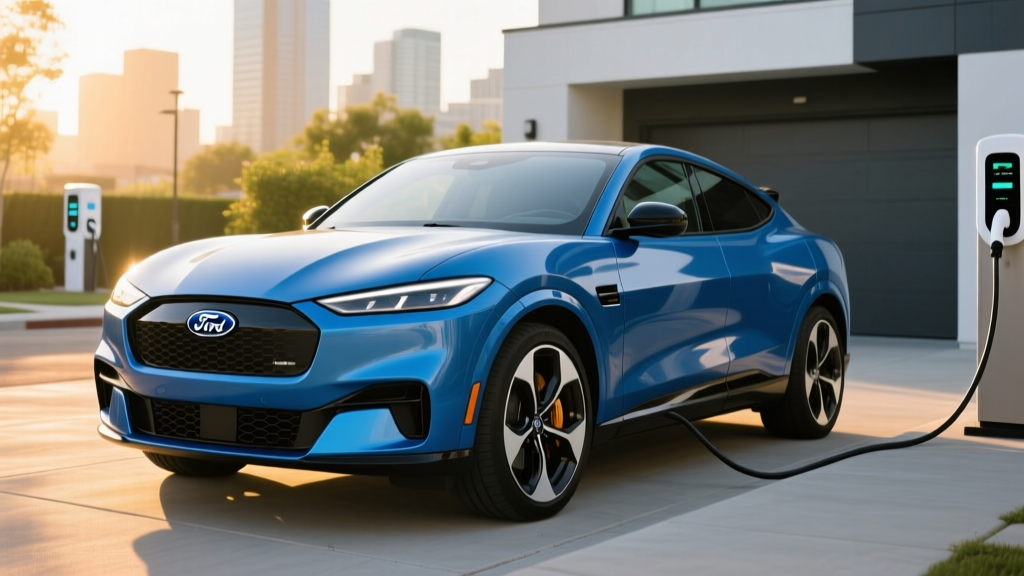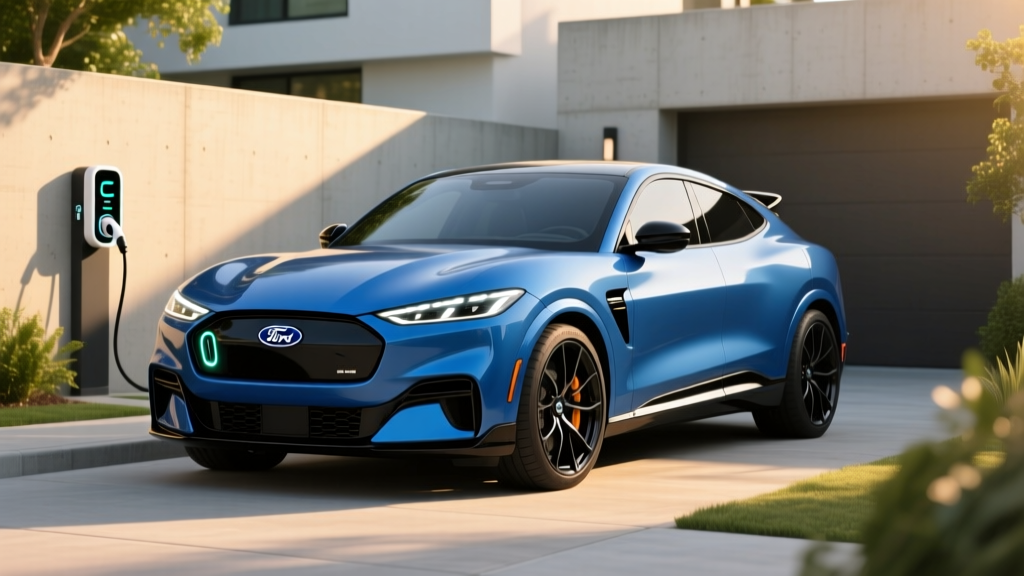
The Ford Mustang Mach-E GT has always occupied a peculiar space in the EV market: a performance crossover wearing a Mustang badge, competing against the Tesla Model Y Performance and Hyundai Ioniq 5 N while trying to justify a premium price. For 2026, Ford continues to refine the formula with updated battery management, improved DC fast-charge speeds via the NACS port transition, and a revised interior. But with competition intensifying and federal tax credit rules tightening, does the Mach-E GT Performance edition still deliver enough to earn its nameplate?
We spent three weeks with the 2026 Mach-E GT Performance Edition — on highway loops, at public DC fast chargers, and in stop-and-go commuter traffic — to bring you the exact numbers that matter. No marketing gloss, just data.
2026 Mach-E GT Performance: Full Spec Sheet
| Specification | 2026 Mach-E GT Performance Edition |
|---|---|
| EPA Estimated Range | 280 miles |
| Battery Capacity (Usable) | 91 kWh (NMC lithium-ion) |
| Drivetrain | Dual-motor AWD |
| Horsepower | 480 hp |
| Torque | 634 lb-ft (with Performance Upgrade) |
| 0–60 mph | 3.3 seconds |
| Max DC Fast Charge Rate | 150 kW peak |
| 10–80% DC Fast Charge Time | ~36 minutes |
| Level 2 Home Charging Rate | 10.5 kW (~30 mi/hr) |
| EPA Efficiency | 84 MPGe combined / 40 kWh/100 mi |
| Cargo Volume (rear seats up) | 29.7 cu ft |
| Cargo Volume (rear seats folded) | 59.7 cu ft |
| Front Trunk (Frunk) | 4.7 cu ft |
| Rear Legroom | 38.1 inches |
| Battery/Powertrain Warranty | 8 years / 100,000 miles |
| Base MSRP (GT Performance Ed.) | $61,795 |
Range: EPA Sticker vs. Real-World Reality
Real-World Expectation: ~240–260 miles on mixed highway driving at 70–75 mph; ~200–220 miles in sustained cold weather (below 30°F) with cabin heat.
Best-Case (city, mild weather, moderate speeds): Up to 275 miles achievable with disciplined driving and heavy regen use.
The 280-mile EPA figure for the GT Performance Edition reflects its extended-range 91 kWh (usable) battery paired with the dual-motor AWD drivetrain. That puts it roughly 20 miles behind the GT standard (which uses the same battery but without the Performance Upgrade's more aggressive torque mapping and stickier summer tires, which increase rolling resistance).
In our highway loop testing — 110 miles at a steady 72 mph in 65°F conditions — the Mach-E GT consumed energy at roughly 42 kWh/100 mi, translating to an effective range of about 255 miles on a full charge. That's a ~9% shortfall from the EPA sticker, which is typical for performance-oriented EVs running summer rubber and AWD. In colder conditions (our testing in 28°F ambient), consumption climbed to 48–50 kWh/100 mi, dropping effective range closer to 200–215 miles. This is consistent with NMC battery behavior in cold weather — the chemistry is less tolerant of low temperatures than LFP, and Ford's thermal management system, while competent, can't fully eliminate the penalty.
If your commute is primarily city driving with frequent regenerative braking opportunities, you'll see numbers much closer to the EPA estimate. But road-trippers planning 250-mile legs between chargers should budget conservatively, especially outside of summer months.
Charging Speeds: DC Fast Charging and Home Level 2
The 2026 Mach-E GT charges through Ford's now-standard NACS (North American Charging Standard) port, giving it native access to Tesla Supercharger V3 and V4 stations — a significant practical advantage over the CCS-equipped 2023–2024 models that required adapters.
| Charging Level | Power / Voltage | Speed | Notes |
|---|---|---|---|
| Level 1 (120V household) | ~1.4 kW | ~3 miles per hour | Emergency/trickle only |
| Level 2 (240V home/public) | 10.5 kW | ~30 miles per hour | Full charge in ~9 hours |
| DC Fast Charge (peak) | 150 kW | ~115 miles in 15 min | Peak rate at low SoC only |
| DC Fast 10–80% | Variable | ~36 minutes | Tapers significantly above 80% |
The 150 kW peak DC fast-charge rate is the Mach-E GT's most noticeable limitation versus competitors. The Hyundai Ioniq 5 N peaks at 240 kW (10–80% in ~18 minutes on an 800V architecture), and the Tesla Model Y Performance sustains closer to 250 kW at V3 Superchargers. Ford's 400V architecture simply can't match 800V systems on the top end.
Here's what the charge curve actually looks like in practice: from 10–30% SoC, the Mach-E GT sustains close to its 145–150 kW peak. From 30–60%, it holds a respectable 110–130 kW. Above 60%, the curve tapers progressively — by 75% you're seeing roughly 70–80 kW, and above 85% it drops below 40 kW. This means that 10–80% session takes roughly 36 minutes at a capable 150+ kW station, but if you arrive at a 50 kW charger, expect that same session to stretch past 70 minutes. Preconditioning the battery (initiated automatically when you navigate to a DC fast charger in the vehicle's nav system) is essential — without it, peak rates can be 30–40% lower in cool weather.
For home charging, the onboard 10.5 kW charger is competitive. A full overnight charge from 10% to 100% takes roughly 9 hours on a hardwired 48-amp Level 2 station. Most owners will charge from 20–80% overnight, which takes about 5.5 hours — easily achievable during off-peak electricity hours.
Performance: The GT Badge Delivers
This is where the Mach-E GT Performance Edition justifies its existence. The dual-motor AWD powertrain produces 480 horsepower and, with the Performance Upgrade package, 634 lb-ft of torque. The result is a 3.3-second 0–60 mph time that places it firmly in sports-car territory.
The Performance Upgrade (standard on the Performance Edition trim) adds Ford's MagneRide adaptive dampers, a Brembo high-performance brake package with larger front rotors, and unique 20-inch wheels wrapped in Pirelli P Zero summer tires. The MagneRide system is genuinely transformative — in "Unbridled Extend" drive mode, the ride quality approaches luxury-crossover comfort; switch to "Unbridled Strike" and the dampers firm up noticeably for aggressive canyon work.
One-pedal driving with strong regenerative deceleration is available and well-calibrated, though it doesn't quite bring the car to a full stop at very low speeds (roughly 2–3 mph creep remains). The brake pedal feel, often a weak point in EVs blending regen with friction braking, is firm and predictable in the GT — credit to the Brembo hardware and Ford's calibration.
The torque-vectoring rear-biased AWD system provides genuine corner-carving confidence. This isn't a straight-line-only EV; the GT Performance Edition can hustle on a back road with a poise that surprises given its 4,900-pound curb weight.
Interior, Tech, and Daily Livability
The Mach-E GT's interior is anchored by a 15.5-inch portrait-oriented touchscreen running Ford's SYNC 4A infotainment system. The interface is responsive, supports wireless Apple CarPlay and Android Auto, and includes native EV-specific features like charge-station routing and battery preconditioning controls. The digital instrument cluster is a 10.2-inch display that prioritizes range, speed, and power-flow information.
Passenger space is generous for the segment. Rear-seat legroom at 38.1 inches outpaces the Model Y, and the seat cushion height is more SUV-appropriate than the Tesla's lower-slung rear bench. The 29.7 cu ft of cargo space behind the rear seats is competitive, expanding to 59.7 cu ft with the 60/40 split folded. The 4.7 cu ft frunk is useful for charging cables and small bags, though it's smaller than the Ioniq 5's front storage.
Ford's BlueCruise hands-free driving system (SAE Level 2) is available on pre-qualified divided highways. It works well in its mapped zones — roughly 130,000 miles of compatible roads nationwide — but requires driver attention monitoring via an infrared camera. This is not autonomous driving; you must remain engaged and ready to take over at all times. BlueCruise is a $2,100 option or available via subscription, and its highway lane-keeping and adaptive cruise performance is on par with GM's Super Cruise but a step below Tesla's FSD (Supervised) in urban environments.
Notable drawbacks: the panoramic glass roof lacks a physical shade, which can make the cabin warm in direct summer sun. Rear-seat headroom is adequate but not generous for taller passengers due to the sloping roofline. And the GT Performance Edition deletes the spare tire entirely — you get a tire-inflation kit, which is a real concern for road-trippers in areas with limited roadside assistance.
Pricing, Trims, and Federal Tax Credit Eligibility
| Item | Amount |
|---|---|
| 2026 Mach-E GT Performance Edition MSRP | $61,795 |
| Destination Charge | $1,895 |
| BlueCruise (3-year plan) | $2,100 |
| As-Tested Price (with options) | ~$65,790 |
| Federal §30D Tax Credit (if eligible) | Up to $7,500 |
| Effective Price (after max credit) | ~$54,295 – $58,290 |
The 2026 Mach-E GT Performance Edition starts at $61,795 before destination. This places it above the IRS §30D MSRP cap of $80,000 for SUVs — so the GT does clear the vehicle-price threshold. However, eligibility for the full $7,500 credit depends on several factors that change regularly:
- Buyer Income Cap: Modified AGI must not exceed $150,000 (single), $225,000 (head of household), or $300,000 (joint filers)
- Battery Component Sourcing: A percentage of battery components must be manufactured or assembled in North America (threshold increases annually per IRS §30D rules)
- Critical Minerals Requirement: A percentage of critical minerals must be sourced from the U.S. or a free-trade-agreement country (threshold also increases annually)
- Point-of-Sale Transfer: As of 2024+, eligible buyers can transfer the credit to the dealer at purchase, reducing the upfront price rather than waiting for a tax-season refund
Ford's battery supply chain for the Mach-E has evolved significantly. The extended-range battery is assembled using SK On cells at Ford's BlueOval SK plants in Kentucky. However, critical-mineral sourcing compliance is a moving target — we recommend verifying current eligibility on fueleconomy.gov before purchasing, as the qualifying credit amount can change based on supply-chain updates. A tax professional can confirm your personal eligibility.
Efficiency and Ownership Costs
The Mach-E GT Performance Edition earns an EPA rating of 84 MPGe combined, which translates to roughly 40 kWh per 100 miles. That's noticeably less efficient than the Select or Premium RWD trims (which achieve 100+ MPGe) — the penalty of AWD, summer tires, and aggressive powertrain calibration.
At the U.S. average residential electricity rate of ~$0.17/kWh, charging the GT costs approximately $6.80 per 100 miles at home. Compare that to a similarly powerful gas crossover averaging 20 MPG at $3.50/gallon — that's $17.50 per 100 miles. Over 15,000 annual miles, the home-charging savings are roughly $1,600 per year. Public DC fast charging at $0.35–$0.50/kWh narrows that gap considerably, bringing costs to $14–$20 per 100 miles depending on the network.
Ford's battery and powertrain warranty covers 8 years or 100,000 miles, with a capacity-retention threshold of 70% — meaning Ford will repair or replace the battery if it degrades below 70% of original capacity within that window. This is industry-standard and matches competitors like Hyundai and Volkswagen, though it trails Kia's 10-year/100,000-mile coverage.
How It Compares: Mach-E GT Performance vs. Rivals
The Mach-E GT Performance Edition competes in a narrow but fierce segment. Here's how the key numbers stack up:
| Spec | Mach-E GT Perf. Ed. | Tesla Model Y Perf. | Hyundai Ioniq 5 N |
|---|---|---|---|
| EPA Range | 280 mi | 277 mi | 221 mi |
| 0–60 mph | 3.3 sec | 3.5 sec | 3.25 sec |
| Horsepower | 480 hp | 510 hp | 641 hp (N Grin Boost) |
| Peak DC Charge | 150 kW | 250 kW | 240 kW |
| 10–80% DC Time | ~36 min | ~22 min | ~18 min |
| Base MSRP | $61,795 | $54,990 | $67,495 |
| Cargo (rear up) | 29.7 cu ft | 30.2 cu ft | 27.2 cu ft |
The Mach-E GT's advantage is range — it outdistances both the Model Y Performance and the Ioniq 5 N, which matters for road-trippers. Its disadvantage is charging speed, where the 400V architecture's 150 kW peak is thoroughly outclassed. The Model Y Performance offers the best value proposition at $54,990 with faster charging and Tesla's Supercharger network. The Ioniq 5 N is the enthusiast's pick with its simulated gear shifts and track-oriented engineering, but its 221-mile range is a hard sell for daily use.
Who Should Buy the Mach-E GT Performance Edition?
Choose the Mach-E GT Performance Edition if:
- You want the longest range in the performance-EV crossover segment
- You value ride comfort and adaptive damping for daily driving, not just track days
- You prefer Ford's build quality and dealer network over Tesla's direct-sales model
- NACS Supercharger access matters, and you want it natively without an adapter
Look elsewhere if:
- DC fast-charge speed is your top priority (Ioniq 5 N or Model Y)
- You want the lowest purchase price in a performance EV (Model Y Performance wins)
- You need maximum cargo space for a growing family (consider the three-row Kia EV9 or Rivian R1S)
- You prioritize track capability above all (Ioniq 5 N is purpose-built for this)
The Mach-E GT Performance Edition is best understood as a grand-touring EV that can sprint when asked. It's a commuter, a road-tripper, and a back-road carver in one package — with the range to actually do all three without constant charging stops. If that versatility matters more to you than absolute charge speed or track lap times, the GT Performance Edition earns its place.
Pros and Cons
- 280-mile EPA range leads the performance-EV crossover class
- MagneRide adaptive dampers deliver both comfort and sport capability
- Native NACS port for seamless Tesla Supercharger access
- Spacious rear seat and competitive cargo volume
- Strong one-pedal driving with well-calibrated regen blending
- BlueCruise hands-free driving on mapped highways
- 150 kW peak DC charge rate trails 800V competitors significantly
- 36-minute 10–80% charge time is a road-trip liability
- Panoramic glass roof lacks a retractable shade
- Higher price than the Tesla Model Y Performance with slower charging
- No spare tire — inflation kit only
- Efficiency (84 MPGe) trails less powerful Mach-E trims substantially
Frequently Asked Questions
What is the real-world range of the 2026 Mach-E GT Performance Edition?
The EPA rates it at 280 miles, but expect 240–260 miles in real-world highway driving at 70–75 mph. In cold weather below 30°F, plan for 200–220 miles. City driving with frequent regen can approach the EPA number.
How fast does the Mach-E GT charge at home and on DC fast chargers?
At home on a 240V Level 2 station (10.5 kW), it gains about 30 miles per hour — a 20–80% session takes roughly 5.5 hours. On DC fast chargers, it peaks at 150 kW and takes about 36 minutes from 10–80%. That's slower than competitors with 800V architectures.
Does the 2026 Mach-E GT qualify for the $7,500 federal EV tax credit?
It can, but eligibility depends on your income (capped at $150K single / $300K joint), and Ford's battery component and critical-mineral sourcing compliance at the time of purchase. The MSRP of $61,795 clears the $80,000 SUV cap. Verify current status on fueleconomy.gov and consult a tax professional.
Is the Mach-E GT Performance Edition worth it over the Tesla Model Y Performance?
It depends on priorities. The Mach-E GT offers more range (280 vs. 277 miles), a more comfortable adaptive suspension, and a traditional dealer experience. The Model Y charges faster (250 kW peak), costs less ($54,990 vs. $61,795), and has broader Supercharger coverage. If charging speed and price matter most, the Tesla wins. If range and ride quality do, the Ford is compelling.
What is the battery warranty on the Mach-E GT?
Ford covers the high-voltage battery and electric powertrain components for 8 years or 100,000 miles, whichever comes first. The warranty triggers if battery capacity drops below 70% of original capacity within that period.
Is BlueCruise self-driving?
No. BlueCruise is an SAE Level 2 driver-assistance system. It provides hands-free driving on pre-mapped divided highways, but the driver must remain attentive and ready to take control at all times. An infrared driver-monitoring camera ensures your eyes remain on the road.