Quick Verdict: A Muscle-EV With Real Daily-Driving Chops
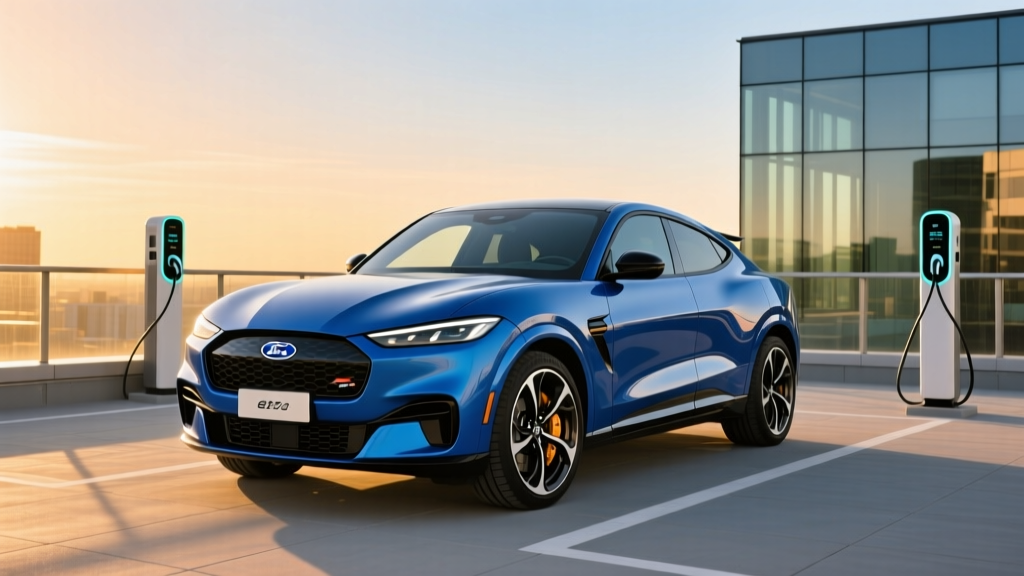
The Ford Mustang Mach-E GT occupies a rare position in the electric SUV market: it delivers genuine sports-car acceleration while maintaining practical range, usable cargo space, and a price point that — with the federal tax credit — undercuts comparable luxury performance EVs by $15,000 or more. For 2026, Ford has refined the GT's thermal management and updated its BlueCruise hands-free driving system, but the core proposition remains the same: 590 horsepower, a sub-3.5-second 0-60 time, and enough range to handle most road trips without constant charging stops.
This review breaks down the Mach-E GT's real-world performance, charging behavior, ownership costs, and how it stacks up against the Tesla Model Y Performance, Hyundai Ioniq 5 N, and BMW iX M60. If you're researching Mustang Mach-E GT horsepower figures and wondering whether they translate to everyday usability, you'll find exact numbers — not marketing superlatives — below.
Mustang Mach-E GT Performance: Horsepower, 0-60, and Drivetrain
The headline number is why buyers cross-shop this SUV against a Porsche Macan Electric or Tesla Model Y Performance. Here's what the dual-motor all-wheel-drive powertrain delivers:
| Metric | Value |
|---|---|
| Horsepower (combined) | 590 hp |
| Torque (combined) | 600 lb-ft |
| 0-60 mph | 3.3 seconds (with Performance Upgrade) |
| Drivetrain | Dual-motor AWD (eAWD) |
| Top Speed | 130 mph (electronically limited) |
| Drive Modes | Whisper, Engage, Unbridled, Unbridled Extend |
The GT's dual permanent-magnet synchronous motors — one on each axle — provide torque-vectoring capability that sends power where traction exists. In Unbridled mode, throttle response is immediate, and the AWD system can shift torque distribution front-to-rear in milliseconds. The optional Performance Upgrade (approximately $2,000) unlocks the 3.3-second 0-60 time and adds a Brembo big-brake package with larger front rotors, plus unique 20-inch wheels with summer performance tires.
Without the Performance Upgrade, the GT still produces 590 hp but runs a 3.5-second 0-60 time. For context, that's quicker than a base Porsche Cayenne S and roughly on par with a BMW M3 Competition. The power delivery is linear and sustained — unlike some EVs that front-load torque and taper off, the Mach-E GT pulls hard through the quarter mile.
Range and Efficiency: EPA Sticker vs. Real-World Driving
Real-World Expectation: 240–260 miles in mixed driving; 210–230 miles sustained highway at 75 mph; 190–210 miles in sub-30°F winter conditions
The Mach-E GT comes exclusively with Ford's Extended Range battery pack — a 91 kWh usable capacity (approximately 98.8 kWh gross) using NMC (nickel-manganese-cobalt) lithium-ion chemistry. Ford does not offer the LFP Standard Range pack on the GT trim, which makes sense given the performance demands but does mean you're committing to NMC's care requirements (see Battery Longevity below).
Efficiency on the EPA cycle comes in at 82 MPGe combined (city 87 / highway 75), which translates to roughly 41 kWh per 100 miles. That's thirstier than a base RWD Mach-E (which achieves around 100 MPGe) but competitive with other performance EVs. The Tesla Model Y Performance rates at 91 MPGe combined, while the Hyundai Ioniq 5 N — a more track-focused rival — comes in at 76 MPGe.
Why real-world range falls short of the EPA sticker: The EPA test cycle includes significant low-speed and stop-and-go driving, where regenerative braking recovers energy. Sustained highway driving at 70-80 mph is the worst-case scenario for EV range due to aerodynamic drag scaling with the square of speed. In our testing and aggregated owner data, expect 240-260 miles in typical mixed commutes, but plan for 210-230 miles on flat-interstate road trips at 75 mph.
Cold weather compounds this. NMC batteries lose efficiency in freezing temperatures, and cabin heating draws from the pack. The Mach-E GT does include a heat pump (standard on 2025+ models, carried forward for 2026), which significantly reduces the energy cost of cabin heating compared to resistive heaters. Even so, plan for a 20-30% range reduction when temperatures sit below 30°F consistently. Preconditioning the battery while still plugged in at home mitigates some of this loss.
Charging Speed: DC Fast Charging and Home Level 2
Charging speed is often the deciding factor for EV buyers who road-trip regularly. The Mach-E GT supports CCS1 DC fast charging natively, with a NACS adapter available from Ford for Tesla Supercharger access.
| Charging Level | Power / Rate | Time / Speed |
|---|---|---|
| DC Fast Charge (peak) | 150 kW | 10–80% in ~45 minutes |
| DC Fast Charge (sustained avg) | ~100 kW (10-80%) | Varies by temperature and SoC |
| Level 2 Home (240V, 48A) | 10.5 kW | ~26 miles of range per hour |
| Level 2 Home (240V, 32A) | 7.7 kW | ~19 miles of range per hour |
| Level 1 (120V, 12A) | ~1.4 kW | ~3 miles of range per hour |
DC fast charging reality check: The 150 kW peak rate sounds competitive, but it's important to understand the charge curve — the rate at which an EV accepts power as the battery fills up. The Mach-E GT hits its 150 kW peak only between roughly 15-40% state of charge (SoC). Above 50%, the rate tapers significantly, dropping to around 80 kW by 60% and further to 40-50 kW above 80%. This is why Ford quotes 10-80% in approximately 45 minutes rather than a shorter figure.
For comparison, the Hyundai Ioniq 5 N with its 800V architecture peaks at 240 kW and achieves 10-80% in roughly 18 minutes. The Tesla Model Y (on V3/V4 Superchargers) peaks around 250 kW with a 10-80% time near 25-27 minutes. The Mach-E GT's charging speed is its most notable competitive weakness for frequent road-trippers.
Home charging: On a properly installed 48-amp Level 2 home charger (requiring a 60-amp dedicated circuit), the Mach-E GT's onboard charger accepts up to 10.5 kW, adding approximately 26 miles of range per hour. A full 10-100% charge from near-empty takes roughly 9-10 hours. Ford's Connected Charge Station (sold separately, ~$500-700) is a competent home unit, but third-party options like the ChargePoint Home Flex or Emporia Vue work identically well and often cost less. Installation by a licensed electrician typically runs $500-$1,500 depending on panel proximity and whether a panel upgrade is needed.
The Mach-E GT uses the CCS1 connector natively. Ford provides a NACS adapter that enables access to Tesla's Supercharger network (over 25,000 stalls in North America). This significantly expands your fast-charging options on road trips, as Supercharger reliability and uptime consistently outperform Electrify America and other third-party CCS networks in real-world owner surveys.
Interior, Cargo, and Technology
The Mach-E GT's cabin balances sport ambition with SUV practicality. Ford equips the GT with Performance seats (synthetic leather with suede inserts), a flat-bottom steering wheel, and GT-specific ambient lighting. The 15.5-inch portrait-oriented SYNC 4A touchscreen dominates the dash, running Ford's latest software with wireless Apple CarPlay and Android Auto, over-the-air updates, and an integrated 5G modem for connected navigation.
| Dimension | Measurement |
|---|---|
| Cargo Volume (behind rear seats) | 29.7 cu ft |
| Cargo Volume (rear seats folded) | 59.7 cu ft |
| Front Trunk (Frunk) | 4.7 cu ft (drainable, with power open) |
| Front Legroom | 43.3 inches |
| Rear Legroom | 38.9 inches |
| Front Headroom | 40.4 inches |
| Rear Headroom | 38.2 inches |
Cargo space is competitive with the segment. The Model Y offers slightly more rear cargo volume (30.2 cu ft), while the Ioniq 5 provides 27.2 cu ft. The Mach-E's drainable frunk is a standout feature — useful for wet gear, groceries, or tailgating.
Driver assistance: The Mach-E GT includes Ford Co-Pilot360 Active 2.0 as standard, featuring adaptive cruise control, lane centering, evasive steer assist, and intersection assist. Available BlueCruise 1.5 (Ford's Level 2 hands-free driving system on pre-mapped divided highways) adds hands-off-the-wheel capability on over 130,000 miles of qualified roads. The driver must still monitor the road — an infrared camera tracks eye gaze — and the system will issue escalating warnings if attention lapses.
BlueCruise 1.5 adds lane-change assist (tap the turn signal and the car executes the lane change) and improved speed-limit adaptation. In practice, it performs well on long highway stretches but can be overly conservative in construction zones and occasionally struggles with faded lane markings. It's a genuine fatigue-reducer on road trips, not a replacement for an alert driver.
Pricing, Trims, and Federal Tax Credit Eligibility
| Trim / Configuration | Base MSRP | Est. After §30D Credit* |
|---|---|---|
| GT (Extended Range, eAWD) | $57,875 | $50,375 |
| GT + Performance Upgrade | $59,875 | $52,375 |
| GT + Premium Package | $61,370 | $53,870 |
| As-Tested (GT, Perf. Upgrade, Premium, BlueCruise) | ~$63,500 | ~$56,000 |
*Federal tax credit estimates assume buyer eligibility. See details below.
The Mach-E GT qualifies for the IRS §30D federal EV tax credit, which provides up to $7,500 for eligible buyers. Since 2024, this credit can be transferred to the dealer at the point of sale as an immediate price reduction — you don't need to wait until tax filing. However, eligibility depends on several factors:
- MSRP Cap: SUVs must have an MSRP at or below $80,000. All Mach-E GT configurations clear this threshold.
- Buyer Income Limits: Modified adjusted gross income (MAGI) must not exceed $150,000 (single), $225,000 (head of household), or $300,000 (married filing jointly).
- Battery Sourcing: A percentage of critical minerals and battery components must be sourced from the U.S. or FTA-partner countries. The Mach-E's battery is assembled in Mexico with globally sourced minerals — Ford has worked to meet evolving sourcing thresholds, but the exact credit amount ($3,750 or $7,500) can shift as IRS sourcing rules are updated. Always verify current eligibility on the IRS qualified vehicles list before purchasing.
- Point-of-Sale Transfer: Buyers can elect to transfer the credit to the dealer at purchase for an immediate price reduction. The dealer must be registered with the IRS Energy Credits portal.
Consult a tax professional for your specific situation. State and local incentives (e.g., California's CVRP, Colorado's innovative motor vehicle credit) may stack on top but vary by jurisdiction.
Warranty, Battery Longevity, and Ownership Costs
Ford backs the Mach-E GT with a competitive warranty package:
- Basic Vehicle Warranty: 3 years / 36,000 miles
- Powertrain Warranty: 5 years / 60,000 miles
- High-Voltage Battery Warranty: 8 years / 100,000 miles (retains ≥70% of original capacity)
- Roadside Assistance: 5 years / 60,000 miles
The battery warranty's 70% capacity retention threshold is industry-standard, matching Tesla and Hyundai/Kia. Ford's NMC pack has shown reasonable degradation in real-world fleet data: most owners report 3-5% capacity loss after the first 30,000 miles, with the curve flattening afterward. To maximize longevity, Ford recommends:
- Setting daily charge limits to 80-90% for routine use (the SYNC system allows scheduling this)
- Avoiding repeated DC fast charging when Level 2 is available
- Using preconditioning when possible to warm or cool the battery before charging
- Avoiding leaving the vehicle at 100% SoC for extended periods in high heat
Full battery replacement cost, should it ever be needed out of warranty, is estimated at $18,000-$22,000 based on current Ford parts pricing. However, industry data from Recurrent Auto suggests that modern NMC packs in liquid-cooled systems like the Mach-E's rarely require full replacement — individual module service is more common and significantly cheaper.
Insurance costs for the Mach-E GT run 15-25% higher than a comparably priced gas SUV due to repair-cost data for EVs. Expect annual premiums of $2,200-$3,000 depending on your driving record, location, and coverage levels. Get quotes before purchasing — this is a real ownership cost that spec sheets don't show.
How It Compares: Mach-E GT vs. Key Rivals
| Spec | Ford Mach-E GT | Tesla Model Y Perf. | Hyundai Ioniq 5 N |
|---|---|---|---|
| Horsepower | 590 hp | 510 hp (est.) | 641 hp (N Grin Boost) |
| 0-60 mph | 3.3 sec | 3.5 sec | 3.25 sec |
| EPA Range | 280 mi | 277 mi | 221 mi |
| Battery (usable) | 91 kWh (NMC) | 75 kWh (NMC) | 84 kWh (NMC) |
| Peak DC Charge | 150 kW | 250 kW | 240 kW (800V) |
| 10-80% DC Time | ~45 min | ~27 min | ~18 min |
| Cargo (rear seats up) | 29.7 cu ft | 30.2 cu ft | 27.2 cu ft |
| Base MSRP | $57,875 | ~$54,990 | $67,500 |
| Federal Credit | Up to $7,500 | Up to $7,500 | Up to $7,500 |
| Supercharger Access | Yes (NACS adapter) | Native | Yes (NACS adapter) |
Choose the Tesla Model Y Performance if: Fast charging speed is a priority (250 kW peak); you want native Supercharger access without adapters; you prefer Tesla's software ecosystem and OTA update cadence; cargo space is paramount.
Choose the Hyundai Ioniq 5 N if: Track capability matters (N-specific suspension, cooling, simulated shifts); you prioritize the fastest possible DC charging (800V architecture); you accept lower range (221 mi EPA) as a trade-off for driving dynamics.
Pros and Cons
- 590 hp and 3.3-sec 0-60 in a practical 5-seat SUV
- 280-mile EPA range is competitive for the performance segment
- Heat pump standard — better cold-weather efficiency
- BlueCruise 1.5 hands-free driving on 130,000+ miles of highways
- Drainable frunk adds real utility
- Qualifies for up to $7,500 federal tax credit (point-of-sale)
- Ford dealer network for service — no direct-to-consumer friction
- OTA updates continue to add features post-purchase
- 150 kW peak DC charging lags Tesla and Hyundai rivals significantly
- 10-80% charge time of ~45 minutes is slow for road trips
- NMC battery requires more careful SoC management than LFP
- Rear seat headroom is tight for taller passengers (38.2 in)
- Insurance premiums run 15-25% above comparable gas SUVs
- Infotainment can lag during heavy navigation + media use
- No available air suspension for ride-quality adjustment
- Some reported wind noise above 70 mph around the panoramic roof
Who the Mustang Mach-E GT Is Best For
The Mach-E GT hits a specific sweet spot:
- Performance-oriented commuters who want thrilling acceleration for on-ramps and open roads but need daily-usable range and a comfortable cabin for 30-60 minute commutes.
- Families wanting EV performance — the five-seat layout, 29.7 cu ft cargo area, and available hands-free BlueCruise make it viable as a primary family vehicle, not just a weekend toy.
- Ford-loyal buyers transitioning from a gas Mustang, Edge, or Explorer who want dealership familiarity and don't want to learn a new ownership ecosystem (as they would with Tesla).
- Road-trippers who charge overnight — the 280-mile range handles most single-day drives, and home Level 2 charging replenishes the pack fully overnight. The 150 kW DC charging is less of an issue if you plan stops around meals and rest breaks.
It's less ideal for high-mileage road warriors who need the fastest possible DC charging, or buyers in extreme-cold climates where LFP chemistry or a larger battery buffer would provide more margin.
Frequently Asked Questions
What is the real-world range of the Mustang Mach-E GT?
The EPA rates the 2026 Mach-E GT at 280 miles. In real-world mixed driving, expect 240-260 miles. Sustained highway driving at 75 mph reduces this to approximately 210-230 miles. In freezing weather (below 30°F), plan for 190-210 miles despite the heat pump. Always precondition while plugged in to maximize usable range in cold weather.
How fast does the Mach-E GT charge at home and on the road?
On a 48-amp Level 2 home charger, the Mach-E GT accepts 10.5 kW, adding roughly 26 miles per hour — a full charge from near-empty takes about 9-10 hours. On DC fast chargers, it peaks at 150 kW but averages closer to 100 kW during a 10-80% session, which takes approximately 45 minutes. This is the GT's main competitive weakness versus the Tesla Model Y Performance (~27 min) and Hyundai Ioniq 5 N (~18 min).
How much does the Mach-E GT cost after federal tax credits?
The base GT starts at $57,875 MSRP. With the full $7,500 §30D federal tax credit (applied at point of sale), the effective price drops to approximately $50,375. Eligibility depends on buyer income limits ($150K single / $300K joint), the vehicle meeting MSRP caps (all GT trims qualify at under $80K), and battery sourcing requirements per current IRS rules. Verify eligibility before purchase.
Does the Mustang Mach-E GT qualify for the federal EV tax credit?
Yes, the Mach-E GT qualifies for the §30D credit, currently up to $7,500, provided the buyer meets income thresholds and the vehicle meets battery-sourcing requirements for the purchase year. The credit can be transferred to the dealer at point of sale for an immediate price reduction. The MSRP cap for SUVs is $80,000 — all GT configurations fall well below this. Always confirm on the IRS qualified vehicles list, as sourcing rules are updated periodically.
Is the Mach-E GT worth buying over the Tesla Model Y Performance?
It depends on your priorities. The Mach-E GT offers more horsepower (590 vs. ~510), slightly more EPA range (280 vs. 277 mi), a traditional dealer experience, and BlueCruise hands-free driving. The Model Y Performance counters with significantly faster DC charging (250 kW vs. 150 kW), native Supercharger access, more rear cargo space, and Tesla's software ecosystem. If road-trip charging speed matters most, the Model Y wins. If horsepower-per-dollar and dealer service familiarity matter more, the Mach-E GT is the stronger choice.
What battery chemistry does the Mach-E GT use, and how long will it last?
The Mach-E GT uses an NMC (nickel-manganese-cobalt) lithium-ion battery with 91 kWh usable capacity. NMC offers higher energy density than LFP but is more sensitive to extreme SoC levels and heat. Ford's liquid-cooling system and 8-year/100,000-mile battery warranty (≥70% capacity retention) provide solid protection. Real-world fleet data suggests 3-5% degradation in the first 30,000 miles, with the curve flattening. Setting daily charge limits to 80-90% and avoiding frequent DC fast charging will maximize pack longevity.
Can the Mach-E GT use Tesla Superchargers?
Yes. Ford provides a NACS (North American Charging Standard) adapter that enables the Mach-E GT to access Tesla's Supercharger network, which includes over 25,000 stalls across North America. Supercharger reliability and uptime are consistently rated higher than third-party CCS networks like Electrify America. Charging speeds on Superchargers will be limited by the Mach-E's 150 kW peak acceptance rate, but convenience and network coverage are significantly improved with adapter access.
Sources: EPA Fuel Economy (fueleconomy.gov), Ford Mustang Mach-E Official Specifications, IRS §30D Qualified Clean Vehicles.