The Mustang Mach-E Frunk: What It Costs and Why It Matters
The Ford Mustang Mach-E has carved out a distinct position in the midsize electric crossover segment since its launch, and for 2026, it remains one of the most practical EVs for buyers who need versatility without stepping up to a full-size SUV like the Ford F-150 Lightning. One feature that consistently draws questions from prospective buyers is the front trunk — or "frunk" — and specifically the Mustang Mach-E frunk option cost and what you get for it.
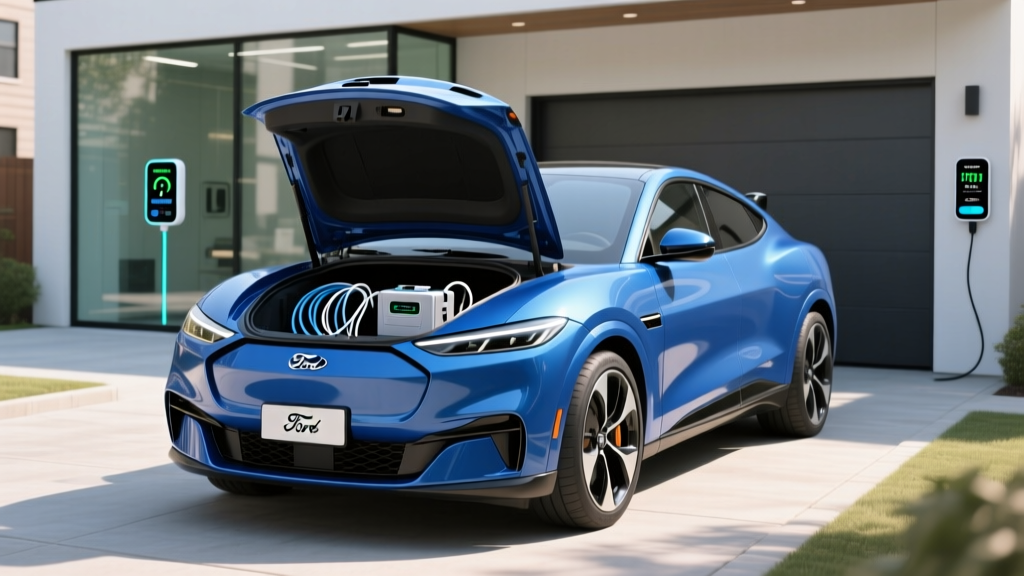
Let's address this up front: the Mach-E's frunk comes standard on all 2026 trims, but it includes a drainable compartment (Ford calls it the Mega Power Frunk) only on certain configurations. On Select and Premium trims, the frunk is a standard sealed storage area. The drainable, washable Mega Power Frunk — which includes a drain plug for use as a cooler or wet-storage bin — is bundled with the Premium package or available as part of accessory packages typically priced between $200 and $350 when added through Ford dealers as an aftermarket accessory. It is not a standalone factory option with its own order code on every trim.
The frunk itself offers 4.7 cubic feet of storage — enough for a charging cable kit, a small cooler, or a couple of gym bags. With the drainable liner accessory, it becomes genuinely useful for tailgating, beach trips, or hauling muddy gear. But the frunk is just one piece of the Mach-E ownership story. Below, we cover the full 2026 lineup with the exact numbers that matter: range, charging, pricing, and tax-credit eligibility.
2026 Mustang Mach-E at a Glance: Specs Table
| Spec | Value |
|---|---|
| EPA Range (Extended Range AWD) | 320 miles |
| EPA Range (Standard Range RWD) | 250 miles |
| Usable Battery Capacity | 91 kWh (Extended Range) / 70 kWh (Standard Range) |
| Battery Chemistry | NMC (Nickel Manganese Cobalt) |
| Max DC Fast-Charge Rate | 150 kW peak |
| 10–80% DC Fast Charge | ~38 minutes |
| Level 2 Home Charge Rate | 10.5 kW (~30 mi/hr) |
| 0–60 mph (GT Performance) | 3.5 seconds |
| 0–60 mph (Extended Range AWD) | 5.1 seconds |
| Horsepower (Extended Range AWD) | 346 hp |
| Horsepower (GT) | 480 hp |
| Drivetrain | RWD or dual-motor AWD |
| Efficiency (Extended Range AWD) | 101 MPGe combined / 33 kWh/100 mi |
| Cargo (rear seats up / folded) | 29.7 / 59.7 cu ft |
| Frunk Volume | 4.7 cu ft |
| Rear Legroom | 38.1 inches |
| Battery/Powertrain Warranty | 8 years / 100,000 miles |
| Base MSRP (Select RWD) | $42,995 |
Range and Efficiency: EPA Sticker vs. Real-World Driving
The 2026 Mach-E Extended Range AWD carries an EPA-estimated 320 miles of range. The Standard Range RWD model lands at 250 miles. These are respectable figures for the segment, but the EPA sticker doesn't tell the whole story.
EPA Estimate: 320 miles (Extended Range AWD)
Highway driving (70–80 mph): Expect ~260–280 miles. EVs lose efficiency at sustained highway speeds because there's no regenerative braking to recapture energy.
Cold weather (below 30°F): Plan for 220–250 miles. NMC chemistry suffers more cold-weather range loss than LFP, and the Mach-E's thermal management system, while adequate, isn't class-leading.
Combined mixed driving: Most owners report 280–305 miles in temperate conditions with a mix of city and highway use.
The Mach-E's efficiency rating of 33 kWh per 100 miles (Extended Range AWD) puts it in the middle of the pack. The Hyundai Ioniq 5 achieves roughly 30 kWh/100 mi, while the Tesla Model Y Long Range sits around 28 kWh/100 mi. This matters for your electricity bill: at a national average of $0.16/kWh, the Mach-E costs roughly $5.28 per 100 miles to charge at home — dramatically less than a comparable gas crossover at $12–15 per 100 miles, but slightly more than its most efficient rivals.
Charging Speeds: Home and DC Fast Charging
Charging speed is where the Mach-E reveals one of its most significant limitations relative to competitors. The 2026 model peaks at 150 kW on DC fast chargers. That's adequate, but it trails the Hyundai Ioniq 5 and Kia EV6, which can sustain 230+ kW on 800V architecture, and the Tesla Model Y, which peaks around 250 kW on V3 Superchargers.
| Charging Level | Power / Rate | Time or Miles Added |
|---|---|---|
| Level 1 (120V household) | ~1.4 kW | ~3–4 miles per hour |
| Level 2 (240V home, Ford Connected Charge Station) | 10.5 kW | ~30 miles per hour; full charge in ~9.5 hrs (Extended Range) |
| Level 2 (public, 19.2 kW capable) | 10.5 kW (vehicle-limited) | ~30 miles per hour |
| DC Fast Charge (50 kW station) | 50 kW | 10–80% in ~85 minutes |
| DC Fast Charge (150 kW+ station) | 150 kW peak | 10–80% in ~38 minutes |
Charging curve reality: The Mach-E hits its 150 kW peak only between roughly 15–30% state of charge. Above 50% SoC, the rate tapers to 90–100 kW, and above 80% it drops sharply to under 40 kW. This is normal behavior for NMC batteries, but it means the advertised 38-minute 10–80% time requires a charger that can actually deliver 150 kW — many Electrify America and EVgo stations in older installations cap at 50–62.5 kW.
For home charging, the Ford Mobile Power Cord (included) delivers 30 amps on a 240V NEMA 14-50 outlet, providing roughly 20 miles per hour of charge. Upgrading to the Ford Charge Station Pro (80-amp hardwired unit, approximately $600–$800 for the equipment) unlocks the full 10.5 kW onboard charger rate, but you'll need a 100-amp dedicated circuit — expect $800–$2,000 for professional electrical installation depending on your panel capacity. Always have a licensed electrician assess your home's service panel before committing to a hardwired Level 2 setup.
Pricing, Trims, and Federal Tax Credit Eligibility
The 2026 Mustang Mach-E lineup spans four trims, and pricing has shifted modestly from prior model years as Ford works to stay competitive and maintain §30D tax-credit eligibility.
| Trim | Drivetrain | Battery | MSRP | Est. After §30D Credit* |
|---|---|---|---|---|
| Select | RWD | Standard Range (70 kWh) | $42,995 | $35,495 |
| Select | AWD | Extended Range (91 kWh) | $48,995 | $41,495 |
| Premium | AWD | Extended Range (91 kWh) | $52,995 | $45,495 |
| GT | AWD | Extended Range (91 kWh) | $59,995 | $52,495 |
| Rally | AWD | Extended Range (91 kWh) | $61,995 | $54,495 |
*Tax credit estimates assume full $7,500 eligibility. See below for requirements.
- MSRP cap: SUVs/crossovers must be priced at or below $80,000 — all Mach-E trims qualify.
- Buyer income cap: Modified AGI must not exceed $150,000 (single), $225,000 (head of household), or $300,000 (married filing jointly).
- Battery sourcing: A percentage of critical minerals and battery components must be sourced from the U.S. or FTA partners. Ford has worked to qualify the Mach-E, but sourcing rules tighten annually. Always verify current eligibility on the IRS Clean Vehicle Credit page before purchasing.
- Point-of-sale transfer: As of 2024+, you can transfer the credit to the dealer at purchase, reducing your out-of-pocket cost immediately rather than waiting for tax filing.
- Assembly: Vehicle must undergo final assembly in North America — the Mach-E is built in Cuautitlán, Mexico, which qualifies.
Eligibility rules change frequently. Consult a tax professional and verify on fueleconomy.gov before relying on the credit.
Performance and Driving Dynamics
The Mach-E's driving character is where Ford's Mustang branding starts to make sense — if you can look past the name controversy. The dual-motor AWD Extended Range model delivers 346 hp and 428 lb-ft of torque, achieving 0–60 mph in roughly 5.1 seconds. That's quick enough for confident highway merging and genuinely fun on back roads.
The GT trim bumps output to 480 hp and 634 lb-ft (with the Performance Upgrade), dropping the 0–60 time to 3.5 seconds — firmly in sports-car territory. The GT also adds MagneRide adaptive dampers, larger Brembo front brakes, and a sport-tuned suspension that trades some ride comfort for cornering composure.
Across all trims, the Mach-E benefits from a low center of gravity (battery pack under the floor), well-weighted steering, and one-pedal driving capability with strong regenerative braking. The ride quality on the standard suspension is firm but controlled — not as plush as a Hyundai Ioniq 5, but more engaging than a Toyota bZ4X. Road noise at highway speeds is noticeable and remains one of the most common owner complaints.
Interior, Tech, and the Frunk in Daily Use
Inside, the Mach-E centers around a large 15.5-inch vertical touchscreen running Ford's SYNC 4A system. The interface is responsive, supports wireless Apple CarPlay and Android Auto, and includes over-the-air update capability. A 10.2-inch digital instrument cluster sits behind the steering wheel. Physical buttons are minimal — climate controls are embedded in the touchscreen, which frustrates some drivers.
The BlueCruise hands-free driving system (SAE Level 2 — the driver must remain attentive at all times) is available on divided highways and covers over 130,000 miles of qualified roads in the U.S. It works well in practice, but it is not autonomous driving and requires you to keep your eyes on the road, monitored by a driver-facing camera.
Cargo space is generous: 29.7 cubic feet behind the rear seats and 59.7 cubic feet with them folded. That's competitive with the Model Y (30.2/74.1 cu ft — the Tesla's advantage comes from its deeper under-floor area). Rear legroom measures 38.1 inches, adequate for adults on longer trips.
Back to the frunk: In daily use, the 4.7-cubic-foot front trunk is most useful for storing the mobile charging cord, keeping it out of the main cargo area. With the drainable Mega Power Frunk accessory ($200–$350), it becomes a legitimate tailgate cooler or a place to stash wet wetsuits, muddy shoes, or fishing gear. The drain plug lets you rinse it out with a hose. For most buyers, the standard frunk is sufficient; the drainable upgrade is worth it primarily if you regularly haul messy or wet items.
Pros and Cons: The Honest Assessment
Pros
- Engaging driving dynamics; GT is genuinely fast
- Competitive 320-mile EPA range (Extended Range)
- Standard frunk adds practical cargo flexibility
- BlueCruise is one of the better Level 2 systems available
- Qualifies for up to $7,500 federal tax credit (verify annually)
- Spacious rear seat and generous cargo volume
- Over-the-air updates continue to improve the vehicle
Cons
- 150 kW peak DC charging trails Ioniq 5, EV6, and Model Y
- 38-minute 10–80% time is slow for road-trip-heavy owners
- Noticeable road and wind noise at highway speeds
- Climate controls buried in touchscreen — no physical knobs
- NMC battery loses more range in cold weather than LFP rivals
- Base price still above $42K even before options
- Dealer markups and availability vary widely by region
How It Compares: Mach-E vs. Key Rivals
| Spec | Ford Mach-E ER AWD | Tesla Model Y LR AWD | Hyundai Ioniq 5 LR AWD |
|---|---|---|---|
| EPA Range | 320 mi | 330 mi | 305 mi |
| Battery (usable) | 91 kWh NMC | ~78 kWh NMC | 77.4 kWh NMC |
| Peak DC Charge | 150 kW | 250 kW | 238 kW (800V) |
| 10–80% DC Time | ~38 min | ~25 min | ~18 min |
| 0–60 mph | 5.1 sec | 4.8 sec | 5.1 sec |
| Base MSRP (comparable trim) | $48,995 | $48,990 | $49,850 |
| Cargo (rear up) | 29.7 cu ft | 30.2 cu ft | 27.2 cu ft |
| Frunk | 4.7 cu ft | 4.1 cu ft | 2.0 cu ft |
| §30D Credit Eligible | Yes (verify) | Yes (verify) | No (Korea-built) |
The Mach-E's biggest competitive disadvantage is charging speed. If you take road trips frequently and rely on DC fast charging, the Ioniq 5's 18-minute 10–80% time is transformative — it cuts charging stops nearly in half compared to the Mach-E. The Model Y's Supercharger network advantage and 25-minute charge time also make it the easier choice for long-distance drivers.
Where the Mach-E wins: driving feel (it's the most engaging to drive of the three), BlueCruise quality, and the practical frunk — which is larger than both the Model Y's and Ioniq 5's. If your driving is primarily commuting and around-town use with home charging, the Mach-E's slower DC charging matters far less.
Who Should Buy the 2026 Mustang Mach-E?
Buy the Mach-E if:
- You primarily charge at home and take road trips 2–3 times per year or fewer
- You value driving engagement and responsive handling in an EV crossover
- You want a drainable frunk for active-lifestyle cargo (kayaking, fishing, beach gear)
- You qualify for the full §30D credit, bringing the effective price into the low $40K range
- You prefer a traditional dealership experience over Tesla's direct-sales model
Look elsewhere if:
- You road-trip frequently and need the fastest possible DC charging (choose Ioniq 5 or Model Y)
- You live in a very cold climate and want maximum cold-weather range retention (consider LFP-equipped models)
- You prioritize a quiet cabin at highway speeds (the Model Y and Ioniq 5 are noticeably quieter)
- You want the lowest cost per mile of electricity — the Model Y's superior efficiency wins here
Frequently Asked Questions
How much does the Mustang Mach-E frunk option cost?
The frunk itself is standard on all 2026 Mach-E trims (4.7 cu ft). The drainable Mega Power Frunk liner accessory — which adds a drain plug and washable surface — costs approximately $200–$350 through Ford dealers. It is not a factory-installed standalone option on every trim but is included with certain package configurations, particularly on Premium and GT trims.
What is the real-world range of the 2026 Mustang Mach-E?
The Extended Range AWD model has a 320-mile EPA estimate. In real-world mixed driving, expect 280–305 miles in moderate temperatures. Sustained highway driving at 75+ mph drops that to roughly 260–280 miles. In sub-freezing weather, plan for 220–250 miles.
How fast does the Mach-E charge at home and on DC fast chargers?
On a Level 2 home charger (240V, 48-amp), the Mach-E charges at up to 10.5 kW, adding roughly 30 miles per hour and fully replenishing the Extended Range battery in about 9.5 hours. On DC fast chargers, it peaks at 150 kW and charges from 10–80% in approximately 38 minutes on a capable station.
Does the 2026 Mustang Mach-E qualify for the federal EV tax credit?
Yes — the Mach-E has historically qualified for the full $7,500 §30D credit, but eligibility depends on battery-sourcing requirements that tighten each year, your income level (capped at $150K single / $300K joint), and the vehicle's MSRP (must be under $80K for SUVs). Always verify current eligibility on the fueleconomy.gov tax credit page and the IRS clean vehicle credit guidelines before purchasing.
Is the Mach-E worth buying over the Tesla Model Y or Hyundai Ioniq 5?
It depends on your priorities. The Mach-E offers the best driving dynamics and a larger frunk than both rivals, plus BlueCruise is excellent for highway commuting. However, its 150 kW peak charging speed is significantly slower than the Ioniq 5 (238 kW) and Model Y (250 kW). If road-trip charging speed is your top concern, the Ioniq 5 or Model Y are stronger choices. If daily driving feel and dealership service access matter more, the Mach-E is compelling — especially with the $7,500 tax credit factored in.
What is the battery warranty on the Mustang Mach-E?
Ford covers the Mach-E's high-voltage battery and electric powertrain components for 8 years or 100,000 miles, whichever comes first. The warranty covers defects and capacity loss below 70% of original capacity. The standard vehicle limited warranty is 3 years / 36,000 miles bumper-to-bumper.