Quick Answer: Is the Mustang Mach-E Worth It in 2026?
The Ford Mustang Mach-E is a compelling electric crossover for buyers who want Mustang styling with practical EV ownership. The 2026 lineup starts around $42,000 (Select trim) and reaches $65,000+ (GT), offering 230–320 miles of EPA range depending on battery and drivetrain. With a usable battery from 70–91 kWh, DC fast charging up to 150 kW (10–80% in ~35 minutes), and potential eligibility for the federal §30D tax credit (up to $7,500 at point of sale, subject to income and sourcing rules), the Mach-E can undercut gas rivals like the Toyota RAV4 or Honda CR-V on total cost of ownership over five years — but only if you have reliable home charging access.
What Exactly Is the "Mustang Electric"?
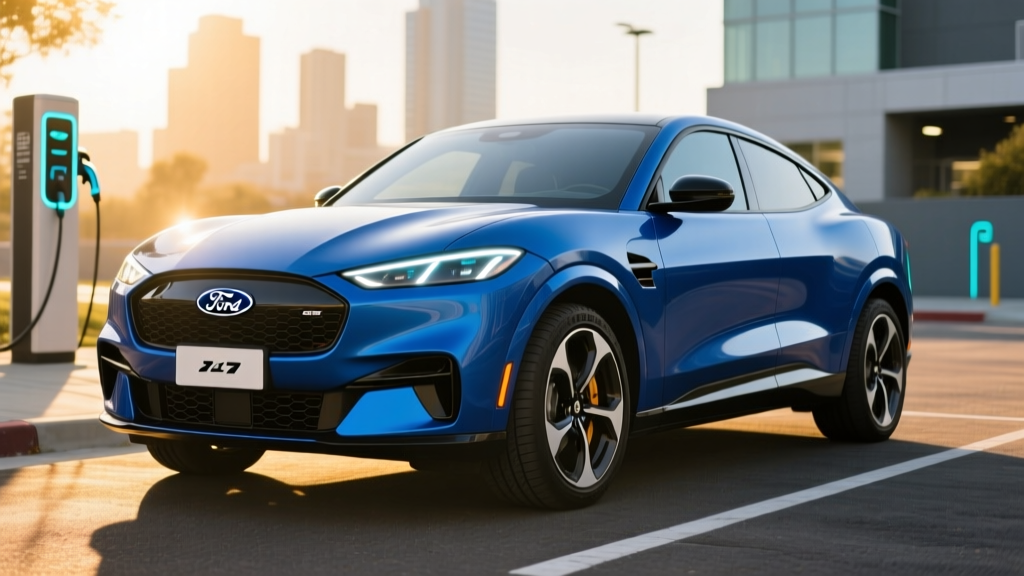
When shoppers search for "mustang electric," they're almost always looking for the Ford Mustang Mach-E, Ford's all-electric crossover that borrows the Mustang nameplate but shares no mechanical parts with the gas-powered Mustang coupe. Introduced for the 2021 model year and refreshed in 2024, the Mach-E competes directly with the Tesla Model Y, Hyundai Ioniq 5, and Volkswagen ID.4 in the mainstream electric SUV segment.
For 2026, Ford offers the Mach-E in Select, Premium, California Route 1, and GT trims. The powertrain options include:
- Standard Range (SR): ~70 kWh usable battery (LFP chemistry), RWD or eAWD
- Extended Range (ER): ~91 kWh usable battery (NMC chemistry), RWD or eAWD
- GT: 91 kWh NMC, dual-motor eAWD, up to 480 hp
The LFP (lithium iron phosphate) battery in the Standard Range trims trades some energy density for longer cycle life and the ability to charge regularly to 100% without degradation concerns — a practical advantage for daily commuters. The NMC (nickel manganese cobalt) packs in Extended Range and GT trims deliver more miles per charge but are best kept between 20–80% for daily use to preserve long-term health.
Range Reality Check: EPA Sticker vs. Real World
Ford's EPA range figures are competitive, but real-world results depend heavily on your driving pattern, climate, and terrain. Here's what to expect:
| Trim / Config | Battery (kWh usable) | EPA Range | Real-World Highway (~70 mph) | Cold Weather Estimate (20°F) |
|---|---|---|---|---|
| Select SR RWD | 70 (LFP) | ~250 mi | ~210–225 mi | ~175–195 mi |
| Premium ER RWD | 91 (NMC) | ~320 mi | ~270–290 mi | ~225–250 mi |
| GT ER eAWD | 91 (NMC) | ~280 mi | ~240–260 mi | ~200–220 mi |
Why the gap? EPA range uses a mixed driving cycle with moderate speeds and regen-friendly stops. Sustained highway driving at 70–80 mph increases aerodynamic drag significantly (drag scales with the square of speed), cutting range 10–15%. In cold weather, the battery must be heated and cabin heating draws substantial energy — expect a 20–30% reduction. The Mach-E's available heat pump (standard on Premium and GT) helps mitigate winter losses compared to resistive heating systems.
Charging Speeds: Home and Public
Understanding the difference between kW (power, or charge rate) and kWh (energy, or battery capacity) is essential. A 150 kW charger doesn't deliver 150 kWh — it delivers energy at a rate of 150 kilojoules per second, tapering as the battery fills.
| Level | Power (kW) | Speed (miles/hr added) | Use Case |
|---|---|---|---|
| Level 1 (120V outlet) | ~1.4 kW | ~3–5 mi/hr | Emergency / overnight trickle |
| Level 2 (240V home) | ~10.5 kW (Mach-E max) | ~30–35 mi/hr | Daily home charging |
| DC Fast Charge | Up to 150 kW peak | ~170 mi in 35 min (10–80%) | Road trips, public stations |
The Mach-E's peak DC charge rate of 150 kW is respectable but trails the Hyundai Ioniq 5's 240 kW capability. More importantly, the Mach-E sustains near-peak rates only up to about 50% state of charge (SoC), then tapers progressively. A 10–80% session takes roughly 35 minutes at a capable 150+ kW station (like Electrify America or EVgo), but expect 45+ minutes at older 50–100 kW chargers.
Home charging setup: A Level 2 home charger (like the Ford Mobile Power Cord with a 240V NEMA 14-50 outlet, or a hardwired ChargePoint Home Flex) is nearly essential for Mach-E ownership. Charging the 91 kWh pack from 20–80% overnight takes about 6–7 hours at 10.5 kW. Budget $800–$2,000 for a professional Level 2 installation (equipment + electrician + permit), or more if your electrical panel needs an upgrade to 200A service.
EV vs Gas: The Real Ownership Cost Comparison
Let's compare the 2026 Mustang Mach-E Premium ER RWD (~$48,000 MSRP) against a similarly equipped 2026 Ford Edge ST-Line AWD (~$44,000 MSRP, gas) over 5 years and 75,000 miles. This is the comparison most Mach-E shoppers are actually weighing.
| Cost Factor | Mach-E Premium ER RWD | Ford Edge ST-Line AWD (Gas) |
|---|---|---|
| MSRP | $48,000 | $44,000 |
| Federal Tax Credit (§30D)* | −$7,500 (if eligible) | $0 |
| Effective Purchase Price | $40,500 | $44,000 |
| Fuel/Energy (75k mi) | $3,200 (home charging avg) | $9,800 (25 MPG, $3.27/gal) |
| Maintenance (5 yr) | $1,200 | $4,500 |
| Insurance (5 yr avg) | $8,500 | $7,000 |
| Estimated Depreciation | $18,000 | $19,500 |
| 5-Year Total Cost | ~$71,400 | ~$84,800 |
*Tax credit caveat: The §30D credit requires adjusted gross income below $150K (single) / $300K (joint), vehicle MSRP under $80K (SUVs), and compliance with battery sourcing and critical mineral rules that tighten annually. The Mach-E's Wixom, Michigan assembly helps, but verify current-year eligibility at IRS.gov or through the dealer's point-of-sale transfer process before signing.
The Mach-E's advantage is clear: even with slightly higher insurance premiums (common for EVs), the combination of the tax credit, dramatically lower "fuel" costs (electricity at ~$0.13/kWh vs. gasoline at ~$3.27/gallon), and reduced maintenance (no oil changes, fewer brake replacements thanks to regenerative braking) yields roughly $13,000 in savings over five years.
Common Misconceptions About the Mustang Mach-E
| Myth | Fact |
|---|---|
| "The battery will need replacing in 5 years for $20K" | Ford warranties the battery for 8 years / 100,000 miles against defects and excessive degradation (below 70% capacity retention). Real-world data from 2021–2024 model-year Mach-Es shows typical degradation of 5–8% over 100K miles. Full replacements are rare and covered under warranty within the term. |
| "It's not a real Mustang" | True in a purist sense — it shares no chassis or powertrain with the S650 Mustang coupe. But as a performance electric crossover, the GT variant hits 0–60 in ~3.5 seconds (480 hp), which outpaces every gas Mustang short of the Shelby GT500. |
| "You can't road trip in an EV" | The Mach-E has access to the Tesla Supercharger network (via Ford's included NACS adapter for 2024+ models), dramatically expanding fast-charging options. A 500-mile trip requires one ~35-minute stop — comparable to gas-car rest breaks. |
| "Home charging is too expensive to install" | A basic 240V outlet installation runs $500–$1,500 for most homes with adequate panel capacity. Many utilities offer rebates of $250–$750 for Level 2 equipment. If you drive under 40 miles daily, even a standard 120V outlet (Level 1) adds ~30 miles overnight — sufficient for many commuters. |
Who Should Buy the Mustang Mach-E (And Who Shouldn't)
Choose the Mach-E If:
- You have home charging access (garage or driveway with a 240V outlet) and drive under 250 miles daily.
- You want a mainstream-brand EV with a physical dealer network for service — not a Tesla-direct model.
- You value Supercharger network access without needing a Tesla badge.
- You qualify for the §30D federal tax credit (income and sourcing requirements met).
- You want crossover practicality (34.4 cu ft cargo behind rear seats) with optional sporty performance.
Look Elsewhere If:
- You rely exclusively on apartment/street parking with no charging access. Public-only charging adds significant time and cost, eroding the EV savings advantage.
- You regularly tow. The Mach-E is rated for just 1,500 lbs (with the trailer tow package) — far less than gas midsize SUVs.
- You live in an extreme cold climate and need 300+ miles of reliable winter range. Consider the EPA-verified Hyundai Ioniq 5 or Tesla Model Y Long Range, which hold range slightly better in sub-freezing conditions.
- You need three rows of seating. The Mach-E is strictly a two-row, five-passenger vehicle.
2026 Mustang Mach-E Spec Summary
| Spec | Select SR RWD | Premium ER RWD | GT ER eAWD |
|---|---|---|---|
| Base MSRP | ~$42,000 | ~$48,000 | ~$60,000 |
| Battery (usable kWh) | 70 (LFP) | 91 (NMC) | 91 (NMC) |
| EPA Range | ~250 mi | ~320 mi | ~280 mi |
| Horsepower | 266 hp | 290 hp | 480 hp |
| 0–60 mph | ~5.8 sec | ~5.2 sec | ~3.5 sec |
| Max DC Charge Rate | 150 kW | 150 kW | 150 kW |
| 10–80% DC Fast Charge | ~33 min | ~36 min | ~36 min |
| Level 2 Rate | 10.5 kW | 10.5 kW | 10.5 kW |
| MPGe (combined) | ~101 MPGe | ~98 MPGe | ~86 MPGe |
| Battery Warranty | 8 yr / 100K mi | 8 yr / 100K mi | 8 yr / 100K mi |
| Cargo Volume | 34.4 cu ft | 34.4 cu ft | 34.4 cu ft |
Source: Ford Motor Company spec sheets and fueleconomy.gov. Verify exact pricing and efficiency with your dealer, as MSRP and EPA figures may shift with mid-year updates.
First-Time EV Buyer Checklist for the Mach-E
- Confirm home charging feasibility. Get a quote from a licensed electrician for a NEMA 14-50 outlet or hardwired Level 2 charger. Check whether your panel supports a 40–50A circuit.
- Verify §30D tax credit eligibility. Use the IRS VIN-check tool at the point of sale. Income limits, MSRP caps, and battery sourcing rules apply and change annually.
- Understand your utility rate. Time-of-use (TOU) plans can cut charging costs by 40–60% if you charge overnight. Contact your utility about EV-specific rate plans.
- Download the FordPass app. It handles remote preconditioning (warming the battery before fast charging for optimal speed), charge scheduling, and locating public chargers.
- Plan your first road trip. Use the FordPass or PlugShare app to map DC fast chargers along your route. Precondition the battery before arriving at each stop for faster charging.
- Budget for insurance. EV insurance premiums run 10–20% higher than comparable gas vehicles. Get quotes from GEICO, Progressive, and State Farm before committing.
Can the Mustang Mach-E use Tesla Superchargers?
Yes. Starting with 2024 model-year vehicles, Ford includes a NACS (North American Charging Standard) adapter that enables access to Tesla's Supercharger network — over 25,000 stalls in North America. This dramatically improves road-trip charging reliability compared to CCS-only networks.
How long does the Mach-E battery actually last?
Ford's battery warranty guarantees at least 70% capacity retention over 8 years or 100,000 miles. Real-world data from early 2021 Mach-E owners suggests degradation of roughly 5–8% over 100K miles under normal use. With proper care (avoiding repeated 100% charges on NMC batteries, minimizing DC fast charging to 100%), the battery should outlast 150,000+ miles before dropping below 80% original capacity.
Is the Mach-E cheaper to own than a gas SUV?
Over five years and 75,000 miles, the Mach-E Premium ER RWD saves approximately $13,000 vs. a comparably priced gas midsize SUV when the federal tax credit applies and most charging is done at home. Without the tax credit or with exclusively public DC fast charging, the savings narrow to roughly $5,000–$7,000.
Does the Mach-E qualify for the $7,500 federal tax credit?
Eligibility depends on current-year IRS §30D rules, including buyer income limits ($150K single / $300K joint AGI), vehicle MSRP under $80,000, and battery component and critical mineral sourcing requirements. The Mach-E is assembled in Wixom, Michigan, but battery sourcing rules tighten annually. Always verify at the point of sale and consult IRS.gov or a tax professional.
What's the real cost to charge at home?
At the U.S. average residential rate of ~$0.16/kWh, fully recharging the 91 kWh Extended Range battery from 20–80% (roughly 55 kWh) costs about $8.80 — equivalent to roughly 180 miles of driving. That's approximately $0.05 per mile, compared to $0.13–$0.15 per mile for a 25 MPG gas SUV at $3.27/gallon.