The Short Answer: Yes, the Mustang SUV Is Fully Electric
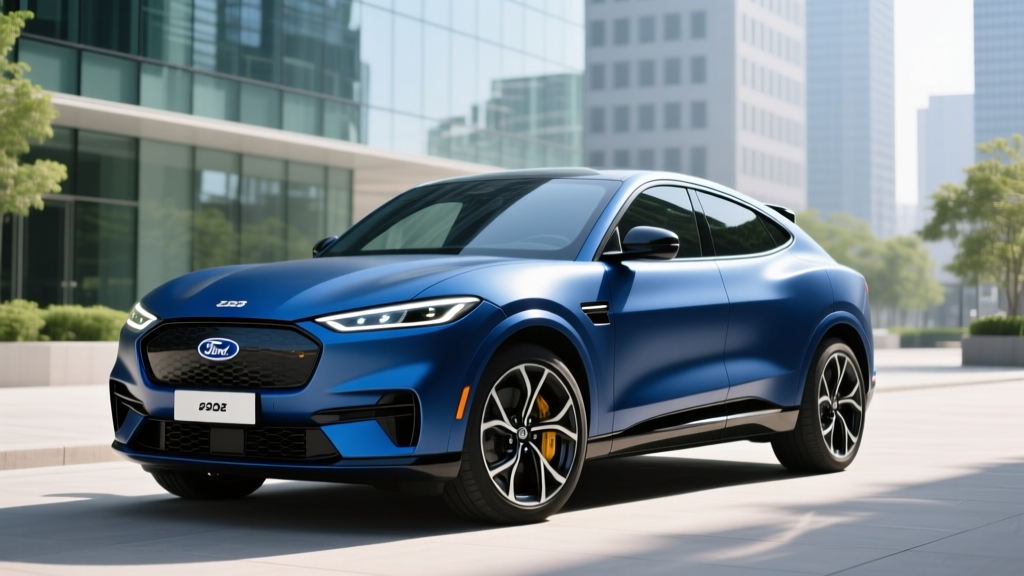
If you're asking "is the Mustang SUV only electric?" — yes. The Ford Mustang Mach-E is a battery-electric vehicle (BEV) with no internal combustion engine, no gas tank, and no hybrid or plug-in hybrid variant. Ford introduced it for the 2021 model year, and through the 2026 model year it remains exclusively electric. There is no gasoline Mustang SUV and no hybrid Mach-E trim.
The two-door Mustang coupe and convertible, by contrast, still use turbocharged gas engines (EcoBoost and V8). But if you want a Mustang-branded SUV or crossover, your only option is the all-electric Mach-E.
2026 Ford Mustang Mach-E: Range, Battery, and Powertrain Specs
Ford offers the 2026 Mach-E with two battery packs and multiple powertrain configurations. The standard-range battery provides approximately 75.7 kWh of usable capacity (LFP chemistry), while the extended-range pack delivers roughly 91 kWh (NMC chemistry). Here's the core spec breakdown:
| Trim / Config | Drivetrain | EPA Range | Battery (usable kWh) | Horsepower | 0–60 mph | Base MSRP |
|---|---|---|---|---|---|---|
| Select SR RWD | Rear-Wheel Drive | 250 mi | 75.7 (LFP) | 266 hp | 6.1 sec | $39,995 |
| Premium ER RWD | Rear-Wheel Drive | 320 mi | 91 (NMC) | 290 hp | 5.5 sec | $46,995 |
| Premium ER AWD | All-Wheel Drive | 290 mi | 91 (NMC) | 346 hp | 4.8 sec | $49,995 |
| GT ER AWD | All-Wheel Drive | 280 mi | 91 (NMC) | 480 hp | 3.5 sec | $59,995 |
Real-world range reality: The EPA 320-mile figure on the Premium ER RWD assumes mixed driving at moderate temperatures. In sustained highway driving at 75 mph, expect roughly 265–285 miles. In freezing weather (below 30°F), range drops 20–30%, meaning a 320-mile sticker could yield 225–255 real miles. Always plan road trips around 80% of the EPA number in moderate weather and 65–70% in deep cold.
Data from fueleconomy.gov confirms the Mach-E ER RWD achieves 101 MPGe combined (34 kWh/100 mi), making it one of the more efficient midsize electric crossovers available.
Charging the Mach-E: Speeds, Connectors, and Real-World Times
The 2026 Mach-E comes equipped with the NACS (North American Charging Standard) port, giving it native access to Tesla Supercharger stations — a major advantage over CCS-only vehicles now that Ford has completed the transition.
| Level | Power (kW) | Miles Added per Hour | Typical Use |
|---|---|---|---|
| Level 1 (120V household) | ~1.4 kW | ~3–4 mi/hr | Emergency / overnight trickle |
| Level 2 (240V home) | ~10.5 kW | ~30–35 mi/hr | Daily home charging (~9 hr for full ER pack) |
| DC Fast Charge | Peak ~150 kW | ~250+ mi/hr (at peak) | 10–80% in ~35 minutes |
The Mach-E's peak DC charge rate of approximately 150 kW is moderate by 2026 standards. Competitors like the Hyundai Ioniq 5 (peak 240 kW) and Kia EV6 (peak 240+ kW) charge noticeably faster. On a 150 kW station, the Mach-E extended-range pack will charge from 10% to 80% in roughly 35 minutes, with the charge curve tapering significantly above 80% — that final 20% can take as long as the first 70%.
Mach-E vs. Gas Mustang vs. Gas SUVs: Cost and Efficiency Compared
Understanding whether the Mach-E makes financial sense requires comparing it to both the gas Mustang and comparable gasoline crossovers. Here's a five-year ownership projection:
| Cost Category | Mach-E Premium ER RWD | Gas Mustang EcoBoost | Toyota RAV4 Gas AWD |
|---|---|---|---|
| Base MSRP | $46,995 | $32,515 | $32,675 |
| Federal Tax Credit (§30D, est.) | Up to $7,500* | $0 | $0 |
| Effective Purchase Price | ~$39,495 | $32,515 | $32,675 |
| 5-Yr Fuel/Energy (15k mi/yr) | ~$4,500** | ~$11,250 | ~$9,750 |
| 5-Yr Maintenance | ~$1,800 | ~$4,200 | ~$3,800 |
| 5-Yr Insurance (avg.) | ~$9,500 | ~$7,800 | ~$7,200 |
| 5-Year Total | ~$55,295 | ~$55,765 | ~$53,425 |
* Federal EV tax credit eligibility under IRS §30D depends on buyer income caps ($150k single / $300k joint), vehicle MSRP caps ($55k for SUVs/trucks), and battery critical-mineral sourcing requirements. Point-of-sale transfer is available at participating dealers. Verify your eligibility with a tax professional.
** Energy cost based on $0.14/kWh national average; actual cost varies by utility rate and home vs. public charging mix. Public DC fast charging at $0.40–$0.60/kWh raises per-mile cost significantly.
The Mach-E's higher insurance premiums (typically 15–25% above a comparable gas crossover) and higher upfront price are partially offset by dramatically lower fuel and maintenance costs. With the tax credit applied, the five-year totals converge closely — and the Mach-E pulls ahead in years six and beyond as gas and maintenance savings compound.
Common Misconceptions About the Mustang Mach-E
| Myth | Fact |
|---|---|
| "There's a gas or hybrid Mustang SUV." | The Mach-E is 100% electric. No ICE or hybrid variant exists. |
| "The Mach-E isn't a real Mustang." | Ford uses the Mustang brand on the Mach-E. It shares no powertrain with the gas Mustang coupe but delivers comparable or superior acceleration (GT: 3.5 sec 0–60). |
| "Electric cars need constant battery replacement." | Ford warranties the Mach-E battery for 8 years / 100,000 miles against degradation below 70% capacity. Real-world data shows NMC packs losing ~10–15% over 100k miles; LFP packs often degrade even less. |
| "You can't road-trip an EV." | The Mach-E with NACS has access to 20,000+ Tesla Supercharger stalls nationwide. A 300-mile trip requires one ~25-minute stop. |
| "EVs are worse in winter." | Range drops 20–30% in freezing temps, but the Mach-E includes a heat pump (Premium/GT trims) that mitigates cabin-heating energy draw. Preconditioning while plugged in preserves range. |
Real-World Ownership: Who Should (and Shouldn't) Buy the Mach-E
Buying an EV isn't just about the vehicle — it's about your daily logistics. Here's an honest framework:
Choose the Mach-E if:
- You have home charging access (garage, driveway, or a landlord willing to install a Level 2 outlet). Home charging at $0.12–$0.18/kWh makes EV ownership dramatically cheaper than gas.
- Your daily commute is under 100 miles round-trip. Even the SR model handles this with ease, charging overnight on Level 2.
- You take 2–4 road trips per year and can plan ~30-minute DC fast-charging stops. The NACS connector opens up the Supercharger network.
- You want strong acceleration without paying luxury-brand prices. The GT's 480 hp at ~$60k undercuts comparably quick gas SUVs.
Reconsider or look at a PHEV/gas alternative if:
- You live in an apartment or park on the street with no realistic path to home or workplace charging. Public-only charging is expensive ($0.40–$0.60/kWh) and time-consuming.
- You regularly drive 400+ miles in a single day in regions with sparse DC fast-charging infrastructure (rural Great Plains, parts of the Mountain West).
- You live in extreme cold (regularly below 0°F) and cannot garage the vehicle. Range loss and charging slowdowns are significant in deep cold.
- Your budget is under $35,000 and you don't qualify for the full tax credit. Consider a used EV or a conventional hybrid like the RAV4 Hybrid instead.
What First-Time EV Buyers Need to Know Before Purchasing
If the Mach-E would be your first electric vehicle, prepare for these ownership realities:
- Home charging installation: A Level 2 (240V, 48-amp) home charger requires a dedicated 60-amp circuit. Installation costs range from $500 (simple panel proximity) to $2,500+ (panel upgrade or long conduit runs). Get a quote from a licensed electrician before purchasing.
- kW vs. kWh: The battery capacity is measured in kWh (energy — how far you can go). Charging speed is measured in kW (power — how fast you add energy). A 91 kWh battery charging at 10.5 kW (Level 2) takes ~9 hours from empty. At 150 kW (DC fast), it adds ~250 miles in 30 minutes.
- Regenerative braking: The Mach-E offers multiple regen levels, including one-pedal driving where lifting off the accelerator slows the car substantially. Most owners adapt within a week and prefer it.
- Tire wear: EVs are heavier and deliver instant torque, wearing tires 15–25% faster than equivalent gas vehicles. Budget for replacement tires every 25,000–35,000 miles.
- Software updates: Ford delivers over-the-air (OTA) updates that can change vehicle behavior, add features, or adjust range estimates. These are generally seamless but occasionally introduce interface changes.
Frequently Asked Questions
Is there a gas-powered Mustang SUV?
No. The only Mustang-branded SUV is the Ford Mustang Mach-E, which is fully electric. The traditional two-door Mustang coupe and convertible remain gas-powered but are not SUVs.
Does the Mach-E qualify for the $7,500 federal tax credit?
Potentially. Under current IRS §30D rules, eligibility depends on your modified adjusted gross income (under $150k single / $300k joint), the vehicle's MSRP (under $55k for SUVs — note that the GT trim at $59,995 exceeds this cap), and battery sourcing requirements that change annually. The credit can be transferred at the point of sale to reduce your purchase price directly. Consult a tax professional for your specific situation.
How long does the Mach-E battery last?
Ford warranties the high-voltage battery for 8 years or 100,000 miles, guaranteeing it retains at least 70% of original capacity. Industry data suggests most NMC and LFP packs retain 85–90% capacity at 100k miles with normal use. Full battery replacement (rare) costs approximately $12,000–$18,000 depending on pack size.
Can I charge the Mach-E at Tesla Superchargers?
Yes. The 2026 Mach-E comes with a native NACS charge port, giving it direct access to Tesla's Supercharger network without an adapter. This is one of the Mach-E's strongest practical advantages for road-trip charging.
What's the real-world range in winter?
Expect a 20–30% range reduction in sustained freezing temperatures. A Premium ER RWD rated at 320 EPA miles may deliver 225–255 miles in cold highway driving. Using the heat pump (standard on Premium and GT), preconditioning while plugged in, and seat/steering wheel heaters instead of cabin heat can recover 5–10% of that loss.
How does Mach-E maintenance compare to a gas car?
Significantly less. No oil changes, no spark plugs, no transmission fluid, no exhaust system. Routine maintenance is limited to tire rotations, cabin air filter replacement, brake fluid checks, and windshield washer fluid. Expect to spend roughly $300–$400/year on maintenance versus $800–$1,200/year for a comparable gas SUV.