Quick Verdict: The Mustang Mach-E Electric SUV in 2026
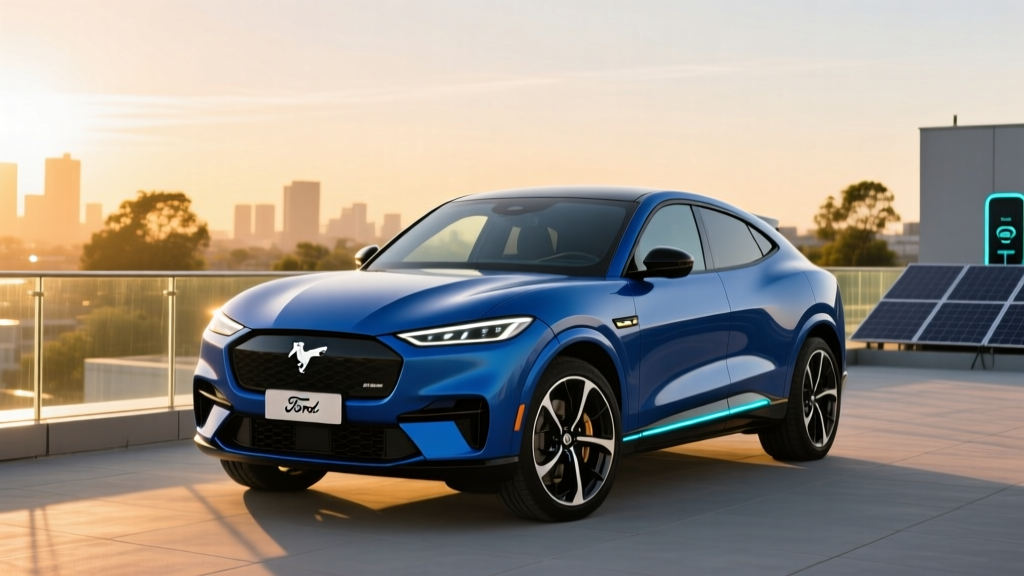
The Ford Mustang Mach-E remains one of the most compelling mainstream electric crossovers available. For 2026, Ford has refined the formula with a refreshed infotainment system running Sync 4A, standard BlueCruise hands-free highway driving on extended trims, and a slightly revised battery pack that pushes EPA range estimates up to 320 miles on the Extended Range RWD model. The Mach-E competes directly with the Tesla Model Y, Hyundai Ioniq 5, and Kia EV6 — and it holds its own through a combination of engaging driving dynamics, a spacious cabin, and improving DC fast-charge speeds.
However, real-world range falls short of the sticker in cold weather and at sustained highway speeds, and the base Select trim's smaller battery means noticeably more charging stops on road trips. If you're shopping the Mustang Mach-E electric SUV, this review gives you the exact numbers to decide which trim fits your driving pattern and whether you'll qualify for federal incentives.
Range, Efficiency, and Real-World Expectations
The 2026 Mach-E lineup offers two battery options: a Standard Range pack (approximately 72 kWh usable, LFP chemistry) and an Extended Range pack (approximately 91 kWh usable, NMC chemistry). The chemistry choice matters: LFP batteries tolerate frequent 100% charging and degrade more slowly over time but are heavier and less energy-dense, while NMC packs deliver more range per kilogram but benefit from daily charging limits around 80-90%.
| Trim / Drivetrain | EPA Range | Real-World Highway (~70 mph) | Cold Weather Estimate (20°F) |
|---|---|---|---|
| Select RWD (Std Range, LFP) | 250 mi | ~210-225 mi | ~175-195 mi |
| Premium RWD (Ext Range, NMC) | 320 mi | ~270-290 mi | ~225-250 mi |
| Premium AWD (Ext Range, NMC) | 290 mi | ~245-265 mi | ~205-225 mi |
| GT AWD (Ext Range, NMC) | 280 mi | ~235-255 mi | ~195-215 mi |
Real-world estimates based on mixed highway driving at 70-75 mph. Cold-weather figures assume 20°F ambient with cabin heating active. Preconditioning the battery while plugged in can recover 10-15% of cold-weather range loss. Source: fueleconomy.gov
Efficiency varies by configuration. The RWD Extended Range model achieves an EPA-rated 101 MPGe combined (roughly 33 kWh/100 mi), while the GT AWD drops to approximately 84 MPGe combined (40 kWh/100 mi). For context, that means the GT consumes about 21% more energy per mile than the efficiency-oriented RWD Premium — a meaningful difference if you drive 15,000+ miles annually.
Charging Speed: DC Fast Charge and Home Level 2
Charging speed is where the Mach-E has historically lagged behind Hyundai/Kia's E-GMP platform (which peaks at 240+ kW). The 2026 model improves modestly: the Extended Range pack now peaks at 150 kW on DC fast chargers, while the Standard Range LFP pack peaks at approximately 115 kW.
| Charging Level | Power / Rate | Time / Range Added | Notes |
|---|---|---|---|
| Level 1 (120V household) | ~1.4 kW | ~3-4 mi/hr | Emergency/top-up only; 72 kWh pack takes 50+ hrs |
| Level 2 (240V, 48A home charger) | 11.5 kW | ~32 mi/hr; full charge in ~8 hrs (Ext Range) | Requires NEMA 14-50 outlet or hardwired install; ~$500-$1,500 install |
| DC Fast Charge (Std Range) | Peak 115 kW | 10-80% in ~36 min | Charge curve tapers sharply above 80%; CCS connector (NACS adapter available) |
| DC Fast Charge (Ext Range) | Peak 150 kW | 10-80% in ~28 min | Sustains ~130 kW to ~55% SoC, then tapers; 80-100% adds another 20+ min |
Charging curve reality check: The 150 kW peak on the Extended Range model is not sustained across the entire session. In testing, the Mach-E holds roughly 130-145 kW between 10-55% state of charge, then drops to approximately 80-90 kW through 70%, and further tapers to under 40 kW above 85%. If you're road-tripping, plan to charge to 80% and go — the time penalty for pushing to 100% on a DC fast charger is rarely worth it.
Ford provides a NACS adapter for access to Tesla Supercharger stalls (now open to non-Tesla vehicles via the NACS standard transition). This significantly expands the usable fast-charging network, particularly in rural corridors where Electrify America and EVgo coverage can be sparse.
Performance, Drivetrain, and Driving Dynamics
The Mach-E has always prioritized driving engagement over pure straight-line speed (with the GT exception). Here's the performance breakdown by trim:
| Trim | Drivetrain | Horsepower | Torque (lb-ft) | 0-60 mph |
|---|---|---|---|---|
| Select | RWD (single motor) | 266 hp | 387 | 6.3 sec |
| Premium RWD | RWD (single motor) | 290 hp | 387 | 5.8 sec |
| Premium AWD | AWD (dual motor) | 346 hp | 428 | 5.1 sec |
| GT | AWD (dual motor) | 480 hp | 634 | 3.5 sec |
The AWD models use a dual-motor setup with independent front and rear motors — no mechanical driveshaft. Regenerative braking offers multiple levels, including a one-pedal driving mode that can bring the car to a complete stop without touching the brake pedal. The GT's 3.5-second 0-60 time puts it in genuine sports-car territory, though the premium in price and energy consumption is substantial.
Ride quality is firm but compliant. The Mach-E's low center of gravity (battery pack under the floor) gives it genuinely athletic cornering for a crossover. Steering is well-weighted, and the GT's MagneRide adaptive dampers (standard on GT, optional on Premium AWD) make a noticeable difference on rough pavement.
Interior, Cargo Space, and Technology
The cabin is modern and functional, though not quite as premium as a Genesis GV60 or as minimalist as a Tesla Model Y. Materials are good for the price point — soft-touch surfaces on the dash and door uppers, with harder plastics lower down.
Passenger space:
- Front legroom: 43.3 inches
- Rear legroom: 38.9 inches
- Front headroom: 40.4 inches (panoramic glass roof reduces rear headroom slightly)
- Rear headroom: 38.2 inches
Cargo volume:
- Behind rear seats: 29.7 cu ft
- Rear seats folded: 59.7 cu ft
- Front trunk (frunk): 4.7 cu ft (drainable — useful for wet gear or ice)
The 15.5-inch vertical touchscreen dominates the dash and runs Ford's Sync 4A system. It supports wireless Apple CarPlay and Android Auto, over-the-air updates, and integrates BlueCruise settings. The screen is responsive, though the heavy reliance on touch controls (climate, seat heaters) can be distracting while driving. Physical volume and tuning knobs would be welcome.
BlueCruise (SAE Level 2): Ford's hands-free highway driving assist is standard on Premium and GT trims (subscription-based after the initial trial period). It operates on pre-mapped divided highways and uses a driver-monitoring camera to confirm you're paying attention. This is not self-driving — it's a Level 2 system that requires an attentive driver at all times. In practice, it handles lane centering and adaptive cruise competently on well-marked interstates but disengages in construction zones and complex merges.
BlueCruise is a Level 2 driver-assistance system. The driver must remain engaged, monitor the road, and be prepared to take over instantly. It does not make the Mach-E a self-driving vehicle. Only Level 4 services (e.g., Waymo robotaxis in designated geofenced areas) operate without a human driver.
Pricing, Trims, and Federal Tax Credit Eligibility
The 2026 Mach-E lineup starts below $38,000, making it one of the more accessible electric SUVs in its class. Here's the trim-by-trim breakdown:
| Trim | Base MSRP | Est. As-Tested* | §30D Credit Eligibility |
|---|---|---|---|
| Select RWD (Std Range) | $37,995 | $39,500-$41,000 | Eligible up to $7,500 (subject to income + sourcing rules) |
| Premium RWD (Ext Range) | $45,495 | $47,000-$50,500 | Eligible up to $7,500 (subject to income + sourcing rules) |
| Premium AWD (Ext Range) | $48,495 | $50,500-$54,000 | Eligible up to $7,500 (subject to income + sourcing rules) |
| GT AWD (Ext Range) | $57,995 | $60,000-$63,500 | Eligible up to $7,500 (subject to income + sourcing rules) |
*As-tested estimates include common option packages and destination charge. Actual prices vary by dealer.
- MSRP cap: SUVs/crossovers must be under $80,000 — all Mach-E trims qualify.
- Buyer income cap: AGI must not exceed $150,000 (single), $225,000 (head of household), or $300,000 (married filing jointly).
- Battery sourcing: The full $7,500 requires both critical-mineral AND battery-component sourcing thresholds. Partial credit ($3,750) may apply if only one threshold is met. Ford has been working to shift sourcing to North America, but exact credit amounts vary by build date and supply chain changes. Verify current eligibility at IRS.gov qualified vehicle list.
- Point-of-sale transfer: You can transfer the credit to the dealer at purchase for an immediate price reduction (rather than waiting for a tax refund).
- Not refundable: The credit can only offset tax liability — if you owe less than $7,500 in federal taxes, you won't receive the full benefit unless transferred at point of sale.
Warranty and Long-Term Ownership
Ford backs the Mach-E with competitive warranty coverage:
- Bumper-to-bumper: 3 years / 36,000 miles
- Powertrain (including electric motors): 5 years / 60,000 miles
- Battery pack: 8 years / 100,000 miles (capacity retention must remain above 70% of original)
The 70% battery retention threshold over 8 years is industry-standard, matching Tesla and Hyundai/Kia. Real-world degradation data from early Mach-E owners (2021-2023 models) suggests approximately 5-8% capacity loss over the first 60,000 miles — well within warranty tolerance. The LFP pack in the Standard Range model is expected to show even slower degradation, though long-term data on Ford's specific LFP cells is still accumulating.
Maintenance costs are minimal: no oil changes, no spark plugs, no transmission fluid. Expect to replace cabin air filters ($30-50), wiper blades, and brake fluid periodically. Brake pad life is extended significantly thanks to regenerative braking — many EV owners report original pads lasting 80,000+ miles.
Pros, Cons, and Who Should Buy the Mach-E
- Engaging driving dynamics — genuinely fun to drive for a crossover
- Up to 320 mi EPA range (Extended Range RWD)
- Spacious cabin with 38.9" rear legroom and 59.7 cu ft max cargo
- NACS adapter unlocks Tesla Supercharger network
- BlueCruise is one of the better Level 2 highway assist systems
- LFP option in Standard Range for buyers who want max battery longevity
- Drainable frunk is genuinely useful
- DC fast-charge speed (150 kW peak) trails Hyundai Ioniq 5 / Kia EV6 (~240 kW)
- Heavy reliance on touchscreen for basic controls (climate, seat heat)
- Real-world highway range drops 10-15% below EPA; cold weather hits harder
- GT trim is expensive and consumes significantly more energy
- BlueCruise requires ongoing subscription after trial period
- Rear visibility is compromised by thick C-pillars and sloping roofline
- Choose the Select RWD if: You commute under 40 miles daily, can charge at home, and want the lowest entry price with LFP battery longevity.
- Choose the Premium RWD (Ext Range) if: You want maximum range for road trips without paying for AWD, and value the best efficiency-to-price ratio in the lineup.
- Choose the Premium AWD if: You live in a snowy climate, need all-weather traction, and take road trips where 290 mi EPA range is sufficient.
- Choose the GT if: Performance is a priority and you accept the range/efficiency trade-off for 480 hp and a 3.5-second 0-60.
- Look elsewhere if: You need 350+ miles of real-world range, want the fastest DC charging available (see Ioniq 5), or prefer physical buttons for climate controls.
Frequently Asked Questions
What is the real-world range of the 2026 Mustang Mach-E?
The EPA rates the Extended Range RWD at 320 miles, but expect approximately 270-290 miles in real-world highway driving at 70 mph. In cold weather (20°F), range can drop to 225-250 miles even with battery preconditioning. The Standard Range RWD delivers roughly 210-225 real-world highway miles from its 250-mile EPA rating.
How fast does the Mach-E charge at home and on DC fast chargers?
On a Level 2 home charger (240V, 48A), the Mach-E adds approximately 32 miles of range per hour, fully charging the Extended Range pack in about 8 hours. On DC fast chargers, the Extended Range pack peaks at 150 kW and charges from 10-80% in approximately 28 minutes. The Standard Range pack peaks at 115 kW with a 10-80% time of about 36 minutes.
Does the 2026 Mustang Mach-E qualify for the $7,500 federal EV tax credit?
All Mach-E trims fall under the $80,000 MSRP cap for SUVs. However, full $7,500 eligibility depends on your income (AGI under $150K single / $300K married), and the battery must meet critical-mineral and component sourcing thresholds set by the IRS. Partial credit ($3,750) may apply. Check the IRS qualified vehicles list for the specific build you're considering, as sourcing requirements can shift.
How does the Mach-E compare to the Tesla Model Y and Hyundai Ioniq 5?
The Model Y offers more range (up to 330 mi EPA), access to the Supercharger network natively, and a more minimalist interior — but less traditional crossover styling and no physical controls at all. The Ioniq 5 charges significantly faster (10-80% in ~18 min at 240 kW) and has a more distinctive design, but slightly less cargo space. The Mach-E splits the difference: more conventional styling than the Ioniq 5, better driving dynamics than the Model Y, and NACS adapter access to Superchargers.
Is the Mustang Mach-E good for towing?
The Mach-E is rated for up to 2,300 pounds of towing capacity (with the available tow package on AWD trims). That's sufficient for a small utility trailer, a pair of jet skis, or a lightweight teardrop camper — but not a full-size travel trailer. Towing will reduce range by 30-50% depending on trailer weight and aerodynamics.
What is the battery chemistry, and does it matter?
The Standard Range pack uses LFP (lithium iron phosphate) chemistry, which offers slower degradation and tolerance for regular 100% charging — ideal for daily commuters. The Extended Range pack uses NMC (nickel manganese cobalt), which is more energy-dense (more range in less weight) but benefits from daily charging limits of 80-90% to maximize longevity. Both chemistries carry the same 8-year/100,000-mile warranty.