Is the Ford Mustang Mach-E Actually Being Discontinued?
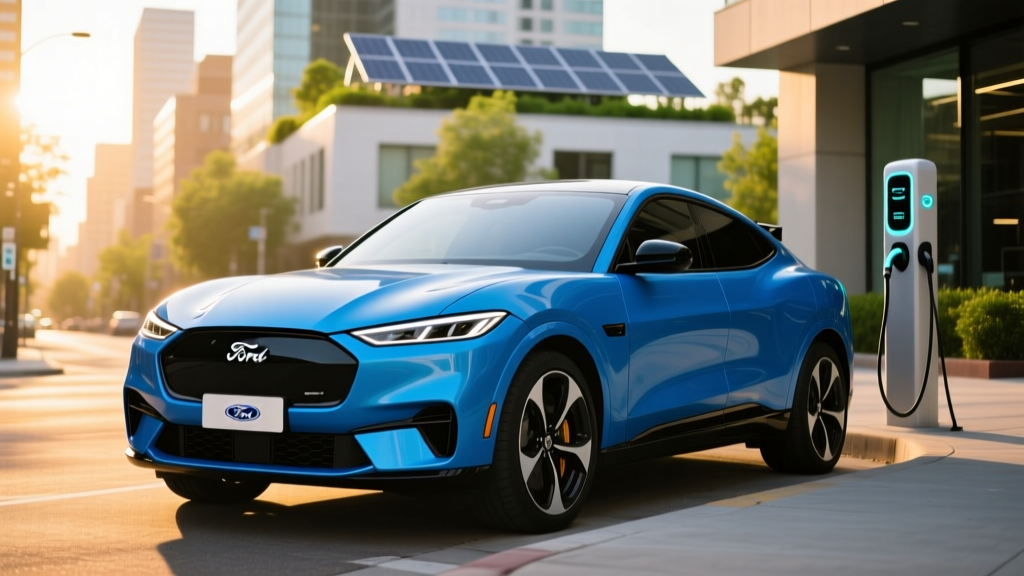
If you've been researching the Mustang Mach-E and stumbled on alarming headlines, you're not alone. Searches for "Mustang Mach-E discontinued" have spiked as Ford restructures its electric vehicle strategy. Here's the reality as of early 2026: the Ford Mustang Mach-E is still in production and available for purchase. However, Ford has made significant changes to its EV roadmap that have fueled discontinuation rumors — including shifting production capacity, delaying next-generation models, and writing down billions in EV investment losses.
Ford's Model e division has faced mounting financial pressure. The automaker has scaled back several EV commitments, canceled or delayed planned electric models, and pivoted toward hybrids. The Mach-E itself has seen production volume adjustments at Ford's Cuautitlán, Mexico plant. But as of the 2025 model year rolling into 2026 dealer inventories, you can still configure and order a new Mustang Mach-E. The question isn't whether it exists today — it's whether Ford will commit to a next generation, and what that means for long-term parts support, resale value, and whether you should buy one now or wait.
2025–2026 Mustang Mach-E: Full Specification Breakdown
Before deciding whether the discontinuation chatter should affect your purchase, let's ground this in hard data. The current-generation Mach-E (refreshed for 2024 and carried into 2025–2026 model years) offers four distinct powertrain configurations. Here's what you're actually getting:
| Spec | Select (Std Range) | Premium (Ext Range RWD) | GT (Ext Range AWD) | Rally (Ext Range AWD) |
|---|---|---|---|---|
| EPA Range | 250 mi | 320 mi | 290 mi | 265 mi |
| Usable Battery | 70 kWh (LFP) | 91 kWh (NMC) | 91 kWh (NMC) | 91 kWh (NMC) |
| Horsepower | 266 hp | 290 hp | 480 hp | 480 hp |
| Torque | 317 lb-ft | 317 lb-ft | 634 lb-ft | 700 lb-ft |
| 0-60 mph | 6.3 sec | 6.1 sec | 3.8 sec | 3.9 sec |
| Drivetrain | RWD | RWD | AWD (dual-motor) | AWD (dual-motor) |
| MPGe (combined) | 105 MPGe | 101 MPGe | 89 MPGe | 84 MPGe |
| Base MSRP | $39,995 | $46,495 | $57,995 | $59,995 |
Source: fueleconomy.gov and Ford Motor Company specifications. Prices exclude destination charges (~$1,395).
One important distinction: Ford shifted the Standard Range model to an LFP (lithium iron phosphate) battery pack, while Extended Range models continue using NMC (nickel manganese cobalt) chemistry. LFP packs are heavier and offer less energy density, but they tolerate repeated 100% charging without accelerated degradation — a meaningful advantage for daily commuters who want to charge to full regularly. NMC packs offer more range per kilogram but Ford recommends keeping daily charge at 80–90% for longevity.
Real-World Range: What the EPA Number Doesn't Tell You
The Mach-E Premium Extended Range RWD carries an EPA-estimated 320 miles — but your actual experience will vary significantly based on conditions:
- Highway driving (75 mph): Expect ~260–280 miles. Aerodynamic drag hits all EVs hard at sustained highway speeds.
- Cold weather (below 30°F): Range drops 20–30%, yielding roughly 220–255 miles from a full charge. The Mach-E's heat pump helps, but battery chemistry still suffers in freezing temps.
- City / mixed commuting: 300–315 miles is achievable. Regenerative braking recovers energy in stop-and-go traffic.
- GT trim highway: Despite its 290-mile EPA rating, aggressive driving and AWD losses can drop real-world highway range to ~220–240 miles.
In independent testing by Edmunds, the Mach-E Extended Range RWD achieved approximately 285–300 miles on their real-world test loop at moderate temperatures — about 6–10% below the EPA sticker. That's consistent with most modern EVs, but it's important to plan your road trips around the lower number, not the optimistic one.
Charging Speed: DC Fast Charging and Home Setup
Charging infrastructure remains the top concern for EV buyers, and the Mach-E's charging performance is competent but not class-leading. Here's what to expect across all charging levels:
| Charging Level | Power / Rate | Std Range (70 kWh) | Ext Range (91 kWh) |
|---|---|---|---|
| Level 1 (120V household) | ~1.4 kW | ~3 mi/hr | ~3 mi/hr |
| Level 2 (240V home charger) | 10.5 kW (48A) | ~23 mi/hr (full in ~7 hr) | ~23 mi/hr (full in ~9.5 hr) |
| DC Fast Charge (peak) | 150 kW (Std) / 150 kW (Ext) | 10–80% in ~38 min | 10–80% in ~45 min |
A few things to note about the Mach-E's charging curve:
Peak vs. sustained rate matters. The Mach-E hits its peak 150 kW only briefly in the 10–30% State of Charge (SoC) window. By 50% SoC, the rate tapers to roughly 100–110 kW, and above 80% it drops dramatically to protect battery health. This is why the 10–80% metric is the industry standard — charging past 80% on DC fast charging adds significant time for minimal range gain.
Connector transition. The Mach-E currently ships with a CCS1 connector. Ford has committed to adopting the NACS (Tesla) connector on future models, and current Mach-E owners can access Tesla Supercharger stations using Ford-provided adapters. This dual-network access is actually an advantage in 2026 — you're not locked into a single ecosystem.
Home charging reality. The onboard 10.5 kW charger is solid for overnight replenishment. Most owners with a home Level 2 setup wake up to a full battery every morning. Expect to spend $500–$1,500 on a quality Level 2 home charger installation (equipment plus electrician), depending on whether your electrical panel needs an upgrade.
Pricing, Trims, and Federal Tax Credit Eligibility
The Mustang Mach-E's pricing positions it squarely against the Tesla Model Y, Hyundai Ioniq 5, and Kia EV6. But the total cost picture changes significantly once you factor in federal incentives.
| Trim | Base MSRP | §30D Credit Eligibility | Effective Price (if eligible) |
|---|---|---|---|
| Select Std Range RWD | $39,995 | Eligible — up to $7,500 | ~$32,495 |
| Premium Ext Range RWD | $46,495 | Eligible — up to $7,500 | ~$38,995 |
| GT Ext Range AWD | $57,995 | Eligible — up to $7,500 | ~$50,495 |
| Rally Ext Range AWD | $59,995 | Eligible — up to $7,500 | ~$52,495 |
Source: IRS §30D Clean Vehicle Credit guidelines. Eligibility is not guaranteed — see requirements below.
To claim the full $7,500 federal credit on a new Mustang Mach-E, ALL of the following must be true:
- MSRP cap: Vehicle base price must be ≤ $80,000 (SUVs/crossovers). All Mach-E trims qualify.
- Buyer income cap: Modified AGI ≤ $150,000 (single) / $300,000 (joint filing). Exceed this and you're ineligible.
- Battery sourcing: A percentage of critical minerals and battery components must be sourced from the US or free-trade-agreement countries. These thresholds tighten annually — verify current-year compliance on the IRS source list before purchasing.
- Point-of-sale transfer: As of 2024+, you can transfer the credit to the dealer at purchase, reducing your out-of-pocket cost immediately rather than waiting for a tax refund.
- Final assembly: Vehicle must be assembled in North America. The Mach-E is built in Cuautitlán, Mexico — which qualifies under USMCA.
Consult a tax professional before relying on credit eligibility. Rules change frequently and battery sourcing compliance varies by production batch.
Interior, Cargo, Tech, and Driver Assistance
The Mach-E's cabin balances sporty aesthetics with practical crossover utility. Here are the concrete dimensions that matter for daily life:
- Cargo behind rear seats: 29.7 cu ft — competitive with the Model Y (30.2 cu ft) and more than the Ioniq 5 (27.2 cu ft)
- Cargo with rear seats folded: 59.7 cu ft
- Front trunk (frunk): 4.7 cu ft — useful for charging cables and small bags, with a drain plug for use as a cooler
- Rear legroom: 38.9 inches — generous for adults on longer trips
- Front headroom: 40.4 inches (panoramic glass roof reduces this slightly vs. solid roof)
Infotainment: The Mach-E runs Ford's SYNC 4A system on a vertically oriented 15.5-inch touchscreen. It supports wireless Apple CarPlay and Android Auto, over-the-air (OTA) updates, and Ford Power-Up software improvements. The interface is responsive, though some owners report occasional lag when navigating between menus — a software issue Ford has addressed incrementally via OTA patches.
Driver assistance: Ford Co-Pilot360 comes standard, including automatic emergency braking, blind-spot monitoring, lane-keeping assist, and adaptive cruise control. Available BlueCruise enables hands-free driving on pre-mapped divided highways — currently covering over 130,000 miles of qualified roads in North America.
BlueCruise is a Level 2 driver-assistance system under SAE International classification. This means the system handles steering and acceleration/braking simultaneously on qualified roads, but you must remain attentive and ready to take over at all times. A driver-facing camera monitors your eyes. This is not autonomous or "self-driving" technology — it is an advanced cruise-and-lane-centering system that reduces fatigue on highway commutes.
Notable drawbacks: The panoramic glass roof lets in significant heat in summer — many owners add an aftermarket shade. Rear visibility is compromised by thick C-pillars and a steeply raked rear window, making the backup camera essential. The single-pedal driving mode is effective but not as aggressive as Chevrolet's or Tesla's implementations, meaning you'll still use the friction brake more often than in some competitors.
How the Mach-E Stacks Up Against Key Competitors
The discontinuation conversation only matters if there's a better alternative. Here's how the Mach-E compares to the three most-shopped rivals in the midsize electric crossover segment:
| Metric | Mach-E Premium ER RWD | Tesla Model Y LR | Hyundai Ioniq 5 LR RWD | Kia EV6 LR RWD |
|---|---|---|---|---|
| EPA Range | 320 mi | 320 mi | 303 mi | 310 mi |
| DC Fast Charge Peak | 150 kW | 250 kW | 240 kW | 240 kW |
| 10–80% DCFC Time | ~45 min | ~25 min | ~18 min | ~18 min |
| Starting MSRP | $46,495 | $46,630 | $46,650 | $44,550 |
| Cargo (rear seats up) | 29.7 cu ft | 30.2 cu ft | 27.2 cu ft | 24.4 cu ft |
| Battery Warranty | 8 yr / 100k mi | 8 yr / 120k mi | 10 yr / 100k mi | 10 yr / 100k mi |
The Mach-E's biggest competitive weakness in 2026 is DC fast charging speed. At 150 kW peak, it's a generation behind the Hyundai/Kia E-GMP platform (800V architecture enabling 240 kW peaks) and Tesla's 250 kW Supercharger capability. On road trips, that translates to 15–25 extra minutes per charging stop compared to an Ioniq 5 or EV6.
Where the Mach-E wins: cargo space (trailing only the Model Y), ride comfort (softer suspension tuning than the sportier EV6), and dealer service network accessibility — Ford's franchise dealer footprint means warranty service is easier to find than for newer EV-only brands.
Warranty, Long-Term Ownership, and the Discontinuation Risk
Ford covers the Mach-E's battery and electric powertrain components for 8 years or 100,000 miles, whichever comes first. The battery warranty guarantees that capacity will not fall below 70% of its original state during the coverage period. The bumper-to-bumper limited warranty runs 3 years / 36,000 miles.
Here's where the discontinuation question has real teeth: if Ford eventually discontinues the Mach-E without a successor, what happens to parts availability and resale value?
Federal law requires automakers to maintain parts availability for a minimum period after discontinuation, and Ford's dealer network is large enough that body panels, suspension components, and general wear items should remain obtainable for many years. The battery pack is the bigger concern — if the specific cell format becomes orphaned, replacement costs could rise. That said, the Mach-E shares its platform components with other Ford products, and the EV market is large enough that third-party battery refurbishment services are expanding.
Resale value is harder to predict. Discontinued models typically depreciate faster than continuing nameplates, but the Mach-E's strong brand recognition and Ford's service infrastructure provide a floor. Current 3-year depreciation sits around 45–50% — competitive with the broader EV segment but worse than a Toyota RAV4 Hybrid.
✅ Pros
- 320-mile EPA range (ER RWD) is genuinely road-trip capable
- Spacious 29.7 cu ft cargo area with useful frunk
- BlueCruise hands-free highway driving is well-implemented
- LFP battery option for daily 100% charging without degradation worry
- Ford dealer network for service access nationwide
- Eligible for $7,500 federal tax credit (with caveats)
- Comfortable ride quality for long commutes
❌ Cons
- 150 kW DC fast charging is slow vs. 240–250 kW competitors
- Uncertain long-term future — discontinuation risk affects resale
- Panoramic glass roof creates cabin heat in summer
- GT and Rally trims are expensive with limited range
- Infotainment can lag despite OTA updates
- Rear visibility is poor without camera aids
- Single-pedal regen less aggressive than rivals
Who Should Buy the Mustang Mach-E (And Who Shouldn't)
Choose the Mach-E if:
- You prioritize cargo space and rear-seat comfort over charging speed
- Your driving is mostly commuting and city/suburban, with occasional road trips
- You want hands-free highway driving (BlueCruise) without Tesla's ecosystem
- You value a large, established dealer service network
- You can charge at home overnight and don't rely heavily on public DC fast charging
Look elsewhere if:
- You take frequent long road trips and need the fastest possible DC charging (consider Ioniq 5 or EV6)
- You want maximum Supercharger network exclusivity (Tesla Model Y)
- Long-term resale value certainty is a top priority (discontinuation risk is real)
- You need a third row or maximum towing capacity (neither is available)
Frequently Asked Questions
Is the Ford Mustang Mach-E being discontinued in 2026?
No. As of early 2026, the Mustang Mach-E remains in production and available for order through Ford dealers. However, Ford has scaled back its broader EV investment and delayed next-generation electric models, creating uncertainty about whether the current-generation Mach-E will receive a direct successor. Current models carry full factory warranties regardless of future production decisions.
What is the real-world range of the Mustang Mach-E?
The EPA-estimated range varies by trim: 250 miles (Select Std Range), 320 miles (Premium Ext Range RWD), 290 miles (GT AWD), and 265 miles (Rally AWD). In real-world driving, expect 10–15% less on the highway and 20–30% less in freezing temperatures. The Premium Ext Range RWD typically delivers 275–300 miles in mixed conditions at moderate temperatures.
How fast does the Mustang Mach-E charge at home and on the road?
On a Level 2 home charger (240V, 48A), the Mach-E charges at up to 10.5 kW, adding approximately 23 miles of range per hour — a full overnight charge replenishes any trim. On DC fast charging, the peak rate is 150 kW, achieving a 10–80% charge in approximately 38–45 minutes depending on battery size. This is slower than competitors like the Ioniq 5 (18 minutes) and Tesla Model Y (25 minutes).
Does the Mustang Mach-E qualify for the $7,500 federal EV tax credit?
The Mach-E currently qualifies for up to $7,500 under IRS §30D, provided you meet income caps ($150,000 single / $300,000 joint MAGI), the vehicle's MSRP is under $80,000 (all trims qualify), and the battery meets current-year critical mineral and component sourcing requirements. The credit can be transferred to the dealer at point of sale. Verify eligibility on the IRS clean vehicle credit page before purchasing, as sourcing rules change.
Should I buy a Mach-E now or wait for a potential replacement?
If the current Mach-E meets your needs, buying now has advantages: you lock in current pricing, full warranty coverage, and potential tax credit eligibility. Ford's dealer network will support the vehicle with parts and service regardless of future production decisions. Waiting for a hypothetical next-generation model carries its own risk — Ford's EV timeline has proven unpredictable, and future models may be priced higher or have different specifications. If the Mach-E's 150 kW charging speed and 320-mile range work for your lifestyle, the current generation is a proven, well-reviewed vehicle.
What is the battery warranty on the Mustang Mach-E?
Ford provides an 8-year / 100,000-mile warranty on the high-voltage battery and electric powertrain components. The battery is warranted to retain at least 70% of its original capacity during the coverage period. The standard bumper-to-bumper warranty covers 3 years / 36,000 miles.