Quick Verdict: Where the Mach-E Lands in 2026
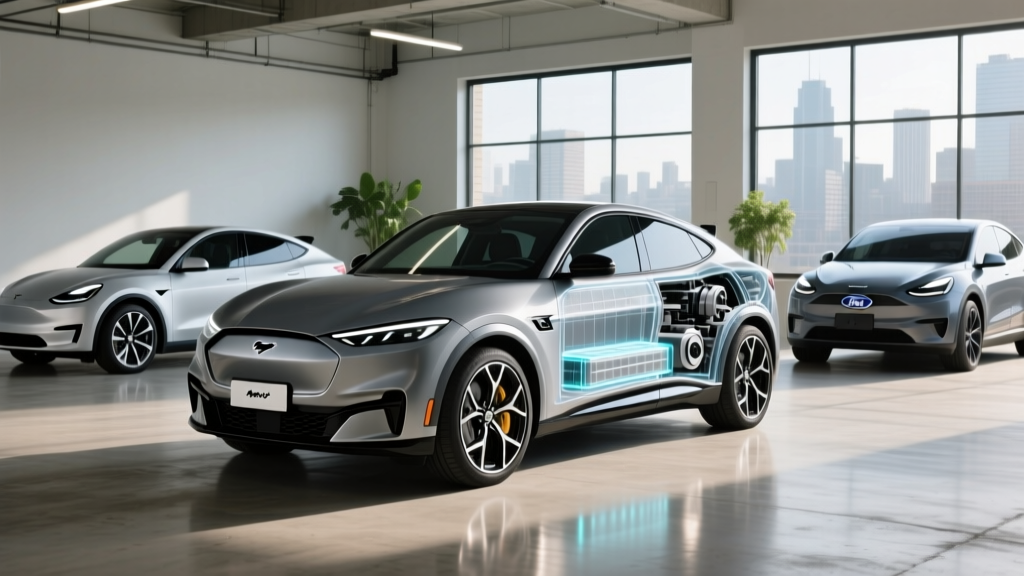
The Ford Mustang Mach-E enters the 2026 model year as one of the most well-rounded electric crossovers available, balancing usable range, strong performance, and a price that undercuts several rivals. But the question most buyers are asking isn't just "what's the sticker price?" — it's what the Mustang Mach-E cost actually looks like after federal incentives, home charging setup, and real-world efficiency losses. This review breaks down every dollar, every mile, and every kilowatt-hour you need to know before signing.
The Mach-E continues to offer multiple battery and drivetrain configurations, a growing NACS-native charging advantage, and Ford's BlueCruise hands-free driving system. It's a compelling option for families and commuters who want a mainstream EV with strong dealer support — but it's not without trade-offs in charging speed and rear-seat packaging.
2026 Mustang Mach-E Pricing by Trim
Ford has streamlined the Mach-E lineup for 2026. Here's what each trim costs before any incentives, along with the key mechanical differences that drive those price gaps.
| Trim | Drivetrain | Battery | EPA Range | 0-60 mph | MSRP |
|---|---|---|---|---|---|
| Select (RWD) | RWD, single motor | 75.7 kWh (LFP) | 250 mi | 6.3 sec | $37,995 |
| Select (AWD) | AWD, dual motor | 75.7 kWh (LFP) | 230 mi | 5.5 sec | $40,995 |
| Premium (RWD) | RWD, single motor | 91 kWh (NMC) | 320 mi | 6.1 sec | $44,495 |
| Premium (AWD) | AWD, dual motor | 91 kWh (NMC) | 290 mi | 4.8 sec | $47,495 |
| GT | AWD, dual motor | 91 kWh (NMC) | 280 mi | 3.5 sec | $56,995 |
| Rally | AWD, dual motor | 91 kWh (NMC) | 265 mi | 3.4 sec | $59,995 |
The destination charge is $1,395 across all trims. Ford also offers a BlueCruise equipped package at $2,100 on Premium and above, and a panoramic fixed-glass roof at $1,695. A fully loaded Premium AWD can easily reach $51,000–$53,000 before incentives.
Federal Tax Credit: Does the Mach-E Qualify?
This is where the actual Mustang Mach-E cost shifts significantly. Under current IRS §30D rules, the Mach-E is eligible for the full $7,500 federal tax credit — but only if you meet all requirements. Ford manufactures the Mach-E in Cuautitlán, Mexico, but its battery components and critical minerals sourcing currently satisfy the credit's thresholds.
- MSRP cap: Vehicle must be under $80,000 (SUVs/crossovers). All Mach-E trims qualify.
- Buyer income cap: AGI must not exceed $150,000 (single), $225,000 (head of household), or $300,000 (joint).
- Battery sourcing: Critical minerals and battery components must meet phased-in thresholds per IRS §30D guidelines. The Mach-E currently meets both requirements.
- Point-of-sale transfer: You can apply the $7,500 as a down payment reduction at the dealer instead of claiming it on your tax return.
- Lease loophole: Leased Mach-Es may qualify for the commercial clean vehicle credit (§45W) without income or MSRP caps — ask your dealer.
| Trim | MSRP | After §30D Credit | Effective Monthly (72-mo, 6% APR) |
|---|---|---|---|
| Select RWD | $37,995 | $30,495 | ~$505 |
| Premium RWD | $44,495 | $36,995 | ~$613 |
| Premium AWD | $47,495 | $39,995 | ~$662 |
| GT | $56,995 | $49,495 | ~$820 |
Important caveat: Tax credit rules change frequently based on battery sourcing determinations. Always verify current eligibility on irs.gov or with a tax professional before purchasing.
Range & Efficiency: EPA vs. Real World
EPA estimated range: Up to 320 miles (Premium RWD with extended-range battery).
Real-world expectation: Plan for 260–280 miles on highway road trips at 70+ mph. In cold weather (below 30°F), expect a 20–30% reduction — roughly 190–220 miles from the extended-range pack. City driving with regenerative braking recovers closer to the EPA sticker.
Efficiency varies by configuration. The Select RWD with the standard-range LFP battery achieves approximately 101 MPGe combined (33 kWh/100 mi), while the Premium RWD extended-range delivers about 98 MPGe combined (34 kWh/100 mi). The GT drops to roughly 84 MPGe combined due to its performance-oriented tuning and heavier dual-motor setup. Per fueleconomy.gov, the Mach-E's efficiency is competitive with the Hyundai Ioniq 5 but trails the Tesla Model Y by roughly 5–8 MPGe in comparable trims.
The LFP (lithium iron phosphate) battery in the Select trim trades some energy density for longevity and lower cost. You can charge LFP to 100% daily without accelerating degradation — a meaningful advantage for commuters. The NMC (nickel manganese cobalt) packs in Premium, GT, and Rally trims offer more range per pound but benefit from an 80% daily charge limit for long-term health.
Charging Speed: DC Fast, Level 2, and Level 1
Charging speed is often the make-or-break factor for EV ownership satisfaction. The 2026 Mach-E now features a native NACS (North American Charging Standard) port, granting access to Tesla Supercharger stations without an adapter — a significant infrastructure advantage over CCS-only competitors.
| Charging Level | Power | Speed / Time | Notes |
|---|---|---|---|
| Level 1 (120V household) | ~1.4 kW | ~3–4 mi/hr | Emergency/trickle only; full charge takes days |
| Level 2 (240V home, 48A) | 11.5 kW | ~30 mi/hr; full charge in ~8–10 hr | Requires 60A circuit; typical home install |
| DC Fast Charge (peak) | 150 kW | 10–80% in ~36 min (extended range) | Peaks briefly; sustains ~115 kW through mid-SoC |
| DC Fast Charge (Tesla Supercharger) | Up to 150 kW | Same as above via native NACS | Widest network access in the US |
Charging curve reality: The Mach-E's peak 150 kW rate is not sustained. In testing, the extended-range NMC pack ramps to approximately 150 kW between 10–25% state of charge, then tapers progressively — dropping to around 80 kW by 60% and below 50 kW past 80%. A 10–80% session at a 150+ kW stall typically takes 34–40 minutes. This is noticeably slower than the Hyundai Ioniq 5 (which peaks at 240 kW and does 10–80% in ~18 minutes on an 800V architecture) but comparable to the Volkswagen ID.4 and Nissan Ariya.
For home charging, the onboard 11.5 kW charger is a strong point. A full overnight charge from 10% takes about 8 hours on a 48-amp Level 2 circuit — easily enough for daily use. Budget $500–$1,200 for a quality Level 2 home charger (like the ChargePoint Home Flex or Emporia Level 2) and $800–$2,500 for professional installation by a licensed electrician, depending on your panel capacity and conduit run.
Performance & Driving Dynamics
The Mach-E's performance envelope is wide, spanning a comfortable 266-hp commuter to a 480-hp GT that embarrasses sports cars at stoplights.
| Trim | Horsepower | Torque (lb-ft) | 0-60 mph | Drivetrain |
|---|---|---|---|---|
| Select RWD | 266 hp | 317 | 6.3 sec | RWD |
| Select AWD | 325 hp | 417 | 5.5 sec | Dual-motor AWD |
| Premium RWD | 290 hp | 317 | 6.1 sec | RWD |
| Premium AWD | 365 hp | 417 | 4.8 sec | Dual-motor AWD |
| GT | 480 hp | 634 | 3.5 sec | Dual-motor AWD |
| Rally | 490 hp | 650 | 3.4 sec | Dual-motor AWD |
Even the base RWD model feels responsive in daily driving thanks to instant electric torque. The AWD models provide confident all-weather traction, and the GT's 3.5-second 0-60 time puts it in genuine performance territory. The Rally trim adds raised suspension, underbody protection, and Ford Performance tuning for light off-road and gravel-road use — a niche but fun addition.
Regenerative braking offers a one-pedal driving mode that's well-calibrated, though not quite as aggressive as Tesla's or Nissan's implementation. The steering is weighted appropriately and the chassis tuning strikes a good balance between comfort and composure on winding roads.
Interior, Cargo, and Technology
The Mach-E's cabin is modern and tech-forward, dominated by a large 15.5-inch vertical touchscreen running Ford's SYNC 4A system. The interface is responsive, supports wireless Apple CarPlay and Android Auto, and includes built-in navigation with EV-aware route planning that factors in charging stops and battery preconditioning.
Cargo space:
- Behind rear seats: 29.7 cu ft
- Rear seats folded: 59.7 cu ft
- Front trunk (frunk): 4.7 cu ft (drainable — useful for ice and tailgating)
Passenger space:
- Front legroom: 43.3 inches
- Rear legroom: 38.9 inches
- Front headroom: 40.4 inches (39.0 with glass roof)
The rear seat is comfortable for adults on shorter trips but is slightly tighter on legroom than the Hyundai Ioniq 5 (41.7 inches rear) and the Tesla Model Y (41.6 inches). If rear-seat space is a top priority for tall teenagers or car seats, cross-shop those rivals carefully.
Standout tech:
- BlueCruise: Ford's Level 2 hands-free driving system works on over 130,000 miles of pre-mapped divided highways. It uses a driver-facing camera to confirm attention. It is not self-driving — you must remain alert and ready to take over. Available as a subscription after the initial trial period.
- Phone-as-a-key: Your smartphone unlocks, starts, and personalizes settings as you approach.
- OTA updates: Ford regularly pushes over-the-air software updates that add features and refine performance.
- FordPass app: Remote preconditioning, charge monitoring, and scheduled charging.
Notable drawbacks:
- No rear wiper — visibility in rain and snow is a common complaint.
- The massive touchscreen lacks physical knobs for volume or climate, though a volume knob was added in recent refreshes.
- Rear-seat headroom is slightly compromised with the panoramic glass roof.
- Some interior materials (hard plastics on lower door panels) don't match the price point of the Premium and GT trims.
Warranty & Long-Term Ownership
Ford provides solid warranty coverage for the Mach-E's electric powertrain:
| Coverage | Term |
|---|---|
| Basic (bumper-to-bumper) | 3 years / 36,000 miles |
| Powertrain | 5 years / 60,000 miles |
| EV battery components | 8 years / 100,000 miles (retains ≥70% capacity) |
| Corrosion perforation | 5 years / unlimited miles |
| Roadside assistance | 5 years / 60,000 miles |
The 8-year/100,000-mile battery warranty is industry-standard and matches what Hyundai, Tesla, and Volkswagen offer. Ford guarantees the battery will retain at least 70% of its original capacity during the warranty period. Real-world degradation data from early 2021–2023 Mach-E owners suggests NMC packs lose roughly 5–8% capacity over the first 50,000 miles before stabilizing. LFP packs in the Select trim are expected to degrade more slowly, though long-term fleet data is still maturing.
Insurance costs for the Mach-E are moderate for the EV segment. Expect annual premiums of $1,800–$2,600 depending on trim, driving record, and location — roughly 15–25% higher than a comparable gas-powered Ford Edge, per industry averages. The GT trim commands the highest premiums.
How It Stacks Up: Mach-E vs. Key Competitors
| Spec | Ford Mustang Mach-E (Premium AWD) | Tesla Model Y (Long Range AWD) | Hyundai Ioniq 5 (Limited AWD) |
|---|---|---|---|
| Base MSRP | $47,495 | $48,990 | $54,600 |
| EPA Range | 290 mi | 320 mi | 290 mi |
| DC Fast Charge Peak | 150 kW | 250 kW | 240 kW (800V) |
| 10–80% DC Time | ~36 min | ~25 min | ~18 min |
| 0-60 mph | 4.8 sec | 4.8 sec | 5.1 sec |
| Cargo (rear seats up) | 29.7 cu ft | 30.2 cu ft | 27.2 cu ft |
| Rear Legroom | 38.9 in | 41.6 in | 41.7 in |
| §30D Tax Credit | $7,500 (eligible) | $7,500 (eligible) | $7,500 (eligible) |
Choose the Mach-E if: You want a mainstream brand with strong dealer support, native NACS access to Superchargers, and a more traditional crossover driving feel. The Mach-E's pricing undercuts the Ioniq 5 Limited and matches the Model Y, while its LFP battery option in the Select trim offers excellent long-term durability for daily commuters.
Choose the Model Y if: Maximum range, fastest DC charging, and the most mature Supercharger network are your top priorities — and you're comfortable with Tesla's direct-to-consumer service model.
Choose the Ioniq 5 if: Blazing-fast 800V charging (18-minute 10–80%) and best-in-class rear-seat space matter most. The Ioniq 5 charges nearly twice as fast as the Mach-E on compatible 350 kW chargers.
Pros & Cons at a Glance
- Native NACS port — full Supercharger access
- LFP battery option (Select) for daily 100% charging
- Strong 0-60 performance across all trims
- Competitive pricing after $7,500 tax credit
- BlueCruise hands-free highway driving
- Drainable frunk for tailgating
- Ford dealer network for service
- DC charging slower than Ioniq 5 and Model Y
- Rear legroom tighter than key rivals
- No rear wiper
- Some hard interior plastics at Premium+ price points
- BlueCruise requires ongoing subscription after trial
- Range drops significantly in cold weather (20–30%)
Who Should Buy the 2026 Mustang Mach-E?
The Mach-E is best suited for:
- Commuters with home charging: The Select RWD with LFP at $30,495 after the tax credit is one of the best value propositions in the EV market. Charge to 100% nightly, drive 250 miles daily, repeat for years.
- Small families: The Premium AWD offers 290 miles of range, 365 hp, and enough cargo space for strollers and groceries. Just note the rear seat is tighter than the Ioniq 5 for tall kids.
- Road-trippers who value network access: Native NACS means the Mach-E taps into the most reliable fast-charging network in North America. Plan charging stops around Superchargers and you'll avoid the CCS-network reliability headaches.
- Performance seekers on a budget: The GT at $49,495 after the credit delivers 480 hp and a 3.5-second 0-60 for less than a base Porsche Macan — and the torque delivery is instant.
It's less ideal for buyers who need maximum rear-seat space, the absolute fastest DC charging for frequent 500+ mile road trips, or those in extreme cold climates where the range penalty stings more on a 290-mile pack.
Frequently Asked Questions
What is the real-world range of the Mustang Mach-E?
The EPA rates the extended-range RWD at 320 miles, but expect 260–280 miles on highway road trips and 190–220 miles in sustained cold weather (below 30°F). City driving with regenerative braking gets closest to the EPA number. The standard-range LFP Select delivers roughly 200–220 real-world highway miles.
How fast does the Mach-E charge at home and on the road?
At home on a 48-amp Level 2 charger (240V), the Mach-E adds about 30 miles of range per hour and fully charges overnight in 8–10 hours. On DC fast chargers, it peaks at 150 kW and charges from 10–80% in approximately 36 minutes — adequate for road trips but slower than the Ioniq 5's 18-minute 800V charging.
How much does the Mustang Mach-E cost after tax credits?
After the $7,500 federal §30D credit, the Select RWD starts at an effective $30,495 and the Premium AWD lands around $39,995. Eligibility requires meeting IRS income caps ($150K single / $300K joint) and the vehicle must meet battery sourcing requirements. Always confirm current eligibility on irs.gov before purchasing.
Does the Mustang Mach-E qualify for the federal EV tax credit?
Yes — as of 2026, all Mach-E trims qualify for the full $7,500 federal tax credit under §30D, provided the buyer meets income limits and the vehicle's battery sourcing continues to satisfy IRS requirements. The credit can be applied at the point of sale as a down payment reduction. Verify current status at fueleconomy.gov.
Is the Mach-E worth buying over the Tesla Model Y?
It depends on your priorities. The Model Y offers more range (320 mi AWD), faster DC charging (250 kW peak), and more rear legroom. The Mach-E counters with a lower starting price on base trims, a more traditional crossover feel, Ford dealer service, and native NACS Supercharger access. If you prefer not to buy directly from Tesla and value mainstream dealer support, the Mach-E is a strong alternative.
What's the battery replacement cost if it fails out of warranty?
Full battery pack replacement for the Mach-E currently ranges from $14,000 to $20,000 depending on the pack size (standard vs. extended range), plus labor. However, EV batteries rarely fail catastrophically — gradual degradation to 70–80% capacity over 150,000+ miles is the more common scenario. The 8-year/100,000-mile warranty covers capacity loss below 70%.