The Short Answer on the Electric Mustang Coupe
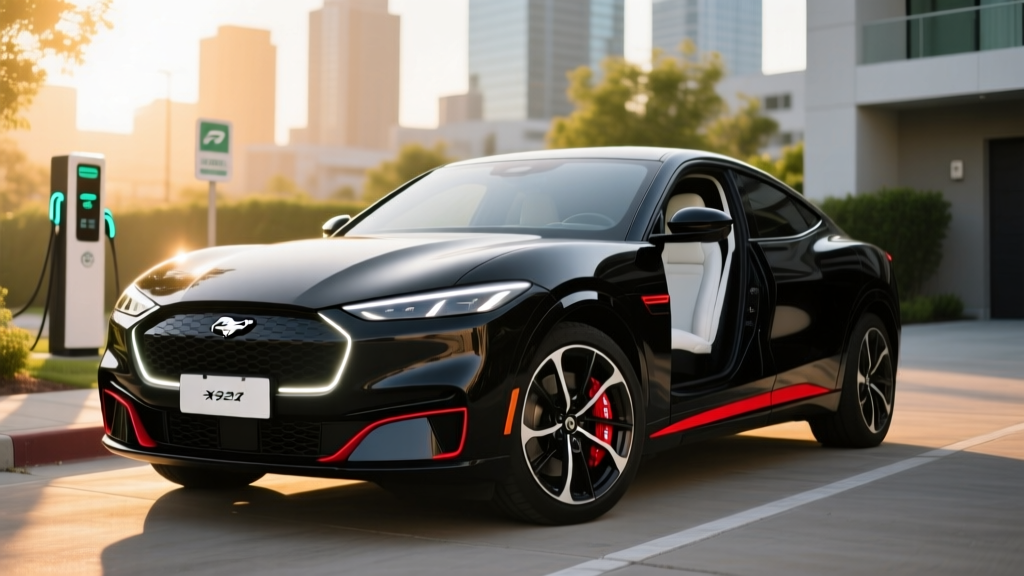
The Ford Mustang Mach-E is the electric Mustang coupe you can actually buy today. For the 2026 model year, it offers up to an EPA-estimated 320 miles of range (Extended Range RWD), peaks at 150 kW DC fast charging (10–80% in approximately 36 minutes), and starts around $39,995 before incentives. If you want the performance flagship, the Mach-E GT delivers 480 hp and a 0–60 mph time of 3.5 seconds. It competes directly with the Tesla Model Y, Hyundai Ioniq 5, and Chevrolet Blazer EV — and unlike the gas Mustang, it seats five with a practical hatchback cargo area.
What Is the Electric Mustang Coupe, Exactly?
When shoppers search for an "electric Mustang coupe," they're almost always looking for the Ford Mustang Mach-E. Ford introduced the Mach-E for the 2021 model year as a fully electric crossover that carries the Mustang nameplate into the EV era. Technically, it's a five-door hatchback with a coupe-like roofline — not a traditional two-door coupe like the gas Mustang EcoBoost or GT.
As of 2026, Ford does not offer a battery-electric version of the two-door Mustang coupe. The gas Mustang (S650 generation) continues with EcoBoost and V8 powertrains, and Ford has not announced a fully electric two-door Mustang for sale. If you want the Mustang brand with zero tailpipe emissions, the Mach-E is your option.
2026 Mach-E Range, Battery, and Efficiency by Trim
Range is the first number most EV buyers check. Here's how the 2026 Mustang Mach-E lineup breaks down, based on EPA estimates. Note that real-world range depends heavily on driving style, temperature, and terrain.
| Trim / Config | Drivetrain | Battery (usable kWh) | Chemistry | EPA Range | Real-World Expectation | MPGe (combined) |
|---|---|---|---|---|---|---|
| Select SR RWD | RWD | ~72 kWh | NMC | ~250 mi | ~200–220 mi highway; ~170 mi cold | ~101 MPGe |
| Premium ER RWD | RWD | ~91 kWh | NMC | ~320 mi | ~260–280 mi highway; ~220 mi cold | ~103 MPGe |
| Premium ER AWD | AWD | ~91 kWh | NMC | ~290 mi | ~240–260 mi highway; ~200 mi cold | ~97 MPGe |
| GT ER AWD | AWD | ~91 kWh | NMC | ~280 mi | ~230–250 mi highway; ~190 mi cold | ~90 MPGe |
| Rally ER AWD | AWD | ~91 kWh | NMC | ~265 mi | ~215–235 mi highway; ~180 mi cold | ~86 MPGe |
Real-World Range Reality: The EPA 320-mile figure for the ER RWD is achievable in mild-weather city and suburban driving. On sustained highway trips at 70–75 mph, expect 260–280 miles before needing a charge. In sub-30°F winter conditions, lithium-ion chemistry and cabin heating reduce usable range by 20–30%, dropping the ER AWD to roughly 200–220 miles. The Mach-E's heat pump (standard on most trims) helps mitigate this loss compared to EVs without one.
Charging Speeds: Home Level 2 and DC Fast Charging
Charging is where many first-time EV buyers have the most questions. The Mach-E uses the CCS1 connector for DC fast charging and the J1772 connector for AC Level 2 home and public charging. Ford has also announced NACS (Tesla Supercharger) adapter compatibility for newer model years — confirm adapter availability with your dealer for 2026 models.
| Charging Level | Connector | Power (kW) | Miles Added per Hour | Time (10–80%) |
|---|---|---|---|---|
| Level 1 (120V household) | J1772 | ~1.4 kW | ~3–4 mi/hr | Not practical (days) |
| Level 2 (240V home/public) | J1772 | ~10.5 kW (max onboard) | ~28–32 mi/hr | ~8–9 hours (full charge) |
| DC Fast Charge | CCS1 | 150 kW peak (ER) / 115 kW (SR) | ~180–220 mi/hr at peak | ~36 min (ER) / ~45 min (SR) |
Charging-curve reality check: The 150 kW peak on Extended Range models is not sustained across the full session. The Mach-E typically holds peak rate between 10–50% State of Charge, then tapers progressively. From 50–80%, expect an average of 80–100 kW. This is why the 10–80% time is approximately 36 minutes — not the 15 minutes some marketing materials might imply if peak rate were sustained.
Home charging setup: Most Mach-E owners install a 240V Level 2 wall connector on a 48-amp or 60-amp circuit. Ford's Mobile Power Cord (included) can deliver up to 30 amps on a NEMA 14-50 outlet for ~20 miles of range per hour. A dedicated hardwired wallbox at 48 amps delivers the full ~10.5 kW the Mach-E can accept.
Pricing, Trims, and Federal Tax Credit Eligibility
The 2026 Mustang Mach-E starts at approximately $39,995 for the Select Standard Range RWD and climbs to roughly $62,995 for the GT with the Performance Upgrade. Here's the approximate MSRP breakdown:
- Select SR RWD: ~$39,995
- Premium ER RWD: ~$47,995
- Premium ER AWD: ~$50,995
- GT ER AWD: ~$57,995
- Rally ER AWD: ~$59,995
Federal tax credit (§30D): The Mach-E is assembled in Cuautitlán, Mexico. Under current IRS rules for the §30D Clean Vehicle Credit, eligibility depends on battery component and critical mineral sourcing requirements that have tightened significantly since 2023. The credit amount varies — some Mach-E configurations may qualify for a partial credit ($3,750) or the full $7,500, depending on the model year's battery supply chain compliance. Key eligibility factors:
- MSRP cap: Must be under $80,000 (SUVs/vans/pickups) — the Mach-E qualifies as an SUV per IRS classification, so all trims fall under the cap.
- Buyer income cap: AGI must not exceed $150,000 (single), $225,000 (head of household), or $300,000 (joint).
- Battery sourcing: Critical minerals and battery components must meet phased percentage thresholds from US or FTA-partner countries.
- Point-of-sale transfer: Eligible buyers can transfer the credit to the dealer at purchase for an immediate price reduction.
Always verify current-year eligibility on fueleconomy.gov before purchasing, as sourcing rules shift annually and vary by build date.
Mach-E vs Gas Mustang vs Gas SUV: Cost Comparison
The Mach-E shares a name with the gas Mustang but serves a fundamentally different buyer. Here's how it stacks up on the numbers that matter:
| Metric | 2026 Mach-E Premium ER AWD | 2026 Mustang GT (5.0L V8) | 2026 Ford Edge ST (AWD Gas SUV) |
|---|---|---|---|
| Base MSRP | ~$50,995 | ~$44,090 | ~$47,000 |
| Horsepower | 346 hp | 480 hp | 335 hp |
| 0–60 mph | ~4.8 sec | ~4.3 sec | ~5.9 sec |
| EPA Range / MPG | 290 mi / 97 MPGe | ~16/24 MPG (city/hwy) | ~19/25 MPG |
| Annual fuel/energy cost* | ~$600–$800 | ~$2,400–$2,800 | ~$2,200–$2,600 |
| 5-year fuel/energy cost* | ~$3,000–$4,000 | ~$12,000–$14,000 | ~$11,000–$13,000 |
| Annual maintenance | ~$300–$500 | ~$600–$900 | ~$700–$1,000 |
*Fuel/energy costs based on national averages ($0.16/kWh home electricity, $3.40/gal regular, $4.00/gal premium) and 12,000 miles/year. Your local utility rate and driving mix will shift these figures. Source: fueleconomy.gov estimates and AAA fuel cost data.
5-Year Total Cost of Ownership Estimate
| Category | Mach-E Premium ER AWD | Gas Mustang GT |
|---|---|---|
| Purchase (after est. credit) | ~$47,245 | ~$44,090 |
| Energy/Fuel (5 yr) | ~$3,500 | ~$13,000 |
| Maintenance (5 yr) | ~$2,000 | ~$4,000 |
| Insurance (5 yr est.) | ~$9,500 | ~$8,000 |
| Estimated depreciation | ~$18,000 | ~$16,000 |
| 5-Year Total (approx.) | ~$80,245 | ~$85,090 |
The Mach-E wins on operating costs but carries higher insurance premiums (common for EVs) and potentially steeper depreciation. Your actual TCO depends on local electricity rates, gas prices, insurance quotes, and how long you hold the vehicle.
Common Misconceptions About the Mach-E
| Myth | Fact |
|---|---|
| "It's not a real Mustang." | It wears the badge and delivers strong performance (GT: 480 hp, 3.5s 0–60), but it's a 5-door EV crossover — not a 2-door sports coupe. Different vehicle, different purpose. |
| "You can't road-trip in it." | With 280–320 miles of range and 150 kW DC fast charging, highway road trips require a 30–35 minute stop every 200–250 miles. The CCS network (Electrify America, EVgo, ChargePoint) covers most US interstates, and NACS adapter access to Tesla Superchargers expands coverage further. |
| "The battery will need replacing soon." | Ford covers the high-voltage battery for 8 years / 100,000 miles (whichever comes first) against defects and excessive capacity loss (below 70% retention). Industry data shows modern NMC packs lose roughly 10–15% capacity over 150,000 miles under normal use. |
| "EVs cost more to own, period." | Higher purchase price and insurance are offset by dramatically lower energy and maintenance costs. Over 5 years, many buyers break even or save — especially with a tax credit and home charging on cheap utility rates. |
| "BlueCruise means I don't have to pay attention." | Ford BlueCruise is an SAE Level 2 driver-assistance system. It handles steering, acceleration, and braking on pre-approved highway sections, but you must remain alert and keep your eyes on the road. A driver-facing camera monitors engagement. |
SAE Automation Level: Ford BlueCruise is Level 2 — partial driving automation. The driver is always responsible and must supervise. It is not "self-driving." Only Level 4 services like Waymo operate without a human driver, and those are limited to specific geofenced areas in select cities.
Real-World Ownership: What First-Time EV Buyers Need to Know
Home Charging Access Is the Make-or-Break Factor
If you can charge at home — whether in a garage, driveway, or dedicated parking spot with 240V access — the Mach-E integrates seamlessly into daily life. You wake up with a "full tank" every morning. Without home charging, you'll depend on public DC fast chargers and Level 2 destination chargers, which adds time, cost, and unpredictability to ownership.
Level 2 home installation cost: Expect $800–$2,500 total for a quality wallbox plus electrician labor on an existing 200-amp panel. If your home needs a panel upgrade (common in older homes), add $1,500–$3,500. Always get a quote from a licensed electrician before committing to a specific charger.
Climate and Driving Pattern Considerations
- Cold climates (Northern US): Expect 20–30% range reduction in sustained sub-30°F weather. The Mach-E's heat pump helps, but battery chemistry limits are real. If you live in Minnesota or Maine and commute more than 80 miles round-trip, opt for the Extended Range battery.
- Hot climates (Southwest): Battery thermal management handles heat well, but cabin AC draws energy. Range loss is less severe than cold — typically 5–10%.
- Highway-heavy commutes: EVs are less efficient at sustained high speeds (no regen braking benefit). If 80%+ of your driving is above 65 mph, plan for 15–20% less than the EPA sticker.
- Mostly city/suburban: This is where EVs shine. Regenerative braking recaptures energy, and the Mach-E will often meet or exceed its EPA range estimate in stop-and-go traffic.
Performance and Driving Impressions
The Mach-E delivers instant electric torque with no gear shifts. Even the base Select SR RWD (266 hp, ~5.8s 0–60) feels responsive off the line. The GT with Performance Upgrade (480 hp, ~700 lb-ft torque, 3.5s 0–60) rivals the gas Mustang GT in straight-line acceleration while offering a lower center of gravity from the floor-mounted battery pack. The trade-off is weight — the ER AWD tips the scales around 4,800 lbs, and you feel it in corners compared to the lighter gas Mustang.
Warranty Coverage
- Bumper-to-bumper: 3 years / 36,000 miles
- Powertrain: 5 years / 60,000 miles
- Battery (high-voltage): 8 years / 100,000 miles (70% capacity retention threshold)
- Roadside assistance: 5 years / 60,000 miles
Decision Framework: Should You Buy the Mach-E?
Choose the Mach-E If:
- You want the Mustang brand with zero tailpipe emissions and practical 5-seat utility.
- You have home Level 2 charging access (or can install it).
- Your daily driving is under 200 miles round-trip, with occasional road trips.
- You value instant torque and a quiet cabin over V8 exhaust sound.
- You qualify for at least a partial federal tax credit, bringing the effective price closer to a gas SUV.
Look Elsewhere If:
- You specifically want a two-door sports coupe — the gas Mustang EcoBoost/GT remains the answer.
- You lack home charging access and live in an area with sparse public DC fast chargers (check PlugShare for your area).
- You regularly tow — the Mach-E is rated for only ~1,500 lbs (light utility trailers), not boats or campers.
- You drive 300+ miles daily without time to stop and charge — consider a PHEV like the Ford Escape PHEV instead.
- Maximum range is your top priority — the Hyundai Ioniq 5 (up to 340 mi EPA) or Tesla Model Y (up to 330 mi EPA) edge ahead.
Frequently Asked Questions
Is the Mach-E actually a Mustang?
It carries the Mustang nameplate and badge, but it's a five-door electric crossover, not a two-door sports coupe. Ford designed it to expand the Mustang brand into the EV market. Whether that makes it a "real" Mustang is subjective — but it's a legitimate performance EV with up to 480 hp in GT trim.
Will Ford make an electric two-door Mustang coupe?
As of early 2026, Ford has not announced a battery-electric two-door Mustang. The gas S650 Mustang continues with EcoBoost and V8 options. Ford executives have hinted at future electrified Mustang variants, but nothing is confirmed or available for purchase.
How long does it take to charge the Mach-E at home?
On a 240V Level 2 connection at 10.5 kW (the Mach-E's maximum onboard charger rate), a full charge from near-empty takes approximately 9–10 hours for the Extended Range battery. In practice, most owners charge from 20–80% overnight, which takes about 5–6 hours — well within a typical overnight window.
Is the Mach-E reliable?
Early model years (2021–2022) saw some software glitches and a battery recall on certain Extended Range packs. Ford addressed these with software updates and battery replacements where needed. The 2025–2026 models benefit from these improvements. Check NHTSA.gov for the latest recall and complaint data on specific model years.
Can I use Tesla Superchargers with the Mach-E?
Ford has enabled NACS adapter compatibility for the Mach-E, allowing access to Tesla's Supercharger network (V2 and V3 stations with Magic Dock or via Ford-provided adapter). Confirm adapter availability and compatibility with your dealer for the specific 2026 build date, as rollout timing varies.
What's the Mach-E's cargo space compared to the gas Mustang?
The Mach-E offers 29.7 cubic feet behind the rear seats and 59.7 cu ft with rear seats folded — far more than the gas Mustang's 13.5 cu ft trunk. There's also a small front trunk (frunk) with approximately 4.7 cu ft of lockable storage, useful for charging cables or a small bag.