Quick Verdict: The Mach-E With Hands-Free Highway Muscle
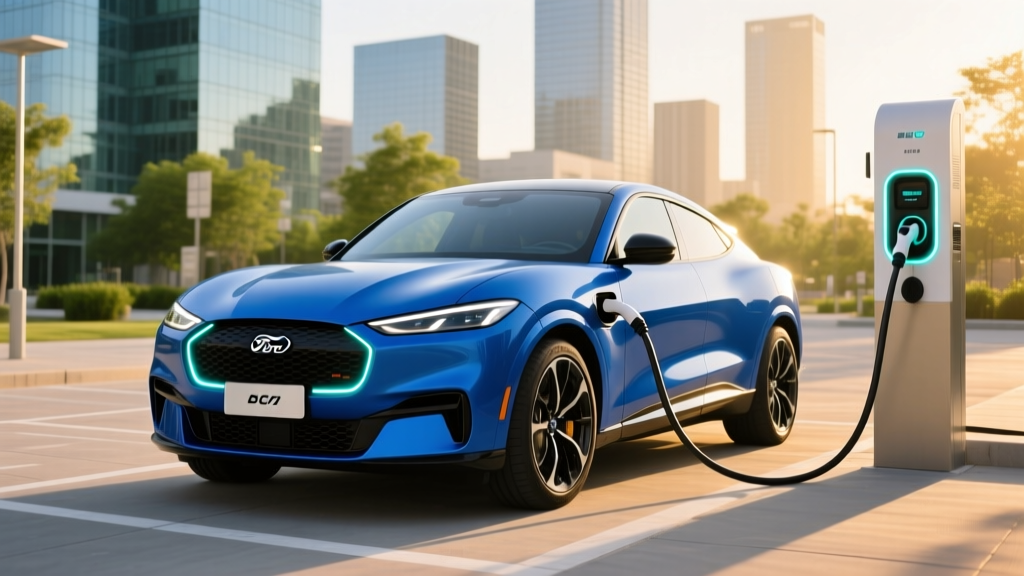
The 2026 Ford Mustang Mach-E remains one of the most balanced electric SUVs on the market, pairing competitive range and brisk acceleration with Ford's BlueCruise hands-free driving system. BlueCruise is the Mach-E's signature differentiator — a Level 2 driver-assist feature that allows true hands-off driving on pre-mapped divided highways. For buyers cross-shopping the Tesla Model Y, Hyundai IONIQ 5, and Chevrolet Equinox EV, the Mach-E's combination of NACS native charging access, a usable LFP battery option, and a mature ADAS suite makes it a serious contender.
But the details matter. Range varies dramatically by trim and wheel size, DC fast-charging speeds differ between battery packs, and BlueCruise carries a subscription cost after the initial trial. This review breaks down every spec, real-world expectation, and ownership cost you need before signing.
Range, Efficiency, and the Real-World Reality Check
| Trim / Config | Battery (Usable kWh) | Chemistry | EPA Range (mi) | MPGe (City/Hwy/Combined) | kWh/100 mi |
|---|---|---|---|---|---|
| Select RWD | 70 kWh (Standard Range) | LFP | 250 | 111 / 94 / 103 | 33 |
| Premium RWD | 91 kWh (Extended Range) | NMC | 320 | 111 / 94 / 103 | 33 |
| Premium AWD (eAWD) | 91 kWh (Extended Range) | NMC | 290 | 103 / 86 / 95 | 36 |
| GT AWD | 91 kWh (Extended Range) | NMC | 280 | 92 / 78 / 85 | 40 |
| Rally AWD | 91 kWh (Extended Range) | NMC | 265 | 86 / 74 / 80 | 43 |
The EPA numbers above assume a mix of city and highway driving at moderate temperatures. In sustained 75-mph highway driving, expect roughly 10–15% less than the EPA sticker — so a Premium RWD rated at 320 miles will deliver closer to 270–290 miles on an all-highway trip. In cold weather (below 30°F), range drops an additional 15–25% due to battery heating demands and cabin climate load. A GT AWD owner in a northern winter should plan for 190–220 miles of usable range before needing a charge.
The LFP-equipped Select RWD trim handles daily commuting well but sacrifices long-trip flexibility. The Extended Range NMC pack is the clear pick for road-trip buyers.
Efficiency-wise, the Mach-E's 33–43 kWh/100 mi depending on trim is competitive but trails the Hyundai IONIQ 5 RWD (around 30 kWh/100 mi). The GT and Rally trims trade efficiency for performance — a deliberate choice Ford makes for enthusiasts.
Charging Speed: DC Fast, Level 2, and the NACS Advantage
| Charging Level | Standard Range (LFP, 70 kWh) | Extended Range (NMC, 91 kWh) |
|---|---|---|
| DC Fast Charge (Peak kW) | 115 kW | 150 kW |
| 10–80% DCFC Time | ~38 minutes | ~33 minutes |
| Level 2 Home (240V, 48A) | ~11.5 kW / ~27 mi/hr | ~11.5 kW / ~27 mi/hr |
| Level 2 Home (240V, 32A) | ~7.7 kW / ~18 mi/hr | ~7.7 kW / ~18 mi/hr |
| Level 1 (120V, 12A) | ~1.4 kW / ~3 mi/hr | ~1.4 kW / ~3 mi/hr |
A critical ownership detail: starting with the 2025 model year, Ford transitioned the Mach-E to the NACS (North American Charging Standard) connector natively, meaning direct access to Tesla Supercharger stations without an adapter. This is a significant practical advantage over CCS-equipped competitors that still require adapters for Supercharger access. Ford's partnership with Tesla's Supercharger network opens up over 20,000 additional fast-charging stalls nationwide, dramatically reducing route-planning anxiety on road trips.
Charging curve reality: The 150 kW peak on Extended Range models is not sustained. Expect peak rates between 10–30% SoC, after which the curve tapers progressively. Above 80%, charging slows dramatically to protect battery health — a 10–80% session takes roughly 33 minutes, but 80–100% can add another 30+ minutes. For road trips, plan stops around the 10–80% window for the best time efficiency.
For home charging, the Ford Mobile Charger (included) handles Level 1 and basic Level 2 duties. For optimal daily charging, Ford's Connected Charge Station (48A, hardwired) adds roughly 27 miles of range per hour — enough to replenish a full Extended Range battery in about 8–9 hours overnight. A professional electrician install for a 48A hardwired unit typically runs $500–$1,500 depending on panel capacity and run length, on top of the ~$600 equipment cost.
Performance: From Sensible Commuter to 480-HP GT
| Trim | Drivetrain | Horsepower | Torque (lb-ft) | 0–60 mph | Towing (lbs) |
|---|---|---|---|---|---|
| Select RWD | RWD (Single Motor) | 266 hp | 387 | 6.3 sec | — |
| Premium RWD | RWD (Single Motor) | 290 hp | 387 | 5.8 sec | — |
| Premium AWD | eAWD (Dual Motor) | 346 hp | 428 | 4.8 sec | 1,500 |
| GT AWD | eAWD (Dual Motor) | 480 hp | 634 | 3.3 sec | 1,500 |
| Rally AWD | eAWD (Dual Motor) | 480 hp | 700 | 3.4 sec | 1,500 |
The GT's 3.3-second 0–60 time puts it firmly in sports-car territory, rivaling the Porsche Taycan base model at a fraction of the price. The Rally trim adds raised suspension, underbody protection, and rally-tuned MagneRide dampers for unpaved-road capability — a niche but genuinely unique offering in the EV SUV segment.
For most buyers, the Premium AWD at 4.8 seconds to 60 is the sweet spot: plenty quick, still efficient, and equipped with the larger battery for road-trip range. Towing is limited to 1,500 lbs on AWD trims — adequate for a small utility trailer but not for boat or camper towing. RWD trims are not rated for towing.
BlueCruise: What Hands-Free Driving Actually Means
Ford BlueCruise is a Level 2 driver-assist system, not autonomous driving. The driver must remain alert, eyes on the road (monitored by an infrared driver-facing camera), and ready to take over at any time. The vehicle controls steering, acceleration, and braking on approved highways, but the human is always responsible. This is fundamentally different from Level 4 robotaxi services like Waymo.
BlueCruise operates on over 130,000 miles of pre-mapped, divided highways across the U.S. and Canada. When the system detects you're on a compatible road (indicated by a blue steering-wheel icon on the cluster), you can remove your hands from the wheel. The system handles lane-keeping, adaptive cruise, and speed-limit adjustments.
The 2026 Mach-E includes BlueCruise with a 90-day free trial. After that, continued use requires a subscription — typically around $75/month or $800/year (pricing subject to Ford's current plans). Hands-free lane-changing assist is available on higher trims, allowing the car to execute lane changes with a turn-signal tap, though the driver must confirm the maneuver.
- Drive on city streets, residential roads, or unmapped highways
- Navigate construction zones reliably — expect frequent disengagement
- Handle severe weather (heavy rain, snow, fog) — the system will request takeover
- Remove the need for driver attention — the IR camera will issue warnings and eventually slow the vehicle if you look away
- Replace the driver in any legal or insurance sense — you are always the responsible operator
Compared to GM's Super Cruise (limited to GM vehicles, similar hands-free highway coverage) and Tesla's Autopilot/FSD Supervised (which allows hands-on use everywhere but hands-off nowhere), BlueCruise occupies a practical middle ground: true hands-off operation, but only on mapped highways. In real-world use, the system is smooth and confidence-inspiring on open interstates but requires frequent takeovers in work zones and complex interchanges.
Pricing, Tax Credits, and Total Cost
| Trim | Base MSRP (2026) | Federal §30D Credit | Effective Price (if eligible) |
|---|---|---|---|
| Select RWD (Standard Range) | $39,995 | Up to $7,500* | ~$32,495 |
| Premium RWD (Extended Range) | $45,495 | Up to $7,500* | ~$37,995 |
| Premium AWD (Extended Range) | $48,495 | Up to $7,500* | ~$40,995 |
| GT AWD (Extended Range) | $57,995 | Up to $3,750* | ~$54,245 |
| Rally AWD (Extended Range) | $61,995 | Up to $3,750* | ~$58,245 |
*Federal tax credit eligibility under IRS §30D is subject to multiple requirements:
- MSRP Cap: SUVs must have an MSRP at or below $80,000 — all Mach-E trims qualify.
- Buyer Income Cap: Modified AGI must not exceed $150,000 (single), $225,000 (head of household), or $300,000 (joint). Exceed the cap and you get $0.
- Battery Sourcing: The $7,500 credit splits into two halves — $3,750 for critical-mineral sourcing and $3,750 for battery-component assembly, each with separate phase-in requirements that tighten annually through 2032. Ford has worked to qualify both halves on Standard Range trims, but Extended Range pack sourcing may limit the credit to $3,750 on some configurations. Always verify the current eligibility for your specific VIN at fueleconomy.gov before purchase.
- Point-of-Sale Transfer: As of 2024, eligible buyers can transfer the credit to the dealer at purchase, reducing the sale price directly rather than waiting for a tax refund. This requires dealer participation.
The Select RWD at roughly $32,500 after the full credit is one of the most affordable new EV SUVs available. However, the Standard Range LFP pack's 250-mile EPA range and slower DC charging make it best suited for city commuters with reliable home charging. Road-trip buyers should budget for the Premium RWD or AWD.
Interior, Cargo, and Daily Livability
The Mach-E's cabin is a clear step above Ford's ICE interiors, with a minimalist design anchored by a 15.5-inch vertical touchscreen running SYNC 4A. Wireless Apple CarPlay and Android Auto are standard. The panoramic glass roof (standard on Premium and above) creates an airy feel but lacks a shade — a real concern in hot climates where solar gain can tax the HVAC system.
| Dimension | Measurement |
|---|---|
| Front Headroom | 40.4 in |
| Rear Headroom | 39.3 in |
| Front Legroom | 43.3 in |
| Rear Legroom | 38.9 in |
| Cargo (Behind Rear Seats) | 29.7 cu ft |
| Cargo (Rear Seats Folded) | 59.7 cu ft |
| Front Trunk (Frunk) | 4.7 cu ft (drainable) |
Rear legroom at 38.9 inches is adequate but trails the Hyundai IONIQ 5 (41.7 in) and Tesla Model Y (41.6 in). The 29.7 cu ft cargo area is practical for a family of four's weekend luggage, and the drainable frunk is a genuinely useful feature for storing wet gear, groceries, or a charging cable. The Mach-E's hatchback design with a power liftgate is standard across all trims.
Notable tech includes Ford's Phone-as-a-Key (unlock and start via Bluetooth), over-the-air software updates, and available Active Park Assist 2.0 for automated parallel and perpendicular parking. A B&O sound system is available on Premium and standard on GT.
Warranty, Battery Longevity, and Ownership Costs
| Coverage | Term |
|---|---|
| Bumper-to-Bumper | 3 years / 36,000 miles |
| Powertrain | 5 years / 60,000 miles |
| High-Voltage Battery | 8 years / 100,000 miles (160,000 mi in CARB states) |
| Battery Capacity Retention Threshold | 70% of original capacity during warranty period |
Ford's battery warranty guarantees that the pack will retain at least 70% of its original capacity over 8 years or 100,000 miles (160,000 miles in California and states that follow CARB emissions standards). This is consistent with the industry standard. Real-world degradation data from early 2021–2023 Mach-E owners suggests roughly 5–8% capacity loss over the first 60,000 miles, which is in line with NMC chemistry expectations.
The LFP pack in the Select RWD trim is notable for its superior cycle life — LFP chemistry typically endures 2,000–3,000+ full charge cycles before significant degradation, compared to roughly 1,000–1,500 for NMC. Ford also allows (and recommends) regular charging to 100% on LFP packs, whereas NMC owners are advised to set a daily charge limit of 80–90% for longevity. If you plan to keep the vehicle 10+ years, the LFP Select RWD has a longevity edge despite its shorter range.
Insurance costs for the Mach-E run higher than comparable gas SUVs — expect quotes 15–30% above a gas-powered Ford Edge, driven by repair costs for EV-specific components. Get quotes before purchasing.
Pros, Cons, and Who Should Buy
- Native NACS connector with direct Tesla Supercharger access
- BlueCruise hands-free highway driving is smooth and reliable on mapped roads
- LFP battery option offers excellent longevity and 100% daily charging
- GT trim delivers supercar-level 3.3-sec 0–60 for under $60K
- Competitive pricing, especially Select RWD after tax credit
- Drainable frunk is genuinely practical
- Over-the-air updates continue to add features
- Rear seat legroom trails IONIQ 5 and Model Y
- DC fast-charging speed (150 kW peak) is slower than Hyundai/Kia's 800V architecture (240 kW)
- BlueCruise subscription adds $800/year after trial
- Panoramic glass roof lacks a sunshade
- Extended Range trims may only qualify for $3,750 of the $7,500 credit
- Towing limited to 1,500 lbs
- Insurance premiums run higher than gas equivalents
- Choose the Select RWD if you commute under 80 miles daily, have reliable Level 2 home charging, want the lowest price, and value long-term battery longevity (LFP).
- Choose the Premium RWD if you road-trip 3+ times per year, need 300+ miles of EPA range, and don't need AWD.
- Choose the Premium AWD if you live in a snow-belt state, want a balance of range, performance, and all-weather capability.
- Choose the GT if performance is the priority and you accept the range/efficiency trade-off for a 3.3-second 0–60 thrill.
- Look elsewhere if you need maximum rear-seat space (IONIQ 5), the fastest DC charging (IONIQ 5/IONIQ 6 at 800V), or a third row (Kia EV9).
Frequently Asked Questions
What is the real-world range of the 2026 Mustang Mach-E?
The EPA rates the Mach-E from 250 miles (Select RWD) to 320 miles (Premium RWD). In real-world highway driving at 75 mph, expect 10–15% less than the EPA number. In cold weather below 30°F, plan for an additional 15–25% reduction. A Premium RWD owner can expect roughly 270–290 highway miles in summer and 220–250 in winter.
How fast does the Mach-E charge at home and on the road?
On a DC fast charger, the Extended Range NMC pack peaks at 150 kW, reaching 10–80% in about 33 minutes. The Standard Range LFP pack peaks at 115 kW (10–80% in ~38 min). At home on a 48A Level 2 charger, both packs add roughly 27 miles of range per hour, fully replenishing overnight.
Does the 2026 Mustang Mach-E qualify for the $7,500 federal tax credit?
It depends on the trim and your tax situation. All trims fall under the $80,000 SUV MSRP cap. However, the full $7,500 credit requires both critical-mineral and battery-component sourcing thresholds to be met, which tighten each year. Standard Range trims are more likely to qualify for the full $7,500; Extended Range trims may qualify for $3,750. Buyer income caps also apply ($150K single / $300K joint). Verify your specific VIN at fueleconomy.gov and consult a tax professional.
Is BlueCruise standard on every 2026 Mach-E?
BlueCruise hardware is standard on all trims, but the feature includes a 90-day free trial. After the trial, continued hands-free use requires a subscription (approximately $75/month or $800/year). Without a subscription, the Mach-E still offers standard adaptive cruise control and lane-centering assist — just not hands-free operation.
How does the Mach-E compare to the Tesla Model Y and Hyundai IONIQ 5?
The Mach-E offers more traditional SUV styling, BlueCruise hands-free driving, and native NACS Supercharger access. The Model Y has more cargo space, slightly better efficiency, and Tesla's Supercharger network (though Mach-E now accesses it too). The IONIQ 5 charges faster (240 kW peak via 800V), has more rear legroom, and a more distinctive design. The Mach-E wins on hands-free driving tech and LFP battery availability; it trails on charging speed and rear-seat space. See our EPA comparison tool for side-by-side efficiency data.
What does it cost to maintain the Mach-E versus a gas SUV?
EVs eliminate oil changes, spark plugs, and transmission fluid. Expect to spend on tire rotation, cabin air filter, brake fluid checks, and wiper blades. Regenerative braking extends pad life significantly — many EV owners don't replace brake pads until 80,000+ miles. Annual maintenance typically runs $200–$400, roughly half of a comparable gas SUV. Electricity costs vary by region, but charging at home at $0.14/kWh yields roughly $0.045/mile for a Premium RWD — about one-third the fuel cost of a 25-MPG gas SUV at $3.50/gallon.