Quick Verdict: The Mustang Mach-E Blue Makes a Strong Case
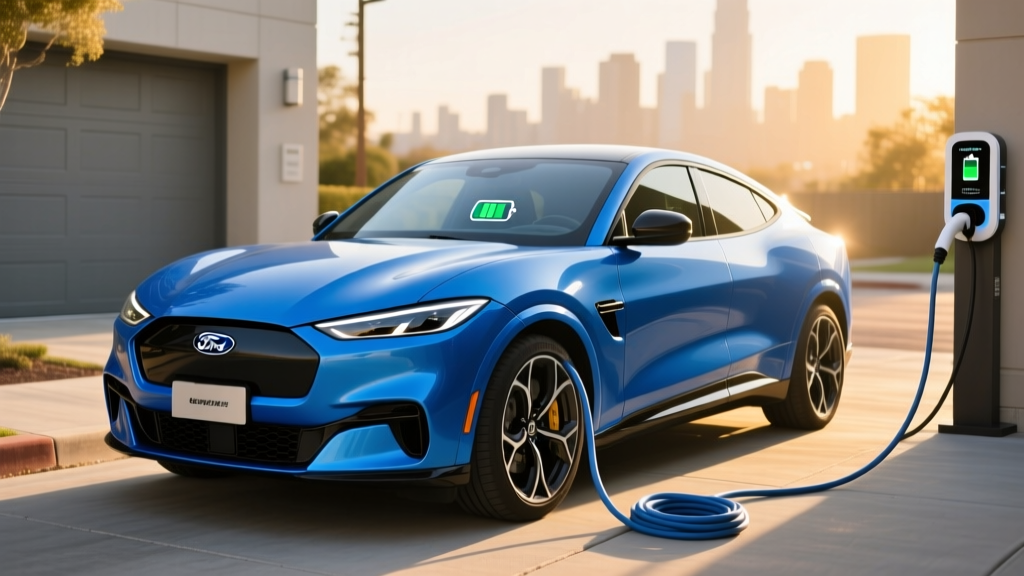
The 2026 Ford Mustang Mach-E in the Blue trim (Ford's entry-level Select package, often searched by buyers looking for the Mach-E in its signature blue colorway or base configuration) delivers a compelling blend of range, practicality, and crossover utility. With an EPA-estimated 250 miles on the Standard Range battery and up to 320 miles on the Extended Range pack, the Mach-E remains one of the most well-rounded electric SUVs in the $38,000–$52,000 segment. But how does it stack up when you factor in real-world driving, charging speeds, and federal tax credit eligibility? Let's break down every number that matters.
| Spec | Standard Range RWD | Extended Range RWD | Extended Range AWD |
|---|---|---|---|
| EPA Range | 250 mi | 320 mi | 300 mi |
| Battery (usable) | 70 kWh (LFP) | 91 kWh (NMC) | 91 kWh (NMC) |
| Horsepower | 266 hp | 290 hp | 346 hp |
| 0–60 mph | 6.3 sec | 5.8 sec | 5.1 sec |
| Peak DC Fast Charge | 150 kW | 150 kW | 150 kW |
| 10–80% DCFC Time | ~33 min | ~41 min | ~41 min |
| Level 2 Home Charge | 10.5 kW (~30 mi/hr) | 10.5 kW (~30 mi/hr) | 10.5 kW (~30 mi/hr) |
| MPGe (combined) | 101 MPGe | 101 MPGe | 96 MPGe |
| Base MSRP | $37,995 | $42,995 | $45,995 |
Range and Efficiency: EPA vs. the Real World
Real-World Expectation: ~260–280 miles on highway road trips at 70–75 mph; ~210–240 miles in sustained cold weather (below 30°F) with cabin heating. City and suburban driving with regenerative braking gets closest to the sticker number.
The Extended Range RWD model's 320-mile EPA figure is genuinely useful for daily commuting and moderate road trips. On fueleconomy.gov, the Mach-E Extended Range RWD posts 101 MPGe combined (33 kWh/100 mi), which is competitive with the Hyundai Ioniq 5 and slightly behind the Tesla Model Y Long Range.
The Standard Range model now uses an LFP (lithium iron phosphate) battery, which trades energy density for longevity and the ability to charge routinely to 100% without accelerated degradation. That means the 250-mile EPA figure is more "usable" day-to-day than an equivalent NMC pack where you'd ideally stop at 80% for daily driving. For the Extended Range trims, Ford sticks with NMC chemistry to maximize range per kilogram.
Charging Speed: DC Fast Charging and Home Setup
Charging infrastructure compatibility is where the 2026 Mach-E benefits from Ford's adoption of the NACS (North American Charging Standard) connector. All 2026 models ship with a native NACS port, granting direct access to Tesla Supercharger stalls without an adapter — a significant advantage over the CCS-equipped competition.
| Charging Level | Power | Miles Added per Hour | Notes |
|---|---|---|---|
| Level 1 (120V household) | ~1.4 kW | ~3–4 mi/hr | Emergency/trickle only |
| Level 2 (240V home) | 10.5 kW | ~30 mi/hr | Full charge overnight (~10 hrs ER) |
| DC Fast Charge (peak) | 150 kW | ~150 mi in 20 min | 10–80% in ~33–41 min depending on pack |
The 150 kW peak DC fast-charge rate is the Mach-E's most debated spec. Competitors like the Hyundai Ioniq 5 and Kia EV6 accept up to 235–240 kW thanks to 800V architectures, shaving 10–80% times to roughly 18 minutes. The Mach-E's 400V platform caps out lower, and the charge curve tapers noticeably above 80% state of charge. On a road trip, plan for slightly longer stops than you'd need in an 800V vehicle — but 150 kW is still adequate for most drivers, especially given Supercharger network access.
For home Level 2 charging, the onboard 10.5 kW charger is solid. A full overnight replenishment on a 48-amp home charger (like the Ford Charge Station Pro or a third-party unit such as the Emporia Level 2) is realistic for most battery states. Expect a professional 240V/50A circuit installation to run $600–$1,800 depending on your panel capacity and run length — always get a quote from a licensed electrician before committing.
Performance, Drivetrain, and Ride Quality
Even the base Standard Range RWD model delivers 266 horsepower and a 6.3-second 0–60 mph time — brisk for a family crossover. The Extended Range AWD variant bumps output to 346 hp and drops the sprint to 5.1 seconds, which is genuinely quick and makes highway merging effortless.
Ford's tuning prioritizes ride comfort over sportiness. The suspension absorbs bumps well, and the low center of gravity (courtesy of the under-floor battery pack) keeps body roll controlled. Regenerative braking offers a one-pedal driving mode that's among the smoothest in the segment — it doesn't grab aggressively, making it easy to modulate in stop-and-go traffic.
The Mach-E is not rated for towing in most trims, which is a limitation compared to the Ford F-150 Lightning or Rivian R1S. If towing is a priority, look elsewhere.
Interior, Cargo Space, and Technology
The Mach-E's cabin is defined by its massive 15.5-inch portrait-oriented touchscreen running Ford's SYNC 4A infotainment system. Wireless Apple CarPlay and Android Auto are standard, along with wireless phone charging on most trims. The interface is responsive, though the decision to route climate controls through the touchscreen draws criticism from drivers who prefer physical knobs.
Cargo space is practical for a midsize crossover:
- Rear cargo (seats up): 29.7 cu ft
- Rear cargo (seats folded): 59.7 cu ft
- Front trunk (frunk): 4.7 cu ft — useful for charging cables or a small bag, but smaller than the Ioniq 5's 0.85 cu ft frunk (which is even smaller) and the Tesla Model Y's 4.1 cu ft frunk
- Rear legroom: 38.9 inches
- Front legroom: 43.3 inches
On the driver-assistance front, Ford's BlueCruise system is available on higher trims and enables hands-free driving on pre-mapped divided highways — a legitimate convenience feature. However, it remains an SAE Level 2 system: you must remain attentive and ready to take over at all times. BlueCruise monitors driver attention via an infrared camera and will issue warnings if your eyes leave the road. This is not autonomous driving; it is supervised driver assistance.
Pricing, Trims, and Federal Tax Credit Eligibility
The 2026 Mustang Mach-E is offered in several trims. Here's what the lineup looks like at the entry point:
| Trim | Drivetrain | MSRP | Est. Federal Credit* | Effective Price |
|---|---|---|---|---|
| Select (Standard Range) | RWD | $37,995 | Up to $7,500 | ~$30,495 |
| Select (Extended Range) | RWD | $42,995 | Up to $7,500 | ~$35,495 |
| Select (Extended Range) | AWD | $45,995 | Up to $7,500 | ~$38,495 |
| Premium (Extended Range) | AWD | $50,995 | Up to $7,500 | ~$43,495 |
| GT (Performance) | AWD | $59,995 | Up to $7,500 | ~$52,495 |
*Federal tax credit amounts under IRS §30D depend on your individual eligibility. The full $7,500 credit requires meeting ALL of the following criteria, which are subject to change:
- Income caps: Modified AGI ≤ $150,000 (single) / ≤ $300,000 (joint) / ≤ $225,000 (head of household)
- MSRP cap: Vehicle MSRP must not exceed $80,000 for SUVs/pickups/vans (the Mach-E qualifies as an SUV)
- Battery sourcing: A percentage of critical minerals and battery components must be sourced from the US or free-trade-agreement partners — percentages increase annually and can reduce or eliminate the credit
- Point-of-sale transfer: As of 2024, eligible buyers can transfer the credit to the dealer at purchase, reducing the upfront price rather than waiting for a tax refund
- Final assembly: Vehicle must undergo final assembly in North America (the Mach-E is assembled in Cuautitlán, Mexico — verify current eligibility on IRS.gov)
Important caveat: Because the Mach-E is assembled in Mexico, and battery-sourcing rules tighten yearly, the credit amount can vary. Always check the latest fueleconomy.gov tax credit page and consult a tax professional before relying on a specific credit amount in your purchase decision.
Warranty and Long-Term Ownership
Ford backs the Mach-E with a competitive warranty package:
- Battery & electric powertrain: 8 years / 100,000 miles (whichever comes first), covering defects and capacity loss below 70% of original capacity
- Bumper-to-bumper: 3 years / 36,000 miles
- Corrosion perforation: 5 years / unlimited miles
The 70% capacity retention threshold is standard for the industry. In practice, most EV batteries degrade far more slowly than this threshold implies. Real-world data from fleet operators and early Mach-E owners suggests roughly 5–8% degradation over the first 100,000 miles for NMC packs, with LFP packs degrading even more slowly but starting from a lower total capacity.
Insurance costs for the Mach-E tend to run 10–20% higher than comparable gas-powered crossovers, a trend common across EVs. Get quotes before purchasing to budget accurately.
Pros and Cons
- Up to 320 miles EPA range (Extended Range RWD)
- Native NACS connector — direct Supercharger access
- Spacious cabin with 29.7 cu ft cargo and generous rear legroom
- LFP option on Standard Range for daily 100% charging confidence
- Competitive pricing from ~$38K before credits
- BlueCruise hands-free highway driving on higher trims
- Smooth one-pedal driving and comfortable ride quality
- 150 kW peak DC charge rate trails 800V competitors (235+ kW)
- No towing capacity in most trims
- Climate controls routed through touchscreen
- Mexican assembly complicates §30D tax credit eligibility
- Smaller frunk than some competitors
- Insurance premiums above segment average
Who Should Buy the Mustang Mach-E?
The Mach-E is ideal for:
- Daily commuters who want 300+ miles of range, home charging convenience, and a comfortable ride
- Small families needing rear-seat space and cargo room without stepping up to a three-row SUV
- Road trippers who value Supercharger network access via the native NACS port
- Buyers transitioning from gas who want a familiar crossover form factor with EV economics
It's less suited for:
- Drivers who frequently tow trailers or boats
- Those who prioritize the absolute fastest DC charging times
- Buyers in regions with limited charging infrastructure who need maximum range reserves
Look at the Ioniq 5 or Model Y instead if: Fastest possible DC charging (Ioniq 5's 18-min 10–80%) or maximum cargo space (Model Y's 76 cu ft) is your top priority.
Frequently Asked Questions
What is the real-world range of the Mustang Mach-E?
The Extended Range RWD is EPA-rated at 320 miles. In real-world highway driving at 70–75 mph, expect roughly 260–280 miles. In cold weather (below 30°F) with cabin heat, that can drop to 210–240 miles. City driving with regenerative braking gets closest to the EPA number.
How fast does the Mustang Mach-E charge?
On a DC fast charger, it peaks at 150 kW, reaching 10–80% in approximately 33 minutes (Standard Range) or 41 minutes (Extended Range). At home on a Level 2 (240V, 48A) charger, it adds about 30 miles of range per hour, fully replenishing the Extended Range battery in roughly 10 hours.
Does the 2026 Mustang Mach-E qualify for the federal EV tax credit?
Eligibility under IRS §30D depends on your income (≤$150K single / ≤$300K joint), the vehicle's MSRP (under $80K for SUVs — the Mach-E qualifies), battery component and critical mineral sourcing requirements, and final assembly location. Because the Mach-E is assembled in Mexico, the credit amount can vary. Always verify current eligibility at IRS.gov before purchasing.
How much does the Mustang Mach-E cost after tax credits?
The base Select Standard Range RWD starts at $37,995. If you qualify for the full $7,500 federal credit, the effective price drops to approximately $30,495. Higher trims like the Premium AWD at $50,995 would come to roughly $43,495 after the maximum credit. State and local incentives may reduce the price further.
Is the Mustang Mach-E worth buying vs. the Tesla Model Y or Ioniq 5?
The Mach-E holds its own with a comfortable ride, strong range, and now direct Supercharger access. The Model Y offers more cargo space and slightly better efficiency. The Ioniq 5 charges significantly faster (800V architecture). The Mach-E wins on ride comfort and BlueCruise availability. Test-drive all three to decide based on your priorities.
What's the difference between the LFP and NMC battery options?
The Standard Range model uses an LFP (lithium iron phosphate) battery — heavier but longer-lasting, with the ability to charge to 100% daily without concern. The Extended Range uses NMC (nickel manganese cobalt) chemistry for higher energy density and more range, but Ford recommends charging to 80% for daily use to preserve longevity.