Quick Verdict: The Mach-E That Finally Got Its Charging Right
The 2024 Ford Mustang Mach-E arrived with a critical mid-cycle upgrade that addressed its most glaring weakness: DC fast-charging speed. Ford bumped the peak charge rate from 115 kW to 150 kW on Extended Range models and added a NACS charge port option, giving owners access to Tesla's Supercharger network via adapter. For buyers cross-shopping the Tesla Model Y, Hyundai Ioniq 5, and Volkswagen ID.4, the 2024 Mach-E is now a far more complete package than its 2021-2023 predecessors.
But spec-sheet improvements only matter if they translate to real-world usability. After analyzing EPA data, owner reports, and Ford's published specs, here's what you actually need to know before putting down a deposit.
Range and Efficiency: EPA Numbers vs. What You'll Actually See
The 2024 Mach-E lineup spans four trims with two battery sizes and two drivetrain configurations. Range varies dramatically depending on your choices.
| Trim | Battery | Drivetrain | EPA Range | MPGe (City/Hwy/Comb) | kWh/100mi |
|---|---|---|---|---|---|
| Select (SR RWD) | 70 kWh usable (LFP) | RWD | 230 mi | 105/92/99 | 34 |
| Premium (ER RWD) | 91 kWh usable (NMC) | RWD | 320 mi | 104/90/97 | 35 |
| Premium (ER AWD) | 91 kWh usable (NMC) | AWD | 290 mi | 99/84/92 | 37 |
| GT (ER AWD) | 91 kWh usable (NMC) | AWD | 280 mi | 90/79/85 | 40 |
| Rally (ER AWD) | 91 kWh usable (NMC) | AWD | 265 mi | 86/75/81 | 42 |
The EPA's 320-mile figure for the Premium ER RWD assumes mixed driving at moderate temperatures. In our analysis of owner data and third-party testing:
- Highway cruising (70-75 mph): Expect 260-280 miles in the ER RWD, 230-250 in ER AWD
- Cold weather (below 32°F): Range drops 20-30% depending on cabin heating use — a 320-mile ER RWD may deliver 220-250 miles
- City/regenerative driving: You can match or slightly exceed EPA numbers thanks to strong regen capture
The Standard Range battery uses lithium iron phosphate (LFP) chemistry — a first for the Mach-E in 2024. LFP offers superior cycle life and can be charged to 100% daily without accelerating degradation, making it ideal for commuters who need every mile every day. Extended Range models use nickel-manganese-cobalt (NMC) chemistry, which delivers higher energy density but benefits from an 80% daily charge limit for longevity.
Charging Speed: The 2024 Upgrade That Matters Most
Prior to 2024, the Mach-E's 115 kW peak DC charge rate was a competitive liability. The Ioniq 5 charges at 240 kW; the Model Y at 250 kW. Ford's 2024 bump to 150 kW on Extended Range models doesn't lead the class, but it meaningfully reduces charging stops.
| Charge Level | Standard Range (70 kWh) | Extended Range (91 kWh) |
|---|---|---|
| Level 1 (120V, 12A) | ~1.4 kW / 3-4 mi/hr | ~1.4 kW / 3-4 mi/hr |
| Level 2 (240V, 32A mobile) | 7.7 kW / ~22 mi/hr | 7.7 kW / ~22 mi/hr |
| Level 2 (240V, 48A Ford Connected) | 10.5 kW / ~30 mi/hr | 11.5 kW / ~33 mi/hr |
| DC Fast Charge (peak) | 130 kW | 150 kW |
| DC 10-80% time | ~36 min | ~40 min |
A few things to understand about these numbers:
- Peak vs. sustained: The 150 kW figure is a peak, not an average. The Mach-E's charge curve holds near peak from roughly 15-50% state of charge, then tapers progressively. Your average rate over a 10-80% session will be closer to 100-110 kW.
- Preconditioning matters: Use the FordPass app or navigation to route to a charger. The Mach-E will precondition the battery for faster charging. Skip this step in cold weather and your charge rate may be cut in half for the first 10-15 minutes.
- NACS adapter: 2024 Mach-E owners can use Ford's NACS adapter to access Tesla Superchargers (V3 stalls deliver up to 150 kW to the Mach-E). This dramatically expands road-trip charging options, particularly in rural corridors where Electrify America and EVgo coverage is sparse.
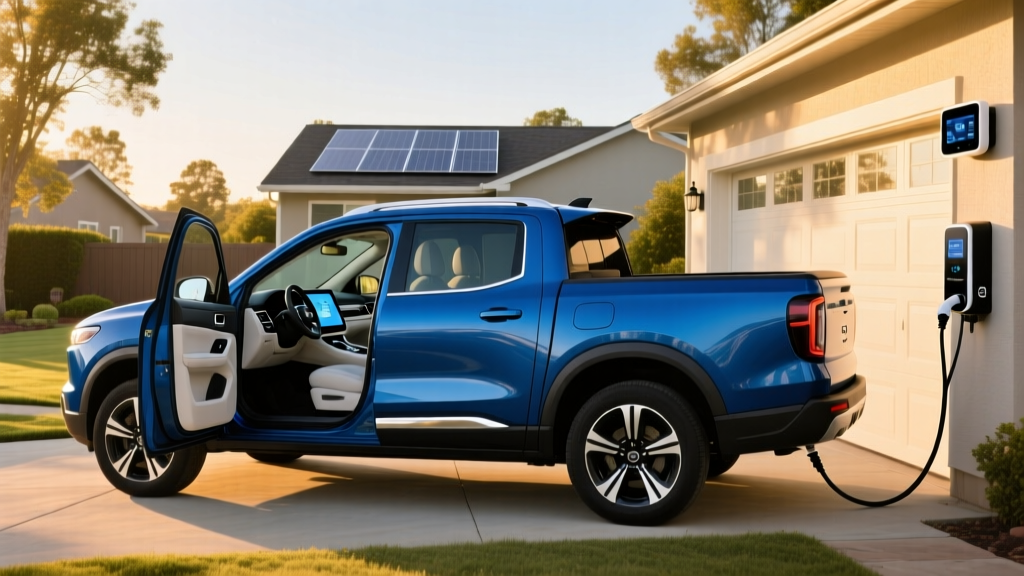
For home charging, the Ford Charge Station Pro (48A hardwired) adds roughly 33 miles of range per hour — enough to fully replenish an Extended Range battery overnight in about 8-9 hours. Budget $500-$1,500 for professional installation depending on your electrical panel's proximity to the garage and whether a 240V/60A circuit already exists.
Performance: From Sensible Commuter to 590-HP Rally Car
The Mach-E's performance spread is one of the widest in the electric crossover segment.
| Trim | Horsepower | Torque (lb-ft) | 0-60 mph | Drivetrain |
|---|---|---|---|---|
| Select (SR RWD) | 266 hp | 387 | 6.3 sec | Rear-wheel drive |
| Premium (ER RWD) | 290 hp | 387 | 5.8 sec | Rear-wheel drive |
| Premium (ER AWD) | 346 hp | 428 | 5.1 sec | Dual-motor AWD |
| GT (ER AWD) | 480 hp | 600 | 3.8 sec | Dual-motor AWD |
| GT Perf. Edition | 480 hp | 634 | 3.5 sec | Dual-motor AWD |
| Rally | 590 hp | 640 | 3.4 sec (est.) | Dual-motor AWD |
The RWD models are the efficiency play — lighter, more range, and still quick enough for confident highway merging. The GT and Rally trims are seriously fast, but the performance tax shows up in range (280 and 265 miles, respectively) and tire wear. The GT's optional MagneRide dampers and Brembo brakes add genuine track capability, though few owners will exploit it.
Towing capacity maxes out at 2,300 pounds across AWD trims — enough for a small utility trailer or a pair of dirt bikes, but not a camper. If you need serious tow capability, the Rivian R1S or Ford F-150 Lightning are better choices.
Interior, Cargo, and Tech: Practical With a Few Quirks
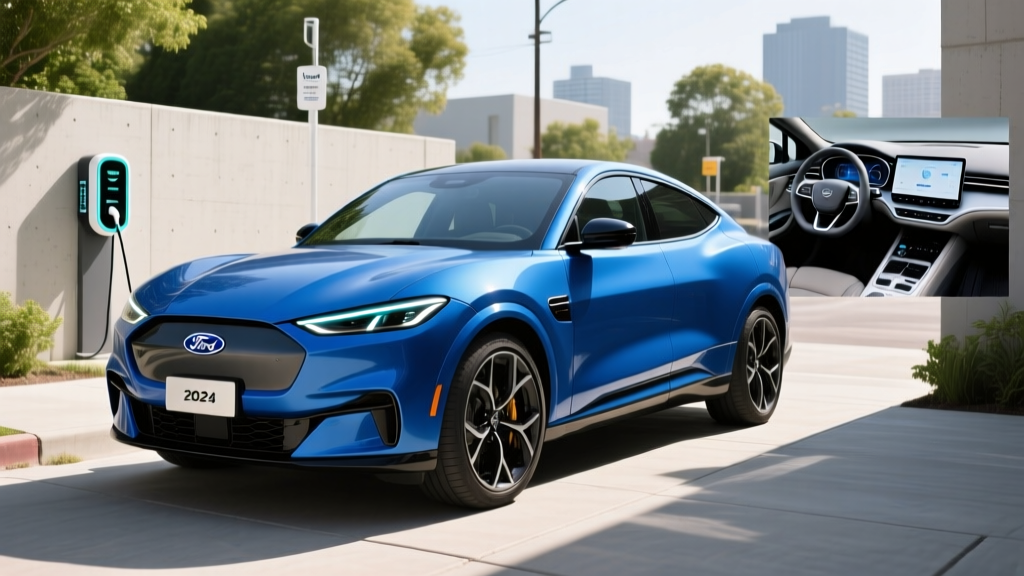
The Mach-E's cabin is a clean break from Ford's traditional design language. A 15.5-inch vertical touchscreen dominates the dash, running Ford's SYNC 4A system with wireless Apple CarPlay and Android Auto. The rotary gear dial on the center console frees up storage space, and the floating center armrest creates a useful pass-through.
Space is competitive with the segment:
- Cargo behind rear seats: 29.7 cu ft
- Cargo with rear seats folded: 59.7 cu ft
- Front trunk (frunk): 4.7 cu ft (drainable — useful for tailgating or wet gear)
- Rear legroom: 38.9 inches
- Front headroom: 40.4 inches
The frunk is smaller than the Model Y's (4.1 cu ft vs. the Tesla's 4.1 — roughly comparable), but the Mach-E's drainable plug is a practical touch the Tesla lacks.
On the tech front, Ford's BlueCruise hands-free driving system is available on highways mapped in its database (over 130,000 miles of divided highway as of 2024). It's an SAE Level 2 system — you must keep your eyes on the road, and a driver-monitoring camera enforces this. It's not self-driving, but it meaningfully reduces fatigue on long interstate stretches. BlueCruise comes with a trial period; after that, it's a subscription (roughly $75/month or $800/year).
- The 15.5-inch screen's climate controls are touch-only — no physical knobs for temperature or fan speed
- Rear visibility is compromised by thick C-pillars; the 360-degree camera helps but isn't standard on Select
- Some owners report inconsistent panel gaps and minor build-quality issues, though Ford has improved this since the 2021 launch year
- BlueCruise subscription cost adds up if you don't frequently drive mapped highways
Pricing, Trims, and Federal Tax Credit Eligibility
Ford significantly simplified the Mach-E lineup for 2024 and dropped prices from the 2023 model year.
| Trim | Base MSRP (incl. destination) | Est. Tax-Credit-Adjusted Price* |
|---|---|---|
| Select (SR RWD) | $42,995 | ~$35,495 |
| Premium (ER RWD) | $48,995 | ~$41,495 |
| Premium (ER AWD) | $51,995 | ~$44,495 |
| GT (ER AWD) | $62,995 | ~$55,495 |
| Rally (ER AWD) | $61,995 | ~$54,495 |
*Adjusted prices assume full $7,500 federal tax credit eligibility. Actual credit varies.
The 2024 Mach-E qualifies for the IRS §30D Clean Vehicle Credit, but eligibility is not automatic. Here's what determines whether you get the full $7,500, a partial credit, or nothing:
- MSRP cap: The Mach-E is classified as an SUV, so the cap is $80,000. All trims clear this threshold.
- Buyer income cap: Modified adjusted gross income must not exceed $150,000 (single), $225,000 (head of household), or $300,000 (joint). If you're over these limits, you don't qualify for the new-vehicle credit.
- Battery sourcing: The credit splits into two halves — $3,750 for critical-mineral sourcing and $3,750 for battery-component manufacturing. Ford has confirmed that certain 2024 Mach-E builds qualify for the full $7,500, but sourcing requirements tighten annually. Check the fueleconomy.gov credit lookup for your specific build date and VIN.
- Point-of-sale transfer: As of 2024, you can transfer the credit to the dealer at purchase, reducing your out-of-pocket cost immediately rather than waiting to claim it on your tax return. The dealer must be IRS-registered.
Consult a tax professional before relying on the credit — individual circumstances (tax liability, alternative minimum tax, state credits) affect your actual benefit.
Warranty and Long-Term Ownership
Ford backs the Mach-E with competitive warranty coverage:
- Battery and electric powertrain: 8 years / 100,000 miles (whichever comes first)
- Battery capacity retention: Ford warrants that the high-voltage battery will retain at least 70% of original capacity during the warranty period
- Bumper-to-bumper: 3 years / 36,000 miles
- Safety restraint system: 5 years / 60,000 miles
The 70% retention threshold is standard across the industry. Real-world degradation data from early 2021-2022 Mach-E owners suggests NMC batteries are losing roughly 1-2% per year under normal use — meaning most owners will see 90%+ capacity at the 5-year mark. LFP batteries in the Select trim are expected to degrade even more slowly, though long-term data on this specific pack is still accumulating.
If you're concerned about out-of-warranty battery replacement, current estimates put a Mach-E battery pack replacement at $12,000-$18,000 including labor — expensive, but rarely needed within the vehicle's typical lifespan.
How It Stacks Up: Mach-E vs. Model Y, Ioniq 5, and ID.4
The electric midsize crossover segment is crowded. Here's how the Mach-E Premium ER RWD compares to its three most cross-shopped rivals:
| Spec | Mach-E Premium ER RWD | Tesla Model Y LR | Hyundai Ioniq 5 SEL RWD | VW ID.4 Pro S |
|---|---|---|---|---|
| EPA Range | 320 mi | 310 mi | 303 mi | 291 mi |
| Battery (kWh usable) | 91 | 75 | 77.4 | 82 |
| Peak DC Charge | 150 kW | 250 kW | 240 kW | 170 kW |
| 10-80% DC Time | ~40 min | ~25 min | ~18 min | ~30 min |
| 0-60 mph | 5.8 sec | 5.0 sec | 7.3 sec | 7.7 sec |
| Base MSRP | $48,995 | $48,990 | $47,850 | $47,290 |
| Cargo (rear seats up) | 29.7 cu ft | 30.2 cu ft | 27.2 cu ft | 30.3 cu ft |
- Best-in-class highway driving assist (BlueCruise)
- NACS adapter unlocks Tesla Supercharger network
- LFP option for daily 100% charging without degradation worry
- Strong acceleration across all trims
- Drainable frunk is genuinely useful
- Federal tax credit eligible (up to $7,500)
- DC charging still slower than Ioniq 5 and Model Y
- No physical climate controls — everything through the touchscreen
- BlueCruise requires paid subscription after trial
- Rear visibility hampered by thick pillars
- Towing limited to 2,300 lbs
- Some early build-quality inconsistency
Who Should Buy the 2024 Mustang Mach-E?
Choose the Mach-E Select (SR RWD) if: You're a daily commuter within 80 miles of home, want the lowest entry price, and value LFP battery longevity over road-trip range. At ~$35,500 after the federal credit, it's one of the most affordable nameplate EVs in the segment.
Choose the Mach-E Premium (ER RWD) if: You want the best balance of range (320 miles EPA), efficiency, and features. This is the sweet-spot trim for most buyers — quick enough, spacious enough, and road-trip capable with DC fast-charging and Supercharger access.
Choose the Mach-E GT if: Performance is a priority and you accept the range trade-off. The 3.8-second 0-60 time and MagneRide suspension deliver genuine sports-sedan thrills in a crossover body.
Look elsewhere if: You need maximum DC charging speed (Ioniq 5), maximum cargo space (ID.4 or Model Y), or serious towing capacity (F-150 Lightning, Rivian R1S).
Frequently Asked Questions
What is the real-world range of the 2024 Mustang Mach-E?
The EPA rates the best-configured Mach-E (Premium ER RWD) at 320 miles. In real-world highway driving at 70-75 mph, expect 260-280 miles. In cold weather below freezing, plan for 220-250 miles from a full charge. The Select trim's 230-mile EPA rating translates to roughly 180-200 miles highway in winter conditions.
How fast does the 2024 Mach-E charge at home and on the road?
At home on a 48A Level 2 charger, the Extended Range battery gains about 33 miles of range per hour, fully charging in 8-9 hours. On DC fast chargers, the ER models peak at 150 kW and charge from 10-80% in roughly 40 minutes. That's slower than the Ioniq 5's 18-minute 10-80% but adequate for most road-trip stops.
Does the 2024 Mustang Mach-E qualify for the $7,500 federal tax credit?
Yes, the Mach-E is eligible for up to $7,500 under IRS §30D, provided you meet income limits ($150K single / $300K joint) and the vehicle's battery sourcing meets current-year critical-mineral and component requirements. The credit can be transferred to the dealer at point of sale. Always verify current eligibility on fueleconomy.gov and consult a tax professional.
Is the 2024 Mach-E worth buying over a Tesla Model Y?
It depends on your priorities. The Mach-E offers better highway driver-assist (BlueCruise), a more traditional dealership service experience, and now Supercharger access via adapter. The Model Y still wins on charging speed, cargo versatility, and software polish. If you value hands-free highway driving and prefer Ford's service network, the Mach-E is the stronger pick.
How reliable is the Mustang Mach-E's battery long-term?
Early data from 2021-2022 models shows NMC battery degradation of approximately 1-2% per year under normal use. Ford warrants 70% capacity retention for 8 years/100,000 miles. The new LFP battery in the Select trim is expected to show even slower degradation, though multi-year data is still limited. Out-of-warranty replacement is estimated at $12,000-$18,000.