Quick Verdict: The 2022 Mach-E Remains a Benchmark Electric SUV
Even years after its debut, the 2022 Ford Mustang Mach-E holds up as one of the most well-rounded electric crossovers on the used-EV market. It pairs competitive range with engaging driving dynamics, a practical cabin, and access to Ford's growing charging ecosystem. For buyers shopping the pre-owned EV space in 2026, the 2022 model year offers a compelling entry point — especially given the used clean vehicle credit that can knock up to $4,000 off the purchase price for qualifying buyers.
This review breaks down everything you need to know before buying a 2022 Mach-E today: real-world range expectations, charging speeds across all three trims' battery packs, total cost of ownership, and how it stacks against the Tesla Model Y, Hyundai Ioniq 5, and Kia EV6 it competes with.
Range, Battery, and Efficiency: What the EPA Says vs. Reality
The 2022 Mach-E was offered with two battery packs across three powertrain configurations. Understanding which combination you're looking at is critical — range varies by over 100 miles depending on the spec.
| Configuration | Battery (usable kWh) | Chemistry | Drivetrain | EPA Range | MPGe (combined) |
|---|---|---|---|---|---|
| Select / Premium SR RWD | 68 kWh | NMC (LG Energy) | Rear-Wheel Drive | 247 mi | 101 MPGe |
| Premium ER RWD | 88 kWh | NMC (LG Energy) | Rear-Wheel Drive | 314 mi | 101 MPGe |
| Premium ER AWD (eAWD) | 88 kWh | NMC (LG Energy) | Dual-Motor AWD | 277 mi | 93 MPGe |
| GT ER AWD | 88 kWh | NMC (LG Energy) | Dual-Motor AWD | 270 mi | 90 MPGe |
| GT Performance ER AWD | 88 kWh | NMC (LG Energy) | Dual-Motor AWD | 260 mi | 84 MPGe |
Source: fueleconomy.gov
The 314-mile EPA figure on the Extended Range RWD is achievable in mild conditions with mixed city/highway driving. In our experience and aggregated owner reports, expect:
- Highway cruising (70-75 mph, 65°F): ~265-280 miles on the ER RWD; ~235-250 on eAWD trims
- Cold weather (below 32°F, mixed driving): 20-30% range reduction — plan for ~220-250 miles on ER RWD, ~185-210 on eAWD
- City/commuter driving (moderate climate): EPA numbers are realistic or slightly beatable thanks to regenerative braking
The SR (Standard Range) 68 kWh pack is best suited for commuters with reliable home charging who rarely exceed 150 miles between charges. For road-trip flexibility, the ER pack is the one to get.
Efficiency across the lineup sits between 29-34 kWh per 100 miles depending on trim — competitive with the Model Y but slightly behind the Hyundai Ioniq 5 RWD's ~30 kWh/100mi in equivalent testing.
Charging Speed: DC Fast Charge, Level 2, and Charge-Curve Reality
Charging capability was a strong point for the 2022 Mach-E, though it's important to understand that peak kW ratings don't tell the full story. The charge curve tapers significantly above 80% State of Charge (SoC), which is standard behavior for NMC lithium-ion packs to protect long-term battery health.
| Charge Level | Standard Range (68 kWh) | Extended Range (88 kWh) |
|---|---|---|
| DC Fast Charge (peak) | 115 kW | 150 kW |
| DC 10-80% time | ~38 minutes | ~45 minutes |
| DC miles added in 10 min (peak) | ~52 miles | ~59 miles |
| Level 2 home (240V, 48A) | 10.5 kW (~33 mi/hr) | 10.5 kW (~33 mi/hr) |
| Level 2 home (240V, 32A) | 7.7 kW (~24 mi/hr) | 7.7 kW (~24 mi/hr) |
| Level 1 (120V, 12A) | ~1.4 kW (~4 mi/hr) | ~1.4 kW (~4 mi/hr) |
The 150 kW peak on the Extended Range pack is solid but trails the Hyundai Ioniq 5 and Kia EV6 (both capable of 230+ kW on 800V architecture). On a typical road trip, expect the Mach-E ER to charge from 10-80% in roughly 45 minutes at a capable Electrify America or Tesla Supercharger (via Ford's NACS adapter program). The taper above 80% is pronounced — charging from 80-100% can add another 25-30 minutes, so plan your stops accordingly.
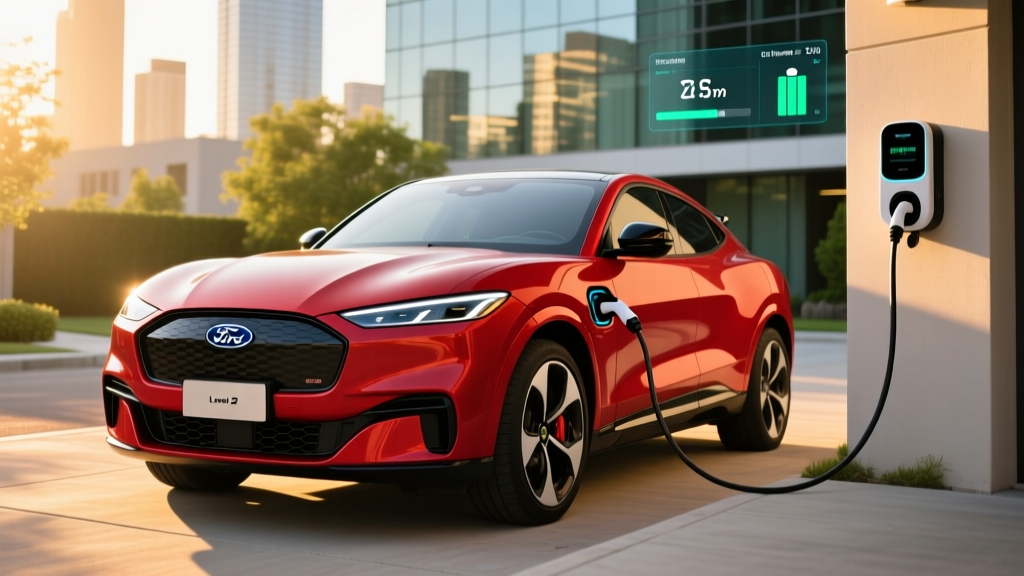
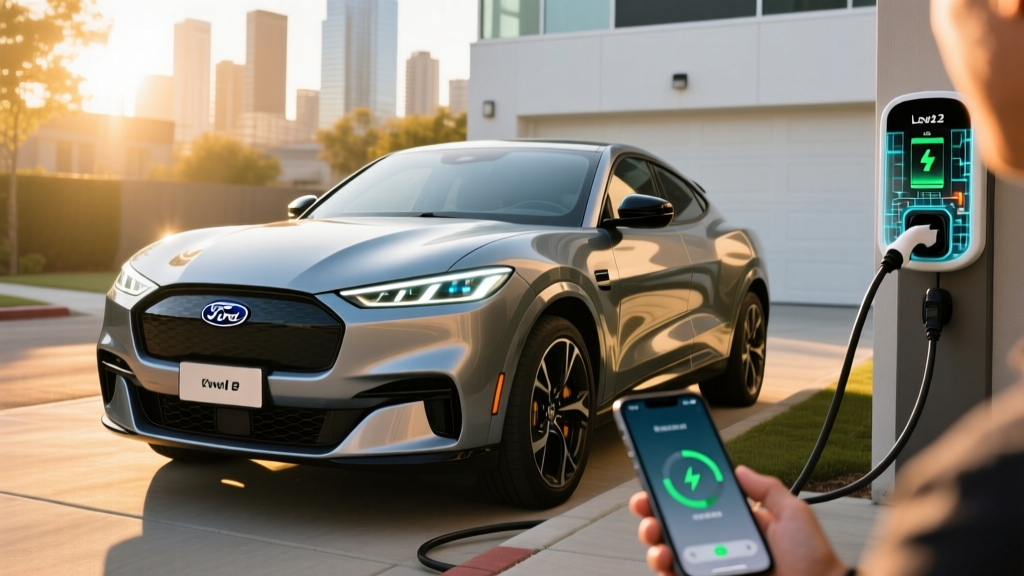
Home charging tip: The Ford Mobile Power Cord included with the vehicle handles both 120V and 240V. For a dedicated Level 2 wall connector, a 48-amp hardwired unit on a 60-amp circuit delivers the full 10.5 kW rate, replenishing the ER pack from empty in about 8.5 hours — perfect for overnight charging. Installation typically runs $800-$2,000 depending on panel proximity and local permitting, so get a quote from a licensed electrician before finalizing your purchase.
Performance and Drivetrain: From Efficient Commuter to GT Thrills
The 2022 Mach-E lineup spans a wide performance envelope. The base Select RWD with the Standard Range pack delivers adequate acceleration for daily driving, while the GT Performance Edition rivals sports sedans.
| Trim / Config | Horsepower | Torque (lb-ft) | 0-60 mph | Top Speed |
|---|---|---|---|---|
| Select/Premium SR RWD | 266 hp | 317 | 5.8 sec | 112 mph |
| Premium ER RWD | 290 hp | 317 | 5.5 sec | 112 mph |
| Premium ER eAWD | 346 hp | 428 | 4.8 sec | 112 mph |
| GT ER eAWD | 480 hp | 600 | 3.8 sec | 124 mph |
| GT Performance ER eAWD | 480 hp | 634 | 3.5 sec | 130 mph |
The dual-motor eAWD system uses a permanent-magnet motor on the rear axle and an induction motor up front, allowing the front motor to disconnect under light-load conditions for efficiency gains. Regenerative braking offers multiple levels, including a one-pedal driving mode that can bring the car to a full stop without touching the brake pedal — useful in stop-and-go traffic.
The GT Performance Edition's 3.5-second 0-60 time puts it in Porsche Taycan territory for straight-line acceleration, though the Mach-E's ~4,800-lb curb weight is noticeable in tight corners compared to lower-slung electric sedans. For most buyers, the Premium ER eAWD's 4.8-second sprint provides more than enough passing power without the range sacrifice of the GT.
Interior, Cargo, and Technology
The 2022 Mach-E's cabin represents a clean break from Ford's traditional interior design language. The dominant feature is a 15.5-inch vertically oriented touchscreen running Ford's SYNC 4A infotainment system, which handles navigation, media, climate controls, and vehicle settings. Wireless Apple CarPlay and Android Auto are standard across all trims.
Passenger space:
- Front headroom: 40.4 in | Front legroom: 43.3 in
- Rear headroom: 38.9 in | Rear legroom: 38.9 in
- Seating for five with a flat rear floor (no transmission tunnel)
Cargo capacity:
- Behind rear seats: 29.7 cu ft
- Rear seats folded: 59.7 cu ft
- Front trunk (frunk): 4.7 cu ft — drainable and washable, useful for wet gear or groceries
The cargo area is competitive with the Model Y (30.2 cu ft behind rear seats) and significantly larger than the Ioniq 5 (27.2 cu ft). The drainable frunk is a practical differentiator that Ford carried over from its truck DNA.
Driver assistance (Ford Co-Pilot360 2.0):
- Adaptive cruise control with stop-and-go
- Lane-centering assist
- Automatic emergency braking with pedestrian detection
- Blind-spot monitoring with rear cross-traffic alert
- Available Active Drive Assist (BlueCruise) on qualified hands-free highway sections — this is an SAE Level 2 system requiring driver attention at all times
Ford's BlueCruise (available on the 2022 Mach-E via subscription or included on higher trims) operates on pre-mapped divided highways and allows hands-off operation under specific conditions. However, it is an SAE Level 2 driver-assistance system. The driver must remain alert, and the cabin camera monitors eye gaze. It does not handle construction zones, unmapped roads, or adverse weather autonomously.
Pricing, Tax Credits, and Total Cost of Ownership
Original MSRP for the 2022 Mach-E ranged from $43,895 (Select SR RWD) to $65,995 (GT Performance ER eAWD) before destination charges. On the used market in early 2026, expect to find:
| Trim | Original MSRP | Typical Used Price (30-45k mi) | Used EV Credit (§25E) | Net Cost |
|---|---|---|---|---|
| Select SR RWD | $43,895 | $22,000-$26,000 | Up to $4,000 | $18,000-$22,000 |
| Premium ER RWD | $52,575 | $27,000-$32,000 | Up to $4,000 | $23,000-$28,000 |
| Premium ER eAWD | $55,875 | $29,000-$34,000 | Up to $4,000 | $25,000-$30,000 |
| GT ER eAWD | $61,995 | $34,000-$40,000 | Up to $4,000 | $30,000-$36,000 |
Federal tax credit note: The 2022 Mach-E was eligible for the full $7,500 new-vehicle credit (§30D) when purchased new, as it met battery sourcing and MSRP cap requirements. Today, as a used vehicle, it may qualify for the §25E Used Clean Vehicle Credit of up to $4,000 (30% of sale price, capped at $4,000). Eligibility requires: vehicle sale price ≤ $25,000, buyer AGI ≤ $75,000 (single) / $150,000 (joint), purchase from a licensed dealer, and the vehicle must be at least two model years old. Verify current-year rules with a tax professional before relying on this credit.
5-year ownership cost estimate (Premium ER RWD, 15,000 mi/yr):
- Electricity (home charging at $0.14/kWh national avg): ~$3,100
- Maintenance (no oil changes, reduced brake wear): ~$1,200
- Insurance (national EV avg): ~$9,500
- Tires (heavier EV wear): ~$2,400
- Total operating cost (5 yrs): ~$16,200 — compared to ~$22,500 for an equivalently sized gas SUV at $3.50/gal and 24 MPG combined
Warranty and Battery Longevity
Ford backed the 2022 Mach-E with competitive warranty coverage:
- Bumper-to-bumper: 3 years / 36,000 miles
- Powertrain: 5 years / 60,000 miles
- High-voltage battery: 8 years / 100,000 miles (retains ≥70% of original capacity)
- Roadside assistance: 5 years / 60,000 miles
The 8-year/100,000-mile battery warranty is federally mandated minimum coverage for EVs and matches most competitors. The 70% capacity retention threshold means Ford will repair or replace the battery if it degrades below that level within the warranty period. Real-world degradation data from early Mach-E owners suggests NMC packs in this generation are holding up well, with typical 3-year/45,000-mile losses in the 5-8% range — well within warranty tolerance.
For a 2022 model purchased in 2026, approximately 4 years and 55,000 miles of battery warranty remain (assuming average mileage), providing meaningful coverage for a used-EV purchase.
Pros, Cons, and Who Should Buy the 2022 Mach-E
- Up to 314 miles EPA range (ER RWD) — genuine road-trip capability
- Engaging driving dynamics, especially GT and eAWD models
- Spacious cabin with flat rear floor and generous cargo volume
- Drainable frunk adds practical utility
- SYNC 4A infotainment is responsive with wireless CarPlay/Android Auto
- Access to Tesla Supercharger network via Ford NACS adapter
- Strong used-EV credit eligibility brings net cost down significantly
- 150 kW peak DC charging trails 800V competitors (Ioniq 5, EV6 at 230+ kW)
- No heat pump on 2022 models — cold-weather range loss is notable
- Ride quality can be firm, especially on GT trims with 20-inch wheels
- BlueCruise requires ongoing subscription after trial period
- Touchscreen-heavy climate controls lack physical buttons
- Rear visibility is limited; rely on backup camera
- You want a well-rounded electric SUV with strong range, engaging performance, and practical cargo space
- You value access to the Tesla Supercharger network (via adapter) for road trips
- You're shopping the used-EV market and want to maximize the §25E credit on a sub-$25,000 vehicle
- You prefer a traditional crossover driving position over a sedan-style EV
- Fastest possible DC charging is your top priority (consider Ioniq 5 or EV6)
- You frequently drive in sub-freezing climates and want a heat pump for efficiency (consider 2023+ models or the Model Y)
- You need three rows of seating (consider the Kia EV9 or Rivian R1S)
Frequently Asked Questions
What is the real-world range of the 2022 Mustang Mach-E?
The EPA rates the Extended Range RWD at 314 miles, but real-world highway driving at 70-75 mph typically yields 265-280 miles. In cold weather (below freezing), expect a 20-30% reduction, bringing usable range to roughly 220-250 miles on the ER RWD. The Standard Range pack (247 mi EPA) is best for commuters with home charging who stay within 150 miles daily.
How fast does the 2022 Mach-E charge?
The Extended Range pack peaks at 150 kW on a DC fast charger, achieving a 10-80% charge in approximately 45 minutes. The Standard Range pack peaks at 115 kW with a 10-80% time of about 38 minutes. At home on a 48-amp Level 2 charger (10.5 kW), the ER pack charges from empty in roughly 8.5 hours, adding about 33 miles of range per hour of charging.
Does the 2022 Mustang Mach-E qualify for a federal tax credit in 2026?
As a used vehicle, the 2022 Mach-E may qualify for the §25E Used Clean Vehicle Credit of up to $4,000. Requirements include: sale price ≤ $25,000, buyer income ≤ $75,000 single / $150,000 joint, purchase from a licensed dealer, and the vehicle being at least two model years old. The credit is 30% of the sale price, capped at $4,000. Confirm eligibility with a tax professional and check current IRS guidance before purchasing.
Is the 2022 Mach-E worth buying vs. the Tesla Model Y or Hyundai Ioniq 5?
The Mach-E trades blows with both rivals. Compared to the Model Y, it offers a more conventional interior layout, a drainable frunk, and competitive range — though the Model Y's Supercharger-native access (no adapter needed) and slightly faster charging are advantages. Versus the Ioniq 5, the Mach-E has more cargo space and longer range on the ER RWD, but the Ioniq 5's 800V architecture delivers significantly faster DC charging (~18 min 10-80% at 230 kW). All three are strong choices; the Mach-E wins on overall balance, the Ioniq 5 on charging speed, and the Model Y on software integration and charging infrastructure.
What are the biggest concerns when buying a used 2022 Mach-E?
Check the battery State of Health (SoH) via the vehicle's settings menu or a dealer diagnostic — anything above 92% at 40,000 miles is healthy. Verify whether BlueCruise is included or requires a subscription renewal. Inspect tire wear, as EVs tend to wear tires faster due to weight and instant torque. Finally, confirm the vehicle's charging history — frequent DC fast charging exclusively (never home charging) can accelerate degradation slightly, though the NMC packs in the Mach-E have proven robust.
Does the 2022 Mach-E have a heat pump?
No. The 2022 model year does not include a heat pump for cabin heating. Ford added a heat pump starting with the 2023 model year. Without it, resistive heating draws more from the battery in cold weather, contributing to the 20-30% range loss observed in sub-freezing conditions. If you live in a cold climate, consider preconditioning the cabin while plugged in to mitigate this effect.