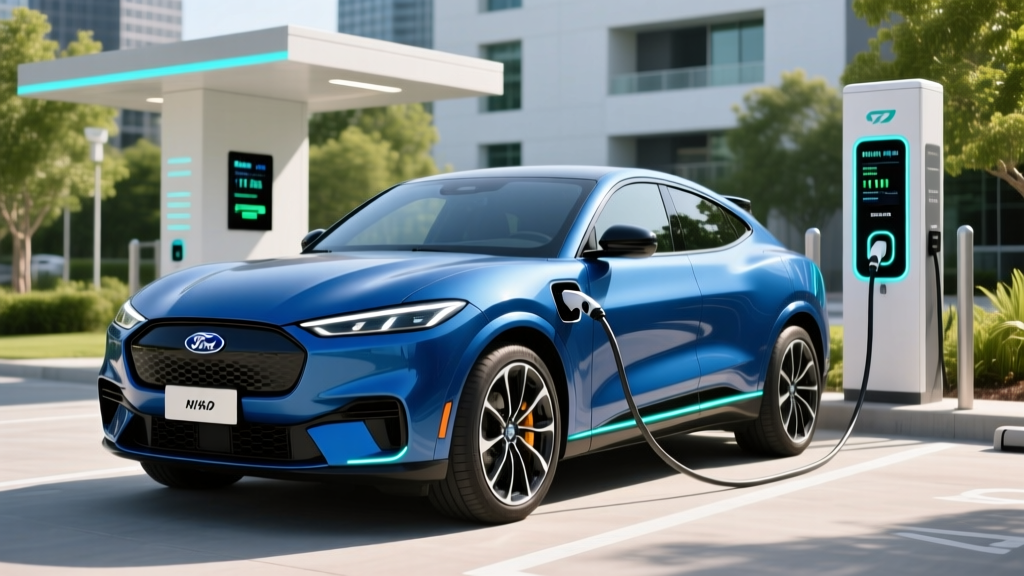
The Ford Mustang Mach-E has been a cornerstone of the mainstream electric crossover segment since its debut, but the introduction of the extended-range 111 kWh battery pack (colloquially dubbed the "Mach 111" by enthusiasts and searchers alike) shifted the value proposition significantly. For 2026, Ford continues to refine this platform, offering a compelling mix of range, utility, and Blue Oval familiarity. This review breaks down the real-world ownership experience of the Mustang Mach-E equipped with the large battery, covering efficiency, charging curves, interior utility, and the complex federal tax credit landscape.
Quick Verdict: The 300+ Mile Benchmark
The 2026 Mustang Mach-E with the extended-range battery remains a top-tier choice for buyers who want a proven, non-Tesla EV with strong highway manners and a comfortable ride. While it may not match the peak charging speeds of 800V architectures like the Hyundai Ioniq 5 or Kia EV6, its 111 kWh pack provides genuine 300-mile confidence for road trippers. It is a mature product with a vast dealer network, though buyers should be aware of the specific tax credit sourcing requirements that affect its final price.
| Spec | 2026 Mach-E Extended Range (RWD) | 2026 Mach-E Extended Range (AWD) |
|---|---|---|
| Base MSRP | $48,995 | $51,995 |
| EPA Range | 320 miles | 290-300 miles |
| Battery Capacity (Usable) | ~91 kWh (111 kWh Gross) | ~91 kWh (111 kWh Gross) |
| Chemistry | NMC (Nickel Manganese Cobalt) | NMC |
| 0-60 mph | 6.1 seconds | 5.1 seconds |
| Horsepower | 266 hp | 346 hp |
| Max DC Charge Rate | 150 kW | 150 kW |
| MPGe (Combined) | 103 MPGe | 98 MPGe |
Range and Efficiency: Sticker vs. Reality
The headline number for the 111 kWh pack is the 320-mile EPA estimate for the rear-wheel-drive Select and Premium trims. However, "Mach 111" buyers need to understand how that translates to actual driving.
Real-World Range Expectations
EPA Sticker: 320 miles (RWD) / 300 miles (AWD)
Highway (70-80 mph): Expect 260–280 miles. Aerodynamic drag significantly impacts crossovers at speed.
Cold Weather (Below 32°F): Expect a 20–30% reduction, dropping range to ~220–250 miles without preconditioning.
City/Commuter: You can often exceed the EPA estimate, reaching 330+ miles due to regenerative braking.
The 2026 model continues to use a liquid-cooled NMC (Nickel Manganese Cobalt) architecture. While LFP (Lithium Iron Phosphate) is gaining ground in standard-range models across the industry for its longevity, Ford sticks with NMC in the extended range for its superior energy density, which is required to hit the 300+ mile target in this vehicle class.
Charging Speed and Infrastructure
Charging speed is often the biggest differentiator between a "good" EV and a "great" road-trip EV. The Mach-E’s 150 kW peak DC fast-charging rate is adequate, though it has been surpassed by newer competitors.
| Charging Level | Power (kW) | Speed (Miles of Range/Hour) | Notes |
|---|---|---|---|
| Level 1 (120V) | ~1.4 kW | 3-4 miles/hr | Emergency/trickle only |
| Level 2 (Home 240V) | 10.5 kW (48A) | ~32 miles/hr | Ford Mobile Power Cord or Wall Charger |
| DC Fast Charge | 150 kW (Peak) | ~590 miles/hr (Peak) | 10-80% in ~45 minutes |
The Charging Curve Reality: The 150 kW peak is only sustained between 10% and 40% State of Charge (SoC). As the battery fills, the rate tapers to protect the cells. A 10-80% session on a 350 kW Electrify America or Tesla Supercharger (via the NACS adapter now standard on 2026 models) will take approximately 45 minutes. This is roughly 15–20 minutes slower than the Hyundai Ioniq 5's 800V system, a factor to consider if you drive long distances frequently.
Performance and Driving Dynamics
The Mach-E has always been praised for its car-like handling, defying its crossover proportions. The 111 kWh battery adds significant weight—nearly 4,800 lbs for the AWD GT—but the low center of gravity keeps body roll in check.
- 0-60 mph: The RWD Extended Range hits 60 mph in 6.1 seconds, which is quick for daily merging. The AWD version drops this to 5.1 seconds.
- Drivetrain: RWD offers the best efficiency, while the dual-motor AWD provides superior traction in inclement weather and a more aggressive torque-vectoring feel.
- One-Pedal Driving: Ford's "True One-Pedal Driving" remains one of the most intuitive in the segment, allowing you to come to a complete stop without touching the brake pedal in most city scenarios.
Interior Tech and Cargo Utility
The cabin is dominated by a 15.5-inch vertical touchscreen running SYNC 4A. Unlike some competitors that hide all controls in the screen, Ford retains a few physical shortcuts and a floating digital instrument cluster that stays within your natural line of sight.
- Cargo Space: 29.7 cu ft behind the rear seats, expanding to 59.7 cu ft with seats folded.
- Frunk (Front Trunk): 4.7 cu ft. It includes a drain plug, making it useful for tailgating as a cooler.
- Passenger Room: Rear legroom is 38.1 inches, which is competitive with the Tesla Model Y but slightly less than the Hyundai Ioniq 5's flat-floor advantage.
Driver Assistance: The Mach-E offers Ford BlueCruise, a Level 2 hands-free driving system approved for specific divided highways. Unlike Tesla's FSD, BlueCruise uses a driver-facing camera to ensure your eyes remain on the road. It is highly rated for reducing fatigue on long trips, though it is not "autonomous" driving.
Pricing, Trims, and Tax Credit Eligibility
Pricing for the 2026 model year reflects the "Mach 111" premium. The Extended Range battery is available on Select, Premium, and GT trims.
| Trim | MSRP | Est. Tax Credit | Effective Price |
|---|---|---|---|
| Select RWD ER | $48,995 | $3,751 - $7,500* | ~$41,495 - $45,244 |
| Premium AWD ER | $54,995 | $3,751 - $7,500* | ~$47,495 - $51,244 |
| GT AWD ER | $65,995 | $3,751 - $7,500* | ~$58,495 - $62,244 |
*Credit amount depends on critical mineral and battery component sourcing per IRS §30D. Many 2026 Mach-E builds qualify for the $3,751 critical minerals portion, but the full $7,500 is subject to change based on supply chain shifts. Always verify the VIN on the IRS Energy Credits portal before purchase.
Eligibility Requirements (IRS §30D):
- MSRP Cap: Must be under $80,000 for SUVs/Crossovers (Mach-E qualifies).
- Income Cap: AGI must not exceed $150k (single) or $300k (joint).
- Point-of-Sale: As of 2024, the credit can be transferred to the dealer to reduce the purchase price at signing.
Pros and Cons: The Owner's Perspective
Pros
- Proven Platform: Reliable tech with widespread dealer support.
- BlueCruise: Top-tier Level 2 highway assist.
- Practicality: Excellent frunk and cargo flexibility.
- Ride Quality: More compliant than the Model Y.
Cons
- Charging Speed: 150 kW peak is average for 2026.
- Efficiency: MPGe lags behind Hyundai/Kia platforms.
- Price: Extended Range trims are expensive before incentives.
Ownership and Warranty
Ford provides a competitive warranty package, essential for long-term battery peace of mind:
- Battery/Powertrain: 8 years or 100,000 miles (whichever comes first).
- Bumper-to-Bumper: 3 years or 36,000 miles.
- Retention Threshold: Ford covers the battery if capacity drops below 70% during the warranty period.
FAQ: Common "Mach 111" Questions
Is the Mustang Mach-E 111 kWh battery LFP or NMC?
The 111 kWh extended-range battery uses NMC (Nickel Manganese Cobalt) chemistry to maximize range. LFP is typically reserved for standard-range models due to its lower energy density but higher cycle life.
Can I use Tesla Superchargers with the 2026 Mach-E?
Yes. 2026 models are built with the NACS (North American Charging Standard) port native, or include an adapter if produced early in the year. This provides access to the 15,000+ Tesla Supercharger network.
Does it qualify for the $7,500 federal tax credit?
The Mach-E is on the IRS approved list, but the exact amount ($3,751 vs $7,500) depends on the specific battery components in your VIN. Always check the EPA/IRS portal for the most current sourcing data.
How does it compare to the Tesla Model Y?
The Model Y is more efficient and charges faster, but the Mach-E offers a more traditional, comfortable interior and superior build quality consistency. The Mach-E is often preferred by those transitioning from gas cars for its familiar ergonomics.