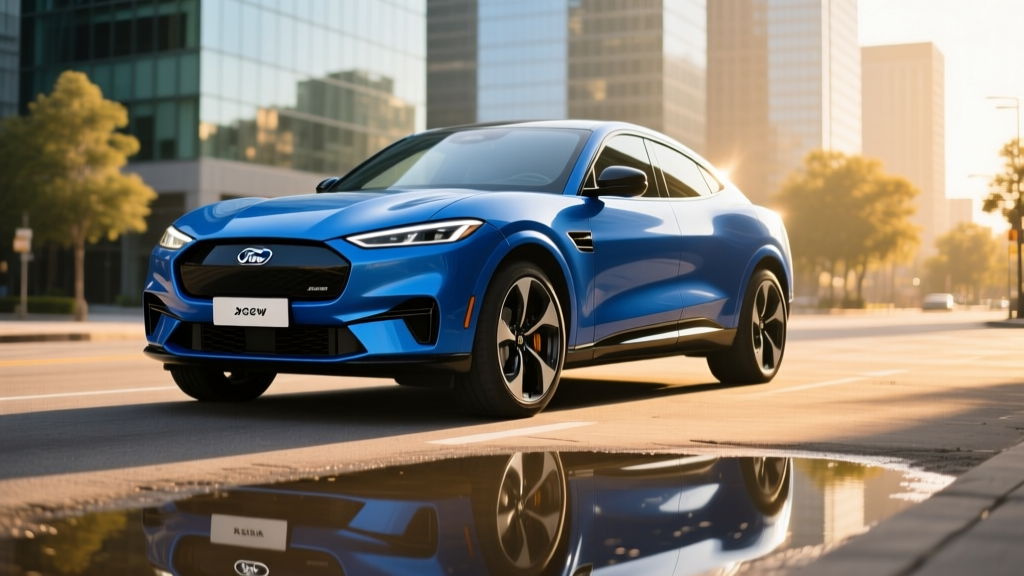
The Ford Mustang Mach-E has carved out a unique space in the electric crossover segment by blending muscle-car branding with genuine daily-driver practicality. For shoppers fixated on straight-line performance, the Mach-E delivers a spread of acceleration times that rival dedicated sports sedans — while still offering over 300 miles of range in its most efficient configuration. This 2026 profile breaks down every trim's 0-60 mph time, real-world range expectations, charging speeds, and federal tax credit eligibility so you can decide which version fits your budget and driving style.
2026 Mustang Mach-E Performance: 0-60 MPH by Trim
Acceleration is where the Mach-E's dual-motor configurations earn the Mustang badge. Ford offers four trims for 2026, each with a distinct powertrain setup that directly impacts sprint times. The single-motor Select prioritizes range, while the GT and Rally models chase supercar territory.
| Trim | Drivetrain | 0-60 mph | Horsepower | Torque (lb-ft) | EPA Range | MPGe (Combined) |
|---|---|---|---|---|---|---|
| Select (Standard Range) | RWD | 6.1 sec | 266 | 317 | 250 mi | 101 |
| Premium (Extended Range) | RWD | 5.2 sec | 290 | 317 | 320 mi | 103 |
| Premium (Extended Range) | AWD | 4.8 sec | 346 | 428 | 300 mi | 98 |
| GT | AWD | 3.5 sec | 480 | 600 | 280 mi | 84 |
| Rally | AWD | 3.4 sec | 500 | 630 | 265 mi | 80 |
The GT's 3.5-second 0-60 mph time puts it in the same ballpark as a Porsche Taycan 4S and noticeably quicker than a Tesla Model Y Performance (3.5 sec). The Rally trim, introduced for off-road-flavored performance, shaves another tenth off thanks to a torque bump and launch-control tuning. For context, a base Tesla Model Y Long Range AWD hits 60 mph in approximately 4.8 seconds — matching the Mach-E Premium AWD but at a lower power output.
Worth noting: these 0-60 times are achievable on prepared surfaces with preconditioned batteries. In cold weather (below 40°F), expect a 0.3–0.5 second penalty due to reduced battery discharge capability until the pack warms up.
Battery, Range & Real-World Efficiency
Ford equips the 2026 Mach-E with two battery options. The Standard Range pack is a 75.7 kWh usable (NMC lithium-ion) unit, while the Extended Range pack steps up to 91.0 kWh usable, also NMC chemistry. Ford does not currently offer an LFP (lithium iron phosphate) option in the Mach-E lineup, which means the pack prioritizes energy density over the ultra-long cycle life that LFP provides. NMC chemistry delivers more range per kilogram but requires owners to avoid routinely charging to 100% for daily use — Ford recommends an 80% daily limit to preserve long-term State of Health (SoH).
Real-World Range: What to Actually Expect
EPA Sticker (Premium Extended Range RWD): 320 miles
Real-World Highway (70–75 mph, moderate climate): ~265–285 miles
Real-World Cold Weather (below 30°F, highway): ~220–245 miles
Real-World City/Commuter (mixed stop-and-go, regen-heavy): ~290–310 miles
Highway driving is the Mach-E's efficiency weak point, as with most crossovers. The boxy-ish profile and 4,400–4,900 lb curb weight push consumption to roughly 32–36 kWh/100mi at sustained highway speeds. City driving with regenerative braking recovers significantly more energy. Cold-weather losses of 25–30% are typical for NMC packs without aggressive preconditioning.
According to fueleconomy.gov, the Premium Extended Range RWD achieves 103 MPGe combined (33 kWh/100mi). The GT drops to 84 MPGe combined (40 kWh/100mi) — a significant efficiency penalty for the performance upgrade.
Charging Speed: DC Fast, Level 2 & Home Setup
The Mach-E supports up to 150 kW peak DC fast charging on Extended Range models and 115 kW on Standard Range trims. Ford has not upgraded the architecture to 800V (as seen in the Hyundai Ioniq 5 or Porsche Taycan), so charging speeds are competitive but not class-leading. The charge curve is the critical detail: the Mach-E sustains peak kW only between roughly 10–45% State of Charge (SoC), then tapers progressively. A 10–80% session on a 150+ kW charger takes approximately 38–42 minutes for the Extended Range pack.
| Charging Level | Power (kW) | Connector | Speed / Time | Notes |
|---|---|---|---|---|
| Level 1 (120V household) | ~1.2 kW | J1772 / NACS | ~3 mi/hr | Emergency/trickle only |
| Level 2 (240V, 32A) | 7.7 kW | J1772 / NACS | ~22 mi/hr | Ford Mobile Charger included |
| Level 2 (240V, 48A wall unit) | 11.5 kW | NACS / J1772 | ~33 mi/hr | Full overnight charge in ~9 hr (ER) |
| DC Fast (Standard Range) | 115 kW peak | CCS1 / NACS | 10–80% in ~38 min | Tapers above 50% SoC |
| DC Fast (Extended Range) | 150 kW peak | CCS1 / NACS | 10–80% in ~40 min | Peak only 10–45% SoC |
Starting with the 2025 model year, Ford transitioned the Mach-E to the NACS (North American Charging Standard) port, granting native access to Tesla Supercharger stations via Ford's BlueOval Charge Network. This is a major practical advantage over CCS-only vehicles, as the Supercharger network remains the most reliable public DC fast-charging infrastructure in North America. Owners of earlier CCS-port Mach-E models can use a Ford-provided NACS adapter.
For home charging, the included Ford Mobile Charger delivers 32A (7.7 kW) on a 240V NEMA 14-50 outlet, adding roughly 22 miles of range per hour. A full overnight session covers most daily commutes easily. For faster home replenishment, a 48A hardwired Level 2 wall connector (such as the ChargePoint Home Flex or Ford Charge Station Pro) pushes 11.5 kW, adding about 33 miles per hour and fully recharging the Extended Range pack in roughly 9 hours.
Pricing, Trims & Federal Tax Credit Eligibility
The 2026 Mustang Mach-E starts at approximately $42,495 for the Select Standard Range RWD and climbs to around $62,995 for the Rally. All trims fall under the IRS §30D federal tax credit MSRP cap of $80,000 for SUVs, making them potentially eligible for up to $7,500 in federal credits — but eligibility is not automatic.
| Trim | Base MSRP | As-Tested (Typical) | Max §30D Credit | Est. Net Price |
|---|---|---|---|---|
| Select SR RWD | $42,495 | $44,200 | $7,500 | ~$36,700 |
| Premium ER RWD | $48,995 | $51,500 | $7,500 | ~$44,000 |
| Premium ER AWD | $51,995 | $54,800 | $7,500 | ~$47,300 |
| GT ER AWD | $59,995 | $63,400 | $7,500 | ~$55,900 |
| Rally ER AWD | $62,995 | $65,500 | $7,500 | ~$58,000 |
- MSRP Cap: Must be under $80,000 for SUVs — all Mach-E trims qualify.
- Buyer Income Cap: AGI must not exceed $150,000 (single), $225,000 (head of household), or $300,000 (joint filers) per IRS §30D rules.
- Battery Sourcing: The full $7,500 requires meeting both critical-minerals ($3,750) and battery-component ($3,750) thresholds. Ford sources battery cells from SK On (South Korea/US plants). Sourcing compliance varies by model year and production batch — verify the specific VIN's eligibility on the IRS qualified vehicle list before purchase.
- Point-of-Sale Transfer: Buyers can transfer the credit to the dealer at purchase, reducing the out-of-pocket price immediately rather than waiting for a tax refund.
- One Credit Per VIN: The vehicle must be new, purchased for personal use, and primarily used in the United States.
Note: Tax credit rules are subject to legislative change. Always confirm eligibility with a tax professional and the current IRS qualified vehicle list before finalizing a purchase.
Interior Space, Cargo & Daily Practicality
The Mach-E's crossover form factor delivers practical interior dimensions that compete directly with the Tesla Model Y and Hyundai Ioniq 5.
- Front legroom: 43.3 inches
- Rear legroom: 38.9 inches
- Cargo (rear seats up): 29.7 cu ft
- Cargo (rear seats folded): 59.7 cu ft
- Front trunk (frunk): 4.7 cu ft (drainable, useful for wet gear or groceries)
The 38.9 inches of rear legroom is adequate for adults on longer trips, though it trails the Ioniq 5's exceptionally spacious rear cabin. The drainable frunk is a standout feature — ideal for storing muddy shoes, ice for tailgating, or wet charging cables. The 29.7 cu ft behind the second row is competitive with the Model Y's 30.2 cu ft but less than the Ioniq 5's 27.2 cu ft (which compensates with a wider load floor).
Infotainment runs on Ford's SYNC 4A system with a 15.5-inch vertical touchscreen. Wireless Apple CarPlay and Android Auto are standard. The available BlueCruise hands-free driving system (SAE Level 2 — driver must remain attentive) covers over 130,000 miles of divided highways in North America. BlueCruise allows hands-off driving on mapped roads but monitors the driver via an infrared camera; it will slow the vehicle and eventually stop if the driver becomes unresponsive.
Warranty, Battery Longevity & Ownership Costs
Ford backs the Mach-E with a competitive warranty package:
- Bumper-to-bumper: 3 years / 36,000 miles
- Powertrain: 5 years / 60,000 miles
- High-voltage battery: 8 years / 100,000 miles (retains ≥70% capacity)
- Roadside assistance: 5 years / 60,000 miles
The 8-year/100,000-mile battery warranty with a 70% capacity retention floor is industry-standard, matching Tesla, Hyundai, and most other mainstream EV makers. Real-world degradation data from early 2021–2023 Mach-E owners suggests the NMC packs lose approximately 5–8% capacity over the first 60,000 miles, with the curve flattening significantly after year three. Owners who follow the 80% daily charge recommendation and avoid frequent DC fast charging in extreme heat tend to see better long-term SoH numbers.
Insurance costs for the Mach-E run 15–25% higher than equivalent gas-powered crossovers, with GT trims commanding the largest premiums. Average annual insurance for a Premium AWD runs approximately $2,200–$2,800 depending on state, age, and driving record. Always pull quotes before committing to a trim.
Pros, Cons & Who Should Buy the Mach-E
Pros
- GT's 3.5-second 0-60 mph rivals sports sedans at half the price
- Native NACS port provides direct Tesla Supercharger access
- Drainable frunk adds genuine utility
- BlueCruise hands-free highway driving is among the best Level 2 systems
- All trims fall under the $80K MSRP cap for federal tax credit
- Competitive 320-mile EPA range (Premium ER RWD)
Cons
- 150 kW peak DC charging trails 800V competitors (Ioniq 5: 240 kW)
- 10–80% in ~40 minutes is slow for road-trippers
- Highway efficiency drops sharply above 70 mph
- No LFP battery option for owners who want 100% daily charging
- Rear legroom trails class leaders (Ioniq 5, Model Y)
- Insurance premiums elevated, especially on GT/Rally
Who Is the Mustang Mach-E For?
Choose the Mach-E Select if: You want an affordable daily commuter with 250 miles of range, sub-$37K net pricing after credits, and Supercharger access.
Choose the Mach-E Premium ER RWD if: Maximum range (320 mi EPA) is your top priority, and you don't need AWD.
Choose the Mach-E Premium AWD if: You need all-weather traction, reasonable acceleration (4.8s), and over 300 miles of range.
Choose the Mach-E GT if: You want 3.5-second 0-60 mph performance without sacrificing daily practicality or paying Porsche prices.
Look elsewhere if: You take frequent 400+ mile road trips and need the fastest possible DC charging (consider the Ioniq 5 or EV6 with 800V architecture).
Frequently Asked Questions
What is the fastest Mustang Mach-E 0-60 time?
The 2026 Mach-E Rally achieves a 3.4-second 0-60 mph time, edging out the GT's 3.5 seconds. Both use dual-motor AWD with the Extended Range 91.0 kWh battery.
Does the Mustang Mach-E qualify for the $7,500 federal tax credit?
All Mach-E trims fall under the $80,000 MSRP cap for SUVs. However, the buyer must meet IRS income limits ($150K single / $300K joint) and the vehicle's battery must satisfy critical-minerals and component sourcing thresholds. Verify VIN-level eligibility on the IRS qualified vehicle list before purchasing.
How long does it take to charge the Mach-E at home?
On a 48A Level 2 wall connector (11.5 kW), the Extended Range pack charges from empty to full in approximately 9 hours. The included 32A Mobile Charger takes about 13 hours for a full charge. Most owners charging overnight from 20–80% SoC need only 4–5 hours.
Is the Mustang Mach-E a good road-trip EV?
It's adequate but not class-leading. The 320-mile EPA range (Premium ER RWD) provides comfortable 200–220 mile highway legs between stops. However, the 40-minute 10–80% DC fast-charge time adds downtime compared to 800V competitors that can 10–80% in under 20 minutes. Supercharger access via NACS is a major reliability advantage.
How does the Mach-E compare to the Tesla Model Y?
The Mach-E Premium AWD matches the Model Y Long Range AWD in 0-60 time (~4.8 sec) but trails in charging speed and cargo volume. The Mach-E GT is significantly quicker than any Model Y variant short of the Plaid-adjacent Performance. The Mach-E's interior materials and BlueCruise system are generally rated higher, while the Model Y wins on charging infrastructure density (though the Mach-E's NACS port now closes this gap).
What is the real-world range in winter?
Expect a 25–30% range reduction in sustained below-freezing temperatures. A Premium ER RWD rated at 320 miles EPA will typically deliver 220–245 miles in winter highway driving. Preconditioning the battery while plugged in and using seat/steering wheel heat instead of cabin air can recover 10–15 miles of that loss.