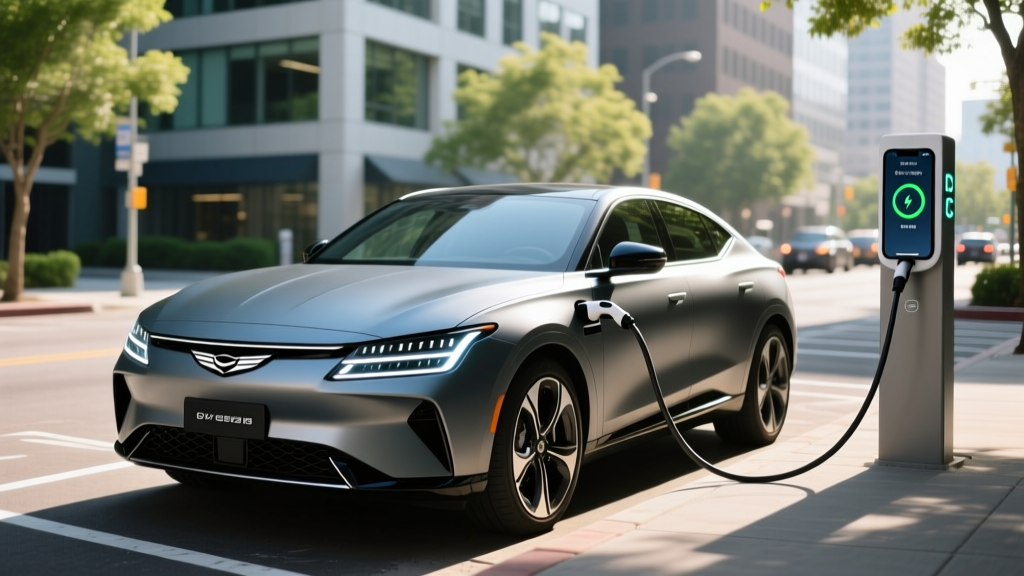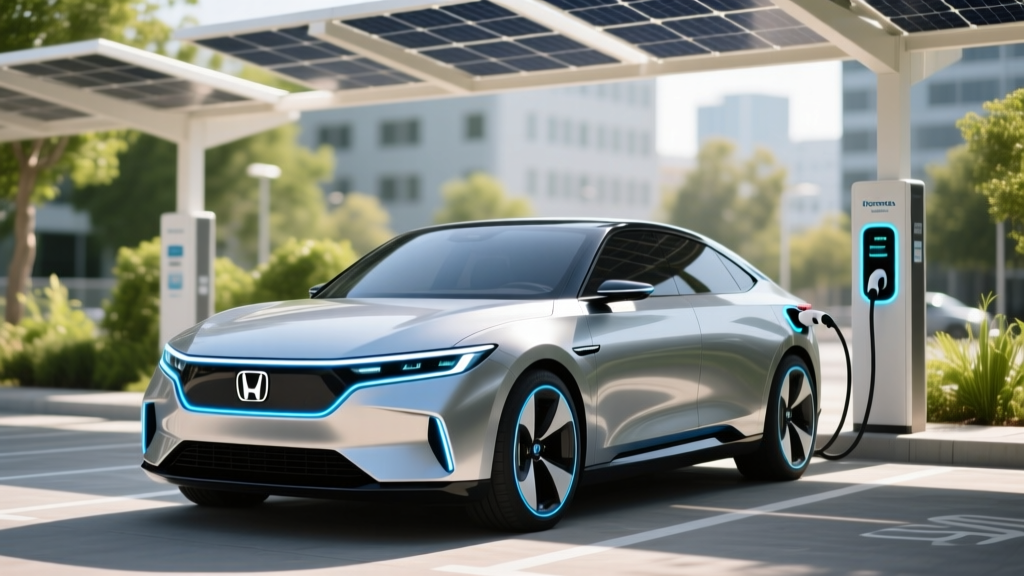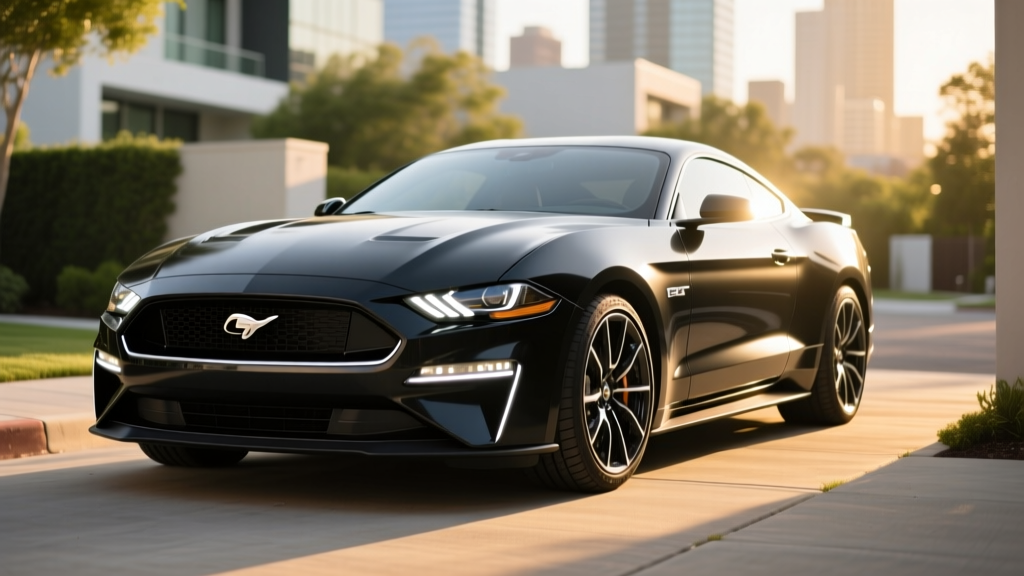
Quick Answer: The upcoming Ford Mustang GT Electric is a high-performance EV expected to deliver around 300 miles of EPA-estimated range, a 100+ kWh battery pack, and peak DC fast-charging near 350 kW. Pricing is anticipated to start in the mid-$50,000 range before incentives. It will compete directly with the Dodge Charger Daytona EV, Tesla Model 3 Performance, and Hyundai Ioniq 5 N. Ford has not yet released final EPA-certified specs — figures below are based on Ford's announced platform targets and industry analysis. The vehicle is expected to go on sale in late 2026 as a 2027 model year.
What the Mustang GT Electric Actually Is
Ford's Mustang GT Electric is not simply a battery-swapped version of the gas Mustang. It rides on an entirely new dedicated EV architecture that Ford has been developing under the "Project T3" (Tesla-beater) initiative, with production slated for the company's Louisville, Kentucky assembly plant. The GT variant sits at the performance end of the lineup, targeting dual-motor all-wheel-drive output north of 500 horsepower — positioning it squarely against the fastest electric coupes and sedans on the market.
The nameplate carries enormous weight. Ford has sold over 10 million Mustangs since 1964, and the GT badge signals the performance-oriented buyer who wants muscle-car character with electric efficiency. This is a critical distinction: the Mustang GT Electric is aimed at enthusiasts, not economy seekers. Buyers should expect sport-tuned suspension, aggressive styling, and a price premium over more utilitarian EVs.
It's important to separate this vehicle from the Mustang Mach-E, which is Ford's existing electric crossover SUV. The GT Electric is a lower, sportier, coupe-like vehicle built on a next-generation platform with significantly improved charging architecture and battery energy density compared to the current Mach-E GT.
Expected Range, Battery, and Charging Specs
Because final EPA certification has not been published as of early 2026, the following figures represent Ford's announced engineering targets and reasonable projections based on the platform's known capabilities. Ford has confirmed an 800-volt electrical architecture, which enables substantially faster DC charging than the 400V systems in most current EVs.
| Specification | Expected / Announced |
|---|---|
| Battery Capacity (usable) | ~100 kWh (estimated, NMC chemistry) |
| EPA Range (target) | ~300 miles (GT AWD); higher trims may vary |
| Real-World Highway Range | ~240–270 miles (70 mph, moderate temps) |
| Real-World Cold-Weather Range | ~200–230 miles (20°F, highway) |
| Peak DC Fast Charge Rate | Up to ~350 kW (800V architecture) |
| 10–80% DC Fast Charge Time | ~18–22 minutes (estimated, with preconditioning) |
| Level 2 Home Charging (AC) | ~11.5 kW (est. ~30 miles of range per hour) |
| Drivetrain | Dual-motor AWD |
| Horsepower (target) | 500+ HP |
| 0–60 mph | ~3.5 seconds (estimated) |
| Battery Warranty | 8 years / 100,000 miles (minimum, per federal mandate) |
Real-World Range Reality: The ~300-mile EPA target assumes mixed driving. On a sustained 75 mph highway run in 70°F weather, expect closer to 250–270 miles before needing a charge. In sub-freezing temperatures, lithium-ion batteries lose efficiency and cabin heating draws significant power — plan for 200–230 miles of usable range. The 800V architecture and expected heat pump should help mitigate cold-weather charging slowdowns, but physics always wins in extreme cold. If your typical commute is under 80 miles round-trip, even the worst-case range is more than adequate.
Understanding kW vs kWh: This is the most common point of confusion for first-time EV buyers. kWh (kilowatt-hours) measures battery capacity — think of it as the size of the fuel tank. A ~100 kWh battery holds enough energy for roughly 300 miles. kW (kilowatts) measures power flow — the rate at which energy is delivered. A 350 kW charger fills the battery very quickly; a 7 kW home charger fills it slowly overnight. Never interchange these units.
EV vs Gas Mustang GT: Cost and Performance Comparison
The natural question for any Mustang enthusiast: how does the electric GT stack up against the gas Mustang GT with its 5.0-liter V8? Here's a data-driven breakdown using the current gas Mustang GT as a baseline.
| Metric | Mustang GT Electric (est.) | 2026 Mustang GT (5.0L V8) |
|---|---|---|
| Base MSRP | ~$55,000–$60,000 | ~$44,000 |
| Horsepower | 500+ HP | 486 HP |
| 0–60 mph | ~3.5 sec | ~4.2 sec |
| Fuel / Energy Cost per Mile | ~$0.04–$0.06 (home charging) | ~$0.15–$0.18 (gas, 18 MPG combined) |
| Annual Fuel/Energy Cost (12k mi) | ~$480–$720 | ~$1,800–$2,160 |
| Annual Maintenance | ~$300–$500 | ~$700–$1,000 |
| EPA Range / Tank Range | ~300 miles | ~340 miles (16-gal tank) |
| Refuel / Recharge Time | ~20 min (10–80% DC) | ~5 min (gas station) |
| Federal Tax Credit (§30D) | Potentially up to $7,500* | $0 |
| Estimated 5-Year Total Fuel Savings | ~$5,500–$7,500 (EV advantage) | |
*The §30D federal tax credit has strict eligibility requirements including MSRP caps, buyer income limits, and battery-component/critical-mineral sourcing rules. Eligibility for the Mustang GT Electric will depend on Ford's supply chain at time of purchase. Always verify current rules with a tax professional.
The gas Mustang GT wins on upfront price and refueling speed. The electric GT wins on acceleration, per-mile operating cost, and potential tax incentives. Over five years of ownership, the EV's lower fuel and maintenance costs offset a meaningful portion of its higher purchase price — but not all of it. This is not purely a financial decision; it's a driving-experience decision with financial implications.
Total Cost of Ownership: 5-Year Breakdown
Below is a realistic five-year cost projection assuming 12,000 miles per year, home Level 2 charging at the national average electricity rate of ~$0.14/kWh, and no major battery issues (covered under warranty regardless).
| Cost Category | Mustang GT Electric (est.) | Mustang GT Gas |
|---|---|---|
| Purchase Price (base MSRP) | $57,000 | $44,000 |
| Federal Tax Credit | –$3,750 to –$7,500* | $0 |
| Home Charger Install (Level 2) | $800–$2,000 | $0 |
| 5-Year Fuel / Energy | $2,400–$3,600 | $9,000–$10,800 |
| 5-Year Maintenance | $1,500–$2,500 | $3,500–$5,000 |
| 5-Year Insurance (avg) | $9,000–$11,000 | $7,500–$9,000 |
| Estimated 5-Year Depreciation | ~$22,000–$28,000 | ~$16,000–$20,000 |
| Approx. 5-Year Total Cost | $68,000–$82,000 | $56,000–$68,000 |
Key takeaways from this analysis:
- Energy savings are real: The electric GT saves roughly $6,000–$7,500 on fuel over five years compared to the gas V8.
- Maintenance is lower: No oil changes, no spark plugs, no transmission fluid. Regenerative braking reduces brake pad wear significantly.
- Insurance costs more: EV performance cars carry higher premiums due to repair costs and parts availability. Get quotes before purchasing.
- Depreciation is the wild card: EV depreciation has been volatile. Ford's brand strength and the Mustang nameplate may help, but EVs have historically depreciated faster than comparable gas performance cars in the first three years.
- The tax credit narrows the gap: If you qualify for the full $7,500 credit (applied at point of sale), the effective purchase price drops significantly. But many buyers will qualify for a reduced amount or none at all depending on income and sourcing rules.
Charging at Home and on the Road: What Buyers Need to Plan For
Owning any EV — including the Mustang GT Electric — requires a realistic assessment of your charging situation before purchase.
Home Charging (Level 2): This is where most EV owners do 80–90% of their charging. A Level 2 home charger operating at 11.5 kW adds roughly 30 miles of range per hour, meaning an overnight session (8–10 hours) easily replenishes a full battery. Installation costs vary enormously:
| Item | Estimated Cost |
|---|---|
| Level 2 Charger Hardware (40–48A) | $400–$700 |
| Electrician Labor (240V circuit, 50–60A) | $500–$1,500 |
| Electrical Panel Upgrade (if needed, 200A service) | $1,500–$3,500 |
| Permits | $50–$200 |
| Total (no panel upgrade) | $950–$2,400 |
| Total (with panel upgrade) | $2,450–$5,900 |
If you live in an apartment, condo, or home without garage/driveway access, home Level 2 charging may not be feasible. In that case, assess your proximity to reliable public DC fast chargers and whether your workplace offers charging. Public DC fast charging costs roughly 2–3x more per kWh than home charging, which erodes the EV's fuel-cost advantage.
DC Fast Charging on Road Trips: The Mustang GT Electric's 800V architecture is a major advantage for road trips. At a compatible 350 kW charger (such as those in the Electrify America or Tesla Supercharger networks via NACS adapter), a 10–80% charge in approximately 20 minutes is achievable — but only under ideal conditions. Real-world charging curves taper significantly above 80% state of charge. Plan road-trip stops around 15–25 minute charges to 80%, then drive on. Preconditioning the battery (navigating to a charger via the car's built-in system) is essential for hitting peak charge rates in cold weather.
Ford EVs now have access to the Tesla Supercharger network using a NACS adapter, which dramatically expands the available fast-charging footprint across the U.S. — a critical advantage for buyers in areas with sparse Electrify America or EVgo coverage.
Common Misconceptions About the Mustang GT Electric
| Myth | Fact |
|---|---|
| "It's just a Mach-E with a Mustang badge." | The GT Electric uses a completely new dedicated EV platform (Project T3) with 800V architecture, not the Mach-E's older GE1 platform. |
| "EV batteries need replacing every 5 years." | Modern NMC and LFP batteries are designed for 15+ years of service. Federal law mandates an 8-year/100,000-mile battery warranty. Data from millions of EVs on the road shows average degradation of ~10–15% over 8 years, not catastrophic failure. |
| "It won't feel like a real Mustang." | Electric motors deliver instant torque with no turbo lag or power-band delay. With 500+ HP and a ~3.5-second 0–60, the GT Electric will out-accelerate the gas GT. Whether it sounds and feels like a Mustang is subjective — Ford will likely offer synthetic sound profiles, but the V8 rumble is inherently absent. |
| "I'll qualify for the full $7,500 tax credit." | The §30D credit has MSRP caps (sedans must be under $55,000; SUVs/trucks under $80,000), buyer income limits ($150k single / $300k joint), and strict battery-sourcing requirements. The GT Electric's likely MSRP may exceed the sedan cap, and credit amounts vary. Always check IRS guidelines before assuming eligibility. |
| "I can charge from any outlet." | Level 1 charging from a standard 120V outlet adds only ~3–5 miles of range per hour — roughly 30–50 miles overnight. This is impractical as a primary charging strategy for a 300-mile battery. Level 2 (240V) is strongly recommended. |
Decision Framework: Is the Mustang GT Electric Right for You?
Choose the Mustang GT Electric if:
- You have access to Level 2 home charging (garage or driveway with 240V capability)
- Your daily driving is under 150 miles round-trip (covering ~95% of American commutes)
- You want muscle-car acceleration with lower per-mile operating costs
- You take 2–4 road trips per year and are comfortable planning ~20-minute charging stops
- You value instant torque, a low center of gravity, and one-pedal regenerative driving
- You're willing to pay a premium upfront for long-term fuel and maintenance savings
Stick with the gas Mustang GT (or consider a hybrid alternative) if:
- You lack home charging access and have no reliable workplace or public charging nearby
- You regularly drive in extreme cold (below 0°F) where range loss exceeds 30%
- You frequently take long road trips through areas with sparse DC fast-charging infrastructure
- The V8 sound, exhaust note, and manual-transmission engagement are non-negotiable for you
- Your budget is strictly under $45,000 and you cannot absorb the EV's higher upfront cost even with tax credits
- You plan to keep the car 10+ years and are concerned about long-term EV depreciation uncertainty
Consider waiting if:
- You want confirmed EPA range and pricing before committing — final specs should be published by mid-to-late 2026
- You're hoping for solid-state battery technology, which is not expected in this generation
- You want to see how the competitive landscape evolves with the Dodge Charger Daytona EV and refreshed Tesla Model 3 Performance
What First-Time EV Buyers Should Know Before Purchasing
If the Mustang GT Electric is your first EV, here are the practical realities that brochures don't emphasize:
Charging speed is not linear. A "350 kW peak charge rate" applies only at low state of charge (typically 10–40%). Above 80%, the charge rate tapers dramatically to protect the battery. This is why manufacturers quote 10–80% times rather than 0–100%. On road trips, charge to 80% and keep driving rather than waiting for a full battery.
Tire wear increases. EVs are heavier (the GT Electric will likely weigh 4,800+ lbs) and deliver instant torque. Expect to replace tires 20–30% sooner than on a comparable gas car. Budget for premium tires at ~$250–$350 per corner.
Insurance quotes vary wildly. Get at least three quotes before purchasing. Some insurers are still calibrating EV risk models, and premiums for a 500+ HP EV coupe will be higher than average. Shopping around can save $500–$1,000 per year.
The §30D credit can be transferred at point of sale. As of current IRS rules, you can transfer the federal tax credit to the dealer, reducing your purchase price directly at the dealership rather than waiting to claim it on your tax return. This makes the EV more affordable on day one — but confirm eligibility with your dealer and tax advisor.
Frequently Asked Questions
When will the Mustang GT Electric be available to buy?
Ford has announced production at its Louisville, Kentucky plant, with deliveries expected to begin in late 2026 as a 2027 model year. Exact timing has not been confirmed. Reservations may open several months before production begins.
Will the Mustang GT Electric qualify for the $7,500 federal tax credit?
Eligibility depends on several factors: the vehicle's final MSRP must fall under the §30D cap (sedans: $55,000; SUVs/trucks: $80,000 — classification matters here), your income must be below the threshold ($150k single / $300k joint), and the battery must meet critical-mineral and component-sourcing requirements. Ford's supply chain decisions will determine how much of the credit applies. Check the IRS clean vehicle credit page and consult a tax professional before relying on a specific credit amount.
How does the Mustang GT Electric compare to the Dodge Charger Daytona EV?
Both target the electric muscle car segment. The Charger Daytona EV (Scat Pack) offers up to 670 HP and an EPA-estimated ~260 miles of range at a starting price around $60,000–$65,000. The Mustang GT Electric is expected to offer competitive range (~300 miles target) with slightly less peak horsepower but potentially better charging speeds via its 800V architecture. Both are strong options; the decision will likely come down to styling preference, brand loyalty, and final pricing.
Can I charge the Mustang GT Electric at Tesla Superchargers?
Yes. Ford EVs are compatible with the Tesla Supercharger network using a NACS (North American Charging Standard) adapter. Ford has been providing adapters to existing EV owners, and future vehicles are expected to ship with native NACS ports. This gives Mustang GT Electric owners access to over 25,000 Supercharger stalls nationwide.
What happens if the battery degrades significantly?
Federal law requires a minimum 8-year/100,000-mile battery warranty covering defects and excessive capacity loss (typically defined as dropping below 70% of original capacity). Real-world data from high-mileage EVs suggests modern battery management systems keep degradation to roughly 10–15% over 8 years under normal use. Battery replacement outside of warranty is expensive — $12,000–$20,000 — but rarely needed within the first decade.
Is the Mustang GT Electric considered "self-driving"?
No. Any driver-assistance features Ford offers (such as BlueCruise) are classified as SAE Level 2 — meaning the driver must remain fully engaged, hands on or near the wheel, and eyes on the road at all times. Level 2 is driver assistance, not autonomous driving. Only Level 4 services like Waymo operate without a human driver, and those are limited to specific geofenced areas in select cities.