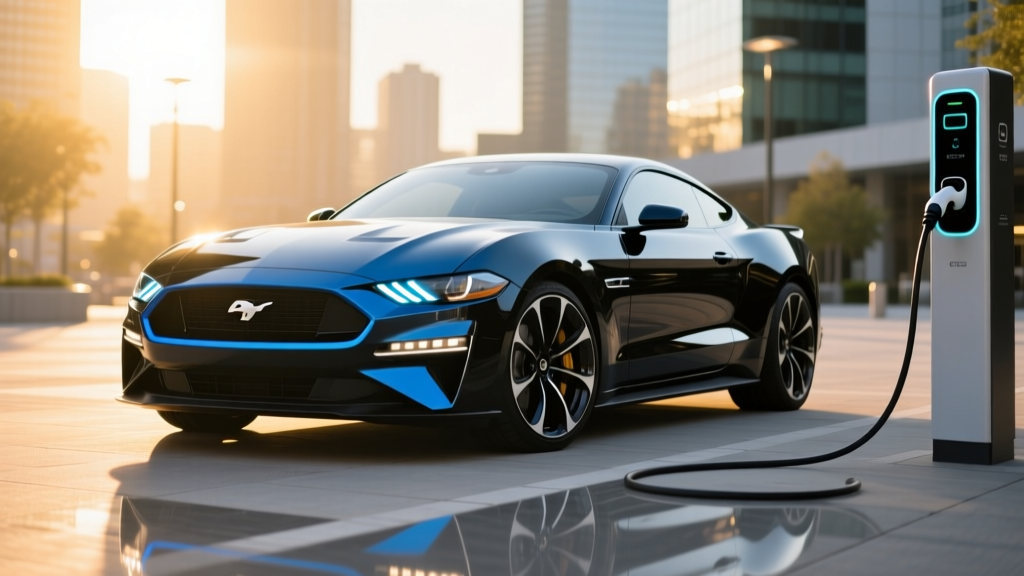
Quick Answer: Is the Mustang EV Worth It?
The 2026 Ford Mustang Mach-E (the Mustang EV) is a strong electric crossover starting at $42,495, offering 250–370 miles of EPA range depending on battery and drivetrain. Real-world highway range drops to roughly 210–310 miles, with further loss in cold weather. Charging peaks at 150 kW on extended-range models (10–80% in ~35 minutes). For buyers with home Level 2 charging and daily commutes under 100 miles, it's a practical, performance-oriented EV. If you rely solely on public charging or drive frequently in sub-freezing climates, carefully weigh the convenience trade-offs before committing.
Mustang EV Range: EPA vs Real-World Expectations
The 2026 Mustang Mach-E offers two battery options: a 75.7 kWh usable standard-range pack (LFP chemistry on base trims) and a 91 kWh usable extended-range pack (NMC chemistry). EPA estimates vary by configuration:
| Configuration | Battery | EPA Range | Real-World Highway | Cold Weather (20°F) |
|---|---|---|---|---|
| SR RWD | 75.7 kWh LFP | 250 mi | ~210 mi | ~175 mi |
| ER RWD | 91 kWh NMC | 320 mi | ~270 mi | ~225 mi |
| ER AWD | 91 kWh NMC | 290 mi | ~245 mi | ~205 mi |
| GT ER AWD | 91 kWh NMC | 280 mi | ~235 mi | ~195 mi |
These real-world figures assume 70–75 mph highway speeds. The Mach-E's heat pump (standard on 2026 models) helps mitigate cold-weather cabin heating losses, but battery chemistry still suffers in freezing temps. If you live in Minnesota or Maine and lack garage parking, expect 30–35% range reduction in January.
Charging Speed and Infrastructure Reality
The Mach-E uses the NACS (Tesla-style) connector starting with 2025 models, granting access to Tesla Superchargers via Ford's native charge port. This is a major infrastructure win over older CCS-only EVs.
| Charging Level | Power (kW) | Miles Added/Hour | 10–80% Time | Use Case |
|---|---|---|---|---|
| Level 1 (120V) | 1.4 kW | 3–4 mi/hr | N/A (days) | Emergency/top-up only |
| Level 2 (240V, 48A) | 11.5 kW | 30–35 mi/hr | ~8–9 hours | Home overnight charging |
| DC Fast (SR) | 115 kW peak | ~250 mi/hr peak | ~38 min | Road trips |
| DC Fast (ER) | 150 kW peak | ~320 mi/hr peak | ~35 min | Road trips |
Charging curve reality: The 150 kW peak on extended-range models only holds from roughly 10–40% state of charge. Above 60%, the rate tapers to ~80 kW, and above 80% it drops below 40 kW to protect battery longevity. This means a 10–80% session takes ~35 minutes, but 10–95% takes closer to 55 minutes. Plan road-trip stops accordingly.
Home Level 2 installation typically costs $800–$2,200 total (charger + electrician + permit), assuming your electrical panel has capacity. If you need a panel upgrade from 100A to 200A, add $1,500–$3,000. Renters or condo dwellers without dedicated parking face a real barrier—public DC fast charging costs 2–3× more per mile than home charging.
EV vs Gas: Mustang Mach-E vs Gas Mustang EcoBoost
Let's compare the 2026 Mach-E Select RWD ($42,495 MSRP) to a 2026 Ford Mustang EcoBoost coupe (~$32,000 MSRP) over 5 years and 75,000 miles:
| Factor | Mustang Mach-E EV | Mustang EcoBoost Gas |
|---|---|---|
| MSRP | $42,495 | $32,000 |
| Federal Tax Credit (§30D) | Up to $7,500 (see eligibility below) | $0 |
| Effective Purchase Price | $34,995 | $32,000 |
| Fuel/Energy Cost (75k mi) | $4,800 (home charging @ $0.14/kWh) | $9,400 (@ 28 MPG, $3.50/gal) |
| Maintenance (5 yr) | $1,200 (tires, cabin filter, fluid top-ups) | $3,800 (oil, brakes, filters, belts) |
| Insurance (5 yr avg) | $9,500 | $7,200 |
| 5-Year Total Cost | $50,495 | $52,400 |
The EV breaks even or wins on total cost if you qualify for the full tax credit and charge primarily at home. Public DC fast charging at $0.35–$0.48/kWh would push the Mach-E's energy cost to $9,000–$12,000, erasing the advantage. Insurance is typically 15–25% higher for EVs due to repair costs and battery replacement risk.
Federal Tax Credit: §30D Eligibility for 2026
The Mach-E may qualify for up to $7,500 under IRS §30D, but eligibility depends on three factors:
- Buyer income cap: AGI ≤ $150k single / $300k joint
- MSRP cap: ≤ $80k for SUVs/trucks (Mach-E qualifies)
- Battery sourcing: Critical minerals and battery components must meet phased-in domestic/free-trade requirements (2026 thresholds are strict—verify VIN-specific eligibility at fueleconomy.gov)
The credit can now be transferred to the dealer at point of sale, reducing your purchase price directly. However, if your tax liability is zero (e.g., you're retired with minimal taxable income), you cannot benefit from a non-refundable credit. Consult a tax professional before assuming the full $7,500.
Performance, Tech, and Daily Ownership
The Mach-E GT delivers 480 hp and a 0–60 mph time of 3.5 seconds—genuine sports-car acceleration. Lower trims (Select, Premium) offer 266–346 hp with 0–60 times of 5.1–6.1 seconds, which is more than adequate for merging and passing.
Interior tech includes a 15.5-inch vertical touchscreen running SYNC 4A, wireless Apple CarPlay/Android Auto, and Ford's BlueCruise Level 2 driver-assist (hands-free on pre-mapped highways, but not self-driving—you must remain alert and ready to take over). Cargo space is 29.7 cu ft behind the rear seats, plus a 4.7 cu ft frunk.
The battery warranty covers 8 years/100,000 miles with a minimum 70% capacity retention threshold. Real-world degradation data from 2021–2024 Mach-E owners shows ~8–12% loss after 100k miles, which is within warranty but noticeable. Replacement cost out of warranty: $18,000–$24,000 for the pack alone.
Decision Framework: Is the Mustang EV Right for You?
- Choose the Mach-E if: You have home Level 2 charging access, your daily driving is under 100 miles, you want performance without gas costs, and you qualify for the tax credit.
- Consider a PHEV (like the Toyota RAV4 Prime) if: You lack reliable home charging, frequently drive 300+ miles in a day, or live in extreme cold where EV range loss is punishing.
- Stick with gas if: You drive less than 8,000 miles/year (the fuel savings won't offset the EV's higher upfront cost), or you're a renter without charging options.
Common Misconceptions About the Mustang EV
| Myth | Fact |
|---|---|
| "It's not a real Mustang" | The Mach-E is a crossover, not a muscle car—but the GT trim outperforms most V8 Mustangs in 0–60 and delivers instant torque. It's a different interpretation of the nameplate. |
| "EV batteries need replacement every 5 years" | Modern NMC and LFP packs are designed for 150k–200k miles before significant degradation. The 8-year/100k-mile warranty covers premature failure. |
| "Charging takes too long" | At home, you plug in once and wake up to a full "tank" every morning. On road trips, 35-minute DC fast stops every 200–250 miles are comparable to gas stops when you factor in food/restroom breaks. |
| "EVs are worse for the environment" | Even on coal-heavy grids, EVs produce fewer lifecycle emissions than gas cars after ~15k miles. On clean grids (wind/solar/nuclear), the advantage is massive. See EPA myth-busting. |
Frequently Asked Questions
Can I tow with the Mustang Mach-E?
Yes, but modestly. The Mach-E is rated for 1,500 lbs (SR) or 2,200 lbs (ER) with the factory tow package. That's fine for a small utility trailer or two dirt bikes, but not a boat or camper. Towing also cuts range by 30–50%.
Does the Mach-E qualify for the $7,500 tax credit in 2026?
It depends on your income, the specific VIN's battery sourcing, and whether you have sufficient tax liability. Ford has worked to localize battery component sourcing, but critical-mineral rules are strict. Check the VIN at fueleconomy.gov before purchasing.
How does the Mach-E compare to the Tesla Model Y?
The Model Y Long Range AWD (~$48,000, 330 mi EPA) offers slightly more range, faster Supercharger access (native NACS), and a more mature software ecosystem. The Mach-E wins on interior build quality, physical controls, and BlueCruise's smoother highway assist. Both are strong choices—test-drive both.
What happens if the battery degrades significantly?
If capacity drops below 70% within 8 years/100k miles, Ford will repair or replace the pack under warranty. Out of warranty, a full replacement costs $18k–$24k, though individual module repairs may be cheaper. Most owners report 8–12% degradation at 100k miles, which is noticeable but not catastrophic.