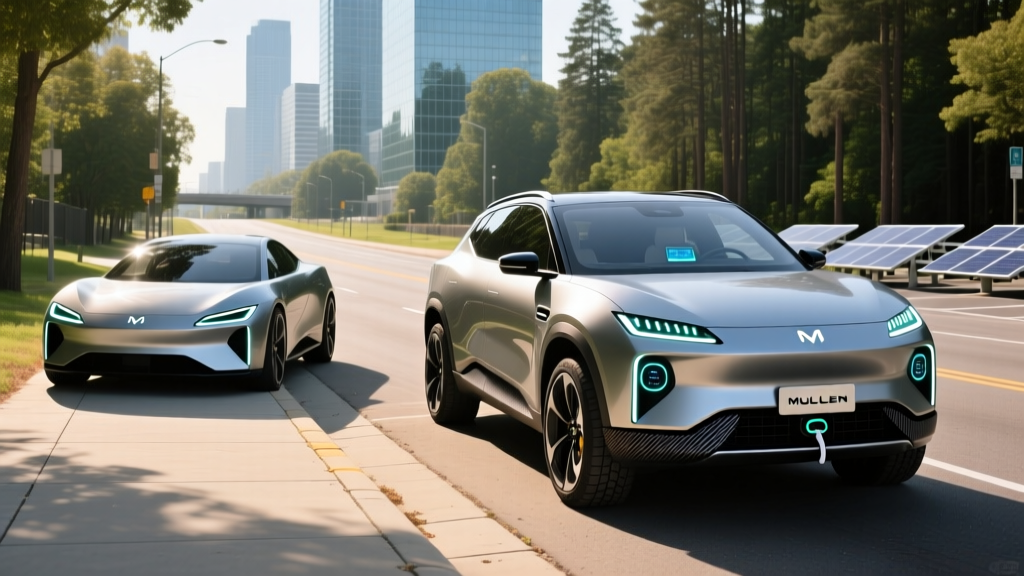
The short answer on Mullen electric vehicles: As of early 2026, Mullen Automotive has not yet delivered a production-ready consumer EV at meaningful scale. The Mullen One (a compact urban EV) and Mullen Five (a crossover SUV) have been announced with preliminary specs, but neither is broadly available for purchase through established dealer networks. Prospective buyers should exercise caution, verify actual delivery timelines, and compare against proven, shipping alternatives from Hyundai, Kia, Tesla, and Chevrolet before committing a deposit.
Mullen Automotive, a California-based EV startup, has generated considerable attention among budget-minded EV shoppers searching for an affordable electric vehicle. But attention doesn't equal production. This guide cuts through the noise with the data available as of 2026, gives you honest ownership context, and provides a clear decision framework so you don't waste time or money on vaporware — or miss out if Mullen actually delivers.
What Mullen Electric Vehicles Exist Today?
Mullen's consumer lineup centers on two models, both of which have appeared at auto shows and in press releases but have faced repeated production delays:
| Spec | Mullen One (Announced) | Mullen Five (Announced) |
|---|---|---|
| Vehicle Type | Subcompact urban hatchback | Compact crossover SUV |
| Est. EPA Range | ~150 mi (preliminary) | ~230 mi (preliminary) |
| Battery (kWh) | ~35 kWh (NMC, est.) | ~72 kWh (NMC, est.) |
| Peak DC Charge Rate | ~50 kW | ~100 kW |
| Horsepower | ~109 hp | ~201 hp |
| Est. Base MSRP | ~$19,990 | ~$29,990 |
| Production Status (2026) | Not in mass production | Limited/pre-production |
Critical context: Every figure above is preliminary or estimated. Mullen has not published official EPA-certified range or efficiency data for either model. Until a vehicle appears on fueleconomy.gov with certified numbers, treat all range and efficiency claims as targets, not guarantees. We've seen startups like Fisker, Lordstown, and Byton announce similarly impressive specs before failing to deliver.
Mullen vs. Proven Alternatives: The Data Comparison
If you're considering a Mullen electric vehicle because of its low price, here's how the announced specs compare against EVs you can actually buy and take delivery on today:
| Attribute | Mullen One (Est.) | Chevy Equinox EV 2LT | Hyundai Kona Electric | Nissan LEAF S |
|---|---|---|---|---|
| Base MSRP | ~$19,990 | $33,600 | $32,975 | $28,140 |
| EPA Range | ~150 mi* | 319 mi | 261 mi | 212 mi |
| Battery (kWh) | ~35* | 85 | 65 | 60 |
| Peak DC Charge (kW) | ~50* | 150 | 100 | 100 |
| 10–80% DC Charge | ~45 min* | ~32 min | ~43 min | ~40 min |
| Can You Buy It Now? | No | Yes | Yes | Yes |
* Mullen figures are preliminary estimates, not EPA-certified. Source for production vehicles: fueleconomy.gov, manufacturer spec sheets.
The Mullen One's estimated $19,990 price is genuinely eye-catching — it would be the cheapest new EV in America if it existed. But the Nissan LEAF at $28,140 with 212 miles of EPA-certified range, CCS DC fast charging, and an established dealer and service network is a known quantity. The price gap of roughly $8,000 buys you certainty: a warranty you can actually use, NHTSA safety ratings, and available replacement parts.
Real Ownership Costs: EV vs. Gas vs. the Mullen Promise
One reason buyers look at Mullen is the desire for the lowest possible total cost of transportation. Let's model what that actually looks like with a proven EV versus a comparable gas car, so you can see the savings Mullen would need to deliver to justify the risk.
| 5-Year Cost Category | Hyundai Kona Electric ($32,975) | Kona Gas 2.0L ($24,000) |
|---|---|---|
| Purchase Price | $32,975 | $24,000 |
| Federal Tax Credit (§30D) | $0 (Korea-built; check IRS sourcing rules) | $0 |
| Fuel / Electricity (60,000 mi) | ~$3,900 (home L2 at $0.14/kWh) | ~$7,800 (28 MPG avg, $3.65/gal) |
| Maintenance (5 yr) | ~$1,200 | ~$3,500 |
| Insurance (est. 5 yr) | ~$8,500 | ~$7,200 |
| Total 5-Year Cost | ~$46,575 | ~$42,500 |
The Kona Electric saves roughly $6,100 on fuel and maintenance over five years, but the higher purchase price and EV insurance premiums (typically 15–20% higher than gas equivalents) narrow the gap. If Mullen delivered the One at $19,990, the math would shift dramatically — but only if the vehicle exists, is insurable, and has parts availability.
Home charging access matters enormously. If you can install a Level 2 (240V) home charger, your per-mile electricity cost drops to roughly $0.04–$0.06. Without home charging, relying on public DC fast chargers at $0.30–$0.50/kWh pushes your per-mile cost to $0.10–$0.16, closer to gas. A typical Level 2 home installation runs $800–$2,500 depending on whether your electrical panel needs an upgrade from 100A to 200A service.
Tax Credit Reality: Will a Mullen EV Qualify?
The federal EV tax credit under IRS §30D offers up to $7,500 for qualifying new EVs, but eligibility in 2026 requires clearing several hurdles:
- MSRP caps: Vans, SUVs, and pickups must be under $80,000; sedans and other vehicles under $55,000. Both Mullen models would clear this.
- Buyer income limits: AGI must not exceed $150,000 (single), $225,000 (head of household), or $300,000 (joint).
- Battery sourcing: A percentage of critical minerals and battery components must be sourced from the U.S. or free-trade-agreement countries. This is where most startups struggle — Mullen has not publicly confirmed compliance with current-year sourcing thresholds.
- Final assembly: Must occur in North America. Mullen's stated manufacturing plans involve a facility in Tunica, Mississippi, but production volume confirmation is pending.
- Point-of-sale transfer: As of 2024+, you can transfer the credit to the dealer for an immediate price reduction, rather than waiting for a tax refund.
Do not assume any startup EV qualifies for the full $7,500 until you can verify the specific VIN on the IRS's official eligible-vehicle list. This is a common misconception that leads to painful surprises at tax time.
Common Mullen Misconceptions: Myth vs. Fact
| Myth | Fact |
|---|---|
| "Mullen EVs are available to order and deliver now." | As of 2026, Mullen has not achieved mass-market production or widespread delivery. Reservation holders should verify timelines directly. |
| "The Mullen Five RS has 1,000 hp and 600 miles of range." | These are concept/preliminary figures from the high-performance RS variant, not a production vehicle. The standard Mullen Five targets ~230 miles and ~201 hp. |
| "Any cheap EV will save me money versus gas." | Only if you can charge at home, the vehicle is insurable and serviceable, and parts are available. A cheap EV you can't fix is more expensive than a gas car you can. |
| "Mullen's solid-state battery will solve everything." | Mullen has discussed solid-state polymer battery R&D, but this technology is not in production in any consumer vehicle as of 2026. Expect conventional NMC lithium-ion cells in any near-term product. |
| "I'll get the $7,500 tax credit on a Mullen." | Unconfirmed. Credit eligibility depends on battery sourcing, final assembly location, and the IRS eligible-vehicle list. Verify the specific VIN before assuming credit. |
First-Time EV Buyer: What You Actually Need to Know
If the Mullen caught your eye as your first electric vehicle, here's the practical checklist that applies to any EV purchase — but is especially important when considering a startup brand:
1. Charging access is non-negotiable. Can you install a Level 2 charger at home (240V, 32–48 amps, adding 25–40 miles of range per hour)? If you live in an apartment without charging, public infrastructure in your area needs to be reliable. Check apps like PlugShare for charger density and uptime ratings near your home and workplace.
2. Cold weather cuts range 20–35%. An EV with 150 miles of EPA range becomes roughly 100–120 miles in freezing temperatures with cabin heat running. If you live in the northern U.S., a 150-mile EV is impractical for anything beyond short urban commutes.
3. Service infrastructure matters more than you think. Hyundai, Ford, and Chevrolet have thousands of dealerships with EV-trained technicians. A startup with no service network means you may be waiting weeks for parts or forced to ship the vehicle to a distant facility for repairs.
4. Insurance costs are higher for EVs. Expect 15–25% higher premiums versus a comparable gas car, driven by higher repair costs and battery replacement risk. Get quotes before purchasing.
5. Depreciation is steep for startups. Fisker Ocean owners saw resale values collapse when the company entered financial distress. An EV from a company that may not exist in three years carries enormous depreciation risk.
Decision Framework: Should You Wait for Mullen or Buy Now?
Choose a proven EV now if:
- You need a vehicle within the next 3–6 months
- You want an EPA-certified range number you can trust (260+ miles recommended for most buyers)
- You need a vehicle you can get serviced within 30 miles of your home
- You want established resale value and insurance availability
- Your budget is $28,000–$40,000 (Nissan LEAF, Chevy Equinox EV, Hyundai Kona Electric)
Consider waiting for Mullen if:
- You already have a reliable vehicle and can afford to wait 12–24+ months with no delivery guarantee
- Your driving needs are strictly urban, under 40 miles per day
- You are comfortable with startup risk — potential company failure, no service network, steep depreciation
- You can absorb the loss of a deposit if production never materializes
- You view it as a second vehicle, not your primary transportation
Frequently Asked Questions
Is Mullen Automotive still in business in 2026?
Mullen Automotive remains a publicly traded company (NASDAQ: MULN), but its financial position has been precarious, with multiple stock offerings, reverse splits, and production delays. Before committing any money, review their most recent SEC filings and verify whether the Tunica, Mississippi manufacturing facility is operational and producing vehicles at any meaningful volume.
What's the cheapest EV I can actually buy today?
The Nissan LEAF S starts at approximately $28,140 with 212 miles of EPA-certified range. The Chevrolet Equinox EV starts around $33,600 with 319 miles. If you qualify for the used-EV tax credit (up to $4,000 under IRS §25E), a certified pre-owned Chevy Bolt EV or Hyundai Kona Electric can be had for under $20,000 with full EPA certification and a working dealer network.
Can I charge a Mullen EV at Tesla Superchargers?
This depends entirely on which charging connector Mullen equips. By 2026, most major automakers have adopted the NACS (North American Charging Standard) connector, granting access to Tesla's Supercharger network. Mullen has not confirmed a definitive connector standard for production vehicles. Any EV with a CCS1 connector would need a NACS adapter to use Tesla Superchargers.
How much does home Level 2 charger installation cost?
A typical Level 2 (240V, 40-amp circuit) home installation costs $800–$1,500 if your electrical panel has sufficient capacity (200A service). If you need a panel upgrade from 100A to 200A, add $1,500–$3,000. The charger hardware itself (Emporia, ChargePoint, or Wallbox) runs $300–$700. Total: $1,100–$4,500 depending on your home's electrical setup. Always get a quote from a licensed electrician before committing.
Will a Mullen electric vehicle hold its resale value?
Historically, EVs from startups that fail or struggle financially experience catastrophic depreciation. The Fisker Ocean dropped below $20,000 on the used market after Fisker's financial collapse, from an original MSRP above $60,000. Until Mullen demonstrates sustained production and financial stability, expect significant resale-value risk compared to established brands.