Quick Answer: Should You Buy a Mullen Electric Car?
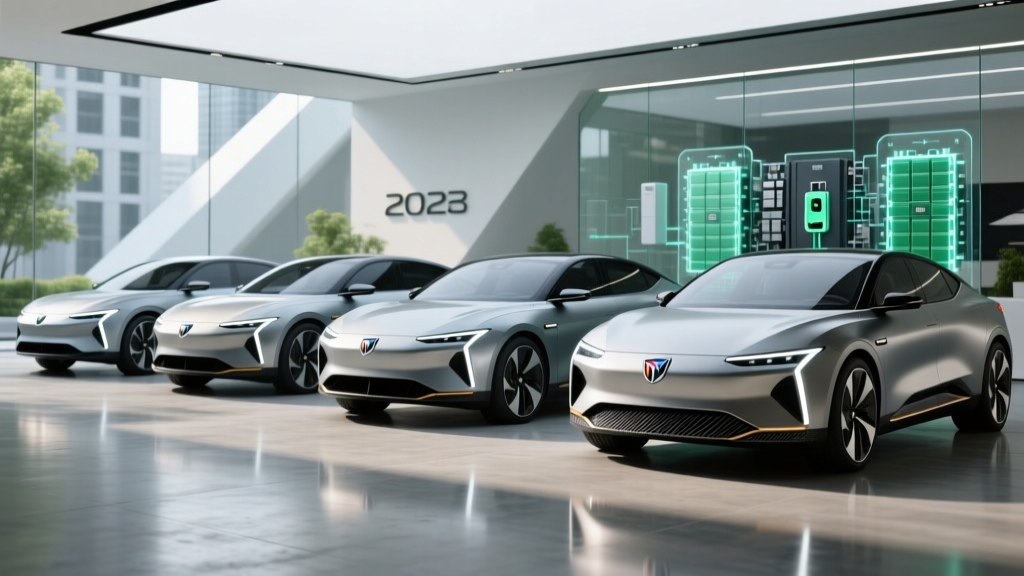
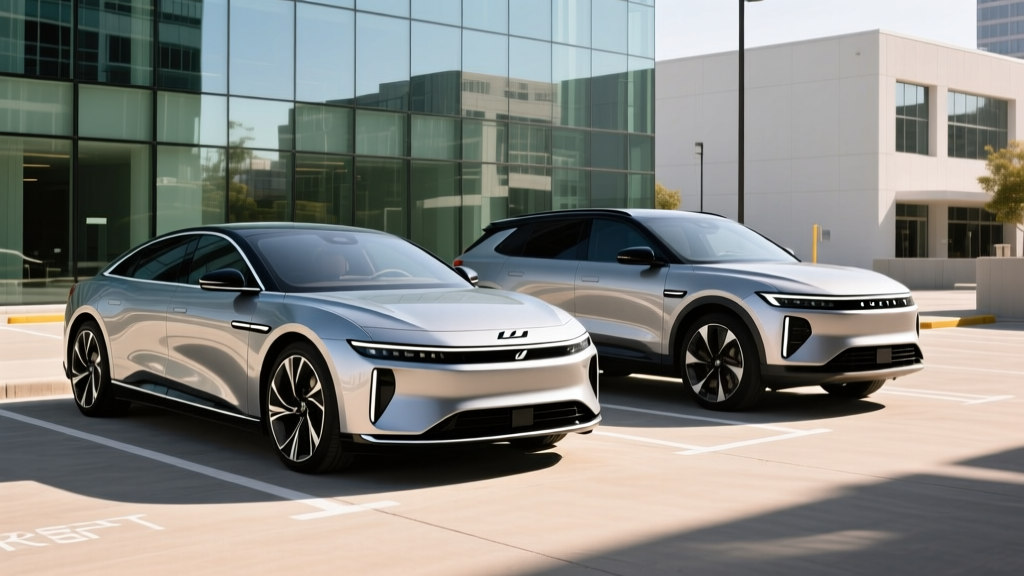
As of early 2026, Mullen Automotive has not delivered a meaningful volume of consumer vehicles. The company's planned models — the Mullen FIVE crossover, Mullen THREE compact SUV, and Mullen GT sports car — remain in pre-production or limited-fleet status. Prospective buyers should treat all published specs as preliminary, recognize that no EPA-certified range figures exist on fueleconomy.gov for Mullen vehicles, and understand that purchasing from a micro-volume startup carries significant risk regarding parts availability, service infrastructure, warranty fulfillment, and long-term company viability.
The Current State of Mullen Automotive
Mullen Automotive, headquartered in Brea, California, has been a publicly traded EV startup (NASDAQ: MULN) that has generated considerable online interest but very limited production. The company acquired a manufacturing facility in Robinsonville, Mississippi, previously used by Navistar, and has announced plans to produce both light-commercial vehicles (the Mullen ONE electric cargo van) and consumer models.
However, production has been repeatedly delayed. The Mullen ONE van saw limited fleet deliveries to commercial partners, but consumer models like the Mullen FIVE and Mullen THREE have not reached general retail availability. As of 2026, Mullen has faced ongoing financial challenges, including stock price volatility, reverse stock splits, and SEC filings indicating going-concern warnings. This context is essential before considering a reservation or purchase.
Mullen's Announced Vehicle Lineup
Mullen has teased several models over the years. Here is what the company has announced, along with the reality of each:
| Model | Segment | Claimed Range (Preliminary) | Claimed Battery | Claimed Base Price | Status (2026) |
|---|---|---|---|---|---|
| Mullen FIVE | Compact Crossover SUV | ~300 mi (target) | ~80 kWh (unconfirmed chemistry) | ~$55,000 (announced) | Pre-production / Not delivered to retail |
| Mullen THREE | Subcompact SUV | ~260 mi (target) | ~60 kWh (unconfirmed) | ~$32,000 (announced) | Concept / Pre-production |
| Mullen GT | Sports Car (Dragonfly-derived) | ~250 mi (target) | ~65 kWh (unconfirmed) | ~$60,000+ (announced) | Prototype stage |
| Mullen ONE | Commercial Cargo Van | ~150 mi (target) | ~70 kWh (LFP targeted) | ~$40,000 (fleet) | Limited fleet deliveries only |
Critical note: None of the range or battery figures above carry EPA certification. They are manufacturer targets that have not been independently verified through the standard EPA test cycle. For comparison, a Tesla Model Y Long Range achieves an EPA-verified 310 miles on a ~75 kWh usable battery, and a Hyundai Ioniq 5 achieves 303 miles on a 77.4 kWh pack — both with proven production and nationwide service networks.
Comparing Mullen to Proven Alternatives
If you are drawn to Mullen's projected price points and vehicle segments, here is how established, available EVs compare in the same space:
| Attribute | Mullen FIVE (Announced) | Tesla Model Y LR (Available) | Hyundai Ioniq 5 SE LR (Available) | Chevrolet Equinox EV 3RS (Available) |
|---|---|---|---|---|
| EPA Range | ~300 mi (unverified) | 310 mi (EPA verified) | 303 mi (EPA verified) | 319 mi (EPA verified) |
| Battery Capacity | ~80 kWh (unconfirmed) | ~75 kWh usable (NMC) | 77.4 kWh usable (NMC) | ~85 kWh usable (NMC) |
| Peak DC Fast Charge | Unknown | 250 kW (10-80% ~18 min) | 240 kW (10-80% ~18 min) | 190 kW (10-80% ~24 min) |
| 0-60 mph | Unknown | 4.8 sec | 5.1 sec (RWD) | ~7.0 sec |
| Base MSRP | ~$55,000 (announced) | $46,630 | $46,650 | $43,400 |
| Federal Tax Credit (§30D) | Unknown eligibility | Up to $7,500 (verify sourcing) | Up to $7,500 (verify sourcing) | Up to $7,500 (verify sourcing) |
| Service Network | None established | Nationwide + mobile service | Nationwide dealer network | Nationwide dealer network |
| Connector | Unknown | NACS (native Supercharger) | NACS (2025+ models) | NACS (2025+ models) |
The comparison reveals a stark reality: established competitors offer EPA-verified ranges, proven charging speeds, nationwide service, and confirmed tax-credit eligibility — all at prices equal to or lower than Mullen's announced targets.
Real Costs and Savings: What EV Ownership Actually Looks Like
Even if Mullen vehicles eventually reach production, buyers should understand the total cost of EV ownership versus a comparable gas vehicle. Here is a 5-year cost breakdown for a typical compact crossover EV (using proven-market data) versus a gas equivalent:
| Cost Category (5 Years) | Compact Crossover EV (~$45,000) | Gas Crossover (~$35,000) |
|---|---|---|
| Purchase Price (after incentives) | ~$37,500 (with $7,500 §30D credit) | $35,000 |
| Fuel / Electricity | ~$3,200 (home charging at $0.14/kWh, 15k mi/yr) | ~$9,750 (gas at $3.25/gal, 28 MPG avg) |
| Maintenance | ~$1,800 (no oil changes, fewer moving parts) | ~$4,500 (oil, filters, belts, brakes more frequent) |
| Insurance | ~$8,500 (EVs typically 15-25% higher premiums) | ~$6,800 |
| Tires | ~$3,000 (EVs wear tires faster due to weight/torque) | ~$2,400 |
| Depreciation (est.) | ~$18,000 | ~$15,000 |
| Total 5-Year Cost | ~$72,000 | ~$73,450 |
Key takeaway: EVs tend to break even or save modestly over 5 years, with the bulk of savings coming from fuel and maintenance. But these projections assume a proven, warrantied vehicle from a manufacturer that will still exist to honor that warranty. A startup with uncertain longevity adds risk that no spreadsheet can fully capture.
Federal Tax Credit: Does Mullen Qualify?
Under current IRS §30D rules, the federal clean vehicle credit of up to $7,500 requires a vehicle to meet several criteria simultaneously:
- MSRP caps: SUVs/vans/pickups must be ≤$80,000; sedans ≤$55,000
- Buyer income limits: AGI ≤$150,000 (single), ≤$225,000 (head of household), ≤$300,000 (joint)
- Final assembly: Must occur in North America (Mullen's Mississippi plant would qualify if operational)
- Battery sourcing: Critical minerals and battery components must meet escalating domestic-content thresholds — thresholds that tighten each year through 2032
- Manufacturer sales cap: The previous 200,000-unit cap was eliminated, so startups are not excluded on volume grounds
- Point-of-sale transfer: Eligible buyers can transfer the credit to the dealer at purchase for an immediate price reduction
For Mullen vehicles, the key unknowns are battery sourcing compliance and whether the company can certify its supply chain to IRS standards. Until a Mullen model appears on the IRS's official list of qualifying vehicles, no buyer should assume credit eligibility. Consult a tax professional before making purchase decisions based on projected credits.
Common Misconceptions About Mullen and EV Startups
| Myth | Fact |
|---|---|
| "Mullen's 300-mile range claim means it will deliver 300 real-world miles." | Unverified manufacturer targets frequently exceed EPA results. Real-world highway driving at 70+ mph typically yields 80-85% of EPA range. In cold weather (below 32°F), expect 20-35% range loss without a heat pump. |
| "A low price means it's a good deal." | A low price from a company with no service network, no proven charging infrastructure partnerships, and uncertain long-term viability may cost far more in downtime, parts scarcity, and resale depreciation. |
| "Reserving now guarantees I'll get the car soon." | Multiple EV startups (Fisker, Lordstown, Nikola) took reservations but never delivered consumer vehicles at scale. Reservation deposits may be at risk if the company restructures. |
| "All EVs charge at the same speed." | Charging speed depends on the vehicle's onboard charge architecture (400V vs 800V), battery chemistry, and thermal management. Without published charge-curve data, Mullen's DC fast-charging capability is unknown. |
| "EVs need no maintenance." | EVs need less maintenance (no oil changes, fewer brake replacements with regen), but still require tire rotations, cabin air filter changes, coolant checks, wiper fluid, and software updates. Startup EVs may also face unique issues with no established repair procedures. |
First-Time EV Buyer Checklist: What to Know Before Committing
If you are considering any EV — Mullen or otherwise — work through this decision framework:
EV Purchase Decision Framework
- If you have home charging access (garage/driveway with 240V outlet capability): EV ownership is practical. Budget $500-$2,000 for a Level 2 home charger installation (equipment + electrician). This covers 85%+ of your charging needs at ~$0.10-$0.18/kWh depending on your utility.
- If you rely solely on public charging: Evaluate your local DC fast-charging network (Tesla Supercharger, Electrify America, EVgo). Public DC charging costs $0.30-$0.50/kWh — significantly more than home. Factor in time (20-40 minutes per session) and reliability concerns. A PHEV may be a better fit.
- If you regularly drive in cold climates (below 32°F for extended periods): Choose an EV with a heat pump (standard on most Hyundai/Kia/Tesla models). Expect 20-35% range loss in deep cold. Buy 25-30% more range than your daily commute requires.
- If you need a vehicle for long road trips (300+ miles regularly): Prioritize proven DC fast-charging speed (10-80% in under 25 minutes) and access to the Tesla Supercharger network (via native NACS or adapter). Mullen has no announced charging-network partnerships.
- If long-term reliability and resale value matter: Favor manufacturers with 5+ years of production history, established dealer/service networks, and proven battery warranty fulfillment. Startup risk is real — Fisker filed for bankruptcy in 2024, leaving owners with no service support.
- If you want the lowest-risk electrified option: Consider a plug-in hybrid (PHEV) like the Toyota RAV4 Prime (42 mi electric-only, 38 MPG combined after battery depletion) — no range anxiety, no charging dependency, proven reliability.
Ownership Risks Unique to EV Startups
Buying from a startup like Mullen carries risks that go beyond the vehicle itself:
- Parts availability: If the company ceases operations, replacement body panels, proprietary electronics, and battery modules may become unavailable. Established manufacturers maintain parts inventories for 10+ years post-discontinuation.
- Software updates and connectivity: Modern EVs rely on over-the-air updates and cloud-connected services. A defunct company means no updates, potential loss of app functionality, and security vulnerabilities.
- Insurance challenges: Insurers may charge significantly higher premiums for low-volume vehicles due to uncertain repair costs and parts scarcity — or may decline to offer comprehensive coverage entirely.
- Resale value: Vehicles from failed or struggling startups depreciate catastrophically. The Fisker Ocean, for example, lost 60-70% of its value within two years as the company collapsed.
- Warranty fulfillment: A stated 8-year/100,000-mile battery warranty is only as good as the company backing it. If Mullen restructures or ceases operations, warranty claims become unsecured creditor claims in bankruptcy proceedings.
Frequently Asked Questions
Can I actually buy a Mullen electric car right now?
As of 2026, Mullen has not made consumer vehicles generally available for retail purchase. The company has conducted limited fleet deliveries of the Mullen ONE commercial van, but the Mullen FIVE, Mullen THREE, and Mullen GT are not in production or available at dealerships. Any reservation or pre-order carries the risk that the vehicle may not be delivered on the projected timeline — or at all.
How does Mullen compare to Tesla, Hyundai, or Chevrolet for EV buyers?
Established manufacturers offer EPA-verified range, proven charging speeds, nationwide service networks, and confirmed §30D tax-credit eligibility. Mullen has none of these confirmed. For buyers in the $35,000-$55,000 range, vehicles like the Chevrolet Equinox EV (319 mi EPA, ~$43,400), Hyundai Ioniq 5 (303 mi EPA, ~$46,650), or Tesla Model Y (310 mi EPA, ~$46,630) offer known quantities with lower ownership risk.
Is it safe to put down a reservation deposit on a Mullen vehicle?
Reservation deposits for EV startups carry financial risk. Review the deposit terms carefully: is it fully refundable? What happens if the company restructures? Given Mullen's history of production delays and financial volatility (including reverse stock splits and going-concern disclosures in SEC filings), treat any deposit as potentially non-recoverable.
What should I look for instead if I want an affordable EV?
If affordability is the priority, consider: the Chevrolet Equinox EV (~$43,400, 319 mi EPA), the Nissan Leaf (~$30,000, 149-212 mi EPA depending on battery), or certified pre-owned EVs from established brands. If your budget is under $35,000, the used EV market offers strong options, and the IRS also offers a used-EV credit of up to $4,000 under §25E for qualifying pre-owned vehicles purchased through a dealer.
Will Mullen vehicles qualify for the $7,500 federal tax credit?
Tax credit eligibility depends on battery sourcing, MSRP caps, buyer income, and North American final assembly — all per IRS §30D rules. Mullen's Mississippi assembly plant would satisfy the final-assembly requirement, but battery-sourcing compliance is unknown. Until a Mullen model appears on the IRS qualifying-vehicle list, do not assume credit eligibility.
Bottom Line: Wait, Watch, or Choose Proven Alternatives
Mullen Automotive's announced vehicle lineup targets attractive price points and segments. However, the gap between announcement and delivery has been wide and persistent. For buyers who need a reliable daily driver with verified range, proven charging, accessible service, and real tax-credit savings, the practical choice in 2026 is a production EV from an established manufacturer. If Mullen eventually delivers retail vehicles with EPA-certified specs and a functioning service network, it may warrant reconsideration — but until then, the data points toward caution.