The Quick Answer on Motiv Electric Trucks
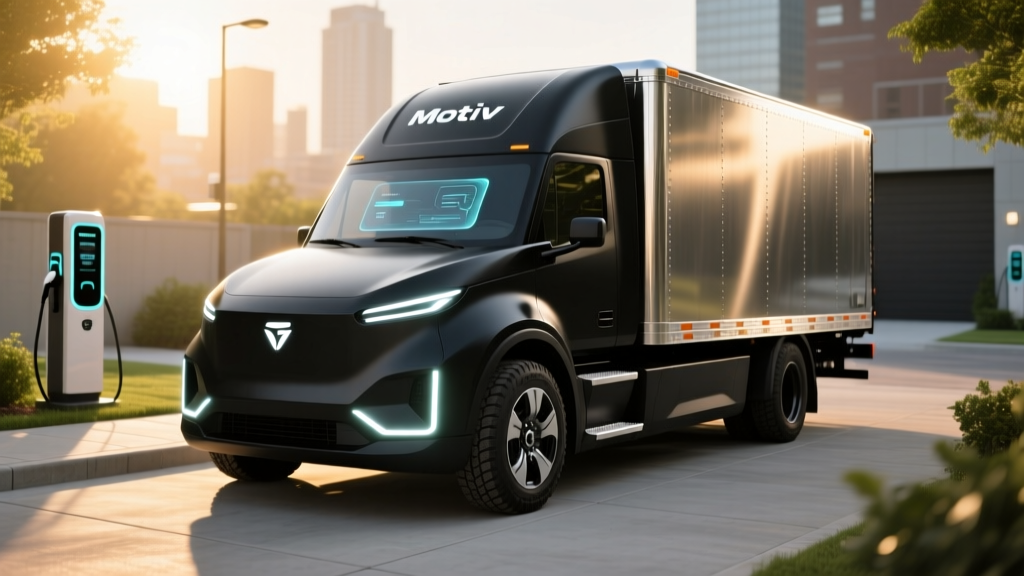
Motiv Electric Trucks (formerly Motiv Power Systems) is a privately held company — there is no publicly traded Motiv Electric Trucks stock available on any major exchange as of 2026. The company, headquartered in Livermore, California, builds Class 4–6 electric chassis for step vans, box trucks, and work vehicles used by fleets like FedEx, Purolator, and various municipal governments. If you're researching Motiv because you're considering electric commercial trucks for a fleet purchase or evaluating the commercial EV sector for investment, this guide breaks down what Motiv's trucks actually deliver, what they cost to operate, and how they compare to diesel alternatives in real-world duty cycles.
What Motiv Electric Trucks Actually Builds
Motiv doesn't sell consumer pickups like the Ford F-150 Lightning or Rivian R1T. Instead, the company manufactures the Electric Power Intelligent Chassis (EPIC) — a purpose-built electric skateboard platform that upfitters and body builders use to create step vans, delivery trucks, refuse trucks, and shuttle buses. Think of it as the electrified skeleton that a commercial body gets bolted onto.
Key Motiv EPIC chassis specifications for the current generation:
- Battery capacity: 150–225 kWh usable (NMC lithium-ion chemistry)
- EPA-estimated range: 100–160 miles depending on configuration and payload
- Real-world range: Expect 75–130 miles with a full payload in stop-and-go urban delivery routes; cold-weather operations can reduce this by 15–25%
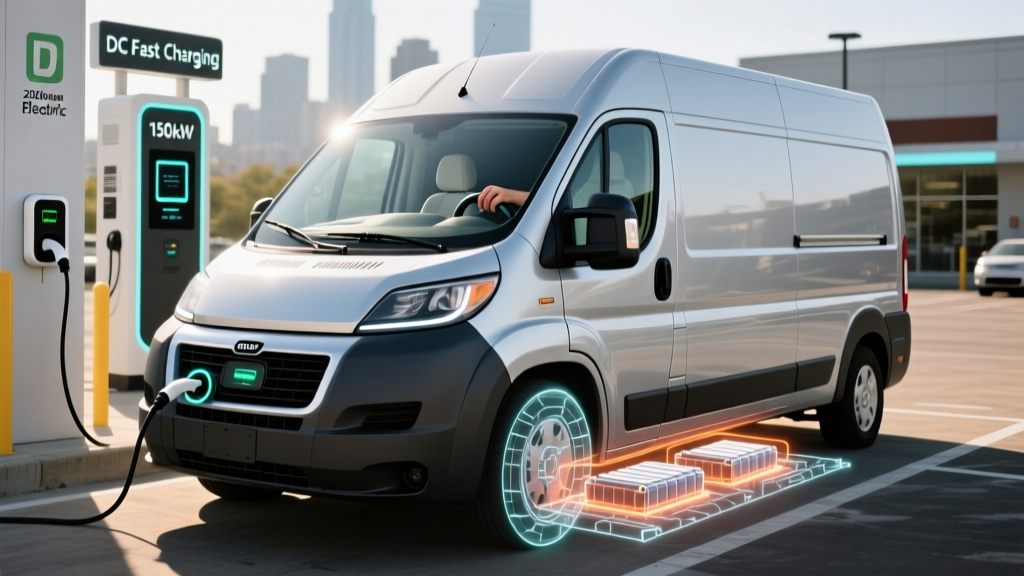
- DC fast charging: Up to 150 kW peak; 20–80% in approximately 60–90 minutes
- Level 2 AC charging: 19.2 kW onboard charger; full charge in 8–12 hours
- GVWR options: Class 4 (15,000–16,000 lbs), Class 5 (17,500–19,500 lbs), Class 6 (up to 26,000 lbs)
- Motor output: Up to 300 kW (402 hp) / 1,500 lb-ft torque
- Warranty: 5 years / 150,000 miles on battery and powertrain
These trucks are sold B2B through fleet sales channels, typically at $180,000–$280,000 per vehicle depending on chassis class and body upfit — significantly more than a comparable diesel chassis, but with dramatically lower operating costs over a 10-year fleet lifecycle.
Electric Work Trucks vs. Diesel: The Real Cost Breakdown
The purchase price of an electric commercial truck is roughly 2–3x that of a diesel equivalent. But fleet buyers evaluate total cost of ownership (TCO), where electrics frequently win on routes under 120 miles with depot-based charging. Here's a 10-year TCO comparison for a Class 5 delivery truck running 25,000 miles/year on urban stop-and-go routes:
| Cost Category | Motiv EPIC (Electric) | Diesel Equivalent |
|---|---|---|
| Purchase Price (chassis + body) | $235,000 | $95,000 |
| Federal §45W Commercial Clean Vehicle Credit | –$40,000 | $0 |
| Net Acquisition Cost | $195,000 | $95,000 |
| Fuel / Electricity (10 yrs, 250K mi) | $37,500 (avg $0.15/kWh) | $112,500 (avg $4.50/gal diesel) |
| Maintenance (10 yrs) | $18,000 | $55,000 |
| DEF Fluid / Emissions Systems | $0 | $8,500 |
| Depot Charger Install (Level 2) | $12,000 | $0 |
| Insurance (10 yrs) | $52,000 | $42,000 |
| 10-Year TCO | $314,500 | $313,000 |
The numbers reveal a near-parity scenario at 10 years. But the electric truck pulls ahead in years 11–15 as diesel maintenance costs accelerate (transmission work, DPF replacement, turbo failures) while the electric drivetrain remains comparatively simple. Fleet operators running trucks 12+ years or 300K+ miles see $40,000–$80,000 in net savings with electric, according to analyses by the National Renewable Energy Laboratory (NREL).
Important caveats: This assumes depot charging at commercial electricity rates ($0.12–$0.18/kWh). Fleets relying on public DC fast charging will see fuel costs double. And routes exceeding 150 miles/day require opportunity charging or simply aren't viable for current battery capacity.
Commercial EV Tax Credits: §45W and State Incentives
Consumer EV buyers know the §30D credit (up to $7,500). Commercial fleet buyers have a different and often more valuable incentive: the §45W Commercial Clean Vehicle Credit, established under the Inflation Reduction Act.
- Credit amount: Up to $40,000 for vehicles over 14,000 lbs GVWR (which covers all Motiv chassis classes)
- Eligibility: Business entities purchasing qualifying clean vehicles for commercial use
- No MSRP cap: Unlike §30D, there is no price ceiling
- No buyer income limit: Business eligibility, not personal income
- Point-of-sale: Can be transferred to the dealer/seller as a price reduction
- Battery sourcing: Must meet domestic content requirements similar to §30D
For full current-year eligibility rules, fleet buyers should consult the IRS §45W guidance page and work with a commercial tax professional. Many states layer additional incentives on top: California's HVIP program has offered $45,000–$120,000 per truck, New York's Truck Voucher Incentive Program provides up to $185,000 for Class 6 vehicles, and utilities in states like Colorado and Massachusetts offer depot-charging infrastructure rebates of $20,000–$75,000.
Stacked together, a fleet in California could see $85,000–$160,000 in combined incentives per vehicle, which transforms the TCO equation decisively in favor of electric.
Real-World Ownership: What Fleet Managers Actually Report
Motiv has been deploying trucks with major fleets since the early 2020s. Here's what real-world operators consistently report:
Where Electric Work Trucks Excel
- Stop-and-go delivery routes: Regenerative braking recaptures energy at every stop, making urban delivery 30–40% more efficient than highway driving — the opposite of a diesel truck
- Driver satisfaction: Instant torque, quiet operation, no diesel smell, and reduced vibration lead to measurably higher driver retention — a critical factor in a labor-short industry
- Idling elimination: Electric trucks don't idle. A diesel delivery truck idles 30–50% of its operating hours; electric trucks use zero energy while stopped
- Maintenance predictability: No oil changes, no DPF regenerations, no transmission fluid — scheduled maintenance drops by 50–70%
- Community relations: Zero tailpipe emissions matter for fleets operating in residential neighborhoods and zero-emission zones increasingly mandated by cities
Where Limitations Are Real
- Range ceiling: A 160-mile EPA range with a full load becomes ~100 miles in winter with HVAC running. Routes must be planned conservatively
- Charging time: A 90-minute DC fast charge is downtime. Fleets need overnight depot charging as the primary strategy
- Depot electrical upgrades: Installing 10–20 Level 2 chargers at a fleet depot often requires a utility transformer upgrade costing $50,000–$200,000, with lead times of 6–18 months
- Payload penalty: Battery weight (3,000–5,000 lbs) reduces usable payload capacity vs. diesel — a concern for weight-sensitive cargo
- Resale uncertainty: The used commercial EV market is immature; residual values are harder to project than diesel
| Myth | Fact |
|---|---|
| "Electric trucks can't handle real work" | Motiv EPIC chassis deliver 1,500 lb-ft of torque from 0 RPM — more low-end pulling power than any diesel in the class. The limitation is range, not capability. |
| "Batteries won't last the life of the truck" | NMC packs are warrantied for 5 years/150,000 miles with guaranteed capacity retention above 70%. Fleet data shows measured degradation of ~2–3% per year under normal duty cycles. |
| "You can't charge in cold weather" | You can, but charging speeds slow 20–40% in sub-freezing temps without battery preconditioning. Motiv's thermal management system includes active battery heating. |
| "Electric trucks cost more over their lifetime" | On routes under 120 miles/day with depot charging, TCO parity is reached in 6–10 years, and electric wins decisively in years 11+. Incentives accelerate payback to 3–5 years in many states. |
| "The grid can't handle fleet charging" | Most depot charging happens overnight during off-peak hours when grid capacity is abundant. Smart charging software can stagger vehicle charging to avoid peak demand charges. |
Should You Invest in the Commercial EV Sector Instead?
Since Motiv Electric Trucks stock isn't publicly available, investors interested in commercial EV exposure often look at adjacent publicly traded companies. While this isn't investment advice (consult a financial professional), here's the landscape for context:
- Lightning eMotors (ZEV) — formerly public, filed for bankruptcy in late 2023; a cautionary tale about cash burn in commercial EV
- Workhorse Group (WKHS) — publicly traded, builds electric delivery vans and last-mile vehicles; has faced production and contract challenges
- Ford Pro (F) — Ford's commercial division sells the E-Transit van and F-150 Lightning Pro; backed by Ford's manufacturing scale
- Blue Bird Corporation (BLBD) — publicly traded, dominant in electric school buses with growing order backlogs
- BYD (BYDDY) — Chinese EV giant with a growing global commercial truck and bus presence (OTC-listed in the US)
The commercial EV sector remains high-risk. Companies need deep capital reserves to survive the gap between R&D spending and fleet-scale production revenue. Fleet sales cycles are long (12–24 months from pilot to volume order), and the companies that survive will be those with binding purchase agreements from major fleets and reliable supply chains.
Decision Framework: Is an Electric Work Truck Right for Your Fleet?
Choose Electric (Motiv EPIC or similar) If:
- Your daily routes are under 120 miles and predictable
- You have depot space where Level 2 chargers can be installed
- Your operation is in a state with strong commercial EV incentives (CA, NY, CO, MA, NJ, WA)
- Stop-and-go urban delivery is your primary duty cycle
- Driver retention is a concern and improved working conditions have measurable value
- Your fleet vehicles are kept 10+ years (maximizing TCO advantage)
- You face impending zero-emission zone regulations in your operating cities
Stick With Diesel or Consider Hybrid If:
- Daily routes regularly exceed 180 miles
- You lack depot charging infrastructure and utility upgrade timelines are prohibitive
- Your trucks operate in extreme cold climates (below 0°F) for extended periods
- Payload capacity is the primary constraint and battery weight is disqualifying
- Your fleet turnover cycle is under 5 years (you won't capture TCO savings)
- You operate in rural areas with no DC fast-charging infrastructure along routes
Frequently Asked Questions
Can individual consumers buy a Motiv electric truck?
No. Motiv sells exclusively to commercial fleets, government agencies, and upfitters through B2B channels. There is no consumer retail configuration. Individuals looking for electric trucks should look at the Ford F-150 Lightning, Rivian R1T, Chevrolet Silverado EV, or Tesla Cybertruck.
How does Motiv compare to competitors like BrightDrop or Lightning eMotors?
Motiv's EPIC chassis is competitive in Class 4–6 range and payload. BrightDrop (backed by GM) focuses on Class 2–3 last-mile delivery vans and has larger manufacturing scale. Lightning eMotors ceased operations in 2023. The competitive landscape also includes SEA Electric, Xos Trucks, and legacy OEMs like Ford Pro and Daimler Truck entering the space.
What's the charging infrastructure cost for a 20-truck fleet depot?
For 20 Level 2 chargers (19.2 kW each), expect $8,000–$15,000 per charger for hardware and installation, plus $50,000–$200,000 for electrical panel upgrades and utility transformer work. Total: roughly $250,000–$500,000 before utility rebates. Many utilities offer make-ready programs that cover 50–100% of infrastructure costs.
Do Motiv trucks qualify for the federal tax credit?
Yes, under §45W (Commercial Clean Vehicle Credit), not §30D (consumer credit). The credit is up to $40,000 for vehicles over 14,000 lbs GVWR. Eligibility depends on battery sourcing requirements and commercial use. Always verify current-year rules on irs.gov and consult a tax professional.
What happens when the battery needs replacement?
Motiv's 5-year/150,000-mile battery warranty covers capacity loss below the guaranteed threshold. Out-of-warranty replacement for a 200 kWh NMC pack currently costs $45,000–$65,000. However, fleet data suggests most packs retain 75–80% capacity at 200,000 miles, and cell-level repair (replacing degraded modules rather than the full pack) is increasingly available at 30–50% lower cost.