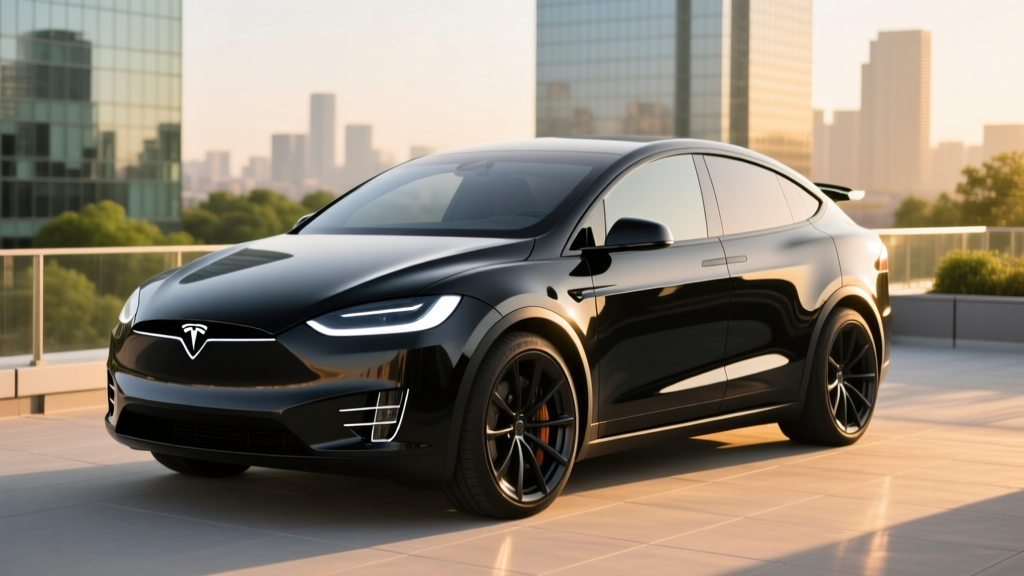
If you are shopping the top of the Tesla lineup and asking what is the most expensive Tesla currently available to order, the answer for 2026 is the Tesla Model X Plaid. Starting at $119,990 (before destination and options), the Model X Plaid sits at the apex of Tesla's production portfolio — a three-row, all-electric SUV with supercar-rivaling acceleration and a premium price tag to match.
But does the flagship Tesla justify its six-figure sticker? Below we break down the real-world range, charging speeds, battery chemistry, tax-credit eligibility, and ownership economics you need before signing the order sheet.
Tesla Model X Plaid: Core Specifications at a Glance
| Spec | Value |
|---|---|
| Base MSRP | $119,990 (+ $1,990 destination) |
| EPA Range | 348 miles (20" wheels) / 326 miles (22" wheels) |
| Battery Capacity | ~100 kWh usable (NMC chemistry) |
| Drivetrain | Tri-Motor AWD (1 front, 2 rear) |
| Horsepower | 1,020 hp |
| 0–60 mph | 2.5 seconds |
| Top Speed | 163 mph |
| Max DC Fast Charge | 250 kW (peak) |
| 10–80% DC Time | ~32 minutes |
| Level 2 Home Charging | 11.5 kW (~34 mi/hr) |
| MPGe (combined) | 98 MPGe |
| Efficiency | 34 kWh/100 mi |
| Cargo (behind 3rd row) | 15.8 cu ft |
| Cargo (max, seats folded) | 85.1 cu ft |
| Seating | 5, 6, or 7 passengers |
| Towing Capacity | 5,000 lbs |
| Battery Warranty | 8 years / 150,000 miles |
| Federal Tax Credit (§30D) | Up to $7,500 (eligibility varies) |
Range and Efficiency: EPA vs. the Real World
The Model X Plaid carries an EPA-estimated 348 miles of range when equipped with the standard 20-inch wheels. Opt for the available 22-inch Turbine wheels and that drops to 326 miles — a meaningful 22-mile penalty for aesthetics. According to fueleconomy.gov, the combined efficiency rating sits at 98 MPGe, translating to roughly 34 kWh consumed per 100 miles of driving.
EPA sticker: 348 miles (20" wheels).
What to actually expect: On highway road trips at 70–75 mph, plan for ~270–295 miles before needing a charger. In freezing winter conditions (below 30°F), range can dip to ~240–265 miles due to battery resistance and cabin heating demands. City driving with regen braking can exceed the EPA figure, sometimes reaching 340+ miles in mild weather.
The Model X Plaid uses NMC (nickel manganese cobalt) battery chemistry, which offers higher energy density than LFP but follows the 80% daily charge recommendation to maximize long-term cell health. Tesla's thermal management system is among the best in the industry, actively preconditioning the pack during navigation to a Supercharger — a critical feature for achieving advertised charge speeds.
Charging Speed: Supercharger and Home Setup
Charging a six-figure EV should be fast and convenient. Here is how the Model X Plaid stacks up across charging levels:
| Charging Level | Power | Miles Added per Hour | Notes |
|---|---|---|---|
| Level 1 (120V household) | ~1.4 kW | ~4 mi/hr | Emergency/trickle only |
| Level 2 (240V home Wall Connector) | 11.5 kW | ~34 mi/hr | Full charge in ~9 hours |
| DC Fast Charge (V3 Supercharger) | 250 kW peak | ~200 mi in 15 min | 10–80% in ~32 minutes |
| DC Fast Charge (V4 Supercharger) | 250 kW peak | Similar to V3 | CCS adapter not needed (NACS native) |
The Model X Plaid peaks at 250 kW on Tesla V3 and V4 Superchargers. However, as with all EVs, peak rate is not sustained rate. The charge curve tapers significantly above 60% state of charge. Expect roughly 200 miles of range in 15 minutes when arriving at a Supercharger with a low battery (10–15% SoC) and a properly preconditioned pack. Charging from 10% to 80% takes approximately 32 minutes.
At home, the Tesla Wall Connector delivers up to 11.5 kW on a 60-amp circuit, adding about 34 miles of range per hour. Most owners will need a NEMA 14-50 outlet or hardwired Wall Connector installation, which typically costs between $800 and $2,000 depending on your electrical panel's capacity. If your home has a 100-amp panel, a panel upgrade to 200 amps could add $1,500–$3,000. Always consult a licensed electrician for final specs.
The Model X uses the NACS (North American Charging Standard) connector natively, giving it seamless access to Tesla's Supercharger network — currently the largest and most reliable DC fast-charging network in the US. With an adapter, it can also use CCS-equipped public chargers from Electrify America and EVgo, though at reduced convenience.
Performance: Supercar Acceleration in a Three-Row SUV
The Model X Plaid's tri-motor powertrain produces 1,020 horsepower and rockets from 0 to 60 mph in 2.5 seconds — a figure that embarrasses most sports cars, let alone a 5,185-pound SUV with falcon-wing doors. The dual rear motors use carbon-sleeved rotors to sustain high-RPM performance without power drop-off.
The all-wheel-drive system provides torque vectoring across all four wheels, and the adaptive air suspension automatically adjusts ride height based on speed and terrain. Towing capacity is rated at 5,000 pounds, adequate for a small boat or utility trailer, though towing will slash range by 30–50% depending on weight and aerodynamics.
For context, the BMW iX M60 (starting around $111,500) does 0–60 in 3.6 seconds, and the Mercedes EQS SUV 580 (starting around $110,550) hits it in 4.4 seconds. The Plaid's acceleration advantage is substantial, but whether you need 2.5-second sprints in a family hauler is a personal calculus.
Interior, Tech, and Cargo: Premium but Polarizing
Inside, the Model X Plaid features a 17-inch center touchscreen with a 22-speaker immersive audio system, a second-row 8-inch display for rear passengers, and a yoke steering wheel (a conventional round wheel is available at no extra charge). The infotainment system runs Tesla's proprietary software — responsive and feature-rich, but lacking Apple CarPlay and Android Auto, a notable omission at this price point.
The signature falcon-wing rear doors remain the Model X's most recognizable feature. They open upward on dual hinges, providing standing-height access to the second and third rows — genuinely useful for loading children into car seats. However, they require overhead clearance (about 12 inches more than conventional doors) and can be slow in tight parking structures. The doors also add mechanical complexity that has historically been a maintenance concern.
Cargo space is generous: 15.8 cubic feet behind the third row, expanding to 85.1 cubic feet with both rear rows folded. A front trunk (frunk) adds additional storage for charging cables or a small bag. Second-row legroom measures 40.9 inches in the six-passenger configuration with individual captain's chairs, while the third row is best suited for children on longer trips.
The Model X comes standard with Tesla Autopilot (SAE Level 2 driver assistance), which includes adaptive cruise control, lane centering, and automatic emergency braking. Full Self-Driving (Supervised) is available as a $8,000 add-on (or $99/month subscription as of 2026), adding automated lane changes, Navigate on Autopilot, and traffic light recognition. Per NHTSA guidelines, both systems require active driver supervision at all times — the Model X is not a self-driving vehicle.
Pricing, Trims, and Federal Tax Credit Eligibility
| Trim | Base MSRP | Est. Price After §30D Credit* |
|---|---|---|
| Model X (Dual Motor AWD) | $94,990 | ~$87,490 |
| Model X Plaid (Tri-Motor AWD) | $119,990 | ~$112,490 |
*Tax credit estimates assume full $7,500 eligibility. Actual credit depends on buyer income, battery sourcing, and MSRP caps. See IRS rules below.
The Model X Plaid starts at $119,990, with typical options pushing the as-tested price higher. Popular add-ons include:
- Full Self-Driving (Supervised): $8,000
- 22" Turbine Wheels: $5,500 (reduces range to 326 mi)
- Signature Red Multi-Coat Paint: $3,000
- Six-Seat Interior (captain's chairs): $6,500
A fully loaded Model X Plaid can approach $143,000 before any incentives.
- MSRP Cap for SUVs: Vehicle must have an MSRP at or below $80,000. ⚠️ The Model X Plaid at $119,990 exceeds this cap and does NOT qualify for the new-vehicle §30D credit.
- Buyer Income Cap: Modified AGI must not exceed $300,000 (joint) / $150,000 (individual).
- Battery Sourcing: Critical minerals and battery components must meet phased-in domestic/free-trade requirements.
- Point-of-Sale Transfer: Eligible credits can be applied at purchase to reduce out-of-pocket cost.
Key takeaway: The Model X Plaid's MSRP exceeds the $80,000 SUV cap, making it ineligible for the $7,500 federal new-vehicle tax credit. The base Model X Dual Motor at $94,990 also exceeds the cap. Consult a tax professional and review current rules at IRS.gov.
Some buyers may find relief through state-level incentives (California, Colorado, and others offer rebates that are not MSRP-capped), but these vary by jurisdiction. Check your state's energy office for current programs.
Model X Plaid vs. the Competition: Is It Worth It?
At roughly $120,000–$140,000, the Model X Plaid competes with luxury electric SUVs that take very different approaches to the formula:
| Tesla Model X Plaid | BMW iX M60 | Mercedes EQS 580 SUV | Lotus Eletre R | |
|---|---|---|---|---|
| Starting MSRP | $119,990 | ~$111,500 | ~$110,550 | ~$120,000 |
| EPA Range | 348 mi | ~296 mi | ~305 mi | ~304 mi |
| 0–60 mph | 2.5 sec | 3.6 sec | 4.4 sec | 2.9 sec |
| Horsepower | 1,020 | 610 | 536 | 905 |
| Max DC Charge | 250 kW | 200 kW | 200 kW | 350 kW |
| Third Row | Yes | No | Yes (optional) | No |
| Apple CarPlay | No | Yes | Yes | Yes |
- You need three rows AND supercar acceleration
- Supercharger network access is a priority for road trips
- Falcon-wing doors solve a real car-seat-loading problem
- OTA software updates keep the car feeling current
- Traditional luxury fit-and-finish matters more than raw speed
- You want Apple CarPlay or Android Auto
- You prefer a dealer service network over mobile/center service
- The $80k MSRP cap for tax credits matters to your budget
The Model X Plaid wins on range, acceleration, and charging infrastructure. The BMW iX M60 and Mercedes EQS SUV deliver more conventional luxury interiors and dealer-supported service. The Lotus Eletre R offers comparable performance and faster 350 kW charging but lacks a third row. According to IIHS, the Model X has historically performed well in crash testing, though buyers should verify the latest model-year ratings.
Ownership Costs and Warranty
Tesla covers the Model X Plaid with a 4-year/50,000-mile limited vehicle warranty and an 8-year/150,000-mile battery and drive unit warranty — guaranteeing at least 70% battery capacity retention over that period. This is competitive with BMW (4yr/50k basic, 8yr/100k battery) and slightly ahead of Mercedes on battery mileage coverage.
Estimated annual charging costs depend heavily on your electricity rate. At the US average of ~$0.16/kWh and 34 kWh/100 mi, driving 12,000 miles per year costs approximately $653 in electricity — versus roughly $2,200+ in gasoline for a comparable performance SUV getting 16 MPG combined. Over five years, that represents roughly $7,700 in fuel savings, though insurance premiums for the Model X Plaid tend to run 15–30% higher than conventional luxury SUVs.
- 2.5-second 0–60 mph — fastest production SUV
- 348-mile EPA range leads the luxury EV SUV class
- Supercharger network for reliable road-trip charging
- Falcon-wing doors genuinely aid third-row access
- Continuous OTA updates add features post-purchase
- 5,000-lb towing capability
- $119,990+ MSRP exceeds the §30D tax credit cap
- No Apple CarPlay or Android Auto
- Falcon-wing doors can be slow and need overhead clearance
- Yoke steering is polarizing (round wheel available)
- Panel gaps and interior fit remain inconsistent vs. German rivals
- High insurance premiums
Who Should Buy the Most Expensive Tesla?
The Model X Plaid is the right choice for a specific buyer: someone who needs three-row family practicality, wants best-in-class electric range and acceleration, and values the reliability of the Supercharger network for frequent road trips. It is a technology showcase that happens to haul kids, groceries, and 5,000 pounds of trailer.
It is not the right choice if you prioritize traditional luxury craftsmanship, need the federal tax credit to make the numbers work, or want a third-row SUV purely for occasional use (the smaller, less expensive Model Y Long Range at ~$48,990 covers most family needs at a fraction of the cost).
If you have decided the Model X Plaid is the one, order directly through Tesla's website, configure your build, and expect a delivery timeline of 2–6 weeks depending on your region and selected options.
Frequently Asked Questions
What is the most expensive Tesla you can buy in 2026?
The Tesla Model X Plaid at a base MSRP of $119,990 is the most expensive Tesla currently available for order. Fully optioned, it can approach $143,000. The Cyberbeast (Cybertruck) starts at ~$99,990 and the Model S Plaid at ~$108,490, both less than the Model X Plaid.
What is the real-world range of the Model X Plaid?
The EPA rates it at 348 miles (20" wheels). In real-world highway driving at 70+ mph, expect 270–295 miles. In cold weather below freezing, plan for 240–265 miles. City driving with regenerative braking in mild weather can approach or slightly exceed the EPA figure.
How fast does the Model X Plaid charge?
On a Tesla V3/V4 Supercharger, it peaks at 250 kW, adding approximately 200 miles in 15 minutes. A 10–80% session takes about 32 minutes. At home on a Level 2 Wall Connector (11.5 kW), a full charge takes roughly 9 hours.
Does the Model X Plaid qualify for the federal EV tax credit?
No. The IRS §30D credit caps SUV eligibility at an MSRP of $80,000. The Model X Plaid at $119,990 exceeds this threshold. The base Model X Dual Motor at $94,990 also exceeds it. Always verify current rules at IRS.gov and consult a tax professional.
Is the Model X Plaid worth it vs. the BMW iX M60 or Mercedes EQS SUV?
It depends on priorities. The Model X Plaid wins on range (348 vs ~296–305 mi), acceleration (2.5 vs 3.6–4.4 sec), and Supercharger access. The BMW and Mercedes offer more traditional luxury interiors, Apple CarPlay, and dealer service networks. Test-drive all three before deciding.
What battery does the Model X Plaid use?
The Model X Plaid uses an approximately 100 kWh usable NMC (nickel manganese cobalt) battery pack. NMC offers high energy density but benefits from daily charging to 80% rather than 100% for long-term health. The battery is warrantied for 8 years / 150,000 miles with at least 70% capacity retention.
Can the Model X Plaid tow?
Yes, it is rated to tow up to 5,000 pounds. However, towing significantly impacts range — expect a 30–50% reduction depending on trailer weight, aerodynamics, and terrain. A 348-mile range can drop to roughly 175–240 miles when towing near maximum capacity.