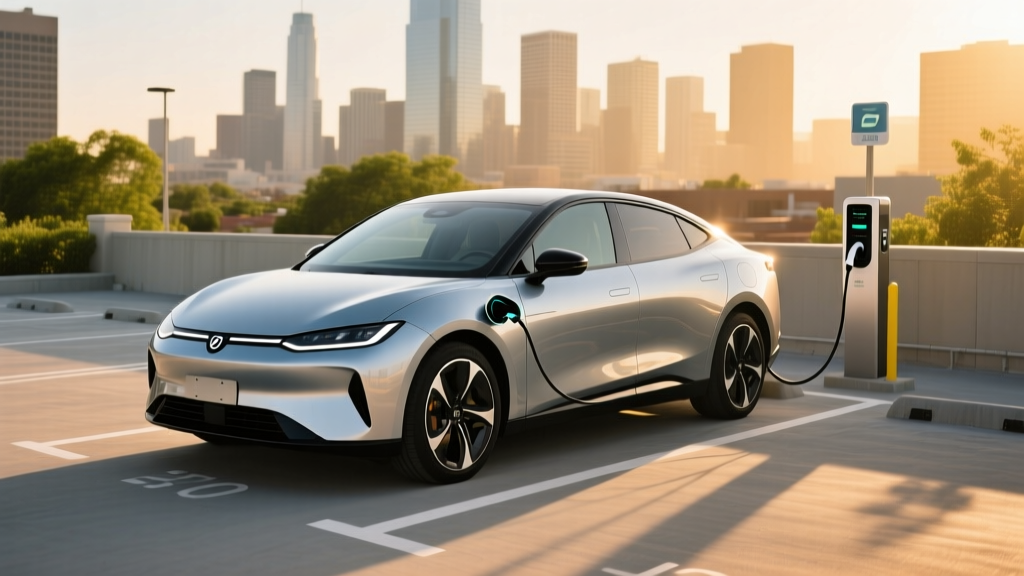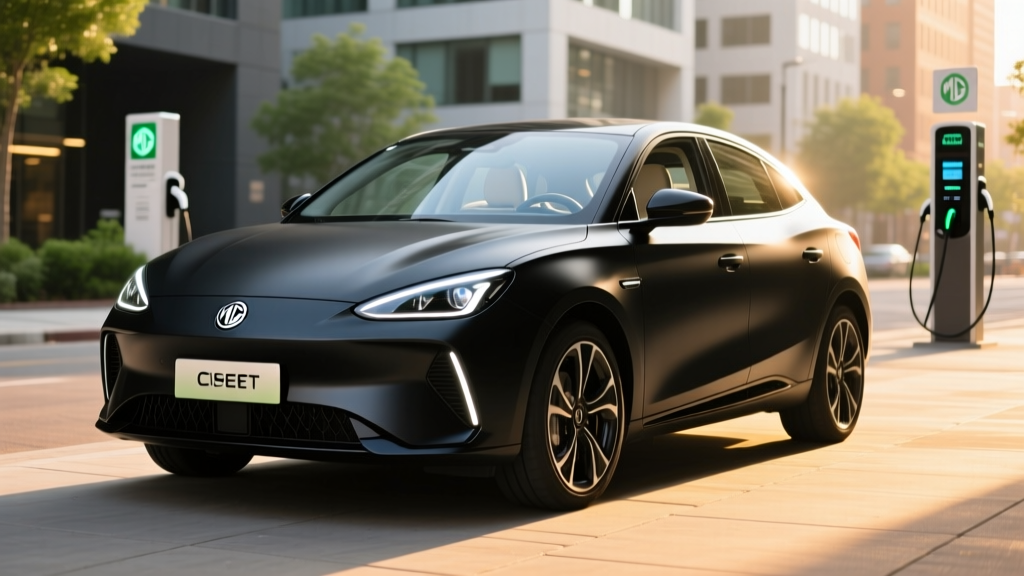
Morris Garages Comet EV: The Quick Answer
Bottom line: The Morris Garages Comet EV (sold globally as the MG Comet EV and mechanically identical to the Wuling Air EV) is a compact, city-focused battery-electric microcar. As of early 2026, it is not officially sold in the United States. MG (owned by SAIC Motor) does not currently have a US retail presence, meaning the Comet EV cannot be purchased new through authorized American dealerships, is not eligible for the federal §30D EV tax credit, and lacks US-spec safety certification from NHTSA.
If you're researching the Morris Garages Comet EV from outside the US — particularly in India, Indonesia, or Southeast Asia where it is sold — read on for a full breakdown of range, charging, costs, and whether it fits your driving needs. If you're a US buyer, skip to the decision framework for comparable alternatives available stateside.
Morris Garages Comet EV Specs at a Glance
The MG Comet EV is built on SAIC-GM-Wuling's Global Small Electric Vehicle (GSEV) platform. It's a two-door, four-seat microcar designed strictly for urban commuting. Here are the confirmed specifications for the latest model year:
| Specification | Figure |
|---|---|
| Battery Capacity (usable) | ~16.7 kWh (Lithium-ion, NMC chemistry) |
| Claimed Range (ARAI/MIDC – India) | 230 km (~143 miles) |
| Real-World Estimated Range | 150–180 km (~93–112 miles) mixed driving |
| Motor Output | 40 PS (~39 hp) / 110 Nm torque |
| Top Speed | ~100 km/h (62 mph) |
| 0–60 km/h | ~6.5 seconds |
| AC Charging (Level 2 equivalent) | 3.3 kW onboard charger |
| Full Charge Time (0–100%, 3.3 kW) | ~5–7 hours |
| DC Fast Charging | Not supported |
| Length / Width / Height | 2,974 mm / 1,505 mm / 1,640 mm |
| Curb Weight | ~825 kg (1,819 lbs) |
| Starting Price (India, ex-showroom) | ₹699,000 (~$8,400 USD equivalent) |
| Battery Warranty | 8 years / 120,000 km |
Real-World Range: What to Actually Expect
The Morris Garages Comet EV's claimed 230 km range comes from India's ARAI/MIDC testing cycle, which tends to overstate range compared to real-world conditions — similar to how the US EPA cycle differs from optimistic WLTP figures. Based on owner reports and independent testing from Indian automotive media, here's what to expect:
Claimed range: 230 km (143 mi) ARAI
Real-world city driving (30–50 km/h avg): 170–190 km (105–118 mi)
Real-world highway (80–100 km/h): 120–140 km (75–87 mi)
Hot climate with A/C (India summer): 140–160 km (87–99 mi)
Cold climate (below 10°C / 50°F): 110–130 km (68–81 mi) — expect 25–35% range loss
The 16.7 kWh battery pack is small by any standard. For context, a Chevrolet Equinox EV carries roughly 85 kWh usable. The Comet EV is designed for short urban loops — school runs, grocery trips, and commutes under 50 km per day. If your daily driving exceeds 80 km round-trip, this vehicle will require daily charging and leave little buffer for detours or climate control.
The battery uses NMC (nickel manganese cobalt) chemistry, which offers better energy density than LFP but is more sensitive to sustained high-SoC storage. For longevity, charge to 80–90% for daily use rather than 100%, and avoid letting the pack sit below 10% for extended periods.
Charging the Morris Garages Comet EV: Home Only
This is where ownership reality sets in. The Comet EV supports only AC charging at a maximum of 3.3 kW. There is no DC fast-charging capability — no CCS, no NACS, no CHAdeMO port. This means:
- Standard household outlet (15A, India): ~3.3 kW, 0–100% in approximately 5–7 hours
- Public fast chargers: Completely unusable — the car cannot accept DC current
- Overnight charging: Practical and sufficient if you have a dedicated parking spot with outlet access
For US readers comparing this to domestic options: even a basic Level 2 home charger (7.2–11.5 kW) charges most American-market EVs 2–3x faster than the Comet's onboard charger allows. The absence of DC fast charging is a significant limitation — it confines the Comet EV to a strict city-car role with no practical road-trip capability.
Cost Breakdown: Purchase, Fueling, and Ownership
The Comet EV's appeal is overwhelmingly about cost. Here's how the numbers work in the Indian market (its primary market), converted to USD equivalents for comparison:
| Cost Category | MG Comet EV | Comparable Gas Microcar (e.g., Maruti S-Presso) |
|---|---|---|
| Purchase Price | ~$8,400 (base) | ~$5,500 (base) |
| Fuel/Energy Cost per km | ₹0.75/km (~$0.009/km) at ₹8/kWh | ₹3.50/km (~$0.042/km) at 20 km/l, ₹100/l |
| Annual Fuel/Energy (12,000 km/yr) | ~₹9,000 ($108) | ~₹42,000 ($504) |
| Annual Maintenance | ~₹3,000 ($36) — minimal service | ~₹8,000 ($96) — oil, filters, plugs |
| 5-Year Total Fuel + Maintenance | ~₹60,000 ($720) | ~₹250,000 ($3,000) |
| Insurance (Annual, India avg) | ~₹15,000 ($180) | ~₹10,000 ($120) |
The breakeven math: The Comet EV costs roughly $2,900 more upfront than a gas equivalent. At typical Indian driving distances (12,000 km/year), annual fuel savings of ~$396 mean breakeven arrives in approximately 7.3 years. If you drive 20,000 km/year, breakeven drops to ~4.4 years. Higher electricity rates or lower annual mileage extend the payback period.
For US buyers eyeing the ultra-budget EV segment, the closest American-market comparison is the base Nissan LEAF S (~$28,000 MSRP before incentives) or a used Chevrolet Bolt EV. Neither approaches the Comet's price point, but both offer EPA-rated range above 200 miles, DC fast charging, full safety equipment, and federal tax-credit eligibility under IRS §30D rules.
Morris Garages Comet EV vs. Gas Car vs. Hybrid: The Comparison
| Factor | MG Comet EV | Gas Microcar | Subcompact Hybrid (e.g., Toyota Yaris Hybrid) |
|---|---|---|---|
| Upfront Price | ~$8,400 | ~$5,500 | ~$18,000 |
| Range / Tank | ~150–180 km real | ~600 km | ~900 km |
| Refuel/Recharge Time | 5–7 hours (AC only) | 3 minutes | 3 minutes |
| Running Cost per km | Lowest | 3–4x higher | 2–3x higher than EV |
| Highway Capability | Limited (62 mph top speed) | Full | Full |
| Safety Equipment | Dual airbags, ABS | Dual airbags, ABS | 6+ airbags, ESC, ADAS available |
| Best Use Case | City-only second car | Budget daily driver | Single-car household, mixed driving |
The Comet EV wins decisively on running costs but loses on range, speed, safety, and versatility. It is not a replacement for a primary vehicle — it's a purpose-built second car for households that already own something capable of longer trips.
Common Misconceptions About the Morris Garages Comet EV
| Myth | Fact |
|---|---|
| "It has 230 km of range." | That's the ARAI lab figure. Real-world range is 150–180 km mixed, dropping to 110–130 km in cold weather or sustained highway use. |
| "You can fast-charge it on road trips." | No DC fast-charging hardware exists on the Comet EV. It is strictly a home/destination AC-charging vehicle at 3.3 kW max. |
| "It's available in the US." | MG (SAIC Motor) does not sell vehicles in the United States as of 2026. No authorized dealerships, no NHTSA certification, no federal tax-credit eligibility. |
| "The battery will need expensive replacement soon." | MG provides an 8-year/120,000 km battery warranty. NMC packs in light-duty, low-speed applications typically retain 80%+ capacity at 100,000 km. Replacement cost, if needed out of warranty, is estimated at $2,500–$4,000 for a pack this size. |
| "It qualifies for EV incentives everywhere." | Incentive eligibility varies by country and region. In India, the Comet EV has benefited from state-level EV policies but not always the central FAME-II subsidy due to price and localization criteria. Always verify current local rules. |
Decision Framework: Should You Buy the Morris Garages Comet EV?
Buy the MG Comet EV if:
- You live in India, Indonesia, or another market where it's officially sold and serviced
- Your daily commute is under 60 km round-trip, mostly in city traffic
- You have reliable overnight home charging (dedicated parking with a 15A outlet)
- This is a second vehicle — your household has another car for longer trips
- You prioritize lowest possible running cost over highway capability and safety tech
- You plan to keep the car 5+ years to recoup the upfront premium over a gas microcar
Skip the MG Comet EV if:
- You're in the United States — it's not sold, certified, or supported here
- This would be your only vehicle and you ever drive more than 100 km in a day
- You lack home charging access (apartment without outlet, street parking only)
- You regularly drive on highways or need speeds above 80 km/h
- You need more than two usable rear seats or meaningful cargo space
- You live in a cold climate where winter range loss of 25–35% would leave insufficient daily range
US-based alternatives in the budget EV segment (2026):
- Nissan LEAF S — ~$28,000 MSRP, EPA 212 mi range, 48 kW DC fast charging, eligible for up to $7,500 federal credit (subject to IRS §30D income, MSRP, and battery-sourcing requirements)
- Chevrolet Equinox EV LT — ~$33,000 MSRP, EPA 319 mi range, 150 kW DC fast charging, NACS port
- Used Chevrolet Bolt EV/EUV (2022–2023) — $15,000–$20,000 on the used market, EPA 259 mi, eligible for up to $4,000 used-EV credit
What First-Time EV Buyers Should Know Before Choosing Any Micro-EV
Whether you're considering the Morris Garages Comet EV abroad or a budget EV in the US, these ownership realities apply universally:
1. Home charging is non-negotiable for small-battery EVs. With only 16.7 kWh, the Comet EV must be charged nearly every day if driven 40+ km. Without home charging, ownership becomes impractical fast. Public AC chargers are rare and slow; public DC chargers won't work at all.
2. Small batteries degrade proportionally more. A 16.7 kWh pack cycled daily (100% depth of discharge) accumulates full charge cycles quickly. After 1,500+ cycles, expect 10–15% capacity loss — which on a 150 km real-world range means dropping to ~127–135 km. Larger packs (60–85 kWh) cycle less frequently for the same mileage and degrade more slowly in relative terms.
3. Safety is the compromise. The Comet EV weighs 825 kg and has dual front airbags. In a collision with a 2,000 kg SUV, physics is unforgiving. Micro-EVs inherently sacrifice crash protection for affordability and efficiency. Check Global NCAP ratings where available — the Wuling Air EV (its twin) has not been crash-tested by major international bodies as of early 2026.
4. Insurance may surprise you. EV insurance premiums tend to be 15–25% higher than comparable gas cars due to battery replacement costs and specialized repair requirements. Get quotes before purchasing.
5. Resale value is uncertain. Budget micro-EVs from Chinese manufacturers in emerging markets face steep depreciation. There is limited used-market data for the Comet EV specifically. Plan to drive it into the ground rather than expecting strong trade-in value.
Frequently Asked Questions
Is the Morris Garages Comet EV the same as the Wuling Air EV?
Yes. The MG Comet EV is a rebadged version of the Wuling Air EV, produced by SAIC-GM-Wuling, a joint venture that also falls under SAIC Motor — MG's parent company. The hardware, battery, and motor are identical; only branding, minor trim details, and market-specific features differ.
Can I import the MG Comet EV to the United States?
Practically, no. Importing a vehicle not certified by NHTSA for US sale requires a complex Show or Display exemption or a 25-year age waiver. The Comet EV does not meet US FMVSS safety standards, and MG/SAIC has not pursued US homologation. Even if imported, it would lack warranty support, parts availability, and insurance coverage.
How long does the Comet EV battery last?
MG warranties the battery for 8 years or 120,000 km against capacity dropping below a specified threshold (typically 70–80% of original capacity). With daily shallow cycling (charging to 80–90% rather than 100%), the NMC pack should provide reliable service for 8–10 years under normal city-driving conditions.
Does the MG Comet EV have regenerative braking?
Yes, the Comet EV features regenerative braking with selectable levels. In the highest regen setting, it approximates one-pedal driving at city speeds, recovering energy during deceleration and reducing brake wear. However, the small motor and low top speed limit the total energy recaptured compared to larger EVs.
What is the Morris Garages Comet EV's top speed, and is it highway-safe?
The top speed is approximately 100 km/h (62 mph). While technically capable of brief highway speeds, the combination of low power (39 hp), light weight (825 kg), minimal crash structure, and limited range makes it unsuitable for sustained highway use. It is engineered and best used as a city vehicle.