Quick Verdict: Is the Monarch MK-V Electric Tractor Right for Your Farm?
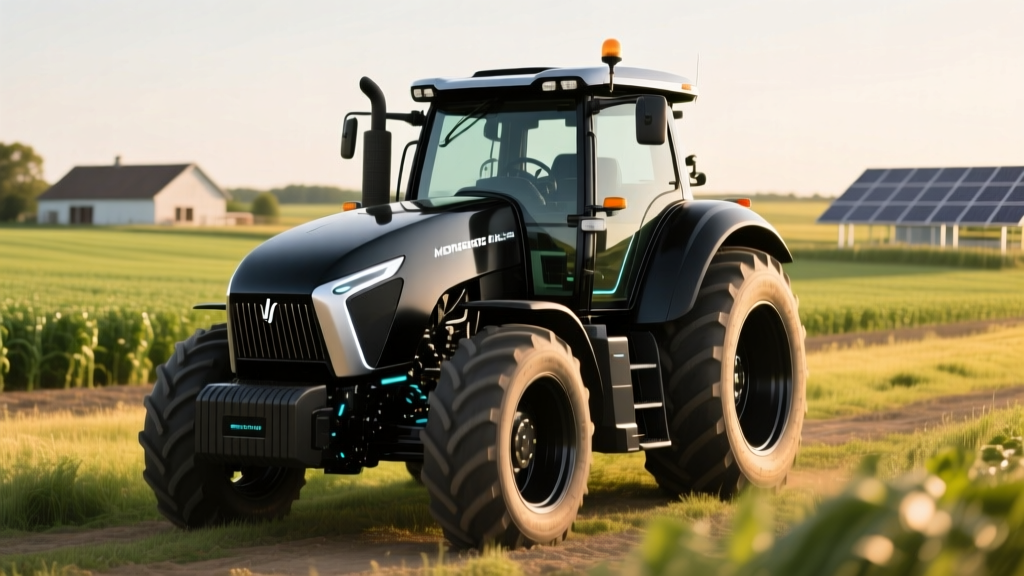
The Monarch MK-V is a fully electric, autonomous-capable utility tractor designed for specialty crop farms (vineyards, orchards, row crops). Starting at approximately $75,000 before incentives, it pairs a 70 kWh LFP battery with a 70 HP electric drivetrain and claims up to 10+ hours of runtime per charge under light-to-moderate loads. It eliminates diesel fuel costs (saving an estimated $15,000–$25,000 over five years depending on usage), requires zero engine maintenance, and offers optional autonomous mowing/spraying via Monarch's subscription software. However, it is not suited for broad-acre grain farming requiring 200+ HP, heavy PTO implements, or operations without access to 240V charging infrastructure.
What Is the Monarch MK-V and Who Is It For?
Monarch Tractor, based in Livermore, California, positions the MK-V as the first fully electric, driver-optional smart tractor built for the realities of specialty agriculture. Unlike the massive diesel tractors you see in Midwest cornfields, the MK-V targets a different buyer: vineyard managers, orchard operators, berry farmers, and nursery owners who need a compact, maneuverable machine for mowing, spraying, hauling, and light tillage between tight rows.
Key 2026 specifications based on Monarch's published data:
- Motor output: 70 HP peak (40 HP continuous)
- Battery capacity: 70 kWh usable, LFP (lithium iron phosphate) chemistry
- Runtime: Up to 10+ hours (light duty); 4–6 hours under heavy PTO load
- Charging: Level 2 (240V, ~10 kW); full charge in approximately 7–8 hours
- PTO: 540 RPM standard, electrically driven
- Top speed: ~20 mph (transport mode)
- Weight: ~5,500 lbs (base)
- Autonomy: Optional Wingspan AI subscription for driver-optional mowing, spraying, and hedging
- Base MSRP: ~$75,000 (before incentives); autonomy subscription additional
The LFP chemistry choice is deliberate: LFP cells tolerate daily full charges to 100% without the accelerated degradation seen in NMC packs, and they are far more thermally stable — a critical safety factor in dusty, hot agricultural environments.
Monarch MK-V vs. Diesel Tractor: The Cost Breakdown
The most common question from farm operators is whether the higher upfront cost of an electric tractor pays for itself. Here's a five-year total cost of ownership (TCO) comparison between the Monarch MK-V and a comparably sized diesel utility tractor (e.g., Kubota M5 or John Deere 5E series in the 55–75 HP range, typically $40,000–$55,000 new).
| Cost Category | Monarch MK-V (Electric) | 65 HP Diesel Tractor |
|---|---|---|
| Purchase Price | $75,000 | $48,000 |
| Federal/State Incentives | –$12,000 (est.) | $0 |
| Net Purchase | $63,000 | $48,000 |
| Fuel/Energy (5 yrs) | $4,500 ($0.12/kWh avg) | $28,000 ($3.80/gal diesel) |
| Maintenance (5 yrs) | $1,200 | $8,500 |
| Insurance (5 yrs) | $6,000 | $5,500 |
| Autonomy Sub (5 yrs, optional) | $9,000 | $0 (or $15,000+ for GPS add-on) |
| Total (without autonomy) | $74,700 | $90,000 |
| Total (with autonomy/GPS) | $83,700 | $105,000 |
The math: A 65 HP diesel tractor burning roughly 1.5 gallons per hour at 1,000 hours/year consumes 1,500 gallons annually. At $3.80/gallon, that's $5,700/year in fuel alone. The MK-V drawing an average of 12 kWh per hour at $0.12/kWh costs roughly $1,440/year in electricity — a $4,260 annual fuel savings.
Maintenance savings compound: no oil changes, no fuel filters, no DEF fluid, no transmission fluid, no air filter replacements, no glow plugs. Monarch estimates maintenance costs at roughly 80% less than a comparable diesel.
Charging Infrastructure: What Your Farm Actually Needs
This is where many first-time electric equipment buyers underestimate the requirements. The MK-V charges via a standard J1772 Level 2 connector at approximately 10 kW, meaning a full 0–100% charge takes roughly 7–8 hours. For most farms running a single 8–10 hour shift, this means plugging in at night and starting fresh each morning — a workable pattern.
However, you need to assess your electrical infrastructure honestly:
- Minimum requirement: A dedicated 50-amp, 240V circuit at your equipment barn or charging location
- Electrical panel capacity: If your barn's subpanel is already near capacity, you may need a panel upgrade ($1,500–$4,000) or a new dedicated line from your main service
- Installation cost: Expect $2,000–$5,000 for a licensed electrician to install a proper Level 2 station with conduit, breaker, and weatherproof enclosure in an agricultural setting
- Multiple units: If you plan to run two or more MK-Vs, you'll likely need a load-management system or a service upgrade to avoid tripping your main breaker during simultaneous charging
Cold-weather reality check: LFP batteries lose some capacity in freezing temperatures — expect roughly 10–15% reduced runtime when operating below 32°F. Unlike passenger EVs with sophisticated heat pumps, agricultural equipment prioritizes durability over cabin comfort, so battery preconditioning options are limited. If you're farming in Minnesota winters, plan for shorter shifts or mid-day top-offs.
Incentives and Tax Credits: What's Actually Available?
Farm equipment electrification incentives are evolving rapidly. As of 2026, the Monarch MK-V may qualify for several programs, but eligibility is highly location-dependent:
- Federal investment tax credits: Some clean-energy provisions under the Inflation Reduction Act can apply to commercial/agricultural electric equipment — consult a tax professional about Section 48 investment tax credits and whether your use case qualifies
- USDA REAP grants: The Rural Energy for America Program offers grants covering up to 50% of eligible renewable-energy and energy-efficiency improvements for agricultural producers — electric farm equipment has been approved in some cases
- State-level incentives: California's CARB programs, including CORE (Clean Off-Road Equipment Voucher Incentive Project), have offered vouchers of $20,000–$30,000+ for zero-emission off-road equipment. Check current voucher availability
- Utility rebates: Some rural electric cooperatives and investor-owned utilities offer demand-management rebates for commercial EV charging installations
Critical note: The IRS §30D clean vehicle credit is designed for on-road passenger vehicles and does not apply to off-road agricultural tractors. Do not assume the $7,500 passenger EV credit applies here. Always verify eligibility with a qualified tax professional and your state's agricultural extension office.
Real-World Ownership: What Monarch Won't Tell You in the Brochure
After speaking with specialty-crop operators who've evaluated or deployed the MK-V, several practical patterns emerge that don't always surface in marketing materials:
Runtime varies dramatically by task. Light mowing on flat terrain with a rotary mower might squeeze out 10+ hours. But heavy PTO work — running a flail mower through thick cover crops or powering a sprayer pump uphill — can cut that to 4–5 hours. Know your most demanding task and plan accordingly.
Autonomy is a subscription, not a one-time purchase. Monarch's Wingspan AI driver-optional system requires an ongoing software subscription (estimated $1,500–$2,000/year). This is similar to how precision-ag GPS systems work from John Deere and Trimble, but it means the "autonomous tractor" benefit has a recurring cost.
Implement compatibility isn't universal. The MK-V uses a standard Category 1 three-point hitch and 540 RPM PTO, which covers most specialty-crop implements. However, some older or heavier implements designed for 75+ HP diesel tractors may overload the MK-V's continuous 40 HP rating. Verify your implement list before purchasing.
Dealer and service network is still growing. Unlike Kubota or John Deere with thousands of dealerships, Monarch's service network in 2026 remains concentrated in California, Oregon, Washington, and select East Coast regions. If you're in the Mountain West or Southeast, confirm service availability and parts lead times before committing.
Decision Framework: Should You Buy the Monarch MK-V?
Choose the Monarch MK-V if:
- You operate a vineyard, orchard, berry farm, or nursery with rows narrow enough for a compact tractor
- Your daily runtime needs are under 8 hours for most tasks
- You have (or can install) 240V Level 2 charging at your equipment barn
- You want to eliminate diesel fuel costs and reduce maintenance downtime
- You're interested in autonomous mowing/spraying to address labor shortages
- You're in a state with off-road equipment incentives (especially California)
- Noise and emissions restrictions matter (e.g., organic farms, agritourism venues, urban-adjacent operations)
Stick with a diesel tractor if:
- You need 100+ HP for heavy tillage, large balers, or broad-acre work
- You regularly run 12+ hour days during harvest with no downtime for charging
- Your farm lacks adequate electrical service and upgrading would cost $10,000+
- You're in a region with no Monarch service support and cannot afford extended downtime
- Your existing diesel tractor is under 5 years old and fully paid off (the TCO math flips)
Common Misconceptions About Electric Tractors
| Myth | Fact |
|---|---|
| "Electric tractors don't have enough torque for real farm work." | Electric motors deliver peak torque at 0 RPM. The MK-V's 70 HP peak motor provides strong low-end pulling power that often exceeds a comparable diesel's feel at the hitch. |
| "The battery will need replacing in a few years." | LFP chemistry is rated for 3,000+ full charge cycles before reaching 80% capacity. At one full cycle per day, 250 days/year, that's 12+ years before meaningful degradation. Monarch offers a battery warranty — confirm current terms at purchase. |
| "You can't use it in the rain or dusty conditions." | The MK-V is IP-rated for agricultural environments. Electric drivetrains actually have fewer contamination points than diesel engines (no air intake, no fuel system). Dusty conditions that destroy diesel air filters are a non-issue for the electric motor. |
| "It's completely autonomous — no driver needed." | The Wingspan AI system is driver-optional, not driverless. Certain tasks (mowing, spraying predefined rows) can run autonomously with a supervisor monitoring remotely, but complex tasks, road transport, and unfamiliar terrain still require an operator. Think SAE Level 2–3 for agriculture, not full autonomy. |
| "You'll save $7,500 with the federal EV tax credit." | The §30D credit applies to on-road passenger vehicles, not off-road tractors. Agricultural equipment incentives come from USDA REAP, state voucher programs (like California CORE), and utility rebates — not the standard EV tax credit. |
Frequently Asked Questions
Can the Monarch MK-V tow heavy loads?
The MK-V has a drawbar and can tow trailers, but its 5,500-lb weight and 40 HP continuous rating mean it's best suited for moderate loads — think loaded spray tanks, harvest bins, or equipment trailers under 4,000 lbs. It is not a replacement for a 100+ HP diesel pulling a 20-ton grain cart.
How long does it take to charge the MK-V?
At its ~10 kW Level 2 charge rate, a full 0–100% charge on the 70 kWh battery takes approximately 7–8 hours. There is no DC fast-charging capability on the current model, so mid-day fast top-offs are not an option. Plan operations around overnight charging.
What happens if the battery runs out mid-task?
The MK-V provides battery state-of-charge warnings via its dashboard and connected app. If you do run the battery to zero in the field, you'll need to tow it back to a charger or bring a portable generator-based charger (if supported). This is a real operational risk if you consistently push runtime limits — treat 20% remaining as your "return to barn" threshold.
Is the Monarch MK-V eligible for the federal EV tax credit?
No. The IRS §30D clean vehicle credit applies to on-road passenger vehicles meeting specific MSRP, income, and battery-sourcing requirements. Off-road agricultural equipment like the MK-V falls under different incentive programs — primarily USDA REAP grants, state CORE-type vouchers, and utility rebates.
Can I use my existing implements with the MK-V?
If your implements use a standard Category 1 three-point hitch and 540 RPM PTO, they are physically compatible. However, check each implement's HP requirement against the MK-V's 40 HP continuous output. Implements designed for 70+ HP tractors may not perform adequately.
How does cold weather affect the MK-V?
LFP batteries lose capacity in freezing temperatures — expect roughly 10–15% runtime reduction below 32°F, and potentially more below 0°F. Unlike passenger EVs with battery heat pumps, the MK-V's thermal management prioritizes operational durability over maximum range preservation. Store and charge the tractor in a heated barn if possible during winter months.