Quick Verdict: Should You Lease the 2026 Tesla Model 3?
The 2026 Tesla Model 3 remains the benchmark compact electric sedan for buyers who prioritize charging infrastructure, software refinement, and efficiency. With the "Highland" refresh now fully matured into its second model year, Tesla has addressed the most common complaints from the previous generation — adding ventilated seats, a rear touchscreen, ambient lighting, and significantly improved cabin noise isolation. For shoppers researching a Model 3 Tesla lease, the math is compelling: a base Rear-Wheel Drive starts at $38,990 before incentives, and the Long Range AWD variant delivers an EPA-estimated 341 miles of range — the highest in its class.
However, leasing a Tesla comes with unique considerations. Unlike many automakers, Tesla does not offer a traditional captive lease program through dealerships. Instead, most Model 3 leases are structured through third-party banks or Tesla's own limited leasing options, which affects end-of-lease flexibility and purchase options. This guide covers every spec, real-world ownership cost, and tax-credit nuance you need before signing.
| Spec | RWD (Base) | Long Range AWD | Performance |
|---|---|---|---|
| EPA Range | 272 mi | 341 mi | 315 mi |
| Battery (usable) | ~60 kWh (LFP) | ~79 kWh (NMC) | ~79 kWh (NMC) |
| 0-60 mph | 5.8 sec | 4.2 sec | 2.9 sec |
| Horsepower | 283 hp | 384 hp | 510 hp |
| Drivetrain | RWD | Dual-Motor AWD | Dual-Motor AWD |
| Max DC Charge Rate | 170 kW | 250 kW | 250 kW |
| 10-80% DC Time | ~25 min | ~18 min | ~18 min |
| Level 2 Rate | 11.5 kW (~44 mi/hr) | 11.5 kW (~44 mi/hr) | 11.5 kW (~44 mi/hr) |
| MPGe (combined) | 132 MPGe | 130 MPGe | 119 MPGe |
| Base MSRP | $38,990 | $45,990 | $52,990 |
Source: EPA Fuel Economy, Tesla.com specifications (2026 model year).
Real-World Range: What the EPA Sticker Doesn't Tell You
EPA Estimate: 341 miles (Long Range AWD) / 272 miles (RWD)
Real-World Expectation: Plan for 260-290 miles on highway-heavy trips at 70-75 mph in the Long Range, and roughly 210-240 miles in the RWD. In freezing temperatures (below 32°F), expect a 20-30% reduction — bringing the Long Range down to ~230-250 miles without preconditioning.
The Model 3 Long Range's 341-mile EPA figure is legitimate for mixed suburban and city driving in moderate temperatures. Tesla's energy efficiency is among the best in the industry, achieving roughly 25 kWh per 100 miles in the Long Range — a figure that translates directly to lower charging costs.
But real-world range depends heavily on three factors:
- Highway speed: At 80 mph, aerodynamic drag reduces range by roughly 15-20% compared to the EPA mixed cycle. Expect ~270 miles in the Long Range at sustained interstate speeds.
- Cold weather: Lithium-ion batteries lose efficiency in cold temperatures, and cabin heating draws significant power. The Model 3's standard heat pump helps mitigate this — it's roughly 3-4x more efficient than resistive heating — but you'll still see a 20-30% range hit in sub-freezing conditions.
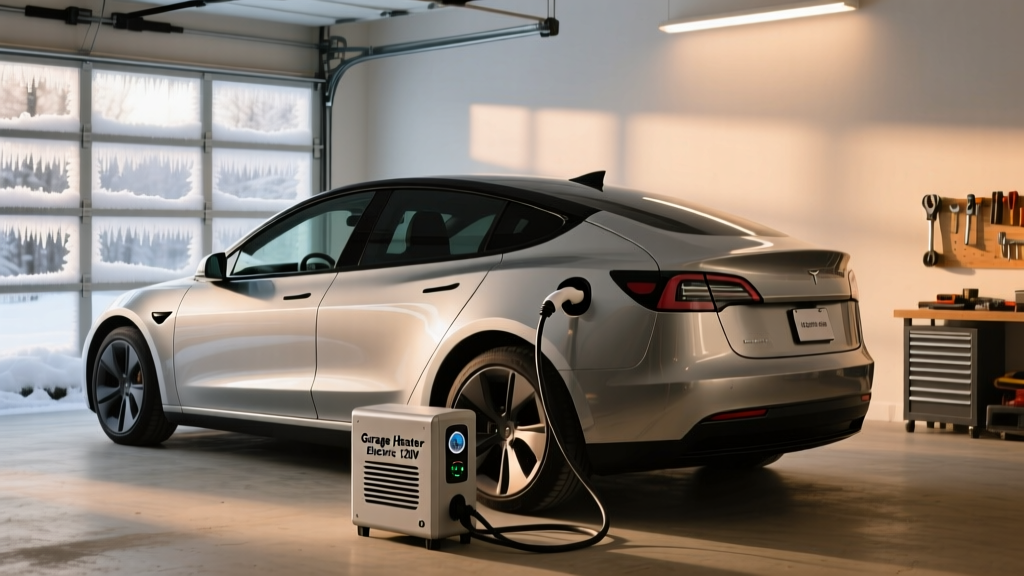
- Preconditioning: If you set a departure time in the Tesla app while plugged in at home, the car warms the battery and cabin using grid power, preserving range. This is essential for cold-climate owners.
For the RWD trim with its 60 kWh LFP (lithium iron phosphate) battery, the 272-mile EPA range is best suited for commuters with home charging. Road-trippers should look to the Long Range for its extra buffer.
Charging Speed: DC Fast Charge and Home Level 2
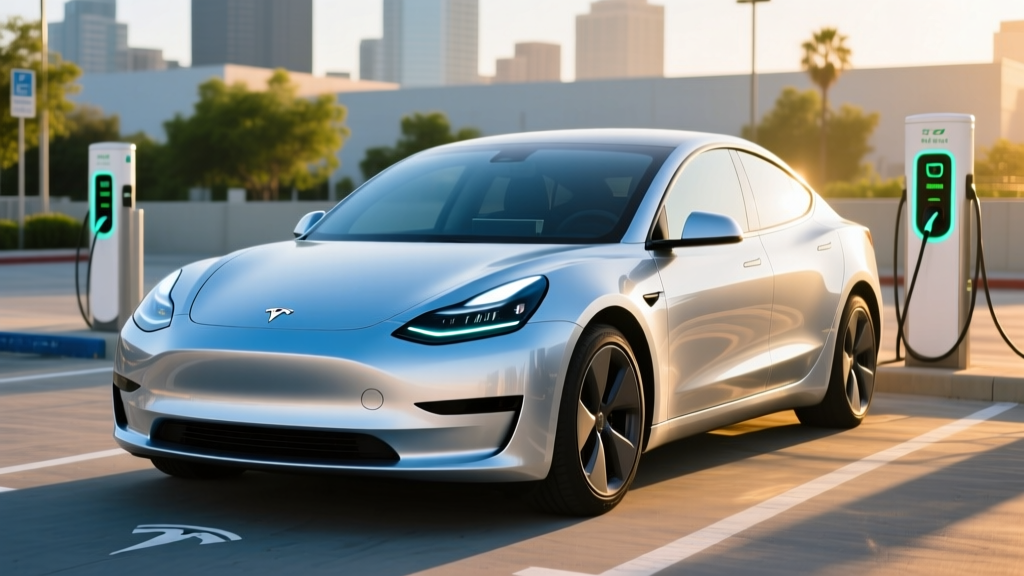
Tesla's Supercharger network remains the most reliable public charging infrastructure in North America, with over 6,000 V3 and V4 stalls across the U.S. The Model 3 Long Range and Performance trims support a peak DC fast-charge rate of 250 kW, while the RWD is capped at 170 kW.
| Charging Method | Power (kW) | Miles Added per Hour | Notes |
|---|---|---|---|
| Level 1 (120V outlet) | ~1.4 kW | ~4-5 mi/hr | Emergency/trickle only |
| Level 2 (240V, 48A) | 11.5 kW | ~44 mi/hr | Home Wall Connector; full charge in 7-9 hrs |
| DC Fast (V3 Supercharger) | Up to 250 kW (LR/Perf) | ~170 mi in 15 min | Peak rate; tapers above 60% SoC |
| DC Fast (RWD) | Up to 170 kW | ~125 mi in 15 min | LFP battery charge curve is more linear |
Understanding the charge curve: The advertised 250 kW is a peak rate, not a sustained one. The Model 3 Long Range hits 250 kW only at a low state of charge (around 10-20% SoC) and gradually tapers as the battery fills. A typical 10-80% session takes about 18 minutes at a V3 Supercharger. Above 80%, charging slows dramatically to protect battery longevity — a 80-100% top-off can add another 15-20 minutes. For road trips, plan to charge from 10-80% and skip the final 20% unless necessary.
At home, Tesla's Wall Connector delivers 11.5 kW on a 60-amp circuit (48 amps continuous), adding roughly 44 miles of range per hour. An overnight charge easily replenishes a full day's driving. Installation costs typically range from $500-$2,000 depending on your electrical panel's proximity to the parking spot and whether a panel upgrade is needed.
One important note for 2026: the Model 3 now ships with the NACS (North American Charging Standard) port natively. This means direct access to Tesla Superchargers without an adapter, and with the CCS-to-NACS adapter, you can also use Electrify America, EVgo, and other CCS networks — though reliability on non-Tesla networks remains inconsistent in many regions.
Performance, Efficiency, and Driving Dynamics
The 2026 Model 3 lineup offers three distinct performance tiers:
- RWD: 283 hp, 5.8-second 0-60 mph. Adequate for daily commuting and confident highway merging. The single rear motor delivers smooth, linear acceleration.
- Long Range AWD: 384 hp, 4.2-second 0-60 mph. Dual-motor all-wheel drive provides excellent traction in rain and light snow. This is the sweet spot for most buyers — strong performance with maximum range.
- Performance: 510 hp, 2.9-second 0-60 mph. Track Mode, lowered suspension, larger brakes, and 20-inch wheels. Enthusiast-focused, with a modest range penalty (315 miles EPA).
All trims feature regenerative braking with a one-pedal driving experience. The Highland refresh brought a noticeable improvement in ride quality — the new frequency-selective dampers absorb road imperfections far better than the pre-2024 Model 3. Cabin noise is dramatically reduced thanks to acoustic glass and additional sound deadening.
Efficiency-wise, the Model 3 Long Range achieves 130 MPGe combined (25 kWh/100mi), making it one of the most efficient AWD electric sedans available. The RWD is even better at 132 MPGe combined. For context, that translates to roughly $0.04-$0.05 per mile when charging at home on a national average electricity rate of $0.16/kWh — compared to $0.12-$0.15 per mile for a 30 MPG gas sedan at $3.50/gallon.
Pricing, Lease Costs, and Federal Tax Credit Eligibility
| Trim | Base MSRP | Destination | Total Before Incentives | §30D Credit Eligible? | Effective Price (if eligible) |
|---|---|---|---|---|---|
| RWD | $38,990 | $1,390 | $40,380 | Yes (if sourcing rules met) | $32,880 |
| Long Range AWD | $45,990 | $1,390 | $47,380 | Yes (if sourcing rules met) | $39,880 |
| Performance | $52,990 | $1,390 | $54,380 | Yes (if sourcing rules met) | $46,880 |
Federal Tax Credit (§30D) — Key Rules for 2026
The Model 3 currently qualifies for up to $7,500 in federal tax credits under IRS §30D, but eligibility is not automatic. Here are the critical requirements:
- MSRP cap: Sedans must have an MSRP at or below $55,000. The RWD and Long Range qualify; the Performance at $52,990 also qualifies (before options push it over).
- Buyer income cap: Modified adjusted gross income (MAGI) must not exceed $150,000 (single), $225,000 (head of household), or $300,000 (joint filing).
- Battery sourcing: At least a percentage of critical minerals and battery components must be sourced from the U.S. or free-trade-agreement countries. Tesla has shifted significant battery production to U.S. plants, but specific eligibility can change by production batch. Always verify the VIN on the fueleconomy.gov credit lookup tool before purchasing.
- Point-of-sale transfer: As of 2024, buyers can transfer the credit to the dealer at point of sale, reducing the purchase price directly rather than waiting for a tax refund. This applies to Tesla's direct sales model as well.
Verify current rules at IRS.gov Clean Vehicle Credit. Tax credit rules are subject to legislative changes.
Leasing the Model 3: What's Different
Tesla does not operate traditional franchise dealerships, and its leasing program is more limited than legacy automakers. Here's what to know about a Model 3 Tesla lease in 2026:
- Lease structure: Tesla offers leasing directly through its website in select states, typically 24- or 36-month terms with 10,000-15,000 miles per year. Monthly payments in early 2026 range from approximately $450-$650/month depending on trim, term, and down payment — though this fluctuates with interest rates and Tesla's pricing adjustments.
- Tax credit and leases: Under a lease, the lessor (the financing entity) technically claims the §30D tax credit, not the lessee. Some lessors pass this savings through as a capitalized-cost reduction (lowering your monthly payment), but this is not guaranteed. Always ask whether the lease quote reflects the tax credit passthrough.
- No lease-end purchase option (in most cases): Tesla's lease agreements have historically not included a purchase option at lease end, meaning you return the car. This is a significant difference from most automaker leases and means you build no equity.
- Third-party leases: Some credit unions and banks offer lease-like products (often called "balloon loans" or closed-end leases) for Teslas, which may include a purchase option. Compare these carefully against Tesla's direct lease.
Interior, Cargo Space, and Technology
The 2026 Model 3 interior represents a major step up from the pre-Highland era. Key updates include:
- Ventilated front seats (a top request from owners in warm climates)
- Rear 8-inch touchscreen for climate control, media, and navigation — solving the previous complaint that rear passengers had no control
- Ambient lighting with customizable color zones
- Acoustic glass on all windows, reducing cabin noise by roughly 30% compared to the previous generation
- Updated materials: Textile dashboard trim, perforated synthetic leather seats, and improved fit-and-finish throughout
Cargo space: The Model 3 offers 23 cubic feet of trunk space (including the rear frunk), which is competitive with compact sedans like the BMW 3 Series. The trunk opening is narrower than a hatchback or crossover, which limits loading bulky items. Rear legroom measures 35.2 inches — adequate for adults on shorter trips but tighter than a Hyundai Ioniq 6 (37.0 inches) or BMW i4 (36.5 inches).
Infotainment: Tesla's 15.4-inch center touchscreen runs the company's proprietary operating system. There is no Apple CarPlay or Android Auto — Tesla's interface handles navigation, media, climate, and vehicle controls natively. The built-in navigation is excellent and integrates with the Supercharger network for automatic route planning and battery preconditioning. Spotify, Tidal, and YouTube are integrated. A premium 17-speaker audio system is standard on Long Range and Performance trims.
Driver Assistance: Autopilot and FSD (Supervised)
SAE Automation Level: Level 2 (Partial Automation)
Tesla Autopilot and Full Self-Driving (Supervised) are driver-assistance systems, not autonomous driving. The driver must remain attentive, keep hands on the steering wheel, and be prepared to take over at any moment. No Tesla vehicle is capable of self-driving without human supervision.
Autopilot (standard): Includes Traffic-Aware Cruise Control and Autosteer (lane-centering on marked highways). This is a competent Level 2 system for highway driving, though it requires constant driver engagement.
Full Self-Driving — Supervised ($8,000 option or $99/month): Adds automatic lane changes, Navigate on Autopilot (highway on-ramp to off-ramp), Autosteer on city streets, traffic light and stop sign recognition, and Smart Summon (low-speed parking lot navigation). FSD has improved substantially through 2025-2026 with Tesla's v13 neural-network architecture, but it still makes errors — particularly in construction zones, unmapped areas, and complex intersections. It is not a substitute for an attentive driver.
What FSD does NOT do: FSD (Supervised) does not make the Model 3 a self-driving car. It cannot handle all road conditions, weather scenarios, or construction zones. The driver is legally responsible for the vehicle at all times. NHTSA continues to investigate FSD-related incidents, and the system's safety record is actively debated. See NHTSA crash reporting for ongoing data.
Warranty and Long-Term Battery Durability
Tesla's warranty coverage for the 2026 Model 3:
- Basic vehicle: 4 years / 50,000 miles (whichever comes first)
- Battery & drive unit (RWD): 8 years / 100,000 miles, with at least 70% capacity retention
- Battery & drive unit (Long Range / Performance): 8 years / 120,000 miles, with at least 70% capacity retention
The RWD's LFP battery chemistry is notable for its longevity. LFP cells typically degrade more slowly than NMC and can be routinely charged to 100% without the same degradation concerns — Tesla recommends daily 100% charging for LFP-equipped vehicles. NMC batteries in the Long Range and Performance benefit from daily charging to 80-90% with occasional 100% for long trips.
Real-world data from Tesla's fleet suggests average battery degradation of approximately 10-12% after 150,000 miles — well within the warranty threshold. Battery replacement outside of warranty currently ranges from $12,000-$16,000 depending on the pack, though prices continue to decline.
Pros and Cons: The Honest Assessment
Pros
- Class-leading efficiency (25 kWh/100mi LR)
- Access to Tesla Supercharger network — the most reliable DC fast-charging system in the U.S.
- Best-in-class EPA range for the segment (341 mi Long Range)
- Over-the-air software updates that add features over time
- Strong resale value relative to most EVs
- Significantly improved ride quality and cabin quietness vs. pre-2024 models
- LFP battery on RWD allows daily 100% charging
Cons
- No Apple CarPlay or Android Auto
- Rear seat legroom is tighter than competitors (35.2 in)
- No physical buttons — all controls are touchscreen-based
- FSD (Supervised) is expensive ($8,000) and still requires full driver attention
- Tesla's lease program lacks a purchase option in most cases
- Insurance costs are above average for the segment
- No head-up display
Who Should Lease the Model 3 — and Who Shouldn't?
Lease the Model 3 if:
- You have access to home Level 2 charging and want the lowest per-mile fuel cost in the segment
- You road-trip regularly and value the Supercharger network's reliability
- You want a tech-forward sedan with continuous software improvements
- You drive under 15,000 miles per year (typical lease limit)
- You prefer to swap vehicles every 3 years and avoid long-term depreciation risk
Look elsewhere if:
- You need spacious rear seating for adults or car seats (consider the Model Y or Hyundai Ioniq 5)
- You rely on Apple CarPlay for navigation or media
- You want a lease-end purchase option to build equity
- You live in an area with limited Supercharger coverage and no home charging
- You need a hatchback or crossover cargo configuration
Frequently Asked Questions
What is the real-world range of the 2026 Tesla Model 3?
The EPA rates the Long Range AWD at 341 miles and the RWD at 272 miles. In real-world highway driving at 70-75 mph, expect 260-290 miles from the Long Range and 210-240 from the RWD. Cold weather (below 32°F) reduces range by 20-30% unless you precondition the battery while plugged in.
How fast does the Model 3 charge at home and on the road?
At home on a Level 2 Tesla Wall Connector (11.5 kW), the Model 3 adds about 44 miles of range per hour — a full overnight charge covers most daily needs. On a V3 Supercharger, the Long Range and Performance peak at 250 kW and charge from 10-80% in approximately 18 minutes. The RWD peaks at 170 kW with a 10-80% time of about 25 minutes.
How much does a Model 3 cost after the federal tax credit?
If you qualify for the full $7,500 §30D credit (meeting income, MSRP, and battery-sourcing requirements), the effective price drops to $32,880 for the RWD, $39,880 for the Long Range, and $46,880 for the Performance. When leasing, the lessor claims the credit — confirm whether it's passed through as a cap-cost reduction in your lease quote.
Does the 2026 Model 3 qualify for the federal EV tax credit?
Yes, the Model 3 is currently eligible for up to $7,500 under IRS §30D, subject to buyer income limits ($150K single / $300K joint), the $55,000 sedan MSRP cap, and battery-component/critical-mineral sourcing requirements. Always verify the specific VIN on fueleconomy.gov before purchasing, as eligibility can vary by production date.
Is it worth leasing vs. buying the Model 3?
Leasing makes sense if you want lower monthly payments, plan to upgrade every 2-3 years, and want to avoid battery-depreciation risk. Buying makes more sense if you drive over 15,000 miles per year, want to claim the $7,500 tax credit directly, and plan to keep the car 5+ years. Tesla's lack of a lease-end purchase option is a key drawback of leasing.
How does the Model 3 compare to the Hyundai Ioniq 6 and BMW i4?
The Ioniq 6 offers a similar EPA range (361 mi SE) and more rear legroom, but its charging network access (CCS) is less reliable than Tesla's. The BMW i4 provides a more traditional luxury interior and CarPlay but starts higher (~$52,200) and offers less range (307 mi eDrive40). The Model 3 wins on efficiency, charging infrastructure, and price-to-range ratio.