The Range Question Every Model 3 Buyer Asks
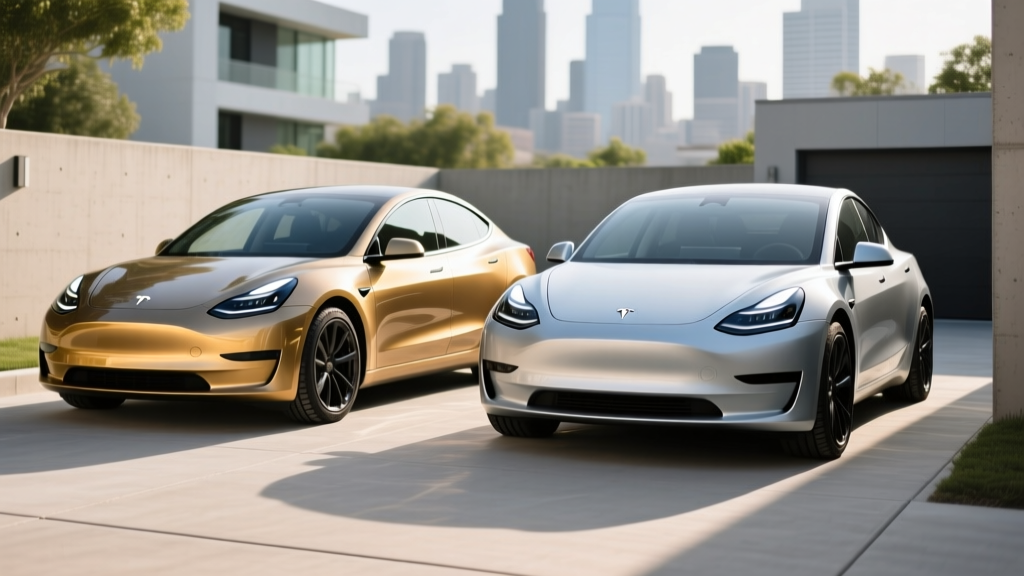
If you've been searching whether the Tesla Model 3 Long Range delivers meaningfully more range than the base Model 3 Rear-Wheel Drive, the short answer is yes — but the gap narrows in real-world driving and the value equation depends heavily on your commute, climate, and tax-credit eligibility. For 2026, Tesla offers the Model 3 in two primary trims for US buyers: the base Rear-Wheel Drive (RWD) and the Long Range AWD. A Performance variant sits above both but targets a different buyer. This review breaks down the exact EPA numbers, battery chemistry trade-offs, charging behavior, and ownership economics so you can pick the right one.
EPA Range vs. Real-World Expectations
The EPA stickers tell a clear story, but real-world efficiency depends on how and where you drive.
Model 3 RWD (2026): EPA-estimated 272 miles (18-inch wheels) / 341 miles (19-inch wheels on select configs). Expect 220–250 miles highway; 180–210 miles in cold weather.
The Long Range's advantage comes from a larger battery pack and dual-motor efficiency optimization. On the highway, aerodynamic drag dominates and both trims lose roughly 15–20% compared to their EPA combined figures. In cold weather (below 32°F), expect an additional 10–20% reduction due to battery thermal management demands and resistive cabin heating, though the Model 3's standard heat pump mitigates some of this loss compared to older resistive systems.
According to fueleconomy.gov, the Long Range AWD achieves 130 MPGe combined (26 kWh/100 mi), while the RWD posts 132 MPGe combined (25 kWh/100 mi). The RWD is marginally more efficient per mile — it's lighter and only drives one axle — but carries fewer total kWh, which is why its absolute range falls short.
Battery Chemistry, Capacity, and What It Means for You
| Spec | Model 3 RWD (Base) | Model 3 Long Range AWD |
|---|---|---|
| Battery Chemistry | LFP (Lithium Iron Phosphate) | NMC (Nickel Manganese Cobalt) |
| Usable Capacity (est.) | ~57.5 kWh | ~75 kWh |
| EPA Range | 272 mi | 363 mi |
| Efficiency | 25 kWh/100 mi (132 MPGe) | 26 kWh/100 mi (130 MPGe) |
| Drivetrain | Rear-Wheel Drive | Dual-Motor AWD |
| Horsepower | ~271 hp | ~346 hp |
| 0–60 mph | 5.8 sec | 4.2 sec |
The chemistry difference is one of the most consequential choices Tesla makes across the lineup. The base RWD uses an LFP cathode, which offers superior cycle life (often rated for 3,000+ full cycles before significant degradation) and can be charged to 100% daily without accelerating wear. Tesla actually recommends periodic 100% charges on LFP packs for accurate state-of-charge calibration.
The Long Range uses NMC chemistry, which provides higher energy density — more kWh in roughly the same physical volume — but degrades faster if habitually held at 100%. For daily use, Tesla recommends an 80% charge limit on NMC packs, reserving 100% for road trips. This means your usable daily range on the Long Range is closer to 290 miles at 80% SoC, narrowing the practical gap with the LFD-equipped RWD (which can use all 272 miles daily).
Charging Speed: DC Fast Charge and Home Level 2
| Charging Method | Model 3 RWD | Model 3 Long Range AWD |
|---|---|---|
| Max DC Fast Charge | ~170 kW peak | ~250 kW peak |
| 10–80% DC Fast Charge | ~25 min | ~18–22 min |
| Level 2 (240V / 48A) | ~11.5 kW (~44 mi/hr) | ~11.5 kW (~44 mi/hr) |
| Level 1 (120V / 12A) | ~1.4 kW (~5 mi/hr) | ~1.4 kW (~5 mi/hr) |
| Connector (US) | NACS (native) | NACS (native) |
Both trims use Tesla's native NACS connector, granting full access to the Supercharger network — now the largest and most reliable DC fast-charging network in North America. The Long Range charges faster at DC stations because its larger NMC pack can accept higher peak power and sustain it longer on the charge curve.
A critical nuance: peak kW is not sustained kW. The Long Range may hit 250 kW briefly at low SoC but tapers to ~150 kW by 50% and ~70 kW above 80%. The RWD's smaller LFP pack has a flatter, lower charge curve — it peaks around 170 kW and tapers earlier. On a 200-mile road trip with one DC stop, the Long Range gets you back on the road roughly 5–7 minutes faster. Over a year of road trips, that adds up.
At home on a Level 2 Wall Connector (48 amps / 11.5 kW), both trims charge at the same rate — roughly 44 miles of range per hour. A full overnight charge (8 hours) adds about 350 miles of capacity, more than enough to replenish either pack from empty.
Pricing, Tax Credits, and the True Cost
| Model 3 RWD | Model 3 Long Range AWD | |
|---|---|---|
| Base MSRP (2026) | ~$38,990 | ~$44,990 |
| Federal §30D Credit | Up to $7,500 (if eligible) | Up to $7,500 (if eligible) |
| Effective Price (after max credit) | ~$31,490 | ~$37,490 |
| MSRP Cap (§30D) | Under $55,000 sedan cap ✓ | Under $55,000 sedan cap ✓ |
Both trims fall under the IRS §30D $55,000 MSRP cap for sedans, making them potentially eligible for the full $7,500 federal tax credit — but eligibility is not automatic. You must meet all of the following:
- Income cap: Modified AGI ≤ $150,000 (single) or ≤ $300,000 (joint)
- Battery sourcing: Minimum percentages of battery components manufactured in North America and critical minerals sourced from FTA partners (thresholds increase annually through 2026)
- Point-of-sale transfer: You can elect to transfer the credit to the dealer at purchase for an immediate price reduction, or claim it on your tax return
- FEOC restriction: Vehicles with battery components from Foreign Entities of Concern (primarily Chinese suppliers) may lose partial or full credit eligibility
Tesla's supply chain has historically qualified for the full credit on US-built Model 3 vehicles, but the critical-minerals and FEOC requirements tightened significantly for 2026. Always verify current eligibility on the fueleconomy.gov credit lookup before purchasing, as sourcing changes can alter qualification mid-year.
Interior, Cargo, and Daily Livability
The Model 3's cabin is minimalist by design — a 15.4-inch center touchscreen handles nearly all vehicle functions, including climate controls, glovebox release, and mirror adjustment. There is no traditional instrument cluster; speed and navigation appear in the upper-left corner of the main display.
Passenger space is competitive for the segment:
- Front legroom: 42.7 inches
- Rear legroom: 35.2 inches
- Cargo (trunk + frunk): ~23 cu ft combined (19.8 trunk + 3.1 frunk)
- Rear seat fold-down: 60/40 split, expanding cargo to ~43 cu ft
The Long Range AWD carries roughly 130 lbs more than the RWD due to the front motor and larger battery. You won't feel it in normal driving, but it does slightly increase tire wear on the front axle over time. Both trims offer the same interior volume — Tesla doesn't trim cabin space to fit the larger pack.
Tech, Driver Assistance, and What's Standard
Every 2026 Model 3 includes Tesla's basic Autopilot suite (SAE Level 2): Traffic-Aware Cruise Control, Autosteer (lane-centering on marked highways), and Automatic Emergency Braking. This is not self-driving — you must keep your hands on the wheel and eyes on the road at all times.
Full Self-Driving (Supervised) remains an optional $8,000 add-on or $99/month subscription. It adds automated lane changes, Navigate on Autopilot, traffic-light and stop-sign recognition, and Autopark. Despite the name, FSD (Supervised) is still Level 2 and requires active driver supervision.
Both trims include:
- 15.4-inch touchscreen with navigation
- Over-the-air software updates
- Heated front and rear seats
- Heated steering wheel
- Wireless phone charging
- Dashcam and Sentry Mode (surveillance recording)
- Ventilated front seats (added in the refresh)
Pros, Cons, and the Verdict
Model 3 RWD — Pros
- Lowest entry price in the Tesla lineup
- LFP battery: charge to 100% daily, longer cycle life
- Marginally higher MPGe efficiency
- Qualifies for full $7,500 credit (subject to sourcing rules)
- Lowest insurance tier in the Model 3 range
Model 3 RWD — Cons
- 91 fewer EPA miles than Long Range
- Slower DC fast charging (~170 kW peak)
- RWD only — less traction in snow/ice
- 5.8-sec 0–60 (adequate, not thrilling)
Model 3 Long Range — Pros
- 363-mile EPA range — road-trip capable
- 250 kW peak DC charging, 10–80% in ~20 min
- Dual-motor AWD for all-weather confidence
- 4.2-sec 0–60 mph
- Best resale value in the Model 3 lineup
Model 3 Long Range — Cons
- $6,000 MSRP premium over RWD
- NMC battery: 80% daily charge limit recommended
- Slightly lower MPGe due to weight and dual motors
- Higher insurance premiums than RWD
Choose the Model 3 Long Range AWD if: You take regular road trips over 200 miles, you live in a cold or snowy climate where AWD and extra range buffer matter, or you want faster DC charging to minimize stops.
Frequently Asked Questions
Does the Model 3 Long Range actually have more range than the base Model 3?
Yes. The Long Range AWD carries an EPA-estimated 363 miles compared to the base RWD's 272 miles — a 91-mile advantage. However, if you charge the RWD's LFP battery to 100% daily (which is safe and recommended) but limit the Long Range's NMC battery to 80% for daily use, the practical daily gap shrinks to roughly 18 miles (272 vs. ~290).
What is the real-world range of the Model 3 Long Range?
Expect 300–330 miles on highway road trips at moderate speeds and temperatures. In winter conditions below freezing, plan for 250–280 miles. City driving with regenerative braking can exceed the EPA estimate, occasionally reaching 370+ miles in mild weather.
How fast does the Model 3 charge at home and on the road?
At home on a 48-amp Level 2 charger, both trims add roughly 44 miles of range per hour (11.5 kW). On DC fast chargers, the Long Range peaks at 250 kW (10–80% in ~20 minutes), while the RWD peaks at ~170 kW (10–80% in ~25 minutes).
Does the 2026 Model 3 qualify for the federal EV tax credit?
Both trims are under the $55,000 sedan MSRP cap and have historically qualified for the full $7,500 credit under IRS §30D. However, eligibility depends on your income (≤$150K single / ≤$300K joint), battery component sourcing, and critical-mineral requirements. Verify on fueleconomy.gov before purchase.
Is the Model 3 worth buying over competitors like the Hyundai Ioniq 6 or BMW i4?
The Model 3 remains the efficiency and charging-network leader. The Ioniq 6 offers comparable range (361 mi EPA) and 800V ultra-fast charging but uses the CCS connector with less public infrastructure. The BMW i4 is more luxurious but starts ~$12,000 higher and offers less range. For most buyers prioritizing range, charging access, and value, the Model 3 Long Range remains the benchmark.
How long will the Model 3 battery last?
Tesla warranties the battery for 8 years / 100,000 miles (RWD) or 8 years / 120,000 miles (Long Range), retaining at least 70% capacity. Real-world data from high-mileage owners shows NMC packs retaining 85–90% after 100,000 miles. LFP packs show even slower degradation, with many projecting 90%+ retention at 150,000 miles.