Quick Answer: Is the Mitsubishi Outlander PHEV Worth It?
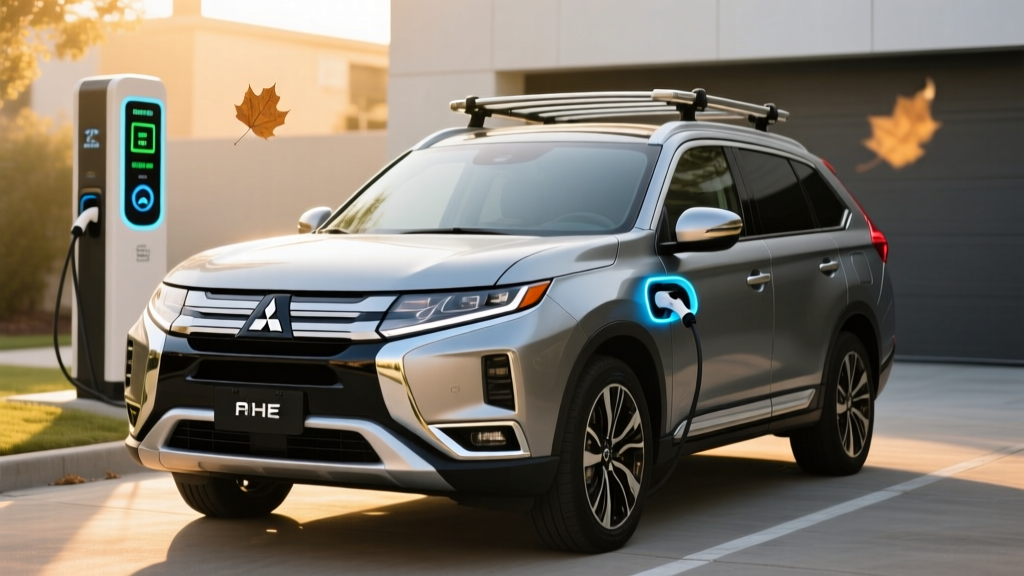
The Mitsubishi Outlander PHEV is a plug-in hybrid SUV offering 38 miles of EPA-rated electric-only range and 64 MPGe combined when using both battery and gas. Starting at $41,845 (2026 ES trim), it qualifies for a partial federal tax credit of up to $3,750 under current IRS §30D rules. For buyers who want electric commuting without range anxiety on road trips, the Outlander PHEV delivers real savings — but only if your daily driving stays under ~40 miles and you can charge at home. If you regularly drive more than 50 miles between charges, a conventional hybrid or fully electric SUV may serve you better.
Outlander PHEV Specs: Range, Battery, and Efficiency
| Spec | 2026 Outlander PHEV |
|---|---|
| EPA Electric-Only Range | 38 miles |
| Combined MPGe (EV + Gas) | 64 MPGe |
| Gas-Only MPG (after battery depletes) | 26 MPG combined |
| Battery Capacity | 20.0 kWh (usable ~17.5 kWh) |
| Battery Chemistry | NMC (Nickel Manganese Cobalt) |
| Electric Motors | Dual-motor AWD (front 114 hp + rear 134 hp) |
| Gas Engine | 2.4L 4-cylinder (126 hp) |
| Combined System Output | 248 hp |
| 0-60 mph | ~7.0 seconds |
| DC Fast Charge (CHAdeMO) | Up to 22 kW, 0-80% in ~38 min |
| Level 2 Charge (J1772) | 3.3 kW, full charge in ~5.5 hours |
| Seating | 7 passengers (3 rows) |
| Cargo (behind 3rd row) | 11.7 cu ft |
| Towing Capacity | 1,500 lbs |
| Battery Warranty | 10 years / 100,000 miles |
| Powertrain Warranty | 10 years / 100,000 miles |
The Outlander PHEV's 20.0 kWh battery pack gives it one of the longer electric-only ranges among mainstream PHEV SUVs. Mitsubishi rates it at 38 miles on electricity alone, which translates to roughly 30-34 real-world miles in mixed highway driving, or 25-28 miles in cold weather (below 35°F). For most commuters with a round trip under 35 miles, this means near-total electric operation on weekdays.
Real-World Range Reality: The EPA rates the Outlander PHEV at 38 electric miles. Expect approximately 30-34 miles in warm-weather mixed driving, 25-28 miles in cold weather, and roughly 26-30 miles at sustained highway speeds (70+ mph). Once the battery depletes, the gas engine kicks in at a combined 26 MPG — comparable to many non-hybrid midsize SUVs but lower than the Toyota RAV4 Hybrid's 39 MPG.
Charging the Outlander PHEV: What You Need at Home
Unlike fully electric vehicles, the Outlander PHEV's smaller battery means home charging is straightforward and relatively inexpensive. Here is what each charging level delivers:
| Level | Power | Full Charge Time | Use Case |
|---|---|---|---|
| Level 1 (120V outlet) | ~1.4 kW | ~12-14 hours | Overnight top-up if driving light |
| Level 2 (240V home charger) | 3.3 kW | ~5.5 hours | Full overnight charge, recommended |
| DC Fast (CHAdeMO) | Up to 22 kW | 0-80% in ~38 min | Road-trip top-ups, limited availability |
Key charging note: The Outlander PHEV uses the CHAdeMO DC fast-charging standard, which is increasingly rare at public stations in the US. Most new DC fast-charger installations use CCS or NACS (Tesla). You will find CHAdeMO connectors at some Electrify America and older ChargePoint stations, but availability is shrinking. For daily use, this matters little — Level 2 home charging fully replenishes the 20 kWh battery overnight. But on road trips, don't count on DC fast charging the battery quickly.
The Outlander PHEV does not support NACS or CCS adapters for DC fast charging. Level 2 charging via J1772 works at any standard public Level 2 station.
Outlander PHEV vs Gas SUV vs Full EV: Cost Comparison
The core question for PHEV buyers is whether the plug-in hybrid saves money compared to a conventional gas SUV or a full battery-electric vehicle. Here is a 5-year cost projection comparing the Outlander PHEV against the gas Outlander and a comparable full EV (Hyundai Ioniq 5):
| Cost Factor (5 Years) | Outlander PHEV ($41,845) | Outlander Gas ($32,445) | Hyundai Ioniq 5 ($42,400) |
|---|---|---|---|
| Purchase Price (base MSRP) | $41,845 | $32,445 | $42,400 |
| Federal Tax Credit (§30D) | Up to $3,750 | $0 | Up to $7,500 |
| Effective Purchase Price | ~$38,095 | $32,445 | ~$34,900 |
| Fuel/Energy (15,000 mi/yr) | ~$5,400 | ~$9,750 | ~$3,750 |
| Maintenance | ~$2,800 | ~$3,500 | ~$1,500 |
| Insurance (avg) | ~$8,500 | ~$7,800 | ~$9,200 |
| 5-Year Total Cost | ~$55,545 | ~$53,495 | ~$49,350 |
Assumptions: 15,000 miles/year, $3.25/gallon gas, $0.14/kWh home electricity, 70% of PHEV miles driven on electricity. Fuel costs based on EPA fueleconomy.gov data. Tax credit estimates based on current IRS §30D rules — eligibility depends on buyer income, battery sourcing, and MSRP caps. Consult a tax professional.
What the numbers show: The Outlander PHEV costs roughly $2,000 more over 5 years than the gas Outlander, largely because the fuel savings don't fully offset the higher purchase price even with the partial tax credit. However, compared to a full EV like the Ioniq 5, the PHEV costs about $6,000 more over 5 years due to the smaller tax credit and higher maintenance (gas engine upkeep). The PHEV makes financial sense primarily when you value the flexibility — electric commuting with no range anxiety on long trips — and when your state or utility offers additional rebates that close the price gap.
Pricing, Trims, and Tax Credit Eligibility
The 2026 Mitsubishi Outlander PHEV is available in five trims:
- ES: $41,845 — base trim, 18-inch wheels, dual-zone climate, 8-inch touchscreen
- SE: $44,345 — synthetic leather, heated front seats, power liftgate, 9-inch screen
- SEL: $47,245 — genuine leather, panoramic sunroof, head-up display, Bose audio
- SEL Platinum: $49,845 — semi-autonomous driving assist, quilted leather, 20-inch wheels
- SEL Black Edition: $50,345 — black exterior accents, unique interior trim
Federal Tax Credit (§30D) Checklist for the Outlander PHEV
- Credit Amount: Up to $3,750 (partial — the Outlander PHEV battery meets some but not all critical-mineral and battery-component sourcing requirements as of 2026)
- MSRP Cap: SUVs must be under $80,000 — all Outlander PHEV trims qualify
- Buyer Income Cap: AGI under $150,000 (single) or $300,000 (joint filers)
- Point-of-Sale Transfer: Available — you can apply the credit as a down-payment reduction at the dealer
- Battery Sourcing: Verify current-year compliance on IRS.gov before purchasing — sourcing requirements tighten annually
Important: The Outlander PHEV qualifies for a partial credit because its battery components and critical minerals do not fully meet 2026 domestic-sourcing thresholds. The exact credit amount can change as Mitsubishi adjusts its supply chain. Always confirm eligibility at the point of sale and consult a tax professional.
Real-World Ownership: Who Should Buy the Outlander PHEV?
The Outlander PHEV excels in a specific ownership scenario — and falls short in others. Here is a practical decision framework:
Decision Framework: Is the Outlander PHEV Right for You?
Choose the Outlander PHEV if:
- Your daily commute is under 35 miles round-trip (you'll drive on electricity ~80% of the time)
- You have access to Level 1 or Level 2 home charging (a standard 120V outlet works for light use)
- You take 3+ road trips per year over 200 miles and don't want to plan around charging stations
- You need 7-passenger seating and AWD in an electrified vehicle
- You live in a region with harsh winters where EV range loss concerns you
Choose a full EV (e.g., Kia EV9, Hyundai Ioniq 5) if:
- You want maximum fuel savings and the full $7,500 federal tax credit
- Your daily driving is predictable and under 250 miles
- You want near-zero maintenance (no oil changes, no gas engine)
- Home Level 2 charging is available and you rarely exceed 250 miles in a day
Choose the gas Outlander or a conventional hybrid (e.g., Toyota Highlander Hybrid) if:
- You cannot charge at home or at work
- Your daily driving regularly exceeds 50 miles (the PHEV advantage disappears once the battery depletes)
- You want the lowest upfront purchase price
- You prioritize cargo space — the PHEV battery reduces cargo volume vs the gas model
Climate and Driving Pattern Considerations
Cold weather: In sub-freezing temperatures, expect the electric-only range to drop by 20-30%. The Outlander PHEV uses battery energy for cabin heating, which can reduce your 38-mile range to roughly 25-28 miles. The gas engine will activate more frequently in cold weather to provide heat, which is actually an advantage of the PHEV over a full EV — you won't be stranded without heat.
Highway driving: At sustained speeds above 70 mph, the Outlander PHEV's electric range drops to approximately 26-30 miles. The gas engine is more efficient at highway speeds once the battery depletes, delivering roughly 27-28 MPG highway.
Towing: The 1,500-lb towing capacity is modest and will significantly reduce both electric range and gas MPG when towing. This SUV is not suited for heavy trailer use.
Common Misconceptions About the Outlander PHEV
| Myth | Fact |
|---|---|
| "PHEVs don't need charging — the gas engine handles everything." | Without plugging in, the Outlander PHEV operates as a heavy, less-efficient gas SUV at 26 MPG. You pay a premium for the PHEV powertrain but get no benefit without charging. |
| "The battery will need expensive replacement soon." | Mitsubishi covers the battery for 10 years / 100,000 miles. PHEV batteries are smaller and experience less stress than full-EV batteries. Degradation data shows typical PHEV batteries retain 85-90% capacity after 8 years. |
| "It qualifies for the full $7,500 tax credit." | The Outlander PHEV qualifies for up to $3,750 under current §30D rules, not the full $7,500. Battery sourcing requirements limit the credit amount. |
| "I can DC fast-charge at any station." | The Outlander PHEV uses CHAdeMO, which is increasingly rare at US public chargers. Plan road trips assuming Level 2 or gas-only operation. |
| "It's a 7-seater with plenty of cargo room." | The third row is best for children only, and cargo behind the third row is just 11.7 cu ft. With the third row folded, you get 33.5 cu ft — adequate but not class-leading. |
What First-Time PHEV Buyers Should Know
If the Outlander PHEV is your first electrified vehicle, these practical tips will shape your ownership experience:
- Install a Level 2 home charger. A 240V Level 2 station (such as a ChargePoint Home Flex or Emporia Level 2) charges the Outlander PHEV in roughly 5.5 hours. Budget $500-$1,200 for the charger unit plus $800-$2,500 for electrician installation (depending on whether your electrical panel needs an upgrade). A standard 120V outlet works but takes 12+ hours — fine for light commuters, inadequate for daily full recharges.
- Track your electric-vs-gas ratio. The Outlander PHEV's onboard computer shows your EV driving percentage. Aim for 70%+ electric miles to realize meaningful fuel savings. If your ratio drops below 50%, your driving pattern may not suit a PHEV.
- Maintain the gas engine. Even if you drive 90% on electricity, the gas engine still needs oil changes, air filters, and periodic use. Mitsubishi recommends running the engine at least once every few weeks to keep it lubricated — the vehicle's "EV Priority" mode management handles some of this automatically.
- Precondition while plugged in. Use the Mitsubishi Connect app to heat or cool the cabin while the car is still plugged in. This preserves battery range for driving rather than climate control.
- Understand the regenerative braking paddles. The Outlander PHEV offers steering-wheel paddles that adjust regenerative braking intensity across six levels. In stop-and-go traffic, higher regen captures more energy and extends your electric range.
Frequently Asked Questions
Can the Outlander PHEV drive on electricity alone at highway speeds?
Yes. The Outlander PHEV can operate in pure EV mode at speeds up to approximately 84 mph. However, electric range drops significantly at highway speeds — expect 26-30 miles rather than the EPA-rated 38 miles. For highway-heavy commutes, the series-hybrid mode (where the gas engine generates electricity for the motors) is more efficient.
How long does the Outlander PHEV battery last?
Mitsubishi warranties the battery for 10 years or 100,000 miles against defects and excessive capacity loss (typically defined as dropping below 70% of original capacity). Based on industry data from similar NMC PHEV batteries, owners can expect 85-92% capacity retention after 8 years of normal use. The smaller battery size means less thermal stress compared to full-EV packs, generally supporting longer longevity.
Is the Outlander PHEV good in snow and ice?
Yes. The dual-motor AWD system (called S-AWC, or Super All-Wheel Control) provides independent torque to front and rear axles, giving the Outlander PHEV confident traction in snow. The added weight of the battery pack (~4,800 lbs curb weight) also helps with stability. Ground clearance is 8.3 inches, adequate for moderate snow accumulation.
How does the Outlander PHEV compare to the Toyota RAV4 Prime?
The RAV4 Prime offers 42 miles of electric range (vs 38), 94 MPGe (vs 64), and a more powerful 302-hp powertrain — but starts around $44,500 and has 5-passenger seating. The Outlander PHEV offers 7-passenger seating and a lower starting price but trails in efficiency and performance. Both use CHAdeMO for DC fast charging, which is a shared limitation. See fueleconomy.gov side-by-side comparison for detailed data.
What happens if I never plug it in?
The Outlander PHEV will operate as a conventional hybrid, using the gas engine and regenerative braking to maintain a small battery buffer. Fuel economy drops to approximately 26 MPG combined — worse than many dedicated hybrids (the RAV4 Hybrid achieves 39 MPG). You'll pay a purchase-price premium for PHEV hardware you never use, making this an economically poor choice.
Does the Outlander PHEV support vehicle-to-home (V2H) or vehicle-to-load (V2L)?
No. The 2026 Outlander PHEV does not offer V2H or V2L capability. You cannot use it to power home appliances or serve as a backup generator. If V2L is a priority, consider the Hyundai Ioniq 5 or Ford F-150 Lightning.