Is the Electric Outlander Right for You?
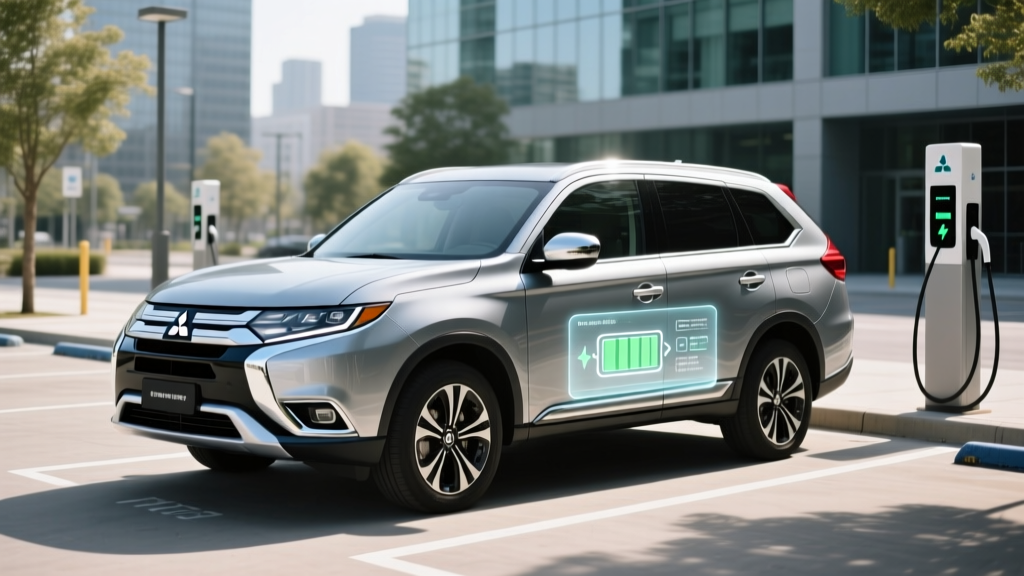
The Mitsubishi Outlander PHEV (plug-in hybrid) offers 38 miles of EPA-rated electric-only range and a 20.4 kWh battery, making it a practical bridge for families who want daily electric commuting without full range-anxiety. Base price starts at $41,640 for the 2026 model year. It qualifies for up to $3,750 under the federal §30D tax credit (not the full $7,500) due to battery-sourcing requirements. If you drive under 40 miles daily and can charge at home, you'll use almost no gas on weekdays. If you regularly take 400+ mile road trips through rural areas, the PHEV eliminates the charging-desert risk that pure EVs still carry.
What the 2026 Outlander PHEV Actually Delivers
Let's be precise about what "electric Outlander" means. Mitsubishi does not sell a fully electric (BEV) Outlander. The Outlander PHEV pairs a 2.4-liter four-cylinder engine with twin electric motors and a 20.4 kWh lithium-ion battery pack (NMC chemistry). Here are the numbers that matter:
| Spec | 2026 Outlander PHEV |
|---|---|
| EPA Electric-Only Range | 38 miles |
| Real-World EV Range (highway/cold) | ~28–33 miles |
| Battery Capacity | 20.4 kWh (NMC) |
| Total System Horsepower | 248 hp |
| 0–60 mph | ~7.2 seconds |
| EPA Combined MPG (gas mode) | 25 MPG |
| MPGe (EV+gas combined) | 64 MPGe |
| Level 1 Charging (120V) | ~1.4 kW, ~14 hours 0–100% |
| Level 2 Charging (240V) | ~3.3 kW, ~6.5 hours 0–100% |
| DC Fast Charging (CHAdeMO) | ~22 kW peak, ~38 min to 80% |
| Base MSRP (ES trim) | $41,640 |
| Battery Warranty | 10 years / 100,000 miles |
Two critical caveats on range: in sustained highway driving at 70+ mph, expect the electric-only range to drop to roughly 30 miles. In freezing temperatures (below 32°F), battery efficiency declines 15–25%, meaning your 38-mile sticker could shrink to 28–30 miles of usable EV range. The Outlander's heat pump helps mitigate cabin-heating drain, but cold chemistry losses are unavoidable physics.
Outlander PHEV vs. Gas Outlander vs. Full EV
The core buyer question: why a PHEV instead of a conventional gas Outlander or a fully electric SUV? Here's the data comparison across a 15,000-mile/year driving profile, assuming 40% of miles fall within the 38-mile EV window (typical for suburban commuters with home charging):
| Factor | Outlander PHEV | Gas Outlander (AWD) | Hyundai Ioniq 5 (full EV) |
|---|---|---|---|
| Base MSRP | $41,640 | $30,445 | $42,600 |
| EPA Range / Fuel Economy | 38 mi EV / 25 MPG gas | 27 MPG combined | 303 mi EPA |
| Annual Fuel/Energy Cost | ~$1,050 | ~$1,750 | ~$600 |
| Federal Tax Credit (est.) | Up to $3,750 | $0 | Up to $7,500* |
| Annual Maintenance (est.) | ~$450 | ~$600 | ~$250 |
| 5-Year Fuel/Energy Total | ~$5,250 | ~$8,750 | ~$3,000 |
| Road-Trip Anxiety | None (gas backup) | None | Moderate in rural areas |
*Ioniq 5 §30D eligibility depends on current-year battery sourcing and buyer income limits per IRS rules. Always verify before purchasing.
The PHEV math favors you if: your daily commute is under 38 miles round-trip, you have Level 2 home charging access, and you take 4+ road trips per year where DC fast-charging infrastructure is sparse. The gas Outlander wins on pure upfront cost. A full EV like the Ioniq 5 wins on running costs but demands you plan long trips around charging stops.
Real Ownership Costs: 5-Year Breakdown
Purchase price is only the opening move. Here's a realistic 5-year / 75,000-mile total cost of ownership for the Outlander PHEV vs. the gas Outlander, assuming $3.50/gallon gas and $0.14/kWh home electricity (national averages):
| Cost Category | Outlander PHEV | Gas Outlander AWD |
|---|---|---|
| Purchase Price (base) | $41,640 | $30,445 |
| Federal Tax Credit | –$3,750 | $0 |
| Net Purchase | $37,890 | $30,445 |
| 5-Year Fuel / Energy | $5,250 | $8,750 |
| 5-Year Maintenance | $2,250 | $3,000 |
| 5-Year Insurance (avg.) | $7,500 | $6,750 |
| Estimated Depreciation | $16,500 | $14,000 |
| 5-Year Total Cost | $69,390 | $62,945 |
| Cost Per Mile | $0.93 | $0.84 |
The PHEV still carries a ~$6,400 premium over five years. However, this narrows to near-parity if you qualify for your state's EV rebate (many states offer $1,500–$4,000 on top of federal credits — check your local DMV or energy office), and it flips in the PHEV's favor if gas prices rise above $4.00/gallon or your daily electric mileage exceeds 35 miles consistently.
Insurance tends to run 8–12% higher on PHEVs due to battery replacement cost exposure. Get a quote before signing — this varies dramatically by zip code and carrier.
Charging Reality: What First-Time Buyers Must Know
The Outlander PHEV uses a J1772 connector for Level 1 and Level 2 AC charging, and a CHAdeMO connector for DC fast charging. This is a critical detail: CHAdeMO is being phased out across North America in favor of NACS (Tesla's standard) and CCS. While existing CHAdeMO stations still work, new installations are rare. Plan accordingly.
Home charging is where the PHEV economics work. A standard 120V outlet (Level 1) adds roughly 4 miles of EV range per hour — adequate to refill the 38-mile battery overnight in about 14 hours. A 240V Level 2 home charger (requiring a dedicated 20-amp circuit minimum) refills the battery in ~6.5 hours, meaning you wake up with a full EV charge every morning.
Level 2 home installation typically costs $600–$1,800 depending on panel proximity and local permit fees. If your home has a 200-amp electrical panel with spare capacity, expect the lower end. A panel upgrade to 200A can add $1,500–$3,500 — get a licensed electrician's assessment before committing.
Public fast charging on the Outlander peaks at roughly 22 kW via CHAdeMO. This is slow compared to modern BEVs (which hit 150–350 kW). A 10–80% charge takes approximately 38 minutes. For a PHEV with a small battery, this is less of a practical issue — you rarely need DC fast charging since the gas engine covers long trips. But know the limitation exists.
Common Misconceptions About the Electric Outlander
| Myth | Fact |
|---|---|
| "The Outlander is a full electric vehicle" | It's a plug-in hybrid (PHEV) with a gas engine. No fully electric Outlander exists as of 2026. |
| "I'll never need gas if I charge daily" | True only for trips under 38 miles. The engine activates under hard acceleration, extreme cold, or once the battery depletes. |
| "It qualifies for the full $7,500 tax credit" | Due to battery critical-mineral sourcing rules under IRS §30D, the Outlander PHEV typically qualifies for $3,750. Verify current-year eligibility. |
| "I can fast-charge at any station" | The Outlander uses CHAdeMO for DC fast charging, not CCS or NACS. Station availability is declining. |
| "The battery will need expensive replacement soon" | Mitsubishi warranties the PHEV battery for 10 years / 100,000 miles. Degradation data shows ~85–90% capacity retention at 100K miles for similar NMC packs. |
Decision Framework: Should You Buy the Outlander PHEV?
Choose the Outlander PHEV if:
- Your daily round-trip commute is 35 miles or less
- You have access to Level 2 home charging (or can install it)
- You take regular road trips to areas with sparse EV charging infrastructure
- You need three-row seating (the Outlander offers a small third row)
- You want AWD with electric torque without committing to a full BEV
- You live in a moderate climate (extreme cold reduces EV range by 20–25%)
Look at a full EV (like the Ioniq 5 or Tesla Model Y) if:
- You drive 50+ miles daily and want to eliminate gas entirely
- You have reliable home charging and live near DC fast-charging corridors
- You want lower long-term maintenance costs (no oil changes, fewer moving parts)
- Maximizing the $7,500 federal credit matters to your budget
Stick with a gas Outlander if:
- You cannot install or access any home/workplace charging
- Your budget is strictly under $32,000
- You drive fewer than 8,000 miles per year (fuel savings won't offset the PHEV premium)
What First-Time PHEV Buyers Overlook
Three ownership realities that rarely appear in brochures:
1. The gas engine fires up more than you expect. Even with a full battery, the Outlander's engine will engage during hard acceleration, when cabin heating demand is high in winter, or when the system determines the engine needs periodic lubrication cycles. Don't be alarmed — it's normal PHEV behavior, not a malfunction.
2. Regenerative braking feel takes adaptation. The Outlander PHEV offers adjustable regen levels via paddle shifters. At maximum regen, you can nearly one-pedal-drive in EV mode, but it's not as aggressive as a full BEV like a Tesla or Ioniq 5. Expect a learning curve of 1–2 weeks.
3. Oil changes don't disappear. Because the gas engine still runs, you'll maintain regular oil-change intervals (typically every 5,000–7,500 miles of engine operation). The PHEV reduces but doesn't eliminate ICE maintenance — factor this into your cost expectations.
Frequently Asked Questions
Can I drive the Outlander PHEV on electricity alone?
Yes, for up to 38 EPA-rated miles (expect 28–33 real-world miles depending on speed, temperature, and terrain). Beyond that, the 2.4L gas engine takes over seamlessly, delivering 25 MPG combined.
Does the Outlander PHEV qualify for the federal tax credit?
It qualifies for a partial credit — typically $3,750 under current IRS §30D rules — because its battery components don't fully meet the critical-minerals and battery-sourcing thresholds required for the full $7,500. Income caps and MSRP caps also apply. The credit can be transferred to the dealer at point of sale as of 2024 onward. Consult a tax professional for your specific situation.
How long does the Outlander PHEV battery last?
Mitsubishi provides a 10-year / 100,000-mile warranty on the PHEV battery, covering capacity loss below a specified threshold (typically 60–70% state of health). Real-world data from earlier Outlander PHEV generations shows approximately 85–90% capacity retention at 100,000 miles. Full battery replacement, if needed out of warranty, runs roughly $8,000–$12,000 installed.
Is the Outlander PHEV good in snow and cold weather?
Yes, with caveats. The twin-motor AWD system (Mitsubishi calls it S-AWC) provides strong traction. However, cold weather reduces EV range by 15–25% due to battery chemistry limitations and cabin-heating demand. Preconditioning the cabin while plugged in helps preserve range.
What connector does the Outlander PHEV use?
J1772 for Level 1 and Level 2 AC charging. CHAdeMO for DC fast charging. Note that CHAdeMO infrastructure is declining in North America as the industry shifts to NACS and CCS, which limits your public fast-charging options long-term.