Mitsubishi EV in 2026: The Short Answer
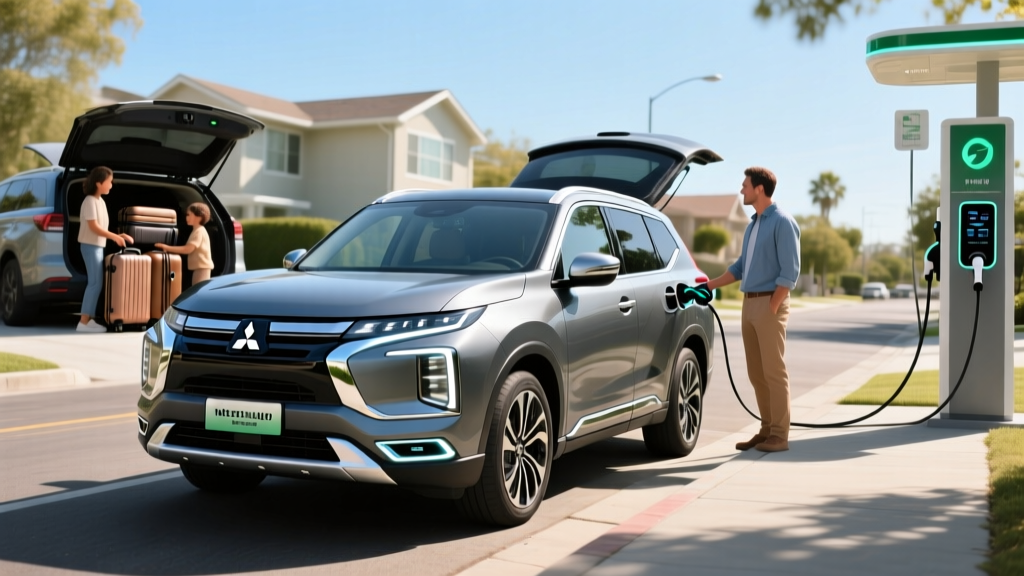
If you're searching for an EV Mitsubishi you can buy today in the U.S., your primary option is the 2026 Mitsubishi Outlander PHEV — a plug-in hybrid SUV offering 38 miles of EPA-rated electric-only range, a 20.0 kWh battery, and 64 MPGe combined. Mitsubishi does not currently sell a fully electric (BEV) vehicle in the American market. The Outlander PHEV starts at approximately $41,640 (ES trim, including destination) and qualifies for the full $7,500 federal tax credit under current IRS §30D rules, subject to buyer income limits and point-of-sale transfer eligibility. For buyers who want electric daily commuting but need gas flexibility for road trips, it's one of the most practical electrified SUVs available — but it is not a pure EV, and understanding that distinction is critical before you buy.
What Mitsubishi Actually Offers Electrified Buyers in 2026
Mitsubishi's U.S. electrified strategy in 2026 remains anchored by the Outlander PHEV, now in its second generation on the Renault-Nissan-Mitsubishi CMF-C platform (shared with the Nissan Rogue). While Mitsubishi has announced future BEV plans globally — including concepts previewing electric crossovers — no battery-electric model is currently on sale or available for order in the United States.
This matters because many shoppers searching "EV Mitsubishi" expect to find a fully electric option comparable to the Hyundai Ioniq 5, Tesla Model Y, or Kia EV6. What Mitsubishi offers instead is a plug-in hybrid that bridges the gap: genuine electric-only commuting for most daily drives, with a 2.4-liter gasoline engine and twin electric motors providing all-wheel-drive capability and extended range when the battery depletes.
| Specification | Value |
|---|---|
| EPA Electric-Only Range | 38 miles |
| Total Range (Electric + Gas) | ~420 miles |
| EPA Combined MPGe (EV Mode) | 64 MPGe |
| Combined MPG (Gas-Only, Charge-Depleted) | 26 MPG |
| Battery Capacity | 20.0 kWh (lithium-ion) |
| Drivetrain | Twin-motor AWD (S-AWC) |
| Combined System Output | 248 hp / 332 lb-ft torque |
| 0–60 mph | ~7.2 seconds |
| Level 2 AC Charging (Full Charge) | ~4.5 hours at 3.6 kW |
| DC Fast Charging (CHAdeMO) | ~38 minutes (0–80%) |
| Cargo Volume (Behind 2nd Row) | 33.5 cu ft |
| Seating Capacity | 7 passengers (3 rows) |
| Towing Capacity | 1,500 lbs |
| Starting MSRP (ES Trim) | $41,640 |
| Battery Warranty | 10 years / 100,000 miles |
| Powertrain Warranty | 10 years / 100,000 miles |
Source: EPA Fuel Economy, Mitsubishi Motors North America
Outlander PHEV vs. a Gas SUV vs. a Full EV: The Numbers
The Outlander PHEV competes in a crowded midsize SUV segment. To understand where it fits, let's compare it against a conventional gas rival (Toyota Highlander gas) and a full battery-electric alternative (Hyundai Ioniq 5 AWD) across the metrics that matter for ownership decisions.
| Metric | Mitsubishi Outlander PHEV | Toyota Highlander (Gas AWD) | Hyundai Ioniq 5 AWD (BEV) |
|---|---|---|---|
| Starting MSRP | $41,640 | $40,970 | $49,650 |
| Federal Tax Credit (§30D) | $7,500 (eligible) | $0 | $7,500 (eligible, subject to sourcing) |
| Effective Starting Price | ~$34,140 | $40,970 | ~$42,150 |
| EPA Range / MPGe | 38 mi EV / 64 MPGe / 26 MPG gas | 24 MPG combined | 290 mi / 110 MPGe |
| Annual Fuel/Energy Cost* | ~$780 (mixed EV/gas driving) | ~$2,250 | ~$680 |
| 5-Year Fuel/Energy Cost | ~$3,900 | ~$11,250 | ~$3,400 |
| Home Charging Required? | Recommended, not mandatory | No | Essential for most owners |
| Maintenance (5-Year Est.) | ~$2,800 | ~$3,200 | ~$1,500 |
*Based on 15,000 miles/year, $3.50/gal gas, $0.15/kWh electricity, and 70% of Outlander miles driven in EV mode. Actual costs vary by region and driving pattern.
The Outlander PHEV's strongest financial case emerges after applying the federal §30D tax credit. At an effective price of roughly $34,140, it undercuts both the gas Highlander and the Ioniq 5 on initial cost. Over five years, a PHEV owner who charges regularly at home saves approximately $7,350 in fuel costs compared to the gas Highlander, while retaining the flexibility to drive 400+ miles without stopping to charge — something the Ioniq 5 cannot match on long road trips through charging-sparse regions.
Real-World Range and Charging: What the EPA Sticker Doesn't Tell You
The EPA rates the Outlander PHEV at 38 miles of electric-only range, but real-world results depend heavily on three factors: temperature, driving style, and terrain.
Outlander PHEV Real-World Electric Range Expectations
- Ideal conditions (65–80°F, city/suburban, flat terrain): 36–40 miles — you may match or slightly exceed the EPA estimate in stop-and-go driving where regenerative braking recovers energy.
- Highway driving (70+ mph, sustained): 28–33 miles — higher speeds increase aerodynamic drag, and the PHEV system engages the gas engine sooner under heavy load.
- Cold weather (below 32°F): 25–30 miles — battery chemistry becomes less efficient, cabin heating draws significant power, and the system may activate the gas engine for heat even with charge remaining.
- Hot weather with A/C (above 95°F): 32–36 miles — moderate impact compared to cold weather, as cooling draws less energy than resistive heating.
On charging, the Outlander PHEV supports both Level 2 AC charging (J1772 connector, up to 3.6 kW) and DC fast charging via the CHAdeMO standard — a notable differentiator, as most competing PHEVs (Toyota RAV4 Prime, Kia Sportage PHEV) offer only AC charging. A full Level 2 charge takes approximately 4.5 hours from empty. On a CHAdeMO DC fast charger, you can reach 80% in roughly 38 minutes.
One practical note: CHAdeMO infrastructure is declining in the U.S. as networks standardize on NACS (Tesla) and CCS1. While Electrify America and some regional networks still maintain CHAdeMO connectors at many stations, new installations increasingly omit them. If DC fast charging on road trips matters to you, verify CHAdeMO availability along your common routes using apps like PlugShare before relying on it.
Breaking Down the True Cost of Ownership
Purchase price and fuel savings are only part of the equation. Here's a five-year cost projection for the Outlander PHEV compared to the gas-only Highlander and the Ioniq 5 BEV, assuming 15,000 miles per year, home charging access for the electrified vehicles, and a Mid-Atlantic electricity rate of $0.15/kWh.
| Cost Category | Outlander PHEV | Highlander Gas | Ioniq 5 BEV |
|---|---|---|---|
| Purchase Price (After §30D Credit) | $34,140 | $40,970 | $42,150 |
| Fuel / Electricity (5 Years) | $3,900 | $11,250 | $3,400 |
| Maintenance & Repairs | $2,800 | $3,200 | $1,500 |
| Insurance (5-Year Avg.) | $8,500 | $7,800 | $9,200 |
| Home Charger Install (Level 2) | $1,200 (one-time) | $0 | $1,200 (one-time) |
| Estimated Depreciation (5 Yr) | $16,000 | $17,500 | $19,500 |
| Total 5-Year Cost | $66,540 | $80,720 | $76,950 |
Depreciation estimates based on historical PHEV and BEV resale trends. Insurance varies significantly by driver profile, ZIP code, and carrier. Consult your insurer for personalized quotes.
The Outlander PHEV posts the lowest five-year total cost in this comparison, driven primarily by its lower effective purchase price after the tax credit and strong fuel savings versus the gas alternative. The Ioniq 5 costs more upfront and depreciates faster (BEV depreciation remains steeper than PHEV in the current market), but its per-mile energy and maintenance costs are the lowest of the three.
Federal Tax Credit Eligibility: What You Must Know
The Outlander PHEV currently qualifies for the full $7,500 federal tax credit under IRS §30D, but eligibility is not automatic. You must meet all of the following criteria:
- Income caps: Modified adjusted gross income (MAGI) must not exceed $150,000 (single filers), $225,000 (head of household), or $300,000 (married filing jointly).
- MSRP cap: The vehicle's MSRP must not exceed $80,000 for SUVs, vans, and pickup trucks (the Outlander PHEV clears this easily at ~$41,640–$50,000 depending on trim).
- Battery sourcing requirements: A percentage of critical minerals and battery components must be sourced from the U.S. or free-trade-agreement partners. These thresholds increase annually. Mitsubishi has confirmed the Outlander PHEV meets current-year sourcing requirements, but verify on the EPA/DOE qualified vehicle list before purchasing, as eligibility can change mid-year.
- Point-of-sale transfer: As of 2024, buyers can transfer the credit to the dealer at purchase, reducing the sale price by $7,500 at the register rather than waiting to claim it on their tax return. This requires the dealer to be registered with the IRS Energy Credits Online portal.
- One credit per VIN, one per taxpayer per year: You cannot claim the credit for the same vehicle twice, and you're limited to one new-vehicle credit per tax year.
Always confirm eligibility with a tax professional and cross-reference the IRS qualified vehicle list before finalizing your purchase. Rules and sourcing determinations can shift.
Common Misconceptions About Mitsubishi's Electrified Lineup
| Myth | Fact |
|---|---|
| "Mitsubishi makes a fully electric SUV I can buy in the U.S." | Mitsubishi does not sell a BEV in the U.S. market as of 2026. The Outlander PHEV is a plug-in hybrid, not a pure electric vehicle. |
| "PHEVs don't save much money compared to gas cars." | An Outlander PHEV owner who charges daily and drives 30–35 miles round-trip can cover ~70% of their annual miles on electricity, saving $1,000–$1,500/year in fuel versus a comparable gas SUV. |
| "You need a home charger to own a PHEV." | You can operate the Outlander PHEV without home charging — it functions as a conventional hybrid (26 MPG) when the battery is depleted. However, you lose the majority of fuel savings without regular plug-in access. |
| "The battery will need expensive replacement within a few years." | Mitsubishi covers the PHEV battery for 10 years / 100,000 miles. PHEV batteries are smaller (20 kWh vs. 75–100 kWh in a BEV), and replacement costs, if ever needed out of warranty, are proportionally lower — typically $4,000–$6,000 versus $10,000–$20,000 for a BEV pack. |
| "CHAdeMO charging is completely dead." | CHAdeMO is declining but not extinct. Electrify America and several regional networks still support it at existing stations. However, new DC fast charger installations increasingly omit CHAdeMO — plan accordingly for road trips. |
Who Should Buy the Outlander PHEV — And Who Shouldn't
Decision Framework
Choose the Mitsubishi Outlander PHEV if:
- You have home Level 2 charging access (or can install it) and a daily commute under 35 miles round-trip — you'll run almost entirely on electricity on weekdays.
- You need 7-passenger seating and AWD capability for family hauling in snow or rain.
- You regularly take road trips exceeding 300 miles and don't want to plan around DC fast-charging stops.
- You want to reduce fuel costs significantly without committing to full EV ownership infrastructure.
- The effective post-credit price of ~$34,000 fits your budget and you qualify for §30D.
Look elsewhere if:
- You want a pure battery-electric vehicle with zero tailpipe emissions — consider the Hyundai Ioniq 5, Tesla Model Y, or Kia EV6 instead.
- You lack any access to plug-in charging (home, workplace, or reliable public Level 2). Without regular charging, you're paying a PHEV premium for a 26 MPG hybrid.
- You need more than 38 miles of electric range for your commute — the Toyota RAV4 Prime offers 42 miles, and the Kia Sportage PHEV offers 34 miles.
- You prioritize fast DC charging on road trips — CHAdeMO's declining infrastructure makes the Outlander PHEV less convenient for frequent long-distance EV-mode travel.
First-Time PHEV Buyer Essentials
If the Outlander PHEV is your first electrified vehicle, here's what to prepare for:
Install a Level 2 home charger. A 240V Level 2 station (such as the ChargePoint Home Flex or Emporia V2) charging at 3.6 kW will fully replenish the Outlander's 20.0 kWh battery in roughly 4.5 hours — easily overnight. Expect to spend $500–$800 on the charger unit and $600–$1,500 on professional installation by a licensed electrician, depending on your panel capacity and run distance. If your electrical panel is near capacity (common in older homes with 100A service), a panel upgrade to 200A can add $1,500–$3,000.
Learn the drive modes. The Outlander PHEV offers EV mode (electric-only), Series Hybrid (engine generates electricity for the motors), and Parallel Hybrid (engine and motors drive the wheels together). For most daily driving, leaving it in EV mode and letting the system manage transitions is optimal. Use the "Save" button on highway stretches to preserve battery for city driving at your destination, where electric mode is most efficient.
Precondition the cabin while plugged in. The Outlander PHEV supports scheduled climate preconditioning. Setting your departure time while the vehicle is plugged in warms or cools the cabin using grid power rather than battery energy, preserving your full 38-mile electric range when you leave — especially impactful in winter.
Track your electric vs. gas miles. The vehicle's trip computer shows your EV-driving percentage. Aim to keep this above 60–70% to maximize your fuel savings. If it consistently drops below 50%, your driving pattern may not suit a PHEV, and either a conventional hybrid (lower upfront cost, no plug needed) or a full BEV (if you can charge) might serve you better.
Frequently Asked Questions
Does Mitsubishi make any fully electric vehicles?
Not in the U.S. market as of 2026. Mitsubishi has previewed BEV concepts for global markets, including the e-Evolution concept, but no production battery-electric vehicle is currently available or announced for U.S. sale. The Outlander PHEV is Mitsubishi's sole electrified offering domestically.
How long does the Outlander PHEV battery last?
Mitsubishi warrants the PHEV traction battery for 10 years or 100,000 miles against defects and capacity loss below a specified threshold. In practice, PHEV batteries experience less degradation stress than BEV batteries because they operate within a narrower state-of-charge window (the system maintains a buffer and never fully depletes the pack). Many first-generation Outlander PHEV owners report 85–90% capacity retention after 8–10 years of regular use.
Can I charge the Outlander PHEV at a Tesla Supercharger?
No. The Outlander PHEV uses a J1772 connector for AC charging and CHAdeMO for DC fast charging. Tesla Superchargers use the NACS connector. There is no adapter currently available that safely enables CHAdeMO-to-NACS charging. You'll need to use Electrify America, EVgo, ChargePoint, or other networks that support CHAdeMO for DC fast charging.
Is the Outlander PHEV good in snow?
Yes — Mitsubishi's S-AWC (Super All-Wheel Control) system uses twin electric motors (one front, one rear) to provide responsive AWD with torque vectoring. Combined with 8.3 inches of ground clearance, it performs well in moderate snow and icy conditions. The added weight of the battery pack (~4,600 lbs curb weight) also aids traction.
What happens if I never plug it in?
The Outlander PHEV operates as a conventional series/parallel hybrid when the battery is depleted, returning an EPA-rated 26 MPG combined. You won't damage the vehicle by never plugging in, but you'll forgo the majority of its fuel-cost advantage and essentially drive a heavier, more expensive hybrid. The financial case for the PHEV depends on regular plug-in charging.