Quick Answer: Is the Mitsubishi Outlander PHEV the Right Electric Four-Wheeler for You?
The Mitsubishi Outlander PHEV (plug-in hybrid electric vehicle) is a three-row SUV that pairs a 20 kWh battery with a 2.4L gasoline engine, delivering an EPA-estimated 38 miles of electric-only driving and up to 64 MPGe when the battery is charged. Starting around $41,000 MSRP for the 2026 model year, it qualifies for up to a $3,750 federal tax credit under current IRS §30D rules (not the full $7,500, due to battery-sourcing requirements). For drivers who can charge at home and commute under 35 miles daily, it slashes fuel costs dramatically. For long highway road-trippers without charging access, the advantage narrows to roughly 25–26 MPG combined — competitive with a standard hybrid but not transformative.
What Exactly Is the "Electric Outlander Four Wheeler"?
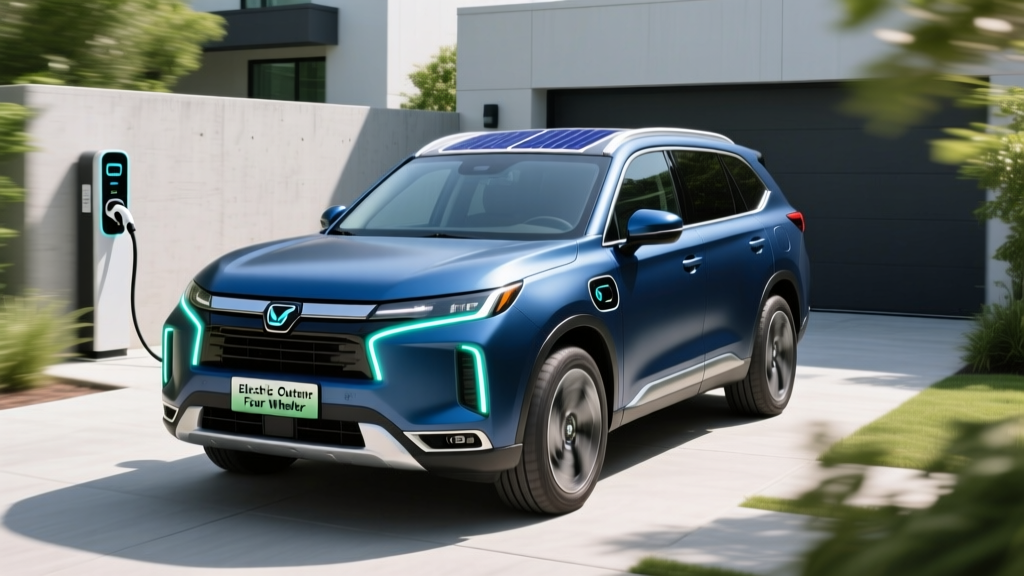
When shoppers search for an electric outlander four wheeler, they're typically looking at the Mitsubishi Outlander PHEV — a plug-in hybrid, not a fully electric vehicle (BEV). This distinction matters enormously for ownership expectations.
A PHEV like the Outlander carries both a rechargeable battery pack and a gasoline engine. You plug it in to charge the battery for electric-only driving on shorter trips. When the battery depletes, the 2.4-liter four-cylinder engine kicks in seamlessly, and the vehicle operates like a conventional hybrid. This eliminates the range anxiety that some first-time EV buyers feel, but it also means you're maintaining two powertrains — oil changes, spark plugs, and a transmission alongside battery management.
The 2026 Outlander PHEV is built on the Renault-Nissan-Mitsubishi Alliance CMF-CD platform (shared with the Nissan Rogue), features standard all-wheel drive via twin rear electric motors, and seats up to seven in its three-row configuration — one of the few PHEVs offering that third row at this price point.
Range, Efficiency, and Charging: The Numbers That Matter
Let's break down exactly what the Outlander PHEV delivers in real-world use versus the EPA sticker.
| Specification | 2026 Outlander PHEV |
|---|---|
| Battery Capacity (usable) | ~20 kWh (NMC chemistry) |
| EPA Electric-Only Range | 38 miles |
| Real-World Electric Range (mixed driving) | 30–35 miles |
| Real-World Electric Range (highway/cold) | 22–28 miles |
| EPA Combined MPGe (electric + gas) | 64 MPGe |
| Gas-Only MPG (battery depleted) | 25–26 MPG combined |
| Total Range (full tank + full battery) | ~400+ miles |
| Level 1 Charging (120V, 1.4 kW) | ~14 hours to full |
| Level 2 Charging (240V, ~3.7 kW onboard) | ~5.5 hours to full |
| DC Fast Charging | CHAdeMO connector, ~22 kW peak, 0–80% in ~38 min |
| Combined System Horsepower | 248 hp |
| 0–60 mph | ~6.8 seconds |
| Towing Capacity | 1,500 lbs |
Real-World Range Reality Check
The EPA's 38-mile electric-only estimate assumes moderate temperatures, mixed city/highway driving, and no aggressive acceleration. In our experience and consistent with owner reports, expect 30–35 miles in typical 65–75°F conditions on suburban roads. Push it to 70+ mph on the highway and you'll see closer to 22–28 miles. Drop below freezing and the battery's usable capacity shrinks — plan for 20–25 miles of electric range in winter. The gas engine will activate sooner in cold weather to provide cabin heat unless you precondition while plugged in.
Charging speed note: The Outlander PHEV's onboard charger maxes out at roughly 3.7 kW on Level 2. That means even with a 48-amp home charger, the car can only accept about 3.7 kW — filling the 20 kWh battery in approximately 5.5 hours. Its CHAdeMO DC fast-charging connector is becoming less common at newer public stations (most now deploy CCS or NACS), so don't rely on public DC charging for daily use.
Outlander PHEV vs. Gas SUV vs. Full EV: Cost Comparison
The Outlander PHEV competes against three benchmarks: a comparable gas-only midsize SUV (like the Toyota Highlander), a standard hybrid (like the Toyota RAV4 Hybrid), and a fully electric SUV (like the Hyundai Ioniq 5 or Tesla Model Y). Here's how they stack up over five years and 75,000 miles of ownership.
| Cost Factor | Outlander PHEV | Gas SUV (25 MPG avg) | Hybrid SUV (38 MPG) | Full EV (3.5 mi/kWh) |
|---|---|---|---|---|
| Base MSRP (approx.) | $41,000 | $35,000 | $36,500 | $45,000 |
| Federal Tax Credit (§30D) | Up to $3,750 | $0 | $0 | Up to $7,500* |
| Effective Purchase Price | ~$37,250 | $35,000 | $36,500 | ~$37,500 |
| Fuel/Energy (5 yrs, 75k mi) | ~$4,200** | ~$9,000 | ~$5,900 | ~$3,200 |
| Maintenance (5 yrs) | ~$2,800 | ~$3,500 | ~$3,200 | ~$1,800 |
| Estimated 5-Yr Total Cost | ~$44,250 | ~$47,500 | ~$45,600 | ~$42,500 |
*Full EV credit eligibility depends on battery sourcing, MSRP caps, and buyer income. Verify at IRS.gov.
**Outlander PHEV fuel cost assumes 70% of miles driven on electricity (home-charged at $0.14/kWh) and 30% on gasoline ($3.50/gal). Your ratio depends entirely on commute distance and charging discipline.
The Outlander PHEV's total cost lands between a gas SUV and a full EV. The savings over a pure gas vehicle are meaningful — roughly $3,000+ over five years — but the full EV still wins on operating cost if you have reliable home charging and your routine fits within its range.
Real-World Ownership: What First-Time Buyers Must Know
Buying a PHEV introduces habits and costs that differ from both gas cars and full EVs. Here's what the brochures don't emphasize.
Home Charging Is Where the Savings Live
The Outlander PHEV's economics only pencil out if you charge regularly. A driver who never plugs in is essentially driving a heavy, slightly less efficient hybrid — you'll get 24–26 MPG and pay for a battery you're not using. To maximize the 38-mile electric envelope:
- Level 1 (standard 120V outlet): Included with the vehicle. Adds roughly 4–5 miles of range per hour. A full charge takes about 14 hours — feasible if you park overnight and drive under 35 miles daily.
- Level 2 (240V home charger): Recommended. A 32-amp Level 2 unit (like a ChargePoint Home Flex or Emporia Level 2) costs $500–$700 for the equipment plus $500–$2,000 for electrician installation depending on your panel's capacity and distance from the breaker. Total: roughly $1,000–$2,700 installed. This delivers a full charge in ~5.5 hours.
- Electrical panel check: If your home has a 100-amp panel and you're already running central AC, an electric dryer, and an electric stove, adding a 32-amp EV circuit may require a panel upgrade ($1,500–$3,500). Get a licensed electrician's assessment before committing.
Cold Weather Hits PHEVs Differently
In sub-freezing conditions, the Outlander's battery capacity temporarily drops by 15–30%, and the gasoline engine may activate to heat the cabin — cutting into your electric-only miles. Preconditioning the cabin while still plugged in (via the Mitsubishi Connect app) mitigates this by warming the interior using grid power before you depart.
Maintenance: Two Powertrains, Two Schedules
Unlike a BEV (no oil changes, no spark plugs), the Outlander PHEV requires conventional engine maintenance on top of battery care. Expect oil changes every 5,000–7,500 miles (or annually), plus eventual transmission fluid, coolant, and brake fluid service. However, regenerative braking extends pad life significantly — many PHEV owners report 60,000+ miles on original brake pads.
Federal Tax Credit: What You Actually Qualify For
The Outlander PHEV currently qualifies for up to $3,750 under the IRS §30D Clean Vehicle Credit — not the full $7,500. The reduced amount is due to battery critical-mineral and component sourcing requirements that the Outlander's battery pack only partially satisfies under current rules.
§30D Eligibility Checklist for the Outlander PHEV
- MSRP Cap: Must be under $80,000 for SUVs/vans/pickups — Outlander PHEV qualifies ✓
- Buyer Income Cap: Modified AGI ≤ $150,000 (single) or ≤ $300,000 (married filing jointly)
- Battery Sourcing: Partial compliance — currently yields $3,750 (not $7,500)
- Point-of-Sale Transfer: Available — you can apply the credit as a down-payment reduction at the dealer (effective 2024+)
- Assembly: Must be assembled in North America — Outlander PHEV is assembled in Okazaki, Japan, which may affect eligibility for some buyers. Confirm with your dealer and IRS.gov before purchase.
Important: Tax credit rules shift frequently. Sourcing requirements tighten annually, and assembly-location rules are strictly enforced. Always verify current eligibility on fueleconomy.gov and consult a tax professional before relying on credit amounts in your purchase decision.
Common Misconceptions: Myth vs. Fact
| Myth | Fact |
|---|---|
| "It's a fully electric SUV." | It's a plug-in hybrid — it has both a battery and a gas engine. Total EV range is 38 miles max. |
| "I don't need to charge it to save money." | Without regular charging, you'll get ~25 MPG — worse than a dedicated hybrid like the RAV4 Hybrid (38 MPG). The premium you paid for the battery goes to waste. |
| "The battery will need expensive replacement soon." | Mitsubishi covers the PHEV battery with a 10-year/100,000-mile warranty (capacity retention threshold typically 70%). Real-world degradation data from earlier Outlander PHEV generations shows ~10–15% capacity loss over 8–10 years. |
| "I can DC fast-charge at any station." | The Outlander uses the CHAdeMO connector, which is increasingly rare at new public charging stations. Most new infrastructure uses CCS1 or NACS. Plan to rely primarily on home Level 1 or Level 2 charging. |
| "It qualifies for the full $7,500 tax credit." | Current eligibility is $3,750 due to partial battery-sourcing compliance, and Japan assembly may further affect eligibility depending on current IRS guidance. |
Decision Framework: Should You Buy the Outlander PHEV?
Choose the Outlander PHEV If:
- Your daily commute is under 35 miles round-trip and you can charge at home nightly
- You need three rows and AWD but aren't ready to commit to a full EV
- You take 3–5 road trips per year exceeding 200 miles and don't want to plan around charging stops
- You want a lower effective purchase price after the $3,750 credit and don't mind maintaining a gas engine
- You live in a region with extreme cold where BEV range loss is a serious concern
Choose a Full EV (Ioniq 5, Model Y, EV6) Instead If:
- You want zero engine maintenance and the lowest possible operating cost
- You have reliable home charging and your daily driving exceeds 35 miles (where the PHEV switches to gas)
- You want access to the full $7,500 federal tax credit (eligible BEVs like the Model Y or Ioniq 5 with compliant sourcing)
- You prefer DC fast-charging infrastructure (CCS or NACS) for road trips at 150–250 kW speeds
Choose a Standard Hybrid (RAV4 Hybrid, Highlander Hybrid) Instead If:
- You cannot charge at home (apartment, street parking, no garage)
- You want simpler ownership with one powertrain and no plug-in routine
- Your budget is tighter — hybrids start $4,000–$6,000 lower than the Outlander PHEV
- You prioritize highway MPG (hybrids sustain 35–40 MPG; the Outlander PHEV drops to ~25 MPG once the battery is depleted on the highway)
Warranty and Long-Term Battery Outlook
Mitsubishi provides one of the strongest PHEV warranties in the segment:
- PHEV Battery: 10 years / 100,000 miles (capacity retention warranty)
- Powertrain: 10 years / 100,000 miles
- New Vehicle: 5 years / 60,000 miles
- Roadside Assistance: 5 years / unlimited miles
Out-of-warranty battery replacement, should it become necessary after 10+ years, typically ranges from $6,000–$9,000 including labor for the Outlander PHEV pack. However, data from the 2017–2023 Outlander PHEV generations (which have now accumulated high mileage in fleet and owner use) suggests most packs retain 80–88% of original capacity at the 100,000-mile mark — well above the warranty threshold.
Frequently Asked Questions
How much does it cost to charge the Outlander PHEV at home?
A full charge of the ~20 kWh battery at the US average residential rate of $0.14/kWh costs about $2.80. That delivers roughly 30–35 real-world electric miles — equivalent to about $0.08–$0.09 per mile, compared to ~$0.14 per mile for a 25 MPG gas SUV at $3.50/gallon. Over a year of 12,000 miles driven 70% on electricity, that's roughly $950 in energy costs versus $1,680 for a gas equivalent.
Can the Outlander PHEV drive on electricity alone at highway speeds?
Yes, the Outlander PHEV can sustain electric-only driving up to approximately 80 mph. However, at sustained highway speeds (70+ mph), the battery depletes rapidly — expect 22–25 miles of range rather than the 38-mile EPA estimate. The vehicle will automatically engage the gas engine when the battery is depleted or when hard acceleration is demanded.
Is the Outlander PHEV good in snow and off-road?
The standard all-wheel-drive system (twin rear electric motors providing torque to the rear axle) performs competently in snow and light off-road conditions. Mitsubishi's S-AWC (Super All-Wheel Control) system includes Snow, Gravel, and Mud modes. However, this is a crossover AWD system — not a body-on-frame 4WD with low range. Ground clearance is 8.3 inches. For serious off-roading, a dedicated 4x4 is more appropriate.
What happens if I never plug it in?
The Outlander PHEV will function as a conventional hybrid, but not an especially efficient one. Expect 24–26 MPG combined — worse than a Toyota RAV4 Hybrid (38 MPG) or Honda CR-V Hybrid (40 MPG). You'll have paid a premium for a battery system that provides no benefit. If you cannot or will not charge regularly, a standard hybrid is the better financial choice.
Does the Outlander PHEV support V2L (vehicle-to-load) or V2H (vehicle-to-home)?
The current-generation Outlander PHEV does not support V2L or V2H power export. If backup-power capability is a priority, look at the Ford F-150 Lightning (V2H capable with Ford Charge Station Pro) or Hyundai Ioniq 5 (V2L via interior outlet and adapter).