Does Mitsubishi Make a Fully Electric Car in 2026?
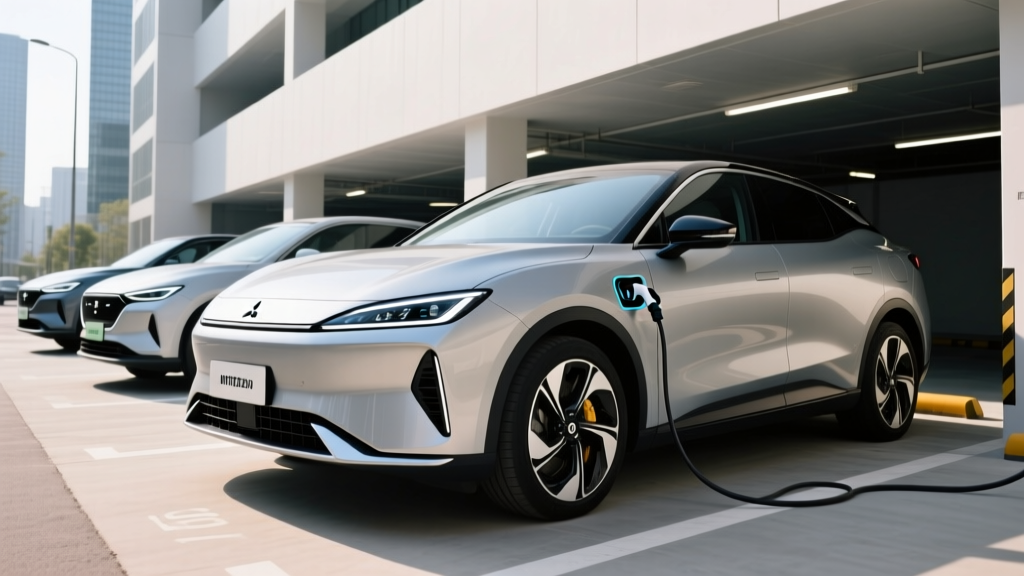
If you're searching for a pure battery-electric Mitsubishi EV in the U.S. market, the short answer is: no — Mitsubishi does not currently sell a fully electric vehicle (BEV) in the United States. What Mitsubishi does offer is the Outlander PHEV, a plug-in hybrid that delivers approximately 38 miles of electric-only driving before the gasoline engine engages. For buyers specifically seeking a zero-tailpipe-emission Mitsubishi, the brand's U.S. lineup does not include one as of the 2026 model year.
Quick Answer: Mitsubishi's only electrified vehicle in the U.S. is the Outlander PHEV (~38 mi electric range, ~$40,000 MSRP). No pure BEV is sold here. If you need a full EV, you'll need to look at competing brands. If a PHEV fits your commute, the Outlander is a legitimate option worth evaluating.
This matters because many shoppers type "Mitsubishi EV" into search engines expecting to find a battery-electric SUV or sedan. The confusion is understandable — Mitsubishi sells the eK X EV (a compact kei-car BEV) in Japan, and the brand has announced future electric models globally. But for American buyers walking into a dealership today, the Outlander PHEV is the only plug-in option on the lot.
The 2026 Mitsubishi Outlander PHEV: Specs and Real-World Numbers
Since the Outlander PHEV is the closest thing to a "Mitsubishi EV" available in the U.S., here's what the data actually shows. The 2026 Outlander PHEV pairs a 2.4-liter four-cylinder engine with dual electric motors and a 20.0 kWh lithium-ion battery pack (approximately 17.0 kWh usable). This combination delivers all-wheel drive as standard across all trims.
| Specification | 2026 Outlander PHEV |
|---|---|
| EPA Electric-Only Range | ~38 miles |
| Battery Capacity (Usable) | ~17.0 kWh (20.0 kWh gross) |
| Combined MPGe (Electric Mode) | ~64 MPGe |
| Combined MPG (Gas-Only) | ~26 MPG |
| Level 2 Charge Time (0–100%) | ~3.5 hours at 7.2 kW |
| DC Fast Charging | Not available |
| System Horsepower | ~248 hp combined |
| 0–60 mph | ~7.5 seconds |
| Base MSRP (ES trim) | ~$40,445 |
| Powertrain Warranty | 5 years / 60,000 miles |
| Hybrid Battery Warranty | 10 years / 100,000 miles |
Real-World Range Reality: The EPA's 38-mile electric estimate assumes moderate temperatures and mixed driving. Expect 30–34 miles in sustained highway driving at 70+ mph, and potentially 25–30 miles in cold weather (below freezing) when battery efficiency drops and cabin heating draws additional power. In warm city driving with frequent regenerative braking, some owners report matching or slightly exceeding the EPA figure.
One critical limitation: the Outlander PHEV does not support DC fast charging. This means you cannot use highway rest-stop fast chargers to quickly top up the battery. All charging happens at Level 1 (120V household outlet, ~8 hours for a full charge) or Level 2 (240V, ~3.5 hours). For most PHEV owners, this is acceptable — you charge overnight at home and wake up to a full battery every morning. But if you lack home charging access, the electric-only benefits of a PHEV diminish substantially.
Outlander PHEV vs. Gas SUV vs. Full EV: Cost Comparison
How does owning the Outlander PHEV actually compare to a gas-only compact SUV or a full battery-electric alternative? Here's a five-year cost breakdown assuming 15,000 miles driven annually, $3.50/gallon regular unleaded, and $0.14/kWh residential electricity.
| Cost Factor (5 Years) | Outlander PHEV | Gas SUV (Toyota RAV4 AWD) | Full EV (Hyundai Ioniq 5 AWD) |
|---|---|---|---|
| Purchase Price (Base MSRP) | $40,445 | $33,575 | $47,500 |
| Federal Tax Credit (§30D) | Not eligible* | $0 | Up to $7,500 (if eligible) |
| Effective Purchase Price | $40,445 | $33,575 | ~$40,000 |
| Fuel/Energy Cost (5 Yrs) | ~$6,800 | ~$10,500 | ~$4,200 |
| Maintenance (5 Yrs) | ~$2,800 | ~$3,600 | ~$1,800 |
| Estimated Insurance (5 Yrs) | ~$8,500 | ~$7,800 | ~$9,200 |
| Total 5-Year Cost | ~$58,545 | ~$55,475 | ~$55,200 |
*The Outlander PHEV does not currently qualify for the full $7,500 §30D federal tax credit due to battery component and critical mineral sourcing requirements under current IRS rules. Always verify eligibility at irs.gov before purchasing, as rules update periodically.
The numbers reveal an important pattern: the Outlander PHEV's fuel savings over a gas SUV are real but modest — roughly $3,700 over five years — and they don't fully close the gap created by the Outlander's higher purchase price. A full EV like the Ioniq 5 delivers greater fuel savings (~$6,300 less than gas over five years) and, if you qualify for the tax credit, lands at a comparable effective purchase price. The PHEV's advantage is flexibility: no range anxiety, no charging-infrastructure dependency, and the ability to road-trip without planning charging stops.
Who Should Consider the Mitsubishi Outlander PHEV?
The Outlander PHEV serves a specific buyer profile well. It's not the cheapest option, nor the most efficient, but it occupies a niche that neither pure EVs nor gas vehicles perfectly fill.
Decision Framework: Is the Outlander PHEV Right for You?
- Choose the Outlander PHEV if: Your daily commute is under 35 miles round-trip, you have reliable Level 2 home charging, you regularly take longer road trips where EV charging infrastructure is sparse, you want AWD standard, and you need three-row seating in a plug-in vehicle.
- Choose a full EV instead if: You have home charging, your daily driving stays under 250 miles, you want to eliminate gas entirely, you qualify for the $7,500 tax credit, and you want lower long-term maintenance costs.
- Choose a conventional hybrid (like the RAV4 Hybrid) instead if: You cannot install home charging, your budget is tighter, you don't want to think about plugging in, and you still want strong fuel economy (~40 MPG combined).
- Walk away from Mitsubishi entirely if: You specifically want a zero-emission BEV. Mitsubishi has no U.S. battery-electric product as of 2026, and announced future models remain preliminary with no confirmed U.S. release dates.
Real-World Ownership: What First-Time PHEV Buyers Get Wrong
Plug-in hybrids like the Outlander PHEV come with ownership realities that marketing brochures gloss over. Here are the misconceptions that trip up first-time buyers, grounded in data rather than opinion.
| Common Misconception | What the Data Shows |
|---|---|
| "38 miles of electric range means I'll never use gas." | Only if your daily driving stays under 30–35 miles (accounting for real-world reduction). The average American drives ~37 miles/day, meaning many owners will use gas regularly. |
| "I can fast-charge on road trips." | The Outlander PHEV has no DC fast charging. On long trips, you'll operate primarily as a gas hybrid at ~26 MPG — respectable, but not class-leading among hybrids. |
| "A PHEV is cheaper to own than a full EV." | Not necessarily. PHEVs have both an engine and a battery system to maintain. Total cost of ownership often favors full EVs when the federal tax credit applies. |
| "I don't need home charging — I'll just plug in at work or public chargers." | Public Level 2 chargers are often occupied, broken, or cost $0.25–0.49/kWh. Without reliable daily charging, a PHEV becomes a heavy, less-efficient gas car. Per fueleconomy.gov, PHEVs deliver their rated efficiency only when regularly charged. |
| "The tax credit makes it a bargain." | The Outlander PHEV may not qualify for the full $7,500 §30D credit under current battery-sourcing rules. Verify on irs.gov before counting on it. |
Charging at Home: What It Takes and What It Costs
If you're considering the Outlander PHEV, home charging is essentially mandatory to extract real value from the electric powertrain. Here's what a typical Level 2 installation looks like.
| Component | Estimated Cost Range |
|---|---|
| Level 2 Charger (32A–48A, e.g., ChargePoint Home Flex, Emporia Vue) | $350–$700 |
| Electrician Labor (240V circuit, 50A breaker, ~40 ft run) | $600–$1,500 |
| Permit & Inspection | $50–$200 |
| Electrical Panel Upgrade (if needed — 100A to 200A) | $1,500–$3,500 |
| Total (No Panel Upgrade) | $1,000–$2,400 |
| Total (With Panel Upgrade) | $2,500–$5,900 |
For the Outlander PHEV specifically, a 32-amp Level 2 charger (7.7 kW) is more than sufficient — the vehicle's onboard charger maxes out at approximately 7.2 kW. You don't need to invest in a 48-amp or 80-amp charger for this vehicle, though installing a higher-capacity unit provides headroom if you add a full EV later.
At $0.14/kWh (the U.S. residential average), fully charging the Outlander PHEV's 17 kWh usable battery costs roughly $2.38 — enough for about 38 miles of electric driving. That works out to approximately $0.063 per mile on electricity versus $0.135 per mile on gasoline (at 26 MPG and $3.50/gallon). The electric savings are real, but only if you actually plug in every night. A PHEV you never charge is just a heavier, thirstier gas car.
Where Mitsubishi's EV Future Stands
Mitsubishi Motors has announced plans to introduce new electrified vehicles globally, including battery-electric models built on the Renault-Nissan-Mitsubishi Alliance's shared platforms. However, as of early 2026, no specific BEV model has been confirmed for the U.S. market with a firm release date. The brand's U.S. strategy has leaned heavily on the Outlander PHEV as its electrification flagship, and the Outlander's three-row crossover formula has found a loyal buyer base.
For shoppers who are committed to Mitsubishi as a brand and want a fully electric vehicle, the honest recommendation is to wait — but with no guaranteed timeline, also evaluate competitors. The Hyundai Tucson PHEV (33 miles electric, ~$38,000), Toyota RAV4 Prime (42 miles electric, ~$44,000), and Kia Sportage PHEV (34 miles electric, ~$39,000) all compete directly with the Outlander PHEV and may qualify for federal incentives the Mitsubishi does not.
Frequently Asked Questions
Does Mitsubishi sell any fully electric cars in the U.S.?
No. As of the 2026 model year, Mitsubishi does not offer a battery-electric vehicle (BEV) in the United States. The only plug-in vehicle available is the Outlander PHEV, which combines an electric motor and battery with a gasoline engine.
How far can the Mitsubishi Outlander PHEV drive on electricity alone?
The EPA rates the Outlander PHEV at approximately 38 miles of electric-only range. Real-world results vary: expect 30–34 miles on the highway and 25–30 miles in cold weather. City driving with regenerative braking may yield results close to or slightly above the EPA estimate.
Does the Outlander PHEV qualify for the $7,500 federal tax credit?
Eligibility is uncertain under current §30D rules due to battery component and critical mineral sourcing requirements. The credit also has MSRP caps (vans/SUVs: $80,000) and buyer income limits ($150,000 single / $300,000 joint). Always check the latest list at irs.gov and consult a tax professional before relying on the credit.
Can I fast-charge the Outlander PHEV on a road trip?
No. The Outlander PHEV does not have a DC fast-charging port. It charges only via Level 1 (120V, ~8 hours for a full charge) or Level 2 (240V, ~3.5 hours). On road trips, the vehicle operates primarily as a conventional hybrid using its gasoline engine at approximately 26 MPG combined.
Is a PHEV better than a full EV for someone with range anxiety?
For many buyers, yes — a PHEV eliminates range anxiety entirely because the gas engine provides unlimited range. However, if your daily driving is predictable and under 250 miles, and you have home charging, a full EV's 250–350 mile range often proves more than adequate, with lower operating costs and no engine maintenance.
What's the cheapest way to own a plug-in Mitsubishi?
Buy the base Outlander PHEV ES trim (~$40,445 MSRP), install a basic 32A Level 2 home charger (~$1,000–$2,400 installed), plug in every night, and drive your daily commute in EV mode. This maximizes your electricity usage (cheapest per-mile cost) while retaining gas-engine flexibility for longer trips.