Quick Answer: Is the Mitsubishi Eclipse Cross Electric Worth Buying?
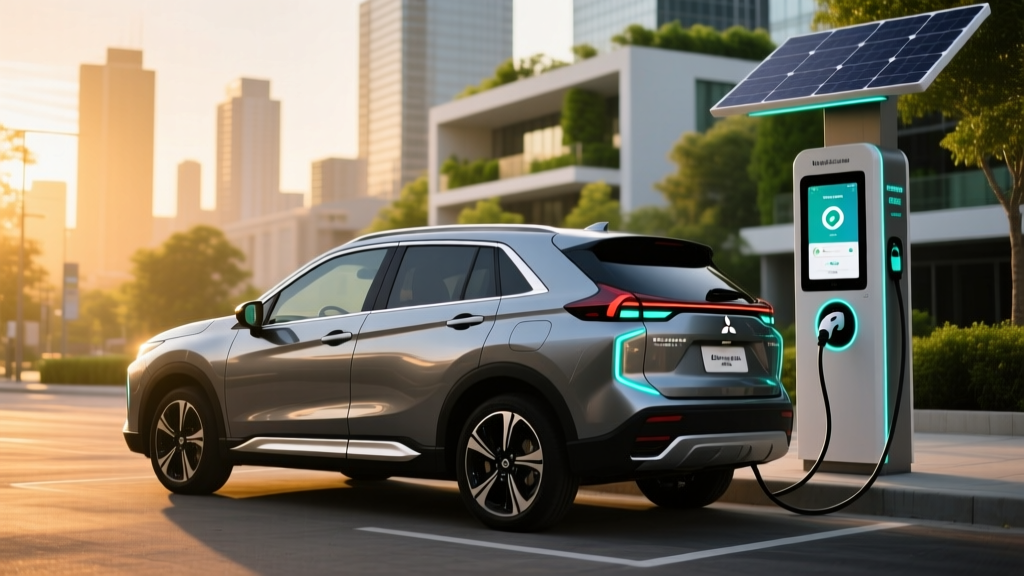
As of early 2026, Mitsubishi has not released a fully electric Eclipse Cross to the U.S. market. The current Eclipse Cross is a plug-in hybrid (PHEV) with approximately 22 miles of electric-only range and a combined 74 MPGe when running on battery power. If Mitsubishi announces a battery-electric Eclipse Cross variant for 2026 or 2027, expect a starting MSRP in the $35,000–$42,000 range, roughly 230–270 miles of EPA range, and DC fast charging near 100–130 kW peak based on the Renault-Nissan-Mitsubishi Alliance's CMF-EV platform capabilities. Until then, the Eclipse Cross PHEV remains the closest electrified option — and it does not qualify for the full $7,500 federal §30D tax credit due to battery sourcing requirements.
What Is the Eclipse Cross Electric — and Does It Actually Exist?
The phrase "Mitsubishi Eclipse Cross Electric" generates consistent search interest, but it's critical to separate what's available from what's anticipated. Mitsubishi's current U.S. lineup includes the Outlander PHEV and the Eclipse Cross PHEV (introduced for the 2025 model year in some markets). Neither is a battery-electric vehicle (BEV).
Mitsubishi is part of the Renault-Nissan-Mitsubishi Alliance, which has committed to launching multiple EVs on shared platforms. The Alliance's CMF-EV architecture underpins vehicles like the Nissan Ariya and Renault Megane E-Tech, and Mitsubishi has signaled it will use this platform for future electric crossovers. However, a production-ready, U.S.-spec Eclipse Cross BEV has not been officially confirmed with finalized specs or a firm on-sale date as of this writing.
What this means for buyers: If you're researching the Eclipse Cross Electric today, you're likely evaluating one of three things: (1) whether to wait for a potential BEV variant, (2) whether the current PHEV meets your electrified-driving needs, or (3) how a future electric Eclipse Cross might compare to rivals. This guide addresses all three.
Eclipse Cross PHEV vs. a Future BEV: The Numbers That Matter
To make a sound purchase decision, you need to understand what the PHEV delivers today versus what a BEV variant would likely offer. Here's a side-by-side breakdown based on current PHEV specs and projected BEV figures drawn from Alliance platform data:
| Specification | Eclipse Cross PHEV (2025) | Projected Eclipse Cross BEV | Gas Compact SUV Baseline |
|---|---|---|---|
| Powertrain | 2.4L 4-cyl + 2 motors | Dual-motor AWD (est.) | 1.5L turbo 4-cyl |
| Electric-Only Range | ~22 mi (EPA) | N/A (all-electric) | 0 mi |
| Total Range | ~320 mi (gas + electric) | ~240–270 mi (EPA est.) | ~380 mi |
| Battery Capacity | ~13.8 kWh (usable) | ~65–87 kWh (est.) | N/A |
| MPGe / MPG Combined | 74 MPGe (electric) / 26 MPG (gas) | ~95–105 MPGe (est.) | ~28 MPG |
| DC Fast Charge (peak) | N/A (AC charging only) | ~100–130 kW (est.) | N/A |
| 10–80% Charge Time | N/A | ~35–45 min (est.) | N/A |
| Level 2 Charge Time (0–100%) | ~3.5–4 hours | ~7–9 hours (est.) | N/A |
| 0–60 mph | ~8.5 sec | ~7.0–8.0 sec (est.) | ~8.5–9.5 sec |
| Horsepower | ~221 hp combined | ~215–290 hp (est.) | ~181 hp |
| Starting MSRP | ~$38,000–$42,000 | $35,000–$42,000 (est.) | ~$28,000–$33,000 |
| Federal Tax Credit (§30D) | $0–$3,750 (sourcing-dependent) | $0–$7,500 (sourcing-dependent) | $0 |
Sources: fueleconomy.gov for PHEV efficiency data; manufacturer press materials for powertrain specs. Projected BEV figures are estimates based on CMF-EV platform vehicles (Nissan Ariya, Renault Scenic E-Tech) and are subject to change upon official release.
Real-World Ownership Costs: PHEV Today vs. Gas vs. Future BEV
Sticker price is only the starting point. The total cost of ownership (TCO) over five years and 75,000 miles tells the real financial story. Below is a cost comparison that accounts for fuel/electricity, maintenance, and estimated insurance — but excludes depreciation, which varies heavily by model and market conditions.
| Cost Category | Eclipse Cross PHEV | Projected BEV | Gas Compact SUV |
|---|---|---|---|
| Purchase Price (base MSRP) | $39,500 | $38,500 (est.) | $30,000 |
| Federal Tax Credit (est.) | −$0 to $3,750 | −$0 to $7,500 | $0 |
| Effective Purchase Price | $35,750–$39,500 | $31,000–$38,500 | $30,000 |
| Fuel/Energy (5 years) | $4,200–$5,800 | $3,000–$4,500 | $8,500–$10,500 |
| Maintenance (5 years) | $2,800–$3,500 | $1,200–$1,800 | $3,500–$4,500 |
| Insurance (5 years, avg.) | $7,500–$9,500 | $7,800–$10,000 | $6,500–$8,500 |
| Home Charger Install (Level 2) | $0 (uses standard outlet or optional L2) | $800–$2,000 | $0 |
| Total 5-Year Cost (est.) | $50,250–$58,300 | $43,800–$54,800 | $48,500–$53,500 |
Key assumptions: Electricity at $0.14/kWh (national average); gasoline at $3.50/gallon; 15,000 miles/year; PHEV driven 60% on electric for short commutes. Insurance premiums for EVs tend to run 10–15% higher than gas equivalents due to higher repair costs — a factor many buyers overlook. Home Level 2 charger installation costs assume an existing 240V circuit or panel capacity; a panel upgrade can add $1,500–$3,000.
The PHEV's ownership economics are strongest when you can charge nightly at home and keep most daily driving under 22 miles. If your commute regularly exceeds the electric range, you're essentially driving a 26-MPG hybrid for the surplus miles — at which point the fuel savings over a gas SUV narrow significantly.
Tax Credit Reality: What the Eclipse Cross PHEV Actually Qualifies For
The federal EV tax credit under IRS §30D is one of the most misunderstood incentives in the auto market. Here's what applies to the current Eclipse Cross PHEV and what would likely apply to a future BEV variant:
§30D Credit Requirements (2026 Rules)
- Vehicle type: PHEVs must have ≥7 kWh battery capacity (Eclipse Cross PHEV qualifies)
- MSRP cap: SUVs/vans/pickups ≤$80,000; sedans ≤$55,000 (Eclipse Cross qualifies)
- Buyer income cap: AGI ≤$150,000 single / ≤$300,000 joint filers
- Battery component sourcing: Must meet North American assembly thresholds — Mitsubishi's battery supply chain may not fully comply, potentially limiting credit to $3,750 or $0
- Critical minerals: Separate $3,750 half requires sourcing from U.S. or FTA partners
- Point-of-sale transfer: Eligible buyers can apply the credit at purchase rather than waiting for tax filing
The honest truth: Mitsubishi's battery sourcing for the Eclipse Cross PHEV has not consistently appeared on the IRS's list of qualifying vehicles for the full $7,500 credit. Always verify current eligibility at fueleconomy.gov's tax credit database before making a purchase decision. A future BEV variant built on the Alliance's CMF-EV platform may face similar sourcing challenges unless battery production is localized.
Charging at Home: What First-Time EV Buyers Need to Plan For
Whether you're buying the PHEV today or waiting for a BEV, home charging infrastructure is the single biggest ownership variable. Here's the practical reality:
For the Eclipse Cross PHEV: The 13.8 kWh battery charges fully in about 8 hours on a standard 120V Level 1 outlet (1.4 kW). With a 240V Level 2 home charger (7.2 kW), a full charge takes roughly 3.5–4 hours. Many PHEV owners find Level 1 sufficient — plug in when you get home, wake up to a full battery every morning.
For a future BEV: Level 1 charging (120V) adds roughly 3–5 miles of range per hour — adequate only if you drive under 30 miles daily and can leave the car plugged in for 12+ hours. A Level 2 home charger (240V, 32–48 amps) is effectively mandatory for BEV ownership, adding 20–35 miles of range per hour and fully replenishing a ~75 kWh battery overnight.
| Level | Voltage / Amperage | Power (kW) | Miles Added per Hour | Install Cost |
|---|---|---|---|---|
| Level 1 | 120V / 12A | 1.4 kW | 3–5 mi | $0 (standard outlet) |
| Level 2 (basic) | 240V / 32A | 7.7 kW | 20–25 mi | $500–$1,500 |
| Level 2 (full) | 240V / 48A | 11.5 kW | 30–35 mi | $800–$2,500 |
Critical caveat: If your home has a 100-amp electrical panel, adding a 48-amp EV charger may require a panel upgrade to 200 amps — a $1,500–$3,000 job. Always get an electrician's assessment before purchasing a Level 2 charger. The Department of Energy's home charging guide offers a useful pre-installation checklist.
Common Misconceptions About the Eclipse Cross Electric
| Myth | Fact |
|---|---|
| "The Eclipse Cross Electric is available now." | Mitsubishi currently sells the Eclipse Cross as a PHEV only in most markets. No BEV variant has been officially launched in the U.S. as of early 2026. |
| "The PHEV qualifies for the full $7,500 tax credit." | Eligibility depends on battery sourcing compliance. The Eclipse Cross PHEV may qualify for $0, $3,750, or $7,500 depending on current IRS sourcing determinations. Verify before buying. |
| "PHEVs don't need home charging." | Without regular home charging, a PHEV operates as a heavy hybrid with worse fuel economy than a dedicated HEV. The 22-mile electric range is wasted. |
| "EV batteries need replacing every 5 years." | Modern lithium-ion EV batteries typically retain 85–90% capacity after 100,000 miles. Mitsubishi's PHEV battery warranty covers 10 years/100,000 miles for capacity retention. |
| "A future Eclipse Cross BEV will charge as fast as a Tesla." | Based on the Alliance CMF-EV platform (Nissan Ariya peaks at ~130 kW), expect moderate — not class-leading — DC fast charging. Tesla Model Y on V3 Superchargers peaks at 250 kW. |
| "All-electric is always cheaper than PHEV." | Not if you lack home charging. Public DC fast charging at $0.35–$0.50/kWh can cost more per mile than gasoline. PHEVs offer flexibility for apartment dwellers or those without garage access. |
How It Compares to Rivals You Can Buy Right Now
If you're considering the Eclipse Cross PHEV or waiting for a potential BEV, you should cross-shop against these established competitors:
PHEV competitors (available now):
- Toyota RAV4 PHEV (Prime): 42 miles electric range, 94 MPGe, ~$44,000 MSRP — significantly more electric range than the Eclipse Cross PHEV but at a higher price
- Hyundai Tucson PHEV: 33 miles electric range, 80 MPGe, ~$38,000 MSRP — strong value with more electric range
- Kia Sportage PHEV: 34 miles electric range, 84 MPGe, ~$39,500 MSRP — comparable pricing with better electric-only coverage
BEV competitors (if a future Eclipse Cross BEV materializes at ~$38K):
- Hyundai Ioniq 5: 303 miles EPA (Long Range), 240 kW peak DC charging, ~$42,000 — faster charging and more range
- Nissan Ariya: 289 miles EPA (long-range), 130 kW peak DC charging, ~$40,000 — same Alliance platform, proven specs
- Chevrolet Equinox EV: 319 miles EPA, 150 kW peak DC charging, ~$33,000 — strong range and value
The competitive picture is clear: the Eclipse Cross PHEV's 22-mile electric range trails key PHEV rivals, and a future BEV variant would need to match the charging speed and range of established BEVs to be competitive. Mitsubishi's advantage lies in its standard all-wheel-drive system and strong reliability reputation.
Decision Framework: Should You Buy, Wait, or Look Elsewhere?
Buy the Eclipse Cross PHEV Now If:
- You have home charging (even Level 1) and a daily commute under 20 miles
- You want AWD capability for snow/mountain driving without range anxiety
- You frequently take road trips over 200 miles and don't want to plan around charging stops
- You value Mitsubishi's 10-year/100,000-mile powertrain warranty
Wait for a Potential Eclipse Cross BEV If:
- You have reliable Level 2 home charging and drive under 250 miles daily
- You want to eliminate gasoline entirely and reduce maintenance costs
- You're not in a rush — a U.S.-spec BEV Eclipse Cross is unconfirmed and likely 12–24 months away at minimum
- You're willing to risk that the BEV may never arrive or may not qualify for the full tax credit
Look at Competitors Instead If:
- Electric-only range is a priority — the RAV4 Prime's 42 miles crushes the Eclipse Cross PHEV's 22
- You want a BEV now — the Equinox EV, Ioniq 5, and Ariya are available with proven specs
- DC fast charging speed matters for your road-trip habits — Alliance-platform vehicles charge slower than Hyundai/Kia's E-GMP vehicles
- You need to maximize the federal tax credit — verify sourcing eligibility at fueleconomy.gov before committing
Frequently Asked Questions
Does Mitsubishi make a fully electric Eclipse Cross?
Not as of early 2026. The Eclipse Cross is available as a plug-in hybrid (PHEV) with approximately 22 miles of electric-only range. Mitsubishi has not announced a battery-electric Eclipse Cross for the U.S. market, though the Renault-Nissan-Mitsubishi Alliance is developing EVs on shared platforms.
How much does it cost to charge the Eclipse Cross PHEV at home?
Charging the 13.8 kWh battery from empty to full at the national average electricity rate of $0.14/kWh costs approximately $1.93. Over a year of daily charging, that's roughly $700 in electricity — compared to approximately $1,700 in gasoline for the same mileage in a gas-only compact SUV.
What is the real-world electric range of the Eclipse Cross PHEV?
The EPA rates the Eclipse Cross PHEV at approximately 22 miles of electric-only range. In real-world driving, expect 18–20 miles in moderate temperatures, dropping to 14–17 miles in cold weather (below 30°F) due to battery efficiency loss and cabin heating demands. Highway-speed driving also reduces electric range by 15–20% compared to city driving.
Can I road-trip in the Eclipse Cross PHEV without charging?
Yes. Once the battery is depleted, the Eclipse Cross PHEV operates as a conventional hybrid, getting approximately 26 MPG combined. With a full tank and full battery, total range is roughly 320 miles. You'll pay more at the pump than in electric mode, but there's no range anxiety or charging-stop planning required.
What happens if I can't charge the PHEV at home?
Without regular charging, the Eclipse Cross PHEV functions as a heavy hybrid and will get roughly 24–26 MPG — slightly worse than a purpose-built hybrid like the Toyota RAV4 Hybrid (39 MPG combined). If you can't charge at home, a conventional HEV is likely a better financial choice than a PHEV.
Will a future Eclipse Cross BEV qualify for the $7,500 federal tax credit?
It depends on battery sourcing at the time of purchase. Under current IRS §30D rules, the credit is split into two $3,750 halves — one for battery component manufacturing and one for critical minerals sourcing. Mitsubishi's supply chain decisions for a future BEV will determine eligibility. Check the IRS qualifying vehicle list before purchasing.