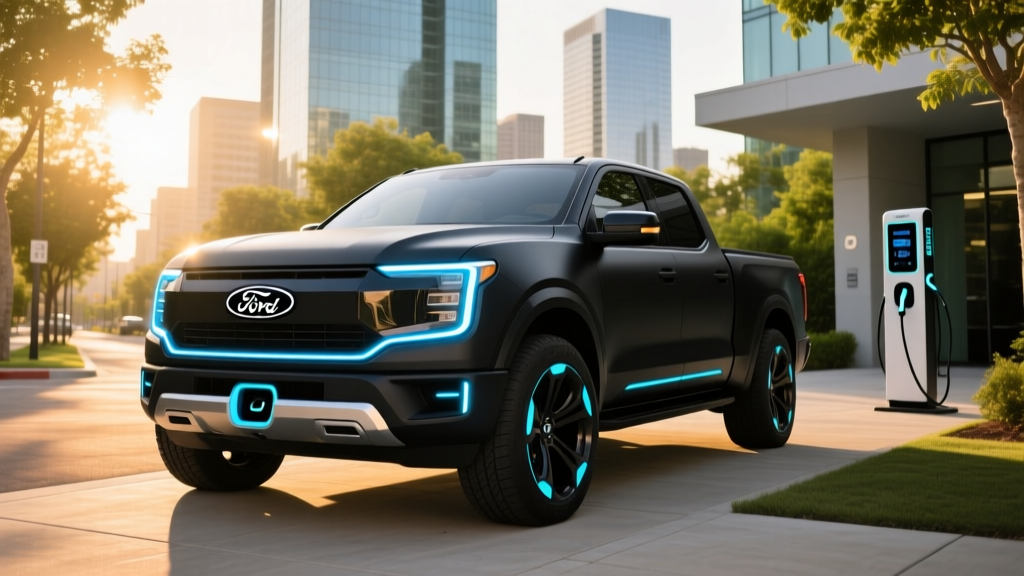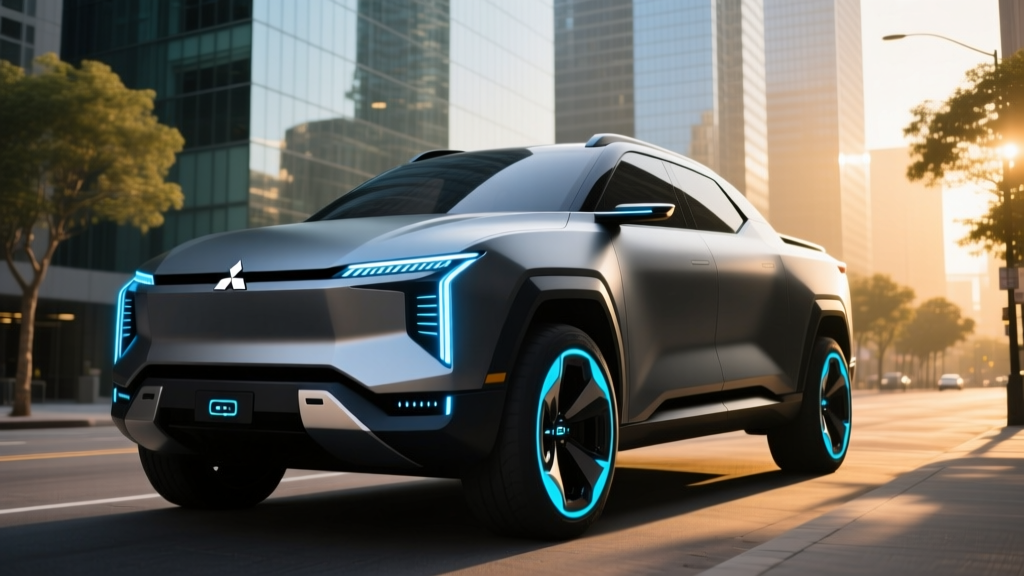
If you've been searching for a "Mitsubishi Cybertruck," you're not alone — the term gets a surprising amount of search traffic. But let's clear this up immediately: there is no Mitsubishi Cybertruck. The Cybertruck is exclusively a Tesla product, and Mitsubishi does not currently sell — or have announced — any electric pickup truck for the U.S. market.
Mitsubishi's current U.S. lineup includes the Outlander PHEV (a plug-in hybrid SUV) and a handful of gas-powered models. The company has discussed future EV ambitions globally, but as of early 2026, no Mitsubishi electric truck exists in any market, nor has one been officially announced for North America.
So if you landed here looking for an angular, stainless-steel Mitsubishi electric pickup, we understand the confusion. What you probably want is a breakdown of the real electric trucks you can actually buy in 2026 — their range, charging speeds, pricing, and how they stack up. That's exactly what follows.
The Real Electric Trucks You Can Buy Right Now
The U.S. electric truck market in 2026 includes several established players. Here's how the major contenders compare on the specs that matter most to truck buyers:
| Spec | Tesla Cybertruck (AWD) | Ford F-150 Lightning (Extended Range) | Rivian R1T (Dual-Motor Max) | Chevrolet Silverado EV (4WT) |
|---|---|---|---|---|
| EPA Range | 340 mi | 320 mi | 352 mi | 450 mi |
| Battery (usable kWh) | ~123 kWh | 131 kWh | 149 kWh | ~200 kWh |
| Chemistry | NMC (structural pack) | NMC | NMC | NMC (Ultium) |
| Peak DC Fast Charge | 250 kW | 150 kW | 220 kW | 350 kW |
| 10–80% Time | ~28 min | ~41 min | ~30 min | ~25 min |
| Level 2 Home Charge | 11.5 kW (~37 mi/hr) | 19.2 kW (~55 mi/hr) | 11.5 kW (~25 mi/hr) | 11.5 kW (~22 mi/hr) |
| 0–60 mph | 4.1 sec | 3.8 sec | 4.5 sec | 4.5 sec |
| Horsepower | 600 hp | 580 hp | 533 hp | 510 hp |
| Drivetrain | AWD (tri-motor available) | AWD (dual-motor) | AWD (dual-motor) | AWD (dual-motor) |
| Max Towing | 11,000 lb | 10,000 lb | 11,000 lb | 10,000 lb |
| Base MSRP | $81,895 | $59,995 | $75,900 | $57,900 |
| Battery Warranty | 8 yr / 120,000 mi | 8 yr / 100,000 mi | 8 yr / 175,000 mi | 8 yr / 100,000 mi |
Sources: fueleconomy.gov, manufacturer specification pages. All figures reflect 2025–2026 model-year data. Specs may vary by trim.
Real-World Range: What the EPA Sticker Won't Tell You
EPA range estimates are a useful baseline, but no EV delivers its sticker number in every condition. Here's what real-world testing and owner data reveal about the trucks above:
- Highway driving (70–80 mph): Expect 15–25% less than EPA. A 340-mile Cybertruck delivers roughly 255–290 miles at sustained highway speeds.
- Cold weather (below 32°F): Range drops 20–35% depending on conditions. That same 340-mile truck may deliver 220–270 miles in freezing temperatures, especially if you're running cabin heat without preconditioning.
- Towing: Pulling a 5,000+ lb trailer can cut range by 40–50%. Plan for 150–190 miles between charges when towing heavy.
- City/regenerative driving: This is where EVs shine — you may actually match or slightly exceed EPA range in stop-and-go traffic with regen braking active.
The Chevrolet Silverado EV's 450-mile EPA figure is class-leading, but that massive ~200 kWh battery also means heavier weight and longer charge times at lower-power stations. The Rivian R1T with the Max Pack offers the best balance of range and charging speed for road-trip-oriented buyers.
Charging Speed and Infrastructure: The Truck Buyer's Reality
For truck owners who tow, haul, or drive long distances, charging speed matters more than peak range. Here's the honest picture:
| Level | Power (kW) | Typical Miles Added/Hour | Use Case |
|---|---|---|---|
| Level 1 (120V outlet) | 1.4 kW | 3–5 mi/hr | Emergency/top-off only |
| Level 2 (240V home) | 7.7–19.2 kW | 22–55 mi/hr | Daily overnight charging |
| DC Fast Charge | 50–350 kW | 150–800+ mi/hr (peak) | Road trips, quick stops |
Key distinction: kW (kilowatts) measures charging power — how fast energy flows into the battery. kWh (kilowatt-hours) measures battery capacity — how much total energy the battery stores. A 350 kW charger fills a large battery much faster than a 150 kW charger, but only if the vehicle can accept that rate.
Charge curve reality: No EV sustains its peak charge rate for the full session. The Silverado EV peaks at 350 kW but tapers significantly above 60% state of charge. The Cybertruck's 250 kW peak on the Tesla Supercharger network is well-supported by infrastructure — Tesla has over 50,000 Superchargers globally, and the network consistently delivers near-peak speeds when preconditioning is used.
The Ford F-150 Lightning's 150 kW peak is the slowest of this group, which is a meaningful drawback for frequent road-trippers. On the plus side, Ford's Pro Power Onboard system turns the truck into a mobile generator — a practical feature for job sites and camping.
Pricing, Tax Credits, and Total Cost of Ownership
Electric trucks carry higher upfront prices than their gas counterparts, but the federal tax credit and lower operating costs can shift the math. Here's the current landscape:
The IRS §30D credit offers up to $7,500 for qualifying new EVs, but eligibility depends on multiple factors:
- MSRP caps: Trucks/vans/SUVs must have an MSRP at or below $80,000. The Cybertruck AWD ($81,895) may exceed this cap — verify with your dealer.
- Buyer income limits: Modified AGI must not exceed $150,000 (single), $225,000 (head of household), or $300,000 (joint filers).
- Battery sourcing requirements: Critical minerals and battery components must meet escalating domestic-content thresholds that tighten each year. Check fueleconomy.gov for the latest eligible vehicles.
- Point-of-sale transfer: You can transfer the credit to the dealer at purchase, reducing your out-of-pocket cost immediately rather than waiting for tax filing.
Consult a tax professional for your specific eligibility. Rules are subject to change.
| Model | Base MSRP | Max §30D Credit | Effective Price* |
|---|---|---|---|
| Chevrolet Silverado EV 4WT | $57,900 | $7,500 | ~$50,400 |
| Ford F-150 Lightning XLT (Ext. Range) | $59,995 | $7,500 | ~$52,495 |
| Rivian R1T Dual-Motor (Standard) | $69,900 | $7,500 | ~$62,400 |
| Tesla Cybertruck AWD | $81,895 | May exceed MSRP cap | $81,895 (verify eligibility) |
*Effective price assumes full credit eligibility. State incentives (e.g., California, Colorado, New York) may further reduce cost. Verify at purchase.
Operating cost advantage: At a national average electricity rate of ~$0.16/kWh, fueling an electric truck costs roughly $0.05–$0.07 per mile. A comparable gas truck at 18 MPG combined and $3.40/gallon costs ~$0.19 per mile. Over 15,000 miles/year, that's a savings of approximately $1,800–$2,100 annually on fuel alone.
Cargo, Passenger Space, and Everyday Utility
Truck buyers need real utility. Here's how the beds and cabins compare:
- Ford F-150 Lightning: 5.5-foot bed, 528 lb payload (varies by trim), 78.6 cu ft rear cargo volume with the mega power frunk adding 14.1 cu ft of sealed, lockable front storage — the largest frunk in the segment.
- Rivian R1T: 4.5-foot bed (shorter than rivals) but features the innovative Gear Tunnel — a pass-through storage compartment behind the cab that adds ~11 cu ft of enclosed space. Total bed + tunnel utility rivals longer beds for gear-heavy users.
- Tesla Cybertruck: 6-foot bed with a motorized retractable tonneau cover and a vault-style sealed design. The angular stainless-steel exoskeleton makes it polarizing but undeniably durable. Rear legroom is adequate but not generous compared to the F-150.
- Chevrolet Silverado EV: 5-foot 11-inch bed with the available Multi-Flex Midgate, which folds down to extend the bed into the cabin — enabling items up to ~9 feet long. Strong practical innovation for hauling lumber or kayaks.
For crew-cab passenger comfort, the F-150 Lightning leads with full-size rear seating and 43.6 inches of rear legroom. The Cybertruck's rear seat is tighter, and visibility out the back is limited by the angular sail pillars.
Driver Assistance and Smart Tech
All four trucks offer advanced driver-assistance systems (ADAS), but it's critical to understand what these systems can and cannot do.
Every system listed below — Tesla Autopilot/FSD (Supervised), Ford BlueCruise, Rivian's Driver+, and Chevy Super Cruise — is classified as SAE Level 2 driver assistance. This means the driver must remain fully engaged, hands on or near the wheel, and eyes on the road at all times. None of these systems make the vehicle self-driving. Only Level 4 services like Waymo's robotaxis operate without a human driver, and those are limited to specific geo-fenced urban areas.
- Tesla Cybertruck: Comes with Autopilot standard (adaptive cruise + lane centering). Full Self-Driving (Supervised) is a $8,000 add-on that enables city-street navigation, but still requires active driver supervision. Tesla's vision-only approach (no LiDAR or radar) remains controversial.
- Ford F-150 Lightning: BlueCruise enables hands-free driving on over 130,000 miles of pre-mapped divided highways. Requires a subscription after the initial trial period (~$75/year). Uses cameras + radar with driver monitoring.
- Rivian R1T: Highway Assist provides competent lane centering and adaptive cruise. Less ambitious than BlueCruise or Super Cruise in terms of hands-free zones, but solid and reliable for highway commutes.
- Chevrolet Silverado EV: Available Super Cruise on higher trims offers hands-free driving on 400,000+ miles of mapped roads — the largest hands-free network in North America. Includes driver attention monitoring via infrared camera.
Who Should Buy What? The Decision Framework
- Best for fleet/work/commercial: Chevrolet Silverado EV — lowest base price, longest range, 350 kW charging, and the Midgate for long cargo. Best value if you qualify for the full tax credit.
- Best for families and daily driving: Ford F-150 Lightning — most spacious cabin, largest frunk, Pro Power Onboard for tailgating and job sites, and the widest dealer network for service.
- Best for adventure and off-road: Rivian R1T — standard air suspension, excellent ground clearance (up to 14.9 inches), Gear Tunnel for outdoor gear, and the strongest battery warranty at 8 years/175,000 miles.
- Best for tech enthusiasts who want attention: Tesla Cybertruck — polarizing design, Supercharger network access, strong performance, and the Tesla software ecosystem. Accept the rougher build quality and higher price as trade-offs.
Frequently Asked Questions
Does Mitsubishi make an electric truck?
No. As of 2026, Mitsubishi does not sell or have any announced plans for an electric pickup truck in the U.S. market. Their electrified offering is the Outlander PHEV, a plug-in hybrid SUV with approximately 38 miles of electric-only range.
What is the "Mitsubishi Cybertruck"?
It's not a real vehicle. The search term likely stems from confusion between the Tesla Cybertruck and Mitsubishi's brand. The Cybertruck is designed, manufactured, and sold exclusively by Tesla.
Which electric truck has the best real-world range?
The Chevrolet Silverado EV leads with a 450-mile EPA estimate, translating to roughly 340–380 miles in mixed real-world driving. For towing, expect roughly 200–250 miles regardless of model.
Can I charge an electric truck at home?
Yes, with a Level 2 (240V) home charger. Expect to add 22–55 miles of range per hour of charging depending on the truck and charger amperage. A full overnight charge (8–10 hours) will replenish most truck batteries. Home charger installation typically costs $500–$2,000 depending on your electrical panel and wiring distance — consult a licensed electrician for a site-specific quote.
Do electric trucks qualify for the $7,500 federal tax credit?
Some do, but eligibility depends on the vehicle's MSRP (must be ≤$80,000 for trucks), your income, and battery-sourcing requirements. Check the fueleconomy.gov tax credit page and IRS guidance before purchasing. A tax professional can confirm your personal eligibility.
Is an electric truck worth it compared to a gas truck?
If you have home charging access and drive within the truck's real-world range for daily use, the fuel savings ($1,800–$2,100/year), lower maintenance costs (no oil changes, fewer moving parts), and instant torque make a strong case. The main drawbacks are higher upfront cost, reduced range when towing, and public charging reliability that still varies by region. For high-mileage towing applications in areas with sparse charging infrastructure, a gas or diesel truck may still be more practical.